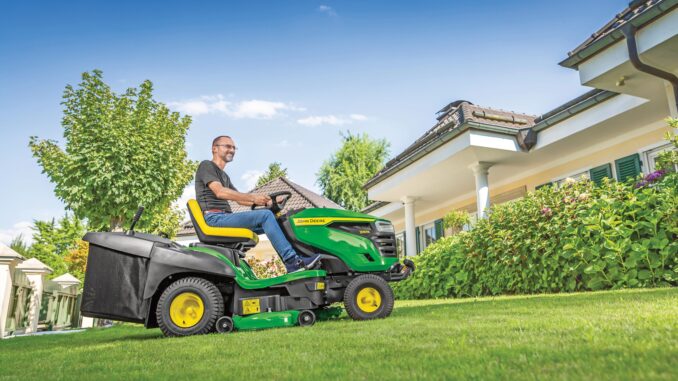
Lawn‑tractor attachments are absolutely not limited to mulchers and baggers. Modern lawn tractors can run a wide range of implements and tow‑behind gear that effectively turn them into light‑duty tractors, sprayers, snow‑removal rigs, and material‑handling machines.
Why attachments go far beyond mulching and bagging
A riding lawn tractor is essentially a small, stripped‑down tractor with a mower deck in the middle. That means it has several “power points” you can exploit:
-
Mid‑mounted PTO or deck‑driven systems.
-
A rear hitch and tow‑point.
-
A hydraulic system (on many garden tractors).
-
Engine power and ground speed.
Mulching and bagging are just two ways of managing cut grass; once you add a hitch, tyres, and a bit of hydraulics, the same machine can mow, till, pull, spread, spray, and even clear snow.
Deck‑mounted and deck‑related attachments
1. Mulching kits and mulch plugs
Mulching attachments are usually a set of baffles, plugs, and sometimes specialised blades that keep grass circulating under the deck so it’s finely chopped and dropped back into the turf.
-
Often reversible: you can switch between mulching and side‑discharge.
-
Main benefit: builds soil organic matter, reduces fertiliser needs, and cuts clippings management.
2. Side‑discharge systems
Side‑discharge chutes are another simple deck‑shroud option that lets clippings flow out one side instead of staying under the deck.
-
Useful when you want to let clippings fall but don’t need a bag.
-
Less convenient than a bagger on large lawns with lots of debris.
3. Bagger systems
Grass‑catchers (baggers) are probably the most common attachment after mulching. They use a chute and blower fan to suck clippings into one or more bags.
-
Best for: curb‑appeal lawns, leaf collection, and areas where clippings must be removed.
-
Downsides: slower mowing, frequent emptying, extra weight.
Even at the deck level, this is already three distinct “grass‑handling” options—not just mulching and bagging.
Front‑mounted implements
1. Front blades and dozer blades
Many garden tractors can be fitted with a front‑mounted blade or dozer blade on a simple three‑point‑style linkage or a proprietary frame.
-
Uses:
-
Pushing light snow and slush.
-
Moving loose soil, gravel, or mulch.
-
Leveling small pads or driveways.
-
-
Capacity: Typically 48–60 in wide, adjustable in angle and height.
-
Limitations: Not for heavy grading or rock‑loaded soil; strain on small front axles and tyres.
2. Front loaders (tractor‑style loaders)
On heavier garden tractors and compact tractors, a front‑loader bucket can be fitted to the front hitch.
-
Uses:
-
Loading mulch, compost, or firewood.
-
Moving small stones and turf offcuts.
-
Scooping up storm debris or light excavation.
-
-
With a loader, the lawn tractor effectively becomes a very basic loader/tractor hybrid.
3. Front‑mounted snow blowers and snow throwers
Some brands offer power‑take‑off or directly driven front snow blowers that bolt to garden tractors.
-
Driven by a mid‑PTO or belt system.
-
Much more aggressive than rear snow blades; better for repeated snowfalls or heavier accumulations.
Rear‑hitch and tow‑behind attachments
Once you add a hitch kit, the list of tow‑behind gear expands dramatically.
1. Utility carts and trailers
Tipping trailers and utility carts are among the most versatile lawn‑tractor attachments.
-
Capacity: Ranges from 200–700 kg or more, depending on size.
-
Typical tasks:
-
Hauling logs, mulch, topsoil, and rubble.
-
Carrying garden furniture, tools, or turf rolls.
-
Transporting plant pots or paving materials.
-
-
Many models have removable sides, tipping mechanisms, and heavy‑duty wheels.
2. Spreaders (fertiliser, seed, and de‑icer)
Tow‑behind spreaders turn the tractor into a fertilising and seeding platform.
-
Uses:
-
Spreading lawn fertiliser in spring and late summer.
-
Overseeding in autumn.
-
Applying rock salt or de‑icing material in winter.
-
-
Working widths: Often 8–12 ft, so they cover very large areas quickly.
-
Advantages: More even coverage than handheld spreaders; saves hours of walking.
3. Sprayers (lawn, paddock, and pasture)
Sprayers can be tow‑behind or sometimes mounted, driven by a 12 V pump or PTO.
-
Uses:
-
Broad‑spread herbicide or fertiliser application.
-
Fungicide or nutrient sprays across paddocks and large lawns.
-
-
Benefits: Faster than backpack sprayers; better coverage for big properties.
4. Aeration and dethatching equipment
Healthy lawns need aeration and thatch control, and several tow‑behind implements handle this.
-
Aerators:
-
Spike or plug aerators punch holes into compacted soil to allow air, water, and nutrients to reach roots.
-
Widths: 24–48 in.
-
-
Dethatchers:
-
Comb heavy thatch and dead grass to the surface for removal.
-
Benefit: Improved germination, better water penetration, and reduced fungal issues.
-
5. Lawn rollers and lawn smoothers
Rollers are used to smooth freshly seeded lawns or to press down sod and turf.
-
Some models are poly rollers that hold water for added weight.
-
Also useful for flattening minor lumps or restoring turf after animal activity.
6. Sweepers and groomers
Tow‑behind sweepers collect grass clippings, leaves, and debris from lawns and drive‑ways.
-
Wide brush drums and large hoppers (often 200–350 L) let them cover large areas quickly.
-
Especially useful after mulching or in autumn when leaf‑litter is heavy.
7. Flail mowers and brush cutters
Flail mowers are deck‑style attachments or tow‑behind units that use multiple rotating flails rather than a single blade.
-
Uses:
-
Rough grass, meadow strips, and paddocks.
-
Light brush, brambles, and small saplings.
-
-
Advantages:
-
Safer around stumps and rocks than a rotary deck.
-
Better at processing dense vegetation.
-
-
Disadvantages:
-
Heavier, more power‑hungry, and slower than a standard deck.
-
8. Tilling, box blades, and grading tools
On stronger garden tractors and compact tractors, attachments move firmly into “real tractor” territory.
-
Rotary tillers:
-
Break up soil for seedbeds, vegetable beds, and flower borders.
-
Often 36–48 in wide with PTO‑driven tines.
-
-
Box blades and box scrapers:
-
Level driveways, compact soil, and smooth riding‑area surfaces.
-
Can be adjusted for shallow grading or scarifying.
-
-
Scarifiers and slitters:
-
Make shallow cuts to thatch or thatch‑like ground cover to improve infiltration.
-
Winter and seasonal attachments
Lawn tractors can be true all‑year workhorses once you add seasonal gear.
1. Snow blades and snow ploughs
Rear‑mounted or front‑mounted snow blades are common on garden tractors.
-
Work best on light‑to‑moderate snow and smooth, graded surfaces.
-
Use with added rear weight or tyre ballast to prevent wheel spin.
2. Snow blowers and snow throwers
As mentioned above, front‑mounted snow blowers extend the machine’s capability into heavier snow.
-
Some models are multi‑stage and can throw snow 10–20 ft.
3. Chains and winter tyres
Snow chains and winter‑compound tyres dramatically improve traction on icy or snowy ground.
-
Specially designed chains for 16–20 in lawn‑tractor wheels are available.
-
Users report that proper chains let small tractors handle driveways that would otherwise be too slippery.
Accessories and “minor” attachments
Beyond major implements, there’s a long list of accessories that change how the tractor works
1. Hitch kits and drawbars
A simple hitch kit is often the first step to unlocking tow‑behind attachments.
-
Many manufacturers sell proprietary hitches that bolt to the rear frame.
-
Once installed, you can pull trailers, spreaders, aerators, and more.
2. Bumpers, brush guards, and protection
Front bumpers and brush guards protect the grille, radiator, and headlights where the tractor encounters shrubs, posts, or fences.
-
Particularly useful in semi‑overgrown areas or tight hedgerow edges.
3. Lighting and cab accessories
Many garden tractors can be fitted with:
-
Forward‑ and rear‑facing work lights.
-
Canopies or small cabs.
-
Covers, seat pads, and storage boxes.
-
On‑board chargers or tool racks.
4. Tire and traction accessories
In addition to chains, users often add:
-
Bar‑tread or turf‑tread tyres for different conditions.
-
Tyre fill (e.g., liquid ballast) to lower centre of gravity and improve grip.
How to choose attachments for your lawn tractor
Attaching the wrong implement can overload the tractor, strain the PTO, or cause instability, so selection matters.
1. Match attachment weight and width to the tractor
-
Rule of thumb: keep tow‑behind attachments well within the tractor’s towing capacity.
-
Over‑wide implements become hard to steer and may “catch” the edge of hazards.
2. Check PTO and hydraulic compatibility
-
Some aerators, tillers, and sprayers need a PTO or 12 V supply.
-
Scrollers and loaders may need a hydraulic system.
-
Always consult the manufacturer’s compatibility list.
3. Consider ground speed and engine load
-
Heavy tillers, flail mowers, or snow blowers need slower speeds and higher RPMs.
-
Light‑duty mowers may overheat or fall short on power if asked to drive a large rotary tiller at high speed.
4. Prioritise tasks on your property
Typical priority ladders:
-
First: Mulching kit, bagger, and hitch kit.
-
Second: Spreader, aerator/dethatcher, and utility cart.
-
Third: Front loader, snow blade, or flail mower (for larger properties).
Practical examples of “tractor‑style” setups
For a medium‑size UK‑style garden (1/2–1 acre) with some hard landscaping and light winter snow, a typical logical progression might be:
-
Spring/summer:
-
Mulching kit plus deck for regular mowing.
-
Hitch kit plus:
-
Spreader for fertiliser.
-
Towed aerator or dethatcher for lawn renovation.
-
Utility cart for turf rolls, mulch, or soil.
-
-
-
Autumn:
-
Bagger or sweeper for leaf collection.
-
Spreader again for autumn fertiliser or overseeding.
-
-
Winter:
-
Rear snow blade and tyre chains for driveway clearing.
-
Optional: front snow blower on heavier garden tractors.
-
On larger paddocks or smallholdings, adding a front loader, rotary tiller, and flail mower can turn a lawn tractor into a true multi‑task machine, even if its power is modest compared with a full‑size tractor.
Limitations and safety considerations
Despite the variety of attachments, there are inherent limits:
-
Power and weight limits: Small lawn tractors cannot safely pull extremely heavy trailers or operate large box blades at high speeds.
-
Stability: Towing wide or tall implements on slopes increases roll‑over risk.
-
Ground conditions: Flail mowers and tillers can churn soft ground into mud if used too early.
Always:
-
Fit the correct hitch and pin‑lock hardware.
-
Observe speed‑reduction guidelines for each attachment.
-
Check tyres, brakes, and hitch points regularly.
Conclusion and follow‑up question
Lawn‑tractor attachments go far beyond simple mulcher and bagger options; they include a wide range of front‑mounted, deck‑mounted, and tow‑behind implements that transform a lawn machine into a light‑duty utility tractor.
From spreaders and aerators to front loaders, snow blades, and flail mowers, the ecosystem is substantial—especially on garden tractors with proper hitches and PTOs.
For a paddock or smallholding
Below is a focused, practical list of attachments and accessories that make sense for paddocks and smallholdings, with a rough hierarchy: from “must‑have” basics to “nice‑to‑have” add‑ons.
Core attachments for paddocks and smallholdings
1. Front‑mounted or tow‑behind flail mower
Flail mowers are usually the first leap beyond a standard rotary deck for rough grass and paddocks.
-
Why they matter:
-
Handle long, uneven grass, thistles, brambles, and light brush far better than a rotary deck.
-
Less likely to throw stones and debris than a rotary mower.
-
-
Typical set‑up:
-
Rear‑mounted PTO flail mower 4–6 ft wide for a 20–35 hp tractor.
-
Some compact tractors can run smaller front‑mounted flail mowers if they have a front PTO and 3‑point.
-
-
Best uses:
-
Overgrown paddocks, bridleways, and rough grazing strips.
-
Laying edges around fences and ditches.
-
2. Chain harrow / drag harrow
Chain harrows are basic but incredibly useful for paddock maintenance.
-
Functions:
-
Pulls thatch and dead grass to the surface to be removed or broken down.
-
Breaks up small horse droppings and manure “caps” to reduce worming issues.
-
Levels minor divots and hoof marks in softer ground.
-
-
Practicalities:
-
Light‑weight, easy to tow, and gentle on the tractor.
-
Often folded or compact for storage.
-
3. Rotovator / rotary tiller
If you have any form of growing area (vegetable beds, small market garden, or pasture renovation), a rotovator is a game‑changer.
-
Typical sizes for smallholdings:
-
4–5 ft wide tillers that match sub‑compact to compact tractor power.
-
-
Best used for:
-
Breaking up compacted soil and turning in old pasture.
-
Preparing seedbeds for crops or oversown pasture.
-
-
Consideration:
-
Avoid over‑tiling on very wet clay; it can create a concrete‑like crust later.
-
4. Box blade (grader / box blade)
A box blade turns your tractor into a light land‑leveling and track‑maintenance tool.
-
Key jobs:
-
Grading paddock tracks, farm laneways, and gateways.
-
Spreading and smoothing topsoil or gravel.
-
Leveling small areas for shelters or sheds.
-
-
Typical features:
-
Front blade, rear blade, and side boards that can be raised or angled.
-
Many models have a small ripper bar on the front for light soil‑breaking.
-
5. Utility trailer or tipping cart
A heavy‑duty trailer or tipping cart is often the single most useful attachment for a smallholding.
-
Uses:
-
Hauling fertiliser, lime, or soil amendments across paddocks.
-
Moving manure, bedding, compost, hay bales, or fencing materials.
-
Carrying posts, rolls of wire, and tools to remote gateways.
-
-
Practical points:
-
At least 1 tonne capacity, tandem wheels on rough ground.
-
Tipping or drop‑side versions save enormous amounts of manual labour.
-
Fencing, digging, and infrastructure attachments
6. Post‑hole borer / auger
Erecting or maintaining fencing is much easier with a powered auger.
-
Typical implementation:
-
3‑point‑mounted PTO auger or 3‑point‑mounted hydraulic auger.
-
6–12 in diameter, 3–4 ft depth suitable for most post‑hole work.
-
-
Benefits:
-
Drives holes through compacted soil far faster than a manual post‑hole digger.
-
Can also be used for planting trees or installing water pipes/cable in some setups.
-
7. Ripper and pipe‑laying implement
For smallholdings that need water or electric to new paddocks, a ripper/pipe‑layer is a specialist but valuable tool.
-
Function:
-
Creates a shallow trench for plastic pipe or armoured cable.
-
Leaves minimal surface damage compared with a full digger.
-
-
Use‑case fit:
-
Connecting new fields or water troughs.
-
Ideal if you already own a compact tractor but don’t want to hire heavy machinery each time.
-
8. Backhoe (if the tractor supports it)
On many compact tractors, a backhoe attachment can be added to the rear.
-
Jobs it unlocks:
-
Digging trenches for drainage or septic lines.
-
Installing post holes in very hard ground.
-
Removing small stumps and roots.
-
-
Limitation:
-
Adds weight and cost; makes sense only if you regularly dig.
-
Pasture and grassland‑specific tools
9. Power harrow / cultivator
Power harrows are more aggressive than chain harrows and are aimed at improving soil structure and pasture quality.
-
How they work:
-
Multiple rotating tines break up the surface and incorporate organic matter.
-
-
Best for:
-
Over‑seeding poor paddocks.
-
Light scarification and mixing in fertiliser or lime.
-
-
Tractor note:
-
Needs enough PTO power and a robust 3‑point linkage.
-
10. Overseeder / slit‑seeder
If you’re improving pasture rather than just mowing it, overseeding is critical.
-
Tow‑behind slit‑seeder:
-
Cuts shallow slits into the soil and drops seed into the slots.
-
Often combined with a cultipacker or roller behind it.
-
-
Benefits:
-
Dramatically improves grass‑sward density without full re‑seeding.
-
Works well after a light power‑harrow pass.
-
11. Land roller / turf roller
Rollers are useful for compacting newly seeded or renovated paddocks and for flattening gateways.
-
Typical design:
-
3–5 ft wide, water‑fillable drum or solid steel.
-
-
Key uses:
-
Seating grass seed into soil.
-
Flattening hoof‑punched gateways and track intersections.
-
Utility and transport attachments
12. Front loader bucket
If your tractor has a front‑loader fitted, it becomes a true multi‑tool for smallholdings.
-
Typical tasks:
-
Loading and moving manure heaps.
-
Handling hay bales, straw, or pallets.
-
Moving soil or bought‑in topsoil.
-
-
Accessory options:
-
Pallet forks, bale spears, and grab buckets can be added to the same loader frame.
-
13. Baler or bale spear (on larger compact tractors)
On slightly larger compact tractors, you can add:
-
A bale spear to lift and move round or square bales.
-
Or, with the right setup, a small baler if you’re producing haylage or hay yourself.
Seasonal and “light” attachments
14. Spreaders for fertiliser, lime, and de‑icer
Tow‑behind spreaders are essential if you’re managing several paddocks.
-
Types:
-
Fertiliser/lime spreaders (often 8–12 ft working width).
-
Salt/rock‑salt spreaders for farm tracks and gateways in winter.
-
-
Benefits:
-
More even coverage; much less time walking than a handheld spreader.
-
15. Sprayer for pasture and paddock treatments
A PTO or 12 V‑powered sprayer helps with weed control and pasture management.
-
Typical units:
-
100–200 L tanks, 8–12 ft boom.
-
-
Uses:
-
Broad‑leaf weed control in paddocks.
-
Applying liquid fertiliser or foliar treatments.
-
16. Snow blade and chains
Even for paddocks, winter snow and ice can be an issue.
-
Snow blade:
-
Rear‑mounted blade for clearing gateways and farm tracks.
-
-
Snow chains / winter tyres:
-
Improve traction on icy laneways and slopes.
-
Prioritisation ladder for a paddock/smallholding
Given a compact tractor suitable for paddocks, a logical order of attachment acquisition might look like this:
-
Essential basics:
-
Flail mower or heavy‑duty finish mower for paddocks.
-
Chain harrow for regular paddock maintenance.
-
Utility trailer or tipping cart.
-
-
Soil and pasture improvement:
-
Rotovator for vegetable beds or pasture renovation.
-
Power harrow and overseeder for grassland improvement.
-
Box blade for track and gateway grading.
-
-
Fencing and infrastructure:
-
Post‑hole auger.
-
Ripper/pipe layer if you regularly extend utilities.
-
-
Optional but powerful:
-
Front loader.
-
Backhoe (if you dig regularly).
-
Baler‑related attachments if you make or move hay yourself.
-
I