
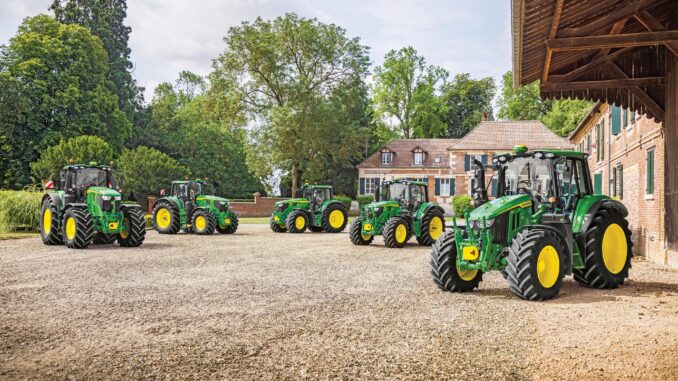
The John Deere 4310 is a compact utility tractor built for property owners, acreage maintenance, loader work, mowing, light ground-engaging jobs, and year-round attachment use. It sits in Deere’s 4000 Ten compact utility tractor range alongside the 4210 and 4410, giving homeowners and small-acreage users a step up from lawn and garden tractors into a more capable diesel machine with hydraulic, PTO, and 3-point hitch capability.
This guide covers the problems owners most commonly see on a John Deere 4310, how to troubleshoot them in a logical order, what maintenance prevents repeat failures, and which repairs are realistic DIY jobs versus dealer-level work. It is written for USA and Canada owners who are comfortable with regular servicing and basic repair work but need clear limits on when serial-number lookup, hydraulic diagnosis, or drivetrain work is better left to an experienced Deere technician.
John Deere 4310 overview
The John Deere 4310 belongs to Deere’s compact utility tractor lineup rather than the lighter residential mower range, so owners typically use it for finish mowing, loader work, snow removal, driveway maintenance, material handling, and light field or landscaping tasks. That means troubleshooting often involves several systems working together rather than just an engine and deck.
On a John Deere 4310, the main systems owners need to understand are:
-
Engine and fuel system: diesel engine, fuel filter, air cleaner, sediment bowl, hoses, and cooling system.
-
Hydraulic and transmission system: hydrostatic or gear-drive related hydraulic filtration, transmission/hydraulic oil service points, suction screen, and related filters.
-
Electrical system: battery, charging circuit, lights, safety systems, switches, and wiring.
-
PTO, hitch, and implement systems: rear PTO operation, rockshaft and 3-point hitch components, and any mower, loader, or rear attachment driven by the tractor.
Several common service parts for the John Deere 4310 are widely referenced in Deere-related parts guides, including engine oil filter M806419, engine primary air filter M131802, engine secondary air filter M131803, engine fuel filter M801101, and transmission/hydraulic oil filters LVA10419 and LVA11522 for hydro models. Deere also lists a Filter Pak, LVA21194, as a bundled service option for routine maintenance on this model.
John Deere 4310 troubleshooting approach
The best way to diagnose a John Deere 4310 is to start with the symptom the owner actually sees, then narrow it down by system. For example, “cranks but will not start,” “loses power under load,” “hydraulics feel weak,” and “runs hot when mowing” each point to a different path even though some causes overlap.
The main symptom groups on a John Deere 4310 are:
-
Starting issues.
-
Running or power-loss issues.
-
PTO, mower, or attachment performance problems.
-
Vibration and unusual noise.
-
Overheating and fluid leaks.
-
Transmission, hydraulic, or drive problems.
-
Electrical and safety-system faults.
Emergency John Deere 4310 repair needs
Some problems on a John Deere 4310 need immediate attention because they can create a safety hazard or quickly damage expensive components such as the engine, hydraulics, driveline, or PTO system. If the machine has low oil pressure, severe overheating, major hydraulic leakage, charging failure, or loud drivetrain noise, shut it down before continuing diagnosis.
4.1 John Deere 4310 starting issues
A no-start or hard-start condition matters because repeated cranking can flatten the battery, overwork the starter, and hide the real issue. Diesel tractors also become harder to diagnose when owners keep cranking without checking fuel delivery, battery condition, and safety interlocks first.
Common causes:
-
Weak or discharged battery.
-
Corroded battery terminals or poor ground.
-
Dirty fuel filter or contaminated fuel.
-
Air in the fuel system.
-
Safety interlock issue.
-
Fault in starter circuit or key switch.
Basic checks:
-
Confirm the battery is charged and the terminals are clean and tight.
-
Check fuel level and inspect the sediment bowl and fuel filter condition.
-
Make sure PTO, range, and operator safety conditions are in the correct start position.
-
If the engine cranks but does not fire, inspect fuel supply and filter condition before replacing electrical parts.
4.2 John Deere 4310 running and power-loss problems
If the John Deere 4310 starts but smokes, surges, bogs down, or feels weak under PTO or loader load, the issue usually sits in the fuel, air, cooling, or service-related side of the tractor. Continued use in this condition can lead to overheating, hard starting, and premature wear.
Common causes:
-
Restricted air cleaner.
-
Fuel filter restriction.
-
Dirty radiator screen or cooling fins.
-
Old fuel or water contamination.
-
Incorrect engine oil or overdue service.
-
Attachment load beyond normal operating range.
Basic checks:
-
Inspect and service the air cleaner if restriction is suspected.
-
Check radiator screen, grille, and cooling fins for debris.
-
Replace the fuel filter if service history is unknown or flow looks poor.
-
Test the tractor with the implement disconnected or unloaded to separate tractor problems from attachment drag.
4.3 Vibration and noise on a John Deere 4310
Unusual vibration or noise should not be ignored because compact tractors transmit faults quickly through the driveline, PTO, tires, loader frame, and mounted implements. A small rattle can turn into a damaged coupling, bearing, or driveline component if the machine stays in use.
Common causes:
-
Loose wheel hardware or attachment hardware.
-
Bent or damaged implement driveline parts.
-
PTO shaft or coupling wear.
-
Worn belt or pulley on mounted equipment.
-
Fan belt issues.
-
Loader, hitch, or frame fasteners loosening over time.
Basic checks:
-
Stop the machine and isolate whether the noise happens at idle, while moving, or only with PTO or hydraulics engaged.
-
Inspect visible fasteners, wheel areas, loader mounts, and attached equipment.
-
Check the alternator belt and front engine accessory area for squeal or looseness.
-
Do not keep running the tractor if the sound is heavy, metallic, or tied to hydraulic or transmission load.
4.4 John Deere 4310 overheating and leaks
Overheating and fluid leaks are urgent because the 4310 depends on clean airflow, correct coolant condition, and stable fluid levels in the engine, transmission, and front axle systems. A small leak often causes a much larger failure if it is left to spread dirt, lower fluid level, or contaminate belts and wiring.
Common causes:
-
Plugged grille, side screens, or radiator screen.
-
Dirty cooling fins.
-
Low coolant level.
-
Damaged hoses or loose clamps.
-
Engine oil leak around filter or drain area.
-
Hydraulic seepage from hoses, fittings, or filters.
Basic checks:
-
Clean the grille, side screens, and radiator cooling screen first.
-
Inspect radiator hoses and clamps for wetness, cracks, or swelling.
-
Check engine oil, coolant, and hydraulic/transmission levels before restarting.
-
If fluid is spraying or dripping rapidly, park the tractor and repair the leak before further use.
4.5 John Deere 4310 transmission, hydraulic, and drive problems
On the John Deere 4310, poor drive response, weak hydraulics, jerky travel, or hitch and loader performance complaints often trace back to filtration, fluid condition, or internal hydraulic restrictions. These systems are expensive to repair, so early diagnosis matters.
Common causes:
-
Overdue transmission/hydraulic filter service.
-
Dirty suction screen.
-
Low hydraulic/transmission oil.
-
Contaminated fluid.
-
Front axle oil neglect on MFWD units.
-
Internal hydrostatic or hydraulic wear.
Basic checks:
-
Verify the correct fluid level before assuming a mechanical failure.
-
Review service history for the transmission/hydraulic oil filters and suction-side service.
-
Check front axle oil level on MFWD tractors.
-
If symptoms remain after basic service, move to dealer-level hydraulic pressure and flow diagnosis.
4.6 John Deere 4310 electrical problems
Electrical problems on a John Deere 4310 often show up as intermittent starting, dead battery complaints, dim lights, or safety-system confusion. Because compact tractors often live outdoors or in dusty barns, simple corrosion is common and should be checked before parts-swapping.
Common causes:
-
Weak battery.
-
Dirty cable connections.
-
Charging-system fault.
-
Blown fuse.
-
Ignition switch issue.
-
Safety switch or wiring fault.
Basic checks:
-
Clean and tighten both battery terminals and grounds.
-
Inspect fuses and obvious harness damage.
-
Confirm whether the battery is being recharged after use, which helps separate battery failure from alternator problems.
-
If the fault is intermittent and wiring-related, dealer diagnosis is often faster than replacing switches one by one.
DIY or dealer for John Deere 4310 repairs
The normal line on a John Deere 4310 is this: routine service, filters, belts, visible leak repairs, and straightforward electrical cleanup are good owner jobs, but internal hydraulic work, transmission diagnosis, injector work, and anything requiring Deere diagnostic procedures quickly move into advanced territory. Because this is a compact utility tractor rather than a simple lawn tractor, the cost of a wrong repair is usually much higher.
Good DIY jobs
-
Engine oil and filter changes.
-
Air filter inspection and replacement.
-
Fuel filter and sediment bowl service.
-
Cleaning radiator screens, fins, and grille areas.
-
Battery service and terminal cleanup.
-
Front axle oil checks and other routine fluid-level checks.
Advanced DIY or dealer jobs
-
Transmission/hydraulic filter and suction-screen service if you are unfamiliar with fluid-loss control and contamination prevention.
-
Hydraulic leak tracing beyond a simple hose or fitting.
-
Charging-system diagnosis with repeated battery drain.
-
PTO clutch, hydrostatic, steering, or internal hydraulic repairs.
-
Injector, pump, or deeper diesel fuel-system work.
Skill level guide
-
Beginner: Oil, filters, battery checks, cleaning screens, visual inspections.
-
Intermediate: Fuel filter replacement, belt inspection, front axle service, basic leak repair, safer switch testing.
-
Advanced: Hydraulic filtration service, electrical tracing, driveline diagnosis, serial-number-sensitive parts replacement, and service-manual-based repairs.
John Deere 4310 parts, OEM numbers, and ordering info
Before ordering John Deere 4310 parts, gather the full model name, the tractor Product Identification Number, the engine model and serial number, and details about whether the tractor is hydrostatic and which attachment or mower setup is installed. That matters because Deere’s own manual groups the 4210, 4310, and 4410 together, while some service parts vary by configuration.
OEM parts are the safer choice for belts, hydraulic filters, safety-related switches, and fit-sensitive items because Deere’s own documentation and parts ecosystem are built around exact configuration matching. Aftermarket parts can be reasonable for some filters, batteries, and general consumables, but only when the cross-reference is exact and the seller clearly lists John Deere 4310 compatibility.
John Deere 4310 manuals and parts diagrams
The best starting point for John Deere 4310 information is Deere’s operator manual page for the 4210/4310/4410 family, which is useful for service intervals, lubrication points, operating checks, and routine servicing procedures. Deere’s Technical Information Store is the right place for official publications, while Deere parts and reputable Deere-focused retailers help confirm current part numbers and diagrams.
Useful sources:
-
John Deere operator manual view — best for routine operation, maintenance intervals, and service procedures.
-
John Deere Technical Information Store — best for locating official publications and deeper technical material.
-
John Deere Shop parts page for M806419 — useful for confirming live OEM part listings and supersession status on common service items.
-
Green Farm Parts 4310 maintenance page — useful as a quick service-parts checklist for recurring maintenance items.
-
Jacks Small Engines 4310 parts diagrams — useful for exploded views and diagram browsing.
How to find John Deere 4310 serial and engine numbers
These numbers matter because compact tractors often changed by configuration, transmission type, and attachment setup, and the Deere operator manual identifies the 4310 by PIN range beginning at 130001. Ordering by “4310” alone can be enough for basic filters, but not always enough for complex driveline, electrical, or hydraulic parts.
Use this process:
-
Locate the tractor Product Identification Number plate on the tractor frame or ID area referenced in your machine documentation, and confirm it falls within the 4310 PIN range.
-
Write down the full PIN exactly as stamped, not just the model number.
-
Record the engine model and serial from the engine tag before ordering fuel-system or engine-specific parts.
-
Note whether the tractor is MFWD and whether it is hydrostatic if the part relates to drive or hydraulic filtration.
-
Record mower deck, loader, or attachment model numbers separately because implement parts do not cross by tractor model alone.
Buying John Deere 4310 parts online and in stores
For a John Deere 4310, the smartest buying strategy is to confirm the OEM number first, then compare pricing and availability. That reduces the risk of ordering a filter, hydraulic part, or attachment component that physically fits a related model but is wrong for your configuration.
-
Online: Best for part-number checking, diagram matching, and comparing OEM versus aftermarket listings on sites such as Deere Shop, Green Farm Parts, and Jacks Small Engines.
-
Dealer counter: Best for serial-specific items, hydraulic parts, safety switches, and anything with fit uncertainty.
-
Retail stores: Fine for oil, batteries, and some cross-referenced consumables, but only if the packaging clearly matches the Deere OEM number or the John Deere 4310 application.
John Deere 4310 fitting guide for common service parts
The John Deere 4310 is very owner-serviceable on the routine side, and a few jobs prevent a large share of reliability problems. Always park safely, lower implements, shut the engine off, remove the key, and let hot parts cool before servicing.
Change the John Deere 4310 engine oil and filter
This service protects the engine and addresses one of the most important recurring maintenance items on the Deere schedule.
-
Warm the tractor slightly if preferred, park on level ground, shut it off, and access the engine service area.
-
Check the area around the fill cap and filter, and clean away dust before opening anything.
-
Drain the engine oil, remove the old oil filter, and install the new M806419 filter after confirming the gasket seats correctly.
-
Refill with the correct oil grade for your climate and verify the level with the dipstick.
-
Start the engine briefly, shut it down, and recheck for leaks and correct oil level.
Replace the John Deere 4310 air filters
Air restriction causes power loss, smoke, and poor cold-weather starting on diesel tractors, so filter condition matters.
-
Open the air cleaner housing and inspect both the primary and secondary elements.
-
Replace the primary M131802 filter if dirty, damaged, or heavily restricted.
-
Replace the secondary M131803 element if contamination has reached it or if the manual/service condition calls for it.
-
Inspect intake hoses and clamps before reassembly so dirt is not pulled in downstream of the filters.
-
Reset any restriction-related checks and confirm the housing seals properly.
Service the John Deere 4310 fuel filter and sediment bowl
This job helps with hard starting, uneven running, and fuel starvation symptoms.
-
Shut the tractor down and clean around the fuel filter and sediment bowl area first.
-
Drain or remove contaminated fuel and sediment as needed.
-
Replace the M801101 fuel filter if service interval or contamination condition calls for it.
-
Reassemble carefully, making sure seals seat correctly and no dirt enters the system.
-
Restart and check for leaks, then monitor whether hard-starting or power-loss symptoms improve.
Replace John Deere 4310 transmission/hydraulic filters
This is a high-value service job because poor hydraulic response and drive complaints are often tied to overdue filter service on hydro models.
-
Confirm the tractor configuration and obtain the correct filter part number, such as LVA10419 or LVA11522 where applicable.
-
Park safely, lower implements, and prepare for fluid control so contamination does not enter the hydraulic system.
-
Remove the old filter or filters and inspect the area for metal debris, damaged seals, or dirty mounting surfaces.
-
Install the new filter, service the suction-side components if required by the schedule, and refill or top up the correct fluid as specified.
-
Run the tractor, cycle hydraulics carefully, and recheck fluid level and leaks before returning it to work.
Maintenance to prevent John Deere 4310 problems
Regular maintenance prevents most John Deere 4310 complaints long before they become repair jobs. The Deere schedule especially emphasizes fluid service, air and fuel system care, cooling-system cleanliness, and hydraulic/transmission maintenance.
Focus areas:
-
Starting reliability: Keep the battery charged, terminals clean, and fuel system serviced.
-
Engine performance: Replace filters on time and keep air intake and cooling areas clean.
-
Overheating prevention: Clean grille screens, radiator screen, and cooling fins regularly.
-
Hydraulic and drive performance: Stay on top of hydro filter intervals and fluid checks.
-
Electrical reliability: Clean corrosion early and fix charging issues before they create repeated no-start complaints.
John Deere 4310 maintenance schedule
Deere’s operator manual for the 4210/4310/4410 family lists service intervals that include break-in checks, daily checks, 50-hour, 200-hour, 400-hour, 500-hour, 500-hour-or-yearly, 2000-hour/two-year, and 5000-hour/five-year items. The exact list can vary by configuration and operating conditions, so owners should always verify the manual against their tractor’s setup.
Daily or before each use
-
Test safety systems.
-
Check tire pressure.
-
Check fuel level.
-
Check engine oil level.
-
Inspect fluid levels and look for obvious leaks or loose parts.
After first 50 hours
-
Replace engine oil filter after initial 50 hours.
-
Replace transmission/hydraulic oil filters after initial 50 hours on hydro models.
-
Perform break-in inspections and fluid-related checks listed in the operator manual.
Every 50 hours
-
Lubricate grease fittings and key chassis points.
-
Inspect cooling, belt, and hose condition.
-
Review battery and general machine condition.
Every 200 hours
-
Replace engine oil filter at the regular 200-hour interval.
-
Replace transmission/hydraulic oil filters on hydro models.
-
Inspect or service transmission/hydraulic components as outlined in the manual.
Every 400 hours
-
Change transmission oil, oil filter, suction screen, and suction-side filter where the service schedule calls for it.
-
Inspect associated hydraulic service points and clean the rockshaft control valve filter as needed.
Every 500 hours or yearly
-
Replace the engine fuel filter.
-
Review cooling system, fuel system, and related hoses and clamps.
-
Perform annual service if hour accumulation is low but the tractor sees seasonal use.
Seasonal John Deere 4310 checklist
-
Spring: Change overdue filters, inspect battery condition, clean cooling system screens, and check all fluids before mowing or loader season.
-
Mid-season: Clean radiator and screen areas more often in dusty conditions, inspect hoses and belts, and check for fresh leaks.
-
Fall/winter prep: Service fuel filtration, confirm battery and charging health, inspect coolant condition, and address hydraulic seepage before cold-weather work.
Repair, upgrade, or replace a John Deere 4310?
For most owners, a John Deere 4310 is worth repairing when the tractor is structurally sound, starts and runs well after proper service, and the issues are limited to wear parts, filtration, hoses, switches, or manageable hydraulic leaks. Replacement becomes more realistic when the tractor has multiple major system failures at once or when the machine’s condition no longer matches the cost of the repairs needed.
Repair if…
-
The problem is limited to filters, hoses, battery, charging cleanup, belts, seals, or routine hydraulic service.
-
The tractor has good compression, good hydraulic function overall, and no major drivetrain noise.
-
Service history is simply overdue rather than catastrophic.
Upgrade if…
-
You need more loader capacity, hydraulic flow, attachment compatibility, or operator comfort than the 4310 was designed to provide.
-
You are stacking repeated attachment changes and want a machine with newer convenience features or stronger support for current implements.
Replace if…
-
The tractor has serious engine, hydrostatic, and hydraulic issues together.
-
Corrosion, neglect, wiring damage, and fluid contamination are all present at the same time.
-
The repair bill approaches the value of a better-condition compact tractor.
John Deere 4310 troubleshooting FAQ
1. Why will my John Deere 4310 not start?
The first checks are battery condition, cable corrosion, safety interlocks, and fuel supply. On a diesel compact tractor, a weak battery may crank slowly enough to prevent clean starting, while a dirty fuel filter or air in the fuel system can cause a crank-no-start condition. Start with the simplest visible issues before assuming the starter or injection system has failed.
2. Why does my John Deere 4310 crank but not fire?
That usually points more toward fuel delivery, air in the fuel side, or weak cranking speed than a major internal engine failure. Inspect the fuel filter, sediment bowl, battery, and cable condition first. If service history is unknown, a routine filter service is often a better first move than replacing electrical parts.
3. Why is my John Deere 4310 hard to start when cold?
Cold starting gets harder when the battery is marginal, the fuel filter is partly restricted, or routine maintenance has been delayed. A tractor that lives outside may also have more corrosion at terminals and grounds. Make sure the battery and fuel system are right before chasing expensive diesel components.
4. Why does my John Deere 4310 lose power under load?
Power loss under load commonly comes from restricted air flow, fuel starvation, cooling-system dirt buildup, or simple overdue service. A clogged radiator screen can also make the tractor feel weak because rising temperature reduces performance. Check the easy service items before blaming the injection system.
5. Why is my John Deere 4310 blowing smoke?
Smoke often shows that the engine is not getting the right air-fuel balance or is being overworked. Dirty air filters, contaminated fuel, or an overloaded implement are common starting points. The color and timing of the smoke matter, but basic service inspection should still come first.
6. Why does my John Deere 4310 run rough at idle?
Rough idle can come from dirty fuel, filter restriction, air in the fuel system, or maintenance neglect. It can also appear when the tractor has been sitting and fuel quality has gone off. Begin with fuel and air service checks before moving deeper.
7. Why does my John Deere 4310 stall after starting?
A tractor that starts and then stalls may be drawing fuel poorly through a dirty filter or contaminated sediment bowl. It can also have an intermittent electrical or safety-related issue. Watch whether it dies under load, at idle, or only when moved, because that helps narrow the system involved.
8. Why does my John Deere 4310 battery keep going flat?
Repeated flat-battery complaints usually come from a weak battery, charging fault, corrosion, or poor grounds rather than a single bad start. Clean the connections first and confirm the charging system is actually restoring the battery after use. If not, the alternator or related wiring needs proper testing.
9. Why are my John Deere 4310 lights dim or intermittent?
Dim or flickering lights usually point to low battery voltage, charging problems, dirty terminals, or grounding issues. On an older compact tractor, corrosion is often the simplest explanation. Fix the basics before replacing switches or light assemblies.
10. Why does my John Deere 4310 overheat when mowing or doing loader work?
The Deere maintenance schedule specifically highlights cleaning the grille, side screens, radiator cooling screen, and cooling fins, because airflow restriction is a common cause of heat buildup. If the tractor overheats under work, check those areas before assuming the cooling system has a major mechanical fault. Also inspect coolant level and hose condition.
11. Why is coolant leaking on my John Deere 4310?
Coolant leaks usually come from hoses, clamps, radiator areas, or related cooling-system service points. Even a small leak matters because low coolant level can quickly lead to overheating. Fix the leak before putting the tractor back under load.
12. Why is my John Deere 4310 leaking engine oil?
Common leak points include the filter area, drain area, and aging seals or hoses near the engine compartment. Oil leaks are not just messy; they can lower lubrication protection and attract dirt onto hot components. Clean the area first so you can identify the true source before replacing parts.
13. Why is my John Deere 4310 leaking hydraulic fluid?
Hydraulic leaks can come from hoses, fittings, filters, or other pressurized components. Because the 4310’s hydraulics affect steering, hitch, loader, and drive-related performance, leaks should be corrected early. Large or recurring leaks are a strong sign to move beyond basic DIY diagnosis.
14. Why does my John Deere 4310 hydrostatic drive feel weak?
Weak hydro response often points to low fluid, overdue hydraulic filter service, contamination, or internal hydraulic wear. Since Deere identifies regular hydraulic filter intervals for hydro models, ignored service is a common starting point. Check fluid and filters before assuming a major transmission failure.
15. Why does my John Deere 4310 move jerkily?
Jerky movement can be related to hydraulic condition, fluid level, filter restriction, or driveline issues. The symptom matters most when it appears only cold, only under load, or all the time. Start with service history and fluid checks, then escalate if the problem remains.
16. Why is the 3-point hitch on my John Deere 4310 slow or weak?
A slow or weak hitch usually ties back to hydraulic fluid condition, filter restriction, or internal hydraulic problems. Deere’s maintenance information includes transmission and hydraulic service points because these systems share health across several tractor functions. If loader and steering are weak too, think hydraulic system, not hitch linkage alone.
17. Why is the loader on my John Deere 4310 slow?
Slow loader response is often another version of the same hydraulic-service story: low fluid, restricted filters, dirty suction-side components, or internal wear. If the problem affects every hydraulic function, do not focus only on the loader valves or cylinders. Start with basic service checks first.
18. Why does my John Deere 4310 make a whining hydraulic noise?
Hydraulic whining can be normal to a point, but a sudden increase in noise often suggests low fluid, restriction, or air entry. If the sound changed after neglected service or a leak, stop and inspect fluid condition and level. Persistent whining under light load can justify dealer testing.
19. Why is my John Deere 4310 PTO not working properly?
PTO complaints can be caused by engagement issues, driveline load, attachment problems, or deeper clutch or hydraulic faults depending on configuration. First separate tractor problems from implement problems by checking whether the issue appears with multiple attachments. If the PTO mechanism itself is inconsistent, dealer diagnosis is usually more efficient.
20. Why does my John Deere 4310 vibrate at higher rpm?
Vibration at engine speed can come from belt issues, loose hardware, driveline imbalance, or attached equipment problems. The first step is to identify whether the vibration appears with the tractor standing still, moving, or with PTO engaged. That quickly narrows the suspect area.
21. Why is there a squealing belt noise on my John Deere 4310?
Deere’s service information includes alternator belt inspection, so belt condition and tension are valid first checks. Squeal often happens from wear, contamination, or improper tension rather than from a failed accessory itself. Inspect before replacing unrelated charging parts.
22. Why does my John Deere 4310 have a rattling noise underneath?
A rattle can come from loose hardware, shield movement, linkage play, driveline looseness, or attachment mounting problems. Because tractors transmit sound through the frame, the source is not always where the noise seems loudest. Stop and inspect before continued use turns a loose part into a broken one.
23. Why does my John Deere 4310 feel weak in MFWD?
If the tractor is MFWD, weak front-drive performance may involve front axle oil neglect, driveline issues, or a broader traction or transmission problem. Check front axle oil level and visible driveline condition first. If the issue is internal, that is usually dealer work.
24. What engine oil filter does a John Deere 4310 use?
Deere-related maintenance sources list M806419 as the engine oil filter for the John Deere 4310. It is one of the most commonly purchased service parts for this tractor. Always verify against your tractor’s serial and current parts listing before ordering.
25. What fuel filter does a John Deere 4310 use?
The commonly referenced engine fuel filter for the John Deere 4310 is M801101. Deere-related maintenance guidance lists it with a 500-hour replacement interval. Confirm application before purchase if your tractor has any configuration uncertainty.
26. What air filters does a John Deere 4310 use?
Maintenance listings for the John Deere 4310 identify primary air filter M131802 and secondary air filter M131803. These are replaced as required rather than on a simple fixed-hour rule in the quick maintenance listing. In dusty work, inspection frequency matters more than waiting too long.
27. What hydraulic filters does a John Deere 4310 use?
For hydro models, Deere-related maintenance guides list transmission or hydraulic oil filters LVA10419 and LVA11522. Those filters are shown as initial 50-hour items and then 200-hour service items. Confirm the transmission type before ordering because this is exactly the sort of part that can be configuration-sensitive.
28. How often should I service a John Deere 4310?
Deere’s published operator information shows daily checks, break-in service, 50-hour, 200-hour, 400-hour, 500-hour, yearly, and longer-term intervals depending on the item. The right answer depends on hours, conditions, and whether the tractor works in heat, dust, or heavy attachment use. Low-hour seasonal use still benefits from annual inspection and fluid review.
29. Can I use aftermarket parts on a John Deere 4310?
Yes, but use caution. Aftermarket can be acceptable for some filters, blades on attachments, and batteries when the cross-reference is exact, while OEM remains the safer route for hydraulic filters, fit-sensitive parts, and safety-related components. Cheap mismatched parts often create more diagnosis time than they save.
30. Is a John Deere 4310 a good DIY tractor to maintain?
Yes, within reason. The 4310 is owner-serviceable for filters, oil, cooling-system cleaning, battery care, and many routine inspections, but it is still a compact utility tractor with more hydraulic and drivetrain complexity than a lawn tractor. That makes it a good DIY machine for maintenance, not for guessing at major hydro or diesel faults.
31. When should I take my John Deere 4310 to a dealer?
Take it in when the problem involves internal hydraulic diagnosis, persistent transmission weakness, injector or fuel-pump concerns, repeated electrical faults that survive basic cleanup, or any symptom that risks expensive secondary damage. Dealer support also makes sense when the part depends heavily on serial number or configuration matching. That is usually cheaper than replacing the wrong parts repeatedly.
32. Is it worth repairing an older John Deere 4310?
In many cases, yes, because routine service items for the 4310 are still clearly supported in Deere-related parts channels, including oil, air, fuel, and hydraulic filters. If the tractor is otherwise solid, those repairs are usually far more sensible than replacing the machine. The calculation changes when engine, hydrostatic, and hydraulic issues pile up together.
33. What is the best first step when troubleshooting a John Deere 4310?
Start with the symptom, not the part. Deere’s own operator information is structured around service systems and intervals, which works best when you first identify whether the issue is starting, power, cooling, hydraulic, or electrical. That approach saves time and avoids random parts replacement.
34. What maintenance prevents most John Deere 4310 problems?
The biggest preventative wins are timely oil and filter changes, clean air filtration, clean fuel filtration, regular radiator and screen cleaning, and staying on top of hydraulic service intervals. Those jobs directly target the most common starting, power-loss, overheating, and weak-hydraulic complaints. For most owners, prevention is much cheaper than repair on a compact utility tractor.
35. Where can I find a John Deere 4310 operator manual and parts diagrams?
The official Deere operator manual view for the 4210/4310/4410 family is available online, and Deere’s Technical Information Store supports publication lookup. For diagrams and parts browsing, Deere-related parts channels and reputable Deere-focused parts sites are the most useful starting points. Those sources are better than guessing from forum posts alone.