
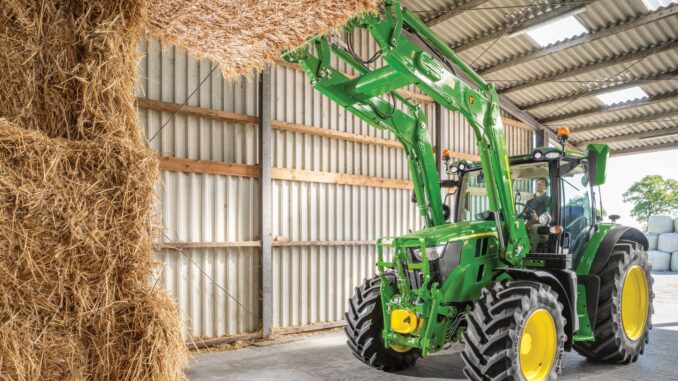
John Deere 5500 Repair Guide: Parts, Diagrams, Manuals
The John Deere 5500 is a full-size utility tractor designed for demanding property, livestock, hay, loader and field work. Its turbocharged four-cylinder diesel, independent rear PTO, Category II three-point hitch and mechanical or power-shuttle transmission options make it far more capable than a lawn tractor—but also mean that safe diagnosis and correct parts identification matter.
This John Deere 5500 repair guide covers common faults, practical owner checks, service parts, maintenance intervals, manuals, parts diagrams and repair decisions. It is written for owners in the USA and Canada who are comfortable carrying out routine servicing and selected intermediate repairs.
General overview of the John Deere 5500
The John Deere 5500 was part of Deere’s 5000-series utility tractor range. Depending on year, market and configuration, tractors may differ in drivetrain, front-wheel-drive equipment, loader setup, cab or open-station arrangement, tire sizes and hydraulic options. Always confirm your tractor’s Product Identification Number before ordering parts.
Most North American John Deere 5500 tractors use a turbocharged, liquid-cooled John Deere four-cylinder diesel engine. Earlier versions are commonly associated with a 3.9-litre engine, while later configurations may use a 4.5-litre engine. Transmission choices also vary, including gear-drive, partially synchronized and power-shuttle arrangements.
The main systems owners will service or troubleshoot include:
-
Diesel engine, air intake and fuel system
-
Cooling system, radiator and fan drive
-
Clutch, transmission and differential lock
-
Hydraulic system, three-point hitch and remote valves
-
PTO clutch and PTO driveline
-
Electrical starting, charging and safety-switch circuits
-
Steering, brakes, front axle and tires
-
Loader mounting and hydraulic circuits, where fitted
Common John Deere 5500 service items include:
-
Engine oil and engine oil filter
-
Primary and secondary air-cleaner elements
-
Fuel filter element and water separator parts
-
Coolant and coolant conditioner, where specified
-
Hydraulic/transmission oil filters
-
Alternator and fan belts
-
Battery, battery cables and starter components
-
PTO shields, hitch pins, drawbar hardware and hydraulic couplers
John Deere 5500 troubleshooting approach
Start with the symptom, not the part you think has failed. For example, a John Deere 5500 that cranks but will not start may have a fuel-supply issue, air in the fuel system, weak battery voltage during cranking, a plugged filter or an intake restriction. Replacing a starter, injector or pump before completing simple checks can waste time and money.
The most common symptom groups are:
-
No-start, hard-start and slow-cranking problems
-
Loss of power, smoke, poor fuel economy or rough running
-
Overheating, coolant loss and oil leaks
-
Clutch, transmission, shuttle or drive problems
-
PTO not engaging or slipping under load
-
Weak three-point hitch, loader or remote hydraulics
-
Steering, brake, front axle and tire problems
-
Electrical faults, warning lights and charging issues
-
Vibration, abnormal noise and driveline concerns
Emergency John Deere 5500 repair needs
Some symptoms should stop the tractor from being used until the cause is found. Continuing to work can turn a relatively inexpensive repair into engine, transmission, hydraulic or PTO damage.
Starting and running issues
A diesel that is hard to start, loses power unexpectedly or runs unevenly needs attention before heavy work. Do not continue using the tractor if it produces severe knocking, runaway engine speed, excessive white smoke after warm-up or a sudden change in exhaust smoke.
Common causes include:
-
Low fuel level or contaminated diesel
-
Clogged fuel filter or water in the separator
-
Air entering the fuel system
-
Restricted air-cleaner element
-
Weak battery, corroded terminals or poor ground cable
-
Faulty thermostart or cold-start system
-
Injector, injection-pump or timing faults
Basic owner checks:
-
Confirm the fuel shutoff is open and there is clean diesel in the tank.
-
Drain water and sediment from the separator, if fitted.
-
Inspect the primary air cleaner and replace it if heavily contaminated.
-
Check battery terminals, ground connections and cable condition.
-
Bleed the fuel system only by the procedure specified in the operator’s manual.
-
Arrange dealer or diesel-specialist diagnosis if fuel delivery remains poor.
John Deere 5500 overheating and leaks
Overheating is urgent because it can damage the head gasket, cylinder head, turbocharger and engine internals. Stop work if the temperature gauge rises into the warning area, coolant boils over, the warning light appears or the engine begins losing power while hot.
Common causes include:
-
Dirty radiator core, grille screen or oil cooler
-
Low coolant level
-
Loose or damaged fan belt
-
Collapsed radiator hose
-
Faulty thermostat
-
Worn water pump
-
Internal coolant leak or head-gasket failure
Basic owner checks:
-
Park safely, lower all implements and allow the engine to cool fully.
-
Never remove the radiator cap while the system is hot or pressurized.
-
Clean debris from the grille, radiator screen and radiator fins.
-
Check coolant level and inspect hoses, clamps and belt tension.
-
Look for external leakage around the water pump, radiator and hoses.
-
Stop using the tractor and seek professional help if coolant mixes with oil or combustion gases appear in the cooling system.
Transmission and drive problems
A tractor that slips, will not move correctly, jumps out of gear, makes gear noise or loses four-wheel-drive engagement can become unsafe—especially on slopes, roads or when carrying a loader load.
Common causes include:
-
Clutch adjustment or clutch wear
-
Incorrect transmission/hydraulic oil level
-
Wrong lubricant type
-
Linkage wear or misadjustment
-
Internal transmission damage
-
Power-shuttle hydraulic or electrical fault
-
Front-drive engagement linkage or driveline problem
Basic owner checks:
-
Stop the tractor on level ground and lower all attachments.
-
Check the specified transmission/hydraulic oil level.
-
Inspect visible linkage, boots and external wiring.
-
Confirm the correct gear and range are selected before releasing the clutch.
-
Check whether the problem occurs in every gear, range and direction.
-
Avoid towing or forcing the tractor if internal transmission damage is suspected.
PTO and hydraulic problems
A PTO that will not stop, engages unpredictably, slips under load or produces noise needs immediate attention. Likewise, do not work beneath a raised loader or implement if the hydraulics drift down or behave erratically.
Common causes include:
-
PTO control linkage or switch problem
-
Worn PTO clutch components
-
Low or contaminated hydraulic oil
-
Restricted hydraulic filter or suction screen
-
External hydraulic leak
-
Worn pump, relief valve or internal cylinder seals
-
Incorrect remote-valve connection
Basic owner checks:
-
Disengage the PTO and shut off the engine before inspecting the area.
-
Confirm all PTO guards and implement driveline shields are present.
-
Check hydraulic oil level with implements lowered.
-
Inspect couplers, hoses and cylinders for leaks or damage.
-
Test one hydraulic function at a time.
-
Never use hands to locate a suspected hydraulic leak; high-pressure fluid can penetrate skin.
Electrical and safety problems
Faulty brakes, lighting, starting circuits or safety switches can make the tractor unsafe for road use, loader work and PTO operation.
Common causes include:
-
Loose battery connections
-
Corroded ground strap
-
Blown fuse or damaged relay
-
Failing ignition switch
-
Neutral-start, clutch or PTO safety-switch fault
-
Alternator or voltage-regulator problem
-
Rodent-damaged wiring
Basic owner checks:
-
Disconnect the battery ground cable before repairing wiring.
-
Inspect fuses and connectors for corrosion, heat damage or loose terminals.
-
Test battery condition and charging voltage with a multimeter.
-
Confirm the transmission and PTO controls are in their required start positions.
-
Replace damaged wiring with the correct gauge and protected routing.
-
Have complex electrical faults diagnosed with a wiring diagram and proper test equipment.
DIY or dealer repair decisions
The John Deere 5500 is owner-serviceable in many areas, but it is not a simple homeowner mower. Routine servicing and external repairs are realistic for a careful owner with a workshop manual, lifting equipment and safe working area. Internal engine, transmission, hydraulic and power-shuttle repairs usually belong with an experienced tractor technician.
Good DIY jobs
-
Engine oil, filter and fuel-filter replacement
-
Air-cleaner inspection and replacement
-
Battery replacement and terminal cleaning
-
Fan-belt inspection and replacement
-
Coolant inspection and radiator cleaning
-
Greasing loader, steering, axle and hitch points
-
Replacing work lights, fuses and accessible switches
-
Replacing external hydraulic hoses with correctly rated replacements
-
Adjusting simple external linkages where the manual gives a procedure
-
Replacing worn hitch pins, stabilizer hardware and PTO shields
Advanced DIY or dealer jobs
-
Injector testing, injection-pump timing or fuel-system calibration
-
Clutch split and clutch replacement
-
Transmission, differential or power-shuttle repair
-
PTO clutch pack or internal PTO repair
-
Hydraulic pump, rockshaft or internal control-valve work
-
Front-wheel-drive clutch, driveshaft or axle repair
-
Major engine repairs, turbocharger diagnosis or head-gasket replacement
-
Brake overhaul involving internal components
-
Cab electrical diagnosis and air-conditioning work
Skill level guide
-
Beginner: Checks fluids, greases fittings, cleans the radiator, changes filters and replaces simple electrical items.
-
Intermediate: Replaces belts, hoses, batteries, external switches, hydraulic couplers and accessible linkage components.
-
Advanced: Diagnoses circuits with a multimeter, performs fuel-system bleeding, adjusts mechanical linkages and replaces external hydraulic components.
-
Dealer or specialist: Opens the transmission, splits the tractor, calibrates fuel equipment or repairs pressurized hydraulic systems internally.
John Deere 5500 parts needed
Before ordering any John Deere 5500 part, collect the following information:
-
Full tractor model designation
-
Product Identification Number, often called the PIN or serial number
-
Engine model and engine serial number
-
Two-wheel-drive or MFWD configuration
-
Transmission type and shuttle arrangement
-
Cab or open-station configuration
-
Loader model, if a loader is fitted
-
Tire and wheel size when ordering steering or axle-related parts
-
The original part number from a parts diagram, when available
The table below lists common service categories. Exact part numbers can differ by production serial number, engine arrangement and option package, so verify each number against your tractor’s PIN before buying.
Use OEM parts for belts, seals, PTO guards, safety switches, hydraulic components and fit-sensitive items. A belt that is only slightly wrong in length or profile can create charging, cooling or driveline problems.
Aftermarket filters, batteries, hoses, light assemblies and selected wear parts can be good value when they cross-reference exactly to the correct Deere specification. Avoid unbranded filters, unknown hydraulic fittings and “universal” electrical components with unclear ratings.
John Deere 5500 manuals and parts diagrams
Use the operator’s manual for daily operation, service intervals, fluid checks, lubrication points and routine adjustments. Use a parts catalog for exploded diagrams and original part numbers. A technical manual is the right reference for diagnostics, torque values, specifications and major repair procedures.
Useful sources include:
-
John Deere Manuals and Training for official operator’s manuals, technical manuals and parts catalogs.
-
John Deere Parts for current parts lookup, diagrams and part-number verification.
-
John Deere Technical Publications for official technical literature and manual availability.
-
GreenPartStore John Deere parts for Deere-focused parts searching and online ordering.
For many North American John Deere 5200, 5300, 5400 and 5500 tractors, the operator’s manual is commonly identified as OMRE41745, while TM1520 is commonly associated with technical repair coverage. Confirm that the manual matches your tractor’s exact market, serial range and transmission configuration before purchase.
Finding John Deere 5500 serial numbers
The Product Identification Number is essential because the John Deere 5500 changed across production ranges and could be equipped with different drivetrains, engines, hydraulics and optional equipment. A part that fits one tractor labeled “5500” may not fit another.
-
Park the tractor on level ground, lower attachments and switch off the engine.
-
Locate the tractor identification plate or stamped PIN, typically on the tractor frame area near the front or right-hand side of the machine.
-
Record the complete PIN exactly, including letters and digits.
-
Locate the engine data plate on the engine block or valve-cover area and record the engine model and serial number.
-
If a loader, backhoe or other attachment is fitted, locate its separate identification plate and record its model and serial number.
Take clear photographs of every identification plate. They are useful when ordering parts online, speaking with a Deere dealer or comparing parts diagrams.
Buying John Deere 5500 parts
The best buying strategy is to identify the original Deere part number first, then compare OEM and reputable aftermarket options. Do not rely solely on a listing title that says “fits John Deere 5500,” especially for hydraulic, electrical, PTO, engine and transmission parts.
-
Online: Use the tractor PIN, engine serial number and original OEM number. Check seller return policies before ordering expensive parts.
-
Dealer counter: Best for serial-number-sensitive parts, technical advice, safety parts, hydraulic items and parts requiring a current supersession check.
-
Retail stores: Suitable for clearly identified oil, grease, batteries, common bulbs and approved fluids, provided the package matches the specification.
-
Salvage yards: Useful for sheet metal, wheels, fenders, drawbars, brackets and some external components, but inspect carefully for wear and damage.
Useful starting points include:
John Deere 5500 common parts fitting guide
Always park on level ground, lower all implements, set the parking brake, remove the key and allow hot components to cool before beginning work. Use suitable jack stands or lifting equipment whenever a component requires support.
Replacing the engine oil and filter
Fresh oil and a clean filter protect the diesel engine, turbocharger and internal lubrication system.
-
Warm the engine briefly so the oil flows more freely, then shut it down.
-
Park safely, lower implements and place a suitable drain pan beneath the engine drain plug.
-
Remove the drain plug and allow the oil to drain completely.
-
Remove the old oil filter, making sure the old gasket has not remained on the filter base.
-
Lightly oil the new filter gasket, install the filter by hand and reinstall the drain plug to the specified torque.
-
Refill with the correct oil grade and quantity, start briefly, check for leaks and recheck the oil level.
Replacing the fuel filter
A restricted fuel filter can cause hard starting, hesitation, low power and stalling under load.
-
Clean dirt from around the filter housing before opening the fuel system.
-
Close the fuel supply if the tractor has a shutoff valve.
-
Remove the old filter or element according to the filter-housing design.
-
Install the new filter, lubricating seals only if the filter instructions specify it.
-
Open the fuel supply and use the correct priming or bleeding procedure from the operator’s manual.
-
Start the tractor, inspect carefully for leaks and confirm normal running before returning to work.
Servicing the air-cleaner elements
A clean air filter protects the engine and turbocharger. Do not run the John Deere 5500 without the correctly fitted air-cleaner assembly.
-
Open the air-cleaner housing carefully and remove the primary element.
-
Inspect the housing, sealing surfaces and dust-unloader valve for damage or packed debris.
-
Replace the primary element if damaged, heavily soiled or at its service limit.
-
Inspect the secondary element without unnecessarily removing it; replace it only when the service schedule or contamination requires it.
-
Wipe the housing with a clean lint-free cloth without pushing dirt into the intake.
-
Refit the cover correctly and ensure all clamps are secure.
Replacing the fan or alternator belt
A loose or damaged belt can lead to overheating, poor charging and loss of accessory drive.
-
Switch off the engine and disconnect the battery ground cable if working close to electrical terminals.
-
Inspect the existing belt routing and photograph it before removal.
-
Loosen the alternator or tensioner mounting hardware as specified for your configuration.
-
Remove the old belt and inspect pulleys for damage, alignment problems or oil contamination.
-
Install the correct replacement belt and adjust tension to the manual specification.
-
Tighten mounting hardware, run the engine briefly and recheck alignment, tension and charging operation.
Maintenance for the John Deere 5500
Regular maintenance prevents the problems most often seen in older utility tractors: restricted cooling, contaminated fuel, air leaks, hydraulic failure, poor charging, worn driveline joints and neglected lubrication points.
Focus on these areas:
-
Starting reliability: Keep the battery, terminals, grounds, fuel filter and air cleaner in good condition.
-
Engine protection: Use correct oil, maintain coolant level and keep the radiator clean.
-
Hydraulic performance: Check fluid level, inspect hoses and change filters at the required interval.
-
Drive reliability: Maintain correct clutch adjustment, tire pressures and driveline lubrication.
-
PTO safety: Keep shields in place and inspect PTO couplers, shafts and implement drivelines.
-
Electrical reliability: Repair chafed wiring, clean corroded connectors and confirm charging voltage.
-
Fire prevention: Remove dry crop residue, oil-soaked debris and chaff from the engine compartment.
John Deere 5500 maintenance schedule
Always use the maintenance chart in the operator’s manual for your exact serial number and equipment configuration. The following is a practical owner checklist based on the usual service pattern for this tractor family.
Daily or before each use
-
Check engine oil level.
-
Check coolant level only when the engine is cool.
-
Check fuel level and drain visible water from the fuel separator if equipped.
-
Inspect tires, wheel hardware, steering and brake operation.
-
Check for oil, fuel, coolant and hydraulic leaks.
-
Clean debris from the grille, radiator screen and engine compartment.
Every 10 hours
-
Grease loader, front axle, steering and three-point-hitch points as applicable.
-
Inspect fan-belt condition and tension.
-
Check air-cleaner restriction indicator, if fitted.
-
Inspect PTO shield condition and implement driveline guards.
-
Check hydraulic hoses and couplers for damage or seepage.
Every 50 hours
-
Inspect battery terminals and electrolyte level where applicable.
-
Check transmission/hydraulic oil level.
-
Inspect brake and clutch linkage operation.
-
Clean the radiator and oil-cooler surfaces thoroughly.
-
Check wheel bolts, loader mounting hardware and drawbar hardware.
After the first 100 hours
-
Complete the first scheduled transmission, hydraulic or drivetrain service specified in the operator’s manual.
-
Inspect filters and fluids for contamination or abnormal metal debris.
-
Recheck external linkage adjustments and visible fasteners.
Every 250 hours
-
Change engine oil and replace the engine oil filter if required by the specified schedule and oil type.
-
Replace the fuel filter according to the manual.
-
Inspect the primary air filter and replace if restricted or damaged.
-
Check cooling-system hoses, clamps and belt condition.
-
Inspect front axle, driveshaft and MFWD components where fitted.
Every 500 hours
-
Replace or inspect hydraulic/transmission filters as specified.
-
Inspect the cooling system, radiator cap and coolant condition.
-
Check PTO operation, clutch linkage and brake performance.
-
Inspect alternator output, starter connections and major wiring harness routing.
Every 750 to 1,500 hours
-
Change hydraulic/transmission oil and filters at the exact interval stated in the operator’s manual.
-
Service the cooling system at the specified time or hour interval.
-
Inspect valve clearances, injection components and engine condition if the manual calls for it.
-
Have drivetrain and hydraulic performance checked if shifting, PTO or lifting performance has changed.
Seasonal checklist
-
Before spring or heavy work: Service filters, inspect belts and hoses, test the battery and clean the cooling stack.
-
Mid-season: Check fluid levels, grease fittings, tire pressure and loader mounting bolts.
-
Before winter: Use clean seasonal fuel, inspect the cold-start system and test the battery.
-
Storage period: Clean debris from the tractor, repair leaks, protect exposed hydraulic couplers and keep rodents out of the wiring area.
Repair, upgrade, or replace?
A well-maintained John Deere 5500 is often worth repairing because it is a capable utility tractor with strong parts and service support. The decision depends on the tractor’s overall condition, intended workload, repair cost and whether several major systems are failing at once.
Repair if…
-
The engine starts well, maintains oil pressure and does not consume excessive coolant or oil.
-
The transmission, PTO and hydraulics are fundamentally sound.
-
The repair is limited to normal wear items such as filters, belts, hoses, batteries, seals or external switches.
-
The tractor suits your current loader, hay, mowing or property-maintenance needs.
Upgrade if…
-
You need more hydraulic flow for a modern loader or hydraulic attachment.
-
You regularly need more PTO horsepower than the tractor can safely provide.
-
You need enclosed-cab comfort, better lighting, electronic controls or greater road speed.
-
Your work now requires higher lifting capacity or a larger implement range.
Replace if…
-
Engine, transmission and hydraulic systems all need major repair at the same time.
-
The tractor has severe structural corrosion, damaged ROPS or unsafe repairs.
-
Parts and labor exceed the practical value of a reliable replacement tractor.
-
It cannot safely perform the work you need it to do.
John Deere 5500 repair FAQ
1. Why will my John Deere 5500 not start?
Start with battery condition, clean terminals, ground cables, fuel level and fuel shutoff position. A diesel that cranks normally but will not fire often has air in the fuel system, a restricted fuel filter, contaminated fuel or a cold-start issue. Check the air intake as well. If basic checks do not solve it, have fuel pressure and injection timing diagnosed professionally.
2. Why does my John Deere 5500 crank slowly?
Slow cranking is commonly caused by a weak battery, corroded battery terminals, a failing ground strap or worn starter connections. Cold weather makes marginal electrical faults more obvious. Load-test the battery rather than relying only on voltage. If cables get hot during cranking, stop and inspect them for internal corrosion or poor connections.
3. Why does my John Deere 5500 start and then stall?
A start-then-stall fault usually points to fuel restriction or air entering the fuel system. Check fuel level, the tank vent, water separator, fuel filter and all accessible supply-line connections. A clogged filter may let enough fuel through for brief starting but not sustained running. Bleed the fuel system using the correct manual procedure after any filter service.
4. Why is my John Deere 5500 hard to start when cold?
Cold starting can be affected by weak battery output, poor cable connections, incorrect engine oil viscosity, fuel-system air leaks or a faulty thermostart system. Begin with battery and cable condition because diesel engines need strong cranking speed. Use the specified cold-start procedure and do not use starting fluid unless the manufacturer specifically permits it for your engine arrangement.
5. Why does my John Deere 5500 have low engine power?
Check the air cleaner, fuel filter, fuel quality and signs of intake or turbocharger problems. A plugged air filter or fuel filter can reduce power significantly under PTO or loader load. Also make sure brakes are not dragging and the implement is not oversized. Persistent low power, excessive smoke or turbo noise needs diesel-engine diagnosis.
6. Why does my John Deere 5500 blow black smoke?
Black smoke normally means too much fuel for the available air. Common causes include a restricted air filter, damaged intake hose, turbocharger issue, overloaded implement or fuel-system fault. Clean or replace the air filter if needed and inspect intake plumbing for loose clamps. If black smoke remains with normal load, stop guessing and have the engine tested.
7. Why does my John Deere 5500 produce white smoke?
White smoke can be unburned fuel during cold starts, but it should reduce as the engine warms. Ongoing white smoke may indicate poor injector spray, low compression, incorrect timing, coolant intrusion or a cold cylinder. Check fuel quality and cold-start operation first. Persistent white smoke, coolant loss or rough running should be treated as a professional diagnostic issue.
8. Why does my John Deere 5500 overheat?
The most common causes are a dirty radiator, blocked grille screen, low coolant, loose fan belt or failing thermostat. Clean the radiator core carefully from the engine side outward where practical, without bending fins. Confirm the coolant level only after the engine cools. Stop using the tractor if overheating continues, as engine damage can occur quickly.
9. Why is coolant leaking from my John Deere 5500?
Inspect hoses, clamps, radiator seams, water-pump weep hole and heater hoses on cab tractors. A small external leak can become serious once the cooling system is hot and pressurized. Do not ignore repeated coolant loss. If there is no visible external leak, check for coolant in the engine oil or combustion pressure in the radiator, both of which need immediate professional attention.
10. Why does my John Deere 5500 lose engine oil?
Look first for valve-cover, oil-pan, filter-base, front-cover and turbo oil-line leaks. Also inspect for oil around the crankcase breather and intake system. If there is no obvious external leak, monitor exhaust smoke and oil consumption because internal wear or turbocharger problems may be involved. Never operate below the correct oil level.
11. Why will my John Deere 5500 not move in gear?
Confirm the parking brake is released, the correct range is selected and the clutch pedal is fully released. Check transmission/hydraulic oil level and inspect external shift linkages. If the tractor will not move in any gear or direction, do not force the shifter. A clutch, transmission, shuttle or driveline problem may require dealer diagnosis.
12. Why does my John Deere 5500 jump out of gear?
Gear jump-out can result from worn linkage, improper adjustment, worn shift rails, damaged gear teeth or internal transmission wear. Note exactly which gear and range are affected. External linkage inspection is reasonable for an owner, but internal gearbox repair is usually advanced work. Continued operation can increase damage to gears and shift components.
13. Why does the clutch slip on my John Deere 5500?
A slipping clutch may show up as rising engine speed without a matching increase in ground speed, especially under loader or drawbar load. Check whether the clutch linkage has correct free travel according to the operator’s manual. Oil contamination, worn clutch discs or pressure-plate problems require splitting the tractor. Do not keep working a slipping clutch.
14. Why is my John Deere 5500 PTO not engaging?
Start by checking PTO-control position, safety interlocks, linkage, fuses and hydraulic oil level where relevant. Make sure the attached implement driveline is not seized or overloaded. If the PTO engages weakly, slips or makes abnormal noise, stop using it. PTO-clutch and internal PTO repairs can be expensive if damage is allowed to continue.
15. Why does my John Deere 5500 PTO slip under load?
A PTO that slips can be caused by clutch wear, incorrect adjustment, low hydraulic pressure, contaminated oil or an implement that exceeds tractor capacity. Confirm the implement’s horsepower requirement and inspect its driveline for binding. Do not try to compensate by increasing engine speed or repeatedly engaging the PTO. Internal PTO problems need trained diagnosis.
16. Why will the three-point hitch not lift?
Check hydraulic/transmission oil level, remote-valve settings and whether an external hydraulic function is holding the system in relief. Inspect the linkage for binding and confirm the position-control lever is set correctly. A blocked filter, worn pump, faulty control valve or internal leak can also cause weak lift. Avoid standing under raised equipment during testing.
17. Why does the three-point hitch drift down?
Slow hitch drop may be caused by internal cylinder leakage, control-valve leakage or external hydraulic issues. First make sure the implement is not simply settling because of its weight and configuration. If the hitch drops quickly with the engine off or struggles to hold position while running, professional hydraulic diagnosis is sensible. Never work under a raised implement.
18. Why is my John Deere 5500 loader weak or jerky?
Check hydraulic oil level, quick coupler seating, hose damage and visible leaks. Jerky motion can also come from air in the system, restricted filters, low pump output or cylinder-seal wear. Test with a safe, moderate load rather than repeatedly forcing the loader at full pressure. High-pressure hydraulic diagnosis should be handled carefully.
19. Why does my John Deere 5500 hydraulic system whine?
A whining hydraulic system can indicate low fluid level, restricted suction flow, aerated oil, a plugged filter or pump wear. Check fluid level with implements lowered and look for foamy oil, which may indicate air entry. Do not keep operating a noisy pump under heavy load. Correcting a suction-side problem early can prevent pump damage.
20. Why is my John Deere 5500 steering hard?
Hard steering may result from low hydraulic oil, a steering-cylinder leak, worn steering linkage, tire-pressure problems or a hydraulic-pump issue. Check front tire pressure and inspect the steering cylinder, hoses and joints. On MFWD tractors, inspect front axle and driveline condition too. Sudden steering changes should be addressed before road or loader work.
21. Why are the brakes weak on my John Deere 5500?
Check pedal linkage, brake adjustment and whether both pedals operate evenly. Oil contamination, internal brake wear or seized linkage can reduce braking performance. Avoid road travel or loader work until braking is reliable. Brake repairs involving internal wet-disc components are usually dealer-level jobs.
22. Why does my John Deere 5500 have a charging warning light?
A charging light can mean a loose belt, corroded connection, weak battery, alternator fault or wiring problem. Inspect belt condition and tension first, then test battery voltage with the engine off and running. A healthy charging system should raise voltage above resting battery voltage. Do not replace the alternator until connections and belt drive are confirmed.
23. Why does my John Deere 5500 blow fuses?
Repeated fuse failure indicates a short circuit, overloaded accessory or damaged wiring—not simply a bad fuse. Inspect the circuit for rubbed insulation, damaged connectors, moisture and aftermarket accessories. Replace fuses only with the correct rating. Installing a larger fuse can overheat wiring and create a fire risk.
24. Why will my John Deere 5500 not crank with the key?
Check battery voltage, battery connections, ground cable, main fuse and ignition-switch operation. Then verify that the transmission, clutch and PTO controls are positioned correctly for the start-safety circuit. Listen for a relay click or starter solenoid click. A multimeter is more reliable than replacing parts based on sound alone.
25. Why does my John Deere 5500 vibrate at certain engine speeds?
Inspect the fan belt, engine mounts, exhaust brackets, pulley condition and visible driveline components. Vibration that changes with engine rpm may be related to the engine, accessories or PTO shaft. Vibration that changes with ground speed may be tire, wheel, axle or driveline related. Stop immediately if vibration is severe or accompanied by banging.
26. Why does my John Deere 5500 make a knocking noise?
A knock can come from loose loader hardware, worn hitch parts, a failing universal joint, driveline wear, engine combustion or internal bearing damage. Identify whether the noise changes with engine speed, ground speed, PTO engagement or hydraulic operation. Do not continue working if the knock is metallic, heavy or rapidly worsening. Early inspection can prevent major failure.
27. How often should I change oil in a John Deere 5500?
Follow the operator’s manual for your engine and oil specification. Many tractors in this family use a 250-hour engine-oil service interval under normal conditions, but severe work, dusty conditions and different oil specifications can require more frequent service. Check oil level daily or before use. Use an oil grade approved for the operating temperature and diesel engine.
28. How often should I change hydraulic oil in a John Deere 5500?
Hydraulic and transmission oil intervals vary by production configuration and are longer than engine-oil intervals. The operator’s manual commonly separates filter changes from complete oil changes, so do not assume both are due together. Use only the fluid specification approved for the transmission and hydraulic system. Incorrect oil can affect shifting, PTO and hydraulic performance.
29. What fuel should I use in a John Deere 5500?
Use clean, fresh diesel fuel that meets the fuel specification for the engine and local climate. Keep water and dirt out of the storage container and tractor tank. In cold weather, use seasonally appropriate diesel and follow the manual’s guidance on additives. Drain water from the separator regularly if your tractor is equipped with one.
30. How do I bleed the fuel system on a John Deere 5500?
Use only the procedure stated in the operator’s manual for your engine and fuel-filter arrangement. Generally, replace the filter cleanly, open the fuel supply, use the primer or bleed points as specified, and crank only in controlled intervals. Never loosen high-pressure injector lines while the engine is running. High-pressure fuel can cause serious injury.
31. Can I use aftermarket filters on a John Deere 5500?
Yes, provided the filter is from a reputable manufacturer and cross-references exactly to the correct OEM number for your PIN and engine. Avoid filters that merely look similar or use vague “universal” fit claims. Air, fuel and hydraulic filters protect costly components, so quality matters. Keep records of part numbers and service dates.
32. Where can I find John Deere 5500 parts diagrams?
The most reliable starting point is the official John Deere Parts Catalog website. Enter the tractor model and, where possible, narrow results by serial number and configuration. Parts diagrams show exploded assemblies and original part numbers, which is far safer than ordering from a generic listing. A Deere dealer can also confirm superseded numbers.
33. What manual do I need for John Deere 5500 repairs?
Use the operator’s manual for maintenance, controls, safety and routine adjustment. Use the parts catalog for diagrams and correct part numbers. For diagnostic procedures, specifications, torque values and major mechanical repair, use the correct official technical manual for your market and serial range. A generic manual may not cover your transmission or hydraulic configuration accurately.
34. Is a John Deere 5500 suitable for owner maintenance?
Yes, for routine tasks such as fluid checks, greasing, filters, belts, battery service and external inspections. It is a robust utility tractor, but major repairs involve heavy components, high-pressure hydraulics and complex drivetrain systems. Work within your tools, lifting capacity and experience. Use a dealer or qualified tractor technician for internal engine, transmission and PTO repairs.
35. When should I stop using my John Deere 5500 and call a dealer?
Stop using the tractor for overheating, loss of oil pressure, severe hydraulic leaks, brake failure, PTO faults, major driveline noise, transmission slipping or sudden steering problems. Also stop if coolant mixes with engine oil, the engine knocks heavily or the tractor moves unpredictably. Continued operation can create a safety risk and dramatically increase repair cost.