
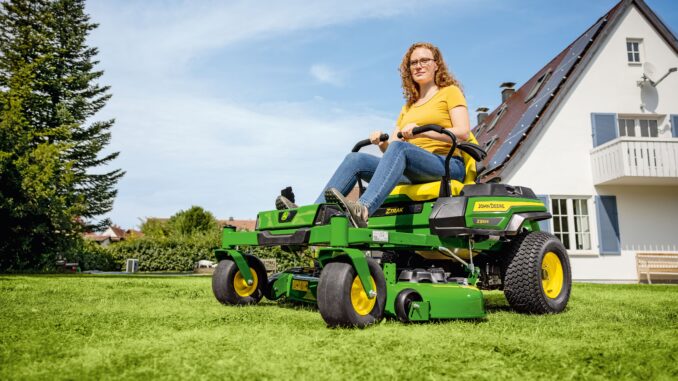
Introduction: John Deere Z950A overview
The John Deere Z950A is a commercial‑grade ZTrak zero‑turn mower designed for high‑productivity mowing on larger properties and professional lawn accounts in the USA and Canada. It pairs a powerful air‑cooled engine with hydrostatic drive and a mid‑mounted mower deck, giving fast maneuvering and clean cut quality when maintained correctly.
This John Deere Z950A service and repair guide is written for homeowner and DIY users who are comfortable with basic maintenance and light repairs but need clear boundaries on what should go to a dealer. You’ll find symptom‑first troubleshooting, DIY vs dealer repair guidance, a parts and maintenance table, links to diagrams and manuals, step‑by‑step fitting guides, a practical maintenance schedule, and an expanded FAQ.
General overview of the John Deere Z950A
The John Deere Z950A sits in the commercial ZTrak zero‑turn lineup, aimed above residential ZTrak units and below the largest diesel machines, making it a popular choice for serious homeowners and small contractors who want commercial quality without going to the largest frame sizes. It typically runs a gasoline V‑twin engine, twin hydrostatic drive pumps and wheel motors, and a commercial mower deck in the 60–72 inch range, depending on the exact configuration you own.
Key systems on the John Deere Z950A that matter for service are the engine and fuel system (engine, fuel filter, fuel lines), the mower deck system (blades, spindles, deck belt, idlers, deck lift), the drive system (hydrostatic drives, drive belt, tires), and the electrical and safety system (battery, starter, key switch, seat and parking‑brake interlocks, PTO switch). Common service parts owners typically buy include the engine oil filter, air filter elements, fuel filter, spark plugs, mower blades, deck drive belt, hydro drive belt, PTO switch, safety switches, and a battery suited to the ZTrak chassis.
Troubleshooting approach for John Deere Z950A
When troubleshooting your John Deere Z950A, always start with the symptom the owner sees rather than jumping straight to assumed failed components. Typical symptom categories include starting problems, running and performance issues, cut‑quality complaints, vibration and noise, overheating or fluid leaks, drive and traction issues, and electrical or safety‑switch problems.
Work from simple causes to complex ones: verify fuel level and battery condition first, then look at filters, belts, blades, and switches before assuming major engine or hydro failures. For most DIY owners, a visual inspection with good lighting, basic hand tools, and the operator’s manual beside you will solve many common Z950A issues without tearing down major components.
Emergency and immediate repair needs on a Z950A
Some problems on a John Deere Z950A should be treated as “stop now” issues because they affect safety or can quickly damage expensive parts. These include no‑start conditions that follow smoke or burning smells, severe deck vibration, oil or fuel leaks, loss of drive on slopes, or any scenario where safety interlocks appear bypassed or unreliable.
Addressing these issues early prevents secondary damage: for example, running with a failed deck bearing can destroy blades and the spindle housing, and ignoring low‑oil warnings can cause engine failure. Use the symptom sections below to decide whether you should park the machine and inspect immediately or book the unit into a dealer.
John Deere Z950A starting issues
Starting issues present as the engine cranking slowly or not at all, clicking from the starter relay, or the engine cranking but failing to fire and run. This matters because repeated cranking can damage the starter and quickly drain the battery, and starting problems often indicate wider electrical or fuel‑system faults.
Common causes:
-
Battery discharged or failing
-
Poor battery connections or corroded terminals
-
Faulty seat, brake, or PTO safety switch
-
Fuel shutoff left closed or stale fuel in tank
-
Dirty or water‑contaminated fuel filter
-
Faulty starter solenoid, ignition switch, or wiring
Basic owner checks:
-
Verify the parking brake is set, PTO switch is OFF, and you are seated properly.
-
Check battery terminals for tightness and corrosion; clean and retighten as needed.
-
Use a multimeter or charger to test battery voltage and charge if low.
-
Confirm there is fresh fuel in the tank and that any fuel shutoff valve is open.
-
Inspect visible safety switches around the seat, brake lever, and PTO for damage or loose wiring.
John Deere Z950A cut‑quality problems
Cut‑quality issues on the John Deere Z950A show up as uneven cutting, scalping, ridges, straggling uncut grass, or clumps and discharge problems from the chute. Poor cut quality matters because it defeats the purpose of a commercial mower and can indicate worn blades, deck mis‑level, or speed/height mismatches that lead to extra wear.
Common causes:
-
Dull, nicked, or incorrectly installed mower blades
-
Deck not level side‑to‑side or front‑to‑back
-
Wrong deck height or mowing too fast for conditions
-
Deck belt slipping or failing to maintain blade speed
-
Build‑up of debris under deck affecting airflow
Basic owner checks:
-
Park on level ground, shut off the engine, remove the key, and engage the park brake.
-
Inspect blades for sharpness, damage, and correct orientation; replace or sharpen as needed.
-
Measure deck level side‑to‑side and front‑to‑back with a suitable gauge, adjusting as per the manual.
-
Check the deck belt for cracks, glazing, and tension; replace if worn or loose.
-
Clean the underside of the deck, removing packed grass and debris.
John Deere Z950A vibration and noise
Excessive vibration and unusual noise from a John Deere Z950A typically appear as shaking in the seat or control levers, harsh noises from the deck area, or howling/whining sounds from the hydro drive. This matters because vibration quickly damages bearings, blades, and other components, and can be a safety concern if parts loosen.
Common causes:
-
Bent or out‑of‑balance blades
-
Worn spindle bearings or loosened spindle mounting bolts
-
Foreign objects wrapped around the spindles or blade shaft
-
Loose engine or deck mounting bolts
-
Hydro drive issues or failing idler pulley bearings
Basic owner checks:
-
With the unit parked and keyed off, inspect blades for straightness and secure mounting.
-
Spin each spindle by hand (engine off) and feel for roughness or grinding.
-
Look for sticks, wire, or debris wrapped around spindle shafts or pulleys.
-
Check visible mounting hardware on the deck and engine for looseness.
-
If vibration persists, avoid using the mower at full speed and consult a dealer for spindle or hydro diagnostics.
John Deere Z950A overheating and leaks
Overheating on the Z950A shows as hot‑running engine, warning lights or alarms (where fitted), power loss under load, or burning smells; leaks appear as spots of oil or fuel under the machine or wet components. These issues are critical because they can lead to engine or hydro failure and fire risks if fuel leaks are ignored.
Common causes:
-
Low engine oil level or wrong oil type
-
Blocked engine cooling fins or shrouds clogged with debris
-
Overfilled crankcase or hydro reservoir
-
Damaged fuel hoses, clamps, or filter housings
-
Loose drain plugs, filters, or hydraulic fittings
Basic owner checks:
-
Allow the machine to cool fully and never remove caps while hot or under pressure.
-
Check engine oil level and top up or correct as specified, using the recommended viscosity.
-
Inspect cooling fins, screens, and shrouds, cleaning away dust and grass.
-
Look for damp or shiny areas around fuel lines, filters, and tanks, tightening or replacing parts as needed.
-
If overheating continues or significant leaks persist, stop operation and book dealer service.
John Deere Z950A transmission and drive problems
Drive problems on a John Deere Z950A appear as loss of forward or reverse movement, weak pulling power on slopes, or uneven response between left and right drive levers. Because the Z950A uses hydrostatic drives, ignoring early symptoms can lead to expensive hydro unit failures.
Common causes:
-
Low or incorrect hydraulic oil level in the drive system
-
Air in the hydraulic system after servicing or filter changes
-
Worn or slipping drive belt to the hydro pumps
-
Damaged wheel motors or leaking hoses
-
Misadjusted control linkage or parking brake not fully releasing
Basic owner checks:
-
Verify the parking brake is releasing fully when you disengage it.
-
Inspect the drive belt for wear, tension, and correct routing.
-
Check hydraulic fluid levels according to the operator’s manual.
-
Observe whether one side feels weaker than the other; avoid steep slopes until resolved.
-
Any persistent drive weakness or loss of motion should be discussed with a dealer, as hydro repair is advanced.
John Deere Z950A electrical and safety‑switch problems
Electrical and safety‑switch issues often show as intermittent no‑start, PTO disengaging unexpectedly, or the engine cutting out when you move the levers or lift off the seat. These are important because safety interlocks are designed to prevent accidents, and bypassing or ignoring their faults increases risk.
Common causes:
-
Worn or misaligned seat switch
-
Faulty PTO switch or key switch contacts
-
Damaged brake or neutral‑position safety switches
-
Loose wiring connectors or chafed harnesses
-
Weak battery causing voltage drops under load
Basic owner checks:
-
Ensure all controls are in the correct start/run positions as per the operator’s manual.
-
Inspect the seat area for damaged or loose switch wiring.
-
Gently operate the PTO and key switch while watching for inconsistent operation.
-
Check visible connectors under the seat and along the frame for disconnection or corrosion.
-
If safety circuit issues continue, avoid DIY bypasses and consult a dealer.
John Deere Z950A DIY or dealer: repair decision guide
For the John Deere Z950A, the “line” between DIY and dealer work sits at the point where you need special tools, hydraulic or engine teardown, or OEM diagnostic information. Most routine service and straightforward bolt‑on parts are realistic DIY jobs for a careful owner, while internal engine, hydro, and complex electrical diagnostics are best handled at a John Deere dealer or experienced shop.
Good DIY jobs on a John Deere Z950A:
-
Engine oil and filter changes
-
Air and fuel filter replacement
-
Spark plug replacement
-
Mower blade removal, sharpening, and replacement
-
Deck belt replacement and deck cleaning
-
Battery replacement and basic electrical checks
-
Greasing spindles and pivot points
Advanced DIY or dealer jobs on a John Deere Z950A:
-
Spindle bearing replacement or complete spindle assembly changes
-
Hydrostatic drive repairs, bleeding, or component replacement
-
Internal engine repairs (head gaskets, valve work, major seals)
-
Deep electrical troubleshooting involving harness repair and ECU diagnostics
-
Frame or structural repairs after impacts
Skill level guide:
-
Beginner: Oil changes, air filter and blade replacement, basic greasing.
-
Intermediate: Deck belt changes, battery and switch replacement, deck leveling, fuel filter changes.
-
Advanced: Hydro and engine internal repairs, complex electrical diagnosis, frame or spindle rebuilds.
John Deere Z950A parts needed and identification
Before ordering parts for your John Deere Z950A, gather the full model name, product identification number (PIN), engine model and serial, and deck size. The PIN ensures you match parts to the correct production run, and deck width affects blades, belts, and spindle components.
For the Z950A, the PIN is typically stamped on a plate fixed to the machine frame (often near the operator’s position or on the frame rail), while the engine model and serial are found on a tag attached to the engine block or shroud. Knowing whether you have a 60‑inch or 72‑inch deck, for example, will change blade and belt part numbers.
Key John Deere Z950A service parts table
Below is a representative example table; always confirm with your PIN and official parts catalog before ordering.
For the John Deere Z950A, OEM parts are strongly recommended for belts, safety‑critical components, hydro and engine parts, and anything where fit or material quality directly affects safety or machine life. Aftermarket parts can be considered for some filters, batteries, and blades if they cross‑reference correctly and explicitly list compatibility with the Z950A.
Where to find John Deere Z950A parts diagrams and service manuals
Several online sources provide diagrams and manuals for the John Deere Z950A:
-
John Deere official owner information pages for commercial ZTrak mowers: look up “Z950A” to access the operator’s manual, maintenance intervals, and basic owner service information.
-
The Z910A/Z920A/Z925A/Z930A/Z950A/Z960A/Z970A technical manual (often referenced as TM109119) provides detailed service procedures, wiring diagrams, hydraulic schematics, and advanced diagnostic information; this is aimed at technicians but useful for serious DIY owners.
-
JDParts / John Deere’s online parts catalog allows you to enter your Z950A model and PIN to view exploded parts diagrams, confirm OEM numbers, and build a parts list.
-
Reputable Deere‑focused aftermarket sites often have Z950A‑specific pages with common service parts and maintenance kits listed by model and deck size.
Use the operator’s manual for safety, routine maintenance, and basic adjustments; use the technical manual for in‑depth repair steps and diagnostics; and use JDParts or dealer parts sites for diagrams and precise part number confirmation.
Locating model, serial and engine numbers on a Z950A
Model, serial, and engine numbers matter because John Deere often changes components, capacities, and part numbers across production years and serial ranges, even within the same model name. Having these numbers to hand ensures your parts order matches your exact machine and avoids returns or fitment problems.
To find numbers on a John Deere Z950A:
-
Locate the main product identification plate on the mower frame, typically around the operator station or frame rail; this plate carries the model and PIN.
-
Check the deck for a separate tag or decal listing deck model and size, especially if the deck has been swapped or upgraded.
-
Look on the engine shroud or block for the engine manufacturer’s tag with model and serial information.
-
Note any configuration codes (such as deck size) printed near the model or PIN.
-
Record these details in your maintenance log or on your phone for quick reference when ordering parts.
Buying John Deere Z950A parts online and in stores
A sensible parts‑buying strategy starts with confirming the OEM part number, then choosing a sourcing route that balances price, availability, and support. For John Deere Z950A owners, a combination of official online resources, local dealers, and reputable aftermarket suppliers works well.
Key approaches:
-
Online: Use John Deere’s official parts catalog to confirm OEM numbers, then order directly from Deere or trusted aftermarket sites that clearly list compatibility with “John Deere Z950A” and allow searching by PIN.
-
Dealer counter: Ideal for complex or serial‑specific items where staff can confirm fit from your PIN and advise on superseded part numbers or updated kits.
-
Retail stores: Suitable for generic consumables such as oil, grease, and sometimes batteries, provided the packaging explicitly lists compatibility with commercial ZTrak mowers or matches the OEM specifications.
Concrete URLs to consider:
-
John Deere parts and service portal for commercial ZTrak mowers: https://www.deere.com (navigate to Parts & Service → Zero‑turn mowers → Commercial ZTrak).
-
JDParts online catalog: https://parts.deere.com (or regional equivalent) for model‑ and PIN‑specific diagrams.
-
A strong aftermarket supplier such as https://greenfarmparts.com or similar that offers Z950‑series maintenance kits and common service parts.
Common John Deere Z950A DIY fitting jobs
Pick high‑impact DIY jobs that improve reliability and cut quality on your John Deere Z950A. Below are simple, safe step‑by‑step guides for typical homeowner‑level work. Always park on level ground, set the park brake, stop the engine, and remove the key before working on the mower.
Changing engine oil and filter on a John Deere Z950A
Regular oil changes protect the Z950A engine from wear, overheating, and sludge build‑up, especially under commercial or heavy‑duty homeowner use.
-
Run the mower for a few minutes to warm the oil, then park on level ground, set the brake, and shut down the engine.
-
Place an oil drain pan under the oil drain point on the engine and open the drain using the appropriate wrench.
-
Allow the oil to drain completely, then close the drain securely.
-
Remove the old oil filter using a filter wrench if needed, keeping the area as clean as possible.
-
Lightly oil the gasket on the new filter and install it hand‑tight, then snug gently with the wrench without over‑tightening.
-
Refill with the specified amount and grade of oil, replace the filler cap, start the engine, check for leaks, then re‑check the level and top up if needed.
Replacing the air filter on a John Deere Z950A
Air filter changes keep dirt out of the engine and help maintain full power and fuel efficiency.
-
Ensure the mower is off and cooled, with the key removed.
-
Open the air cleaner housing, typically located on or near the engine shroud.
-
Remove the primary (outer) air filter element and inspect the secondary (inner) element.
-
Replace the primary element with a new one; replace the secondary element at the recommended interval or if dirty.
-
Clean out any loose debris from the air cleaner housing and reassemble securely.
-
Start the mower and listen for normal engine sound, confirming there are no air leaks around the housing.
Changing mower blades on a John Deere Z950A
Blade maintenance dramatically improves cut quality and reduces stress on deck components.
-
Lower the deck to its lowest position, park the mower, set the brake, and stop the engine.
-
Lift the front of the mower safely using rated jacks and stands if necessary for access, or use a proper lift designed for ZTrak mowers.
-
Wear gloves and use a suitable socket to remove the blade bolts, keeping track of any washers or spacers.
-
Inspect blades for damage; sharpen them if they are serviceable or install new blades that match the deck and Z950A specifications.
-
Ensure blades are installed in the correct orientation (cutting edge facing the direction of rotation) and torque the bolts to the value specified in the manual.
-
Lower the mower, start the engine, and engage the deck briefly to confirm smooth, vibration‑free operation.
Replacing the deck drive belt on a John Deere Z950A
Deck belts transmit power from the engine to the blades; replacing a worn belt restores blade speed and cut quality.
-
Park the mower, set the brake, shut off the engine, and remove the key.
-
Lower the deck, remove any belt shields and access panels covering the deck belt.
-
Note the routing of the existing belt or take a photo for reference.
-
Release belt tension via the idler arm, then remove the old belt from pulleys and guides.
-
Install the new belt along the same path, ensuring it sits correctly in pulley grooves and under belt guides.
-
Re‑apply tension using the idler, check for proper alignment, reinstall shields, and test the deck operation at low throttle before mowing.
Maintenance to prevent John Deere Z950A problems
Regular maintenance on the John Deere Z950A prevents many of the failures discussed above and extends the life of major components. Focus on clean fluids, sharp blades, and keeping moving parts lubricated and free of debris.
Key focus areas:
-
Starting reliability: Keep the battery charged, terminals clean, and safety switches functioning properly; replace fuel and air filters on schedule.
-
Cut quality: Maintain sharp blades, correct deck level, clean underside of the deck, and proper deck belt tension.
-
Fire and overheating prevention: Clean engine cooling fins and screens regularly, fix fuel leaks immediately, and use the correct engine oil at the right level.
-
Drive performance: Monitor tire pressures, drive belt condition, and hydraulic fluid levels; avoid overloading the mower on steep slopes.
-
Electrical reliability: Inspect wiring and connectors for wear, moisture ingress, and damage; secure loose harnesses.
John Deere Z950A maintenance schedule and year‑round checklist
Use the official maintenance chart in your Z950A operator’s manual as the primary reference; the schedule below reflects typical commercial ZTrak gasoline mower practices adapted to this model type. Actual hour intervals may vary slightly depending on your specific serial and engine.
Daily / before each use
-
Check engine oil level and add oil if necessary.
-
Visually inspect tires for damage and check tire pressure.
-
Inspect the mower deck for debris build‑up and clear clippings from the discharge area.
-
Check safety systems (seat, brake, PTO) by verifying normal start and PTO engagement behavior.
After approximately 8 hours of use
-
Grease deck spindles and front caster pivots as specified.
-
Inspect blades for damage and sharpness; address any minor nicks.
-
Check deck belt and drive belt condition for glazing or cracks.
-
Inspect engine cooling fins, screens, and air intake for dust build‑up.
Every 25 hours
-
Inspect and clean the primary air filter element, replacing if very dirty.
-
Check battery condition and clean terminals as needed.
-
Examine all visible fuel and hydraulic lines for signs of leakage or chafing.
-
Inspect all safety switches for secure mounting and obvious wear.
Every 50 hours or yearly (whichever comes first)
-
Change engine oil and replace the oil filter.
-
Inspect and adjust deck level and pitch.
-
Grease all specified grease points (spindles, caster pivots, steering pivots where fitted).
-
Inspect blades thoroughly and sharpen or replace them.
Every 200 hours (or as specified)
-
Replace the fuel filter with the correct Z950A part.
-
Replace air filter elements (primary and secondary) according to the manual interval.
-
Replace spark plugs with specified type and gap.
-
Inspect hydraulic system (drive belt, hoses, filters) and service as directed in your manual.
Seasonal checklist for John Deere Z950A (spring / mid‑season / fall)
Spring (pre‑season):
-
Perform full annual service (oil, filter, blades, deck cleaning, greasing).
-
Inspect tires, battery, and safety systems before first mow.
-
Verify deck leveling and cut height settings.
Mid‑season:
-
Change engine oil and check all fluids if hours justify.
-
Re‑sharpen or replace blades to maintain cut quality.
-
Re‑check deck belts and drive belts.
Fall (end‑of‑season):
-
Clean the entire machine, especially deck and cooling areas.
-
Consider stabilizing fuel or draining the tank if storing for winter.
-
Store under cover, disconnect battery or use a maintainer, and note next service due date.
John Deere Z950A: repair, upgrade, or replace?
For the John Deere Z950A, the decision to repair, upgrade, or replace depends on machine age, total hours, frame and hydro condition, and whether your cutting needs have changed. Because the Z950A is a commercial‑grade platform, many owners find that keeping up with maintenance and targeted repairs is more economical than replacement, as long as the frame and hydro system remain sound.
Repair if:
-
The issue is limited to consumables (blades, belts, filters, plugs, battery).
-
The engine and hydro drive still perform well and parts availability is good.
-
Structural components and frame show no serious cracks or corrosion.
Upgrade if:
-
You want better cut quality or versatility through different blades, mulch kits, or deck configurations.
-
You need improved lighting, seating, or control comfort for longer use.
-
You’re adding accessories such as collection systems, striping kits, or better tires for specific turf conditions.
Replace if:
-
The hydro system or engine require major rebuilds beyond the machine’s value.
-
The frame or structural components are damaged from impacts or long‑term heavy use.
-
Your property size or workload has outgrown the Z950A and you need a larger or different‑type machine.
Expanded troubleshooting FAQ: John Deere Z950A
Below are practical, owner‑focused FAQs for common John Deere Z950A problems and maintenance questions. Each answer assumes basic tools and skills and aims to show clear boundaries between DIY and dealer‑level work.
1. Why will my John Deere Z950A not start?
If your Z950A will not start, first confirm that the parking brake is set, the PTO switch is OFF, and you are seated properly to satisfy the safety interlocks. Check the battery for charge, tight terminals, and signs of corrosion, as a weak battery or poor connection is the most common cause. If the engine cranks but does not fire, inspect the fuel level, ensure any fuel shutoff is open, and consider replacing a dirty or water‑contaminated fuel filter. Persistent no‑start conditions despite good battery and fuel generally warrant inspection of safety switches, the starter solenoid, and ignition components, which may require dealer diagnosis.
2. Why does my John Deere Z950A only click when I turn the key?
A clicking sound usually indicates the starter relay is trying to engage but there is not enough power reaching the starter, commonly due to a weak battery or poor connections. Clean and tighten battery terminals, test voltage with a multimeter, and charge or replace the battery if needed. If the battery is sound, check the ground cable connection and wiring to the starter and solenoid. Ongoing clicking even with a healthy battery can point to a failing solenoid or starter motor, which is often an intermediate‑level repair or dealer job.
3. Why does my John Deere Z950A crank but not fire?
When the Z950A cranks but won’t fire, think fuel and spark: confirm fresh fuel is in the tank and that the fuel filter is not clogged, especially if the mower has sat for a long time. Inspect the spark plugs for fouling, wear, or incorrect gap, replacing them if they look poor or are overdue. Check that all safety interlocks are satisfied, because some faults can cut ignition even while cranking. If you have verified fuel, spark, and safety switches and it still refuses to fire, internal engine or ignition module issues may be involved, and a dealer should evaluate it.
4. Why does my John Deere Z950A start but die after a few seconds?
Starting and then dying often points to restricted fuel flow or a venting issue, such as a clogged fuel filter or a blocked fuel cap vent. Replace the fuel filter, inspect fuel lines for kinks or restrictions, and try running with the fuel cap loosened briefly to see if venting is the problem (do this carefully). Also check that the choke is being used correctly for your engine type and conditions, as improper choke operation can flood or starve the engine. If the engine consistently stalls under load, consider air filter condition and carburetor or fuel‑injector problems, which may need professional cleaning or repair.
5. Why does my John Deere Z950A lose power while mowing?
Power loss under load can result from dull blades, excessive deck build‑up, or mowing too fast for grass height and density, all of which force the engine to work harder. Clean the underside of the deck, sharpen or replace blades, and adjust mowing speed and cut height to suit conditions. Check the air filter for blockage and the fuel filter for restriction, as both can limit engine performance. If the mower still struggles after these checks, have the engine and fuel system inspected for deeper issues such as carburetor, ignition timing, or compression problems.
6. Why does my John Deere Z950A cut unevenly?
Uneven cutting on a Z950A usually stems from deck leveling issues, dull blades, or uneven tire pressures. Confirm that the deck is level side‑to‑side and set to the correct pitch front‑to‑back using a deck leveling gauge or the method in your manual. Inspect blades for damage and sharpness, and replace or sharpen them if they are worn or bent. Check tire pressures and adjust them to the recommended PSI, as mismatched pressures can tilt the deck and create uneven cutting. Persistent uneven cuts even after these steps may require deck hangers and linkage inspection.
7. Why does my John Deere Z950A scalp the lawn in spots?
Scalping, where the mower cuts into the soil or leaves bare patches, often occurs when the deck is set too low for the terrain or the front of the deck is pitched incorrectly. Raise the cutting height, particularly on uneven or bumpy ground, and slow down when mowing over dips or ridges. Verify deck pitch as per the manual, ensuring the front of the deck is slightly lower than the rear but not excessively so. If scalping still occurs, inspect the anti‑scalp wheels and deck suspension components for wear or incorrect adjustment.
8. Why does my John Deere Z950A leave uncut strips of grass?
Uncut strips typically indicate that one blade is not cutting effectively or there is a gap between blade coverage. Check that all blades are correctly installed, with the cutting edge oriented the right way and bolts properly tightened. Inspect blades for bending or damage that could cause overlap gaps, replacing any suspect blades. Confirm that the deck belt is maintaining proper tension and that all spindles are turning when the PTO is engaged. If strips persist, deck leveling and pitch should be re‑checked to ensure blade tips are at the correct height relative to each other.
9. Why is my John Deere Z950A leaving clumps instead of dispersing grass?
Clumping can result from mowing wet grass, running dull blades, or having the deck clogged with debris that disrupts airflow. Try mowing when the grass is dry and reduce ground speed to give the blades more time to process clippings. Clean the underside of the deck thoroughly and inspect blades for sharpness, replacing or sharpening them if needed. If using a mulch kit, ensure all components are installed correctly and that the discharge configuration matches your mowing style.
10. Why does my John Deere Z950A vibrate excessively when the deck is engaged?
Excessive vibration when the deck is on often points to bent blades, worn spindle bearings, or objects stuck around the spindle or blades. Inspect each blade for straightness and damage, replacing any that look bent or heavily nicked. With the mower off, spin each spindle by hand to feel for roughness, noise, or play, which indicates worn bearings. Check for foreign materials such as wire or twine wrapped around spindles and remove them. If vibration continues, consider having a dealer evaluate spindles and balance the deck components.
11. Why does my John Deere Z950A make grinding noises from the deck?
Grinding noises from the deck area can mean failing spindle bearings, loose hardware, or blades contacting the deck or obstacles. Immediately shut down the mower and inspect under the deck for loose parts, missing hardware, or physical contact between blades and deck surfaces. Check spindle housings for cracking or looseness and verify that each blade bolt is properly tightened. If spindle bearings feel rough or noisy when spun by hand, replacing the spindle assembly is usually recommended and may be an intermediate or dealer‑level job.
12. Why does my John Deere Z950A deck belt keep coming off?
Repeated belt derailing suggests misaligned pulleys, damaged belt guides, slack tension, or worn belt surfaces. Inspect all deck pulleys for alignment and wear, making sure bearings are sound and pulleys are firmly mounted. Check belt guides and idler arms for bending or looseness and adjust or replace them as needed. Fit a new deck belt if the current one shows heavy wear, glazing, or stretching, and ensure proper routing and tension. If belts continue to jump off, the deck may need a more thorough alignment check at a dealer.
13. Why is my John Deere Z950A hydro drive weak on one side?
A weak drive on one side can be caused by low hydraulic fluid, air in the system, worn drive belt, or developing issues in the wheel motor or hydro pump. Confirm fluid level and quality according to the manual and check the drive belt condition and tension. If the hydro system was recently serviced, follow the bleeding procedure specified for your Z950A to remove air. Persistent weakness on one side despite correct fluid and belt conditions may point to internal hydro problems, which are advanced repairs best handled by a dealer.
14. Why does my John Deere Z950A struggle on slopes?
Struggling on slopes can indicate underpowered drive due to worn belts, low hydraulic fluid, or simply trying to mow slopes that exceed the mower’s safe operating recommendations. Inspect the drive belt and hydraulic system, correcting any obvious issues. Check tire condition and pressure, as poor traction can feel like drive weakness. Always obey slope guidelines in your operator’s manual; if the mower used to handle moderate slopes and has recently declined, have the hydro system evaluated.
15. Why does my John Deere Z950A pull to one side when driving straight?
Pulling to one side may be caused by uneven tire pressures, misadjusted control levers, or minor hydro imbalance. First, set all tire pressures to the recommended values. Check control lever linkages and adjustments, ensuring they are calibrated according to the manual so that neutral and full‑forward positions match between sides. If pulling remains, the hydro system may need balancing or inspection by a dealer to confirm pump and motor health.
16. Why does my John Deere Z950A battery keep going flat?
A battery that repeatedly goes flat may be old, undersized, or suffering from parasitic electrical drain or charging system faults. Have the battery load‑tested and replace it if it fails to hold charge under a proper test. Check connections, grounds, and cables for corrosion or looseness, which can hinder charging. If the battery is healthy but still drains, the alternator or charging circuit should be tested, and you may need a dealer to diagnose parasitic draws.
17. Why does my John Deere Z950A blow fuses or trip breakers?
Frequent fuse blowing indicates a short circuit or component drawing more current than designed. Inspect wiring in the areas corresponding to the blown fuse (refer to your manual for circuit coverage) for chafing, pinched wires, or damaged insulation. Check accessories, lights, and aftermarket additions that may be overloading the circuit. Replace damaged wiring and ensure fuses of the correct rating are being used; if fuse issues persist, professional electrical diagnosis is advisable.
18. Why does the PTO on my John Deere Z950A disengage randomly?
Random PTO disengagement can arise from a faulty PTO switch, safety interlock triggers, or weak electrical supply to the PTO clutch. Ensure the seat, brake, and other safety switches are operating correctly and not intermittently breaking the circuit due to poor adjustment. Inspect the PTO switch for wear and replace it if it feels loose or inconsistent. Check wiring to the PTO clutch for secure connections and signs of heat damage. If the clutch itself is failing or drawing excessive current, a dealer should evaluate and replace it.
19. Why does my John Deere Z950A engine run hot or smell burnt?
Hot running and burnt smells suggest inadequate cooling, low oil, or overloaded operation. Check the engine oil level and correct it, then inspect cooling fins, screens, and surrounding shrouds for debris build‑up and clean them thoroughly. Avoid mowing in conditions that overload the mower, such as extremely tall or wet grass at maximum speed and lowest height. If hot running persists despite clean cooling surfaces and correct oil levels, have the engine checked for deeper problems such as restricted exhaust, internal deposits, or fan issues.
20. Why is fuel leaking from my John Deere Z950A?
Fuel leaks are serious and should be addressed immediately to prevent fire risk. Inspect the fuel lines from tank to engine for cracks, wear spots, or loose clamps, and replace any damaged sections. Check the fuel filter housing and connections for leaks and ensure the fuel cap seals properly. Do not operate the mower with any visible fuel leaks; if you cannot locate the source quickly, have a dealer perform a pressure test and repair.
21. Why does my John Deere Z950A smell strongly of fuel but I can’t see a leak?
A strong fuel smell may come from overfilling, vapors venting from the tank, or minor seepage that hasn’t formed visible drips yet. Make sure you are not filling the tank above the recommended level and that the fuel cap and venting system are correctly installed. Inspect hoses and fittings closely for dampness or staining, even if you don’t see active drips. If the smell persists, it’s wise to have a dealer evaluate the fuel system rather than continue using the machine.
22. How often should I change the oil on my John Deere Z950A?
For typical homeowner and light commercial use, many Z950A schedules call for an oil and filter change every 100 hours or once per year, whichever comes first, after an initial early change on a new machine. Always consult your specific operator’s manual, as intervals can vary by engine and serial range. Increasing service frequency is sensible if you operate in extremes of heat, dust, or heavy load.
23. How often should I change the air filter on my John Deere Z950A?
Air filter intervals generally fall around 100–200 hours for the primary element and 200 hours or longer for the secondary, but dusty environments can demand more frequent changes. Practice inspecting the primary filter at each 25‑hour check and replacing it when it looks dirty rather than waiting strictly for the hour number. Replace the secondary element according to the manual or when you see contamination, and never try to clean it with compressed air, as this can damage the media.
24. How often should I change the fuel filter on my John Deere Z950A?
Fuel filters on Z950‑series mowers are commonly scheduled around every 200 hours of operation, but contaminated fuel or long storage can justify earlier replacement. If you experience power loss, stalling, or difficult starting and suspect fuel issues, replacing the filter is an inexpensive first step. Always use a filter that matches the OEM specification for flow and filtration, and ensure correct orientation when installing.
25. Do I need to grease the spindles on my John Deere Z950A, and how often?
Yes, many Z950A deck spindles and various pivot points require periodic greasing to stay lubricated and prevent premature bearing wear. Greasing every 8–25 hours depending on your conditions is a common interval; very dusty or wet conditions may require more frequent attention. Use the grease type specified in your manual and give each fitting several pumps until you see fresh grease at seals or feel resistance.
26. What tire pressures should I run on my John Deere Z950A?
Correct tire pressures are important for both safety and cut quality, as uneven pressures tilt the deck and change traction. Your operator’s manual lists recommended front and rear pressures, typically in the low teen PSI range for turf tires on ZTrak mowers. Check and maintain these values regularly with a reliable gauge, and adjust only slightly if needed for ride comfort, never deviating far from Deere’s specifications.
27. Can I use aftermarket blades on my John Deere Z950A?
You can use aftermarket blades if they are specifically listed as compatible with the John Deere Z950A and match the deck size and bolt pattern. However, OEM blades are engineered for the mower’s lift and airflow characteristics, so they often provide the most consistent cut quality and deck performance. When choosing aftermarket blades, pay attention to overall length, center hole type, and lift profile to avoid fit or cut issues.
28. Which oil should I use in my John Deere Z950A engine?
Most John Deere Z950A gasoline engines specify a high‑quality 4‑stroke oil in the 10W‑30 range suitable for air‑cooled engines, with John Deere turf‑grade oils being a safe OEM choice. Your manual may recommend different viscosities depending on ambient temperature; follow these guidelines for best starting and protection. Avoid automotive oils with additives that are not suited to small air‑cooled engines, and always check the level on a flat surface after filling.
29. How do I know if my John Deere Z950A deck is level?
To check deck level, park on a flat surface, lower the deck, and measure blade tip height at both sides and front‑to‑back according to the procedure in your manual. The deck should be level side‑to‑side and set with a slightly lower front than rear for proper cut and discharge. Adjust hanging brackets and linkage until measurements match John Deere’s specified tolerances. Periodically rechecking level prevents cut‑quality issues and scalping.
30. What is a realistic DIY limit for repairs on my John Deere Z950A?
Realistically, most owners can handle fluids, filters, blades, belts, greasing, and minor electrical work such as battery and simple switch replacements. Once repairs involve hydro units, engine internals, structural welding, or complex electrical diagnostics, the time, tools, and risk increase sharply. At that point, sending the Z950A to a John Deere dealer or qualified shop is usually more cost‑effective and safer.
31. How can I keep my John Deere Z950A reliable for many years?
Reliability comes from consistent, scheduled maintenance and prompt attention to minor faults. Follow the official maintenance chart for oil, filters, and greasing, maintain sharp blades and clean decks, and keep an eye on belts, hoses, and wiring. Store the mower under cover, manage off‑season fuel correctly, and log service dates and hours so that you don’t miss critical intervals.
32. What should I check first when my John Deere Z950A develops a new symptom?
Start with the simplest, most visible items: fluid levels, filters, belts, blades, and battery condition. Compare control behavior to what the manual describes, noting any safety‑switch or warning signs. Look for leaks, unusual noises, and debris build‑up, then review whether recent work or changes might have introduced the new symptom. If a basic visual and routine check doesn’t resolve the issue, consult the technical manual or dealer for further troubleshooting.
33. Can I use my John Deere Z950A for light commercial work as a homeowner?
Many homeowners use the Z950A for light commercial work due to its commercial design, but you must maintain it to commercial standards and respect safety guidelines. Increased hours and tougher conditions mean you should shorten maintenance intervals, especially for fluids, filters, and blades. Keep accurate records and ensure any transport or multi‑site use follows local safety and legal requirements.
34. How do I winter‑store my John Deere Z950A properly?
For winter storage, clean the mower thoroughly, including the deck and cooling fins, then perform any due maintenance such as oil changes. Either stabilize the fuel according to product directions or drain it if your environment or manual suggests that approach. Store the Z950A under cover, disconnect the battery or use a maintainer, and avoid leaving the machine exposed to moisture and freezing conditions. In spring, perform a pre‑season check covering fluids, filters, battery, belts, and blades before mowing.
35. Where can I find official support information for my John Deere Z950A?
Official support information is available through John Deere’s website under Parts & Service for commercial ZTrak mowers, where you can access manuals, maintenance schedules, and owner resources. Your local John Deere dealer can also provide printed manuals, parts catalogs, and technical assistance tailored to your Z950A’s PIN and configuration. Combining these resources with this practical guide gives you both official specifications and day‑to‑day owner insight.