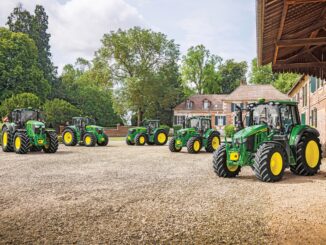
John Deere uses a Product Identification Number (PIN)/VIN or Serial Number to uniquely identify each machine, plus separate model identifiers and part numbers for every replaceable component.
For Detailed Guide to Specific Models, please follow links and then follow links to series guides:
- John Deere Lawn and Garden Tractors
- John Deere Zero Turn Mowers
- John Deere Walk Behind Mowers
- John Deere Compact Tractors
- John Deere Agricultural Tractors
- John Deere Gator Utility Vehicles
- John Deere Skid Steer
- John Deere Compact Excavators
- John Deere Backhoe Loaders
- John Deere Combines
- John Deere Harvesting
- John Deere Balers
- John Deere Planters
- John Deere Tillage
- John Deere Engines
Modern machines typically use a 17‑character alphanumeric PIN that works much like a vehicle VIN.
For end users, those numbers matter because they let you:
-
Identify the exact model and configuration for parts and service.
-
Decode build year, factory and machine series when buying or selling used equipment.
-
Access the correct online John Deere Parts Catalog and dealer systems by entering the PIN or model.
How John Deere identification tags work
A typical John Deere ID tag has:
-
Model number (for example “Z235”, “1025R”, “X350”).
-
Product Identification Number (PIN) or serial number, usually 13–17 characters.
-
Sometimes additional codes for specification or configuration.
On many machines the model name appears under a “MODEL” heading, and the serial number is underlined or labelled on the top right of the tag. Older tractors may use shorter numeric serials stamped on plates rather than a 17‑digit alphanumeric PIN.
Modern 17‑digit Deere PINs encode:
-
Factory code (first characters, for example “1M” for a U.S. plant, “LV” for European).
-
Machine model series in the next block of characters.
-
Configuration or machine series code.
-
Sequential build number at the end, starting from 000001 for that model.
General Steps: from John Deere Machine to Part Number
This core workflow is the same whether you’re dealing with a lawn tractor or a combine:
-
Locate the ID tag: Find the model and PIN/serial on the machine frame, body or chassis; write it down or photograph it.
-
Capture engine information if needed: If you’re buying internal engine parts, also record the separate engine serial number from the engine’s own tag.
-
Go to the John Deere Parts Catalog (web or app): Use the public online catalog or the John Deere Equipment mobile app.
-
Search using model or PIN: Enter the equipment model, model title, catalog number, or directly enter the PIN to jump to the right catalog for your specific machine.
-
Navigate diagrams: Browse the catalog sections (engine, electrical, hydraulics, mower deck, etc.) and open the exploded diagrams.
-
Identify and note the part number: Use the diagram legend to match the physical component to its John Deere part number, then copy the part number (not just the description).
-
Cross‑check against serial ranges: Many parts are valid only within certain serial number breaks, so confirm that your serial is in the range listed for that part.
If you don’t want to use the web catalog, you can look in your printed owner’s manual or PDF manual where parts diagrams and reference numbers are often included. A dealer can also look up part numbers if you provide the model and serial over the phone.
| Broad group | Typical Deere types with serial numbers |
|---|---|
| Farm power | Agricultural tractors, compact tractors, specialty tractors. |
| Turf & grounds | Lawn tractors, garden tractors, zero‑turn mowers, walk‑behind mowers, Blades |
| Utility vehicles | Gator utility vehicles and similar small transport machines. |
| Construction | Skid steers, CTLs, compact excavators, loaders, dozers, backhoe‑loaders, graders, articulated dump trucks. |
| Harvest & hay | Combines, forage harvesters, headers, balers, large hay tools. |
| Seeding & crop care | Planters, drills, air seeders, sprayers, larger applicators. |
| Tillage & soil tools | Disc harrows, cultivators, chisels and other large frames. |
| Power units | Stand‑alone John Deere engines with ESN plates. |
John Deere Serial Number Lookup
A John Deere serial number year lookup is a useful method for determining the production year of a John Deere machine, such as a tractor, lawn mower, or other equipment.
Each John Deere product is assigned a unique serial number during manufacturing that provides valuable information, including the year it was built. This can be crucial for ordering parts, scheduling maintenance, verifying authenticity, or evaluating resale value.
The serial number is typically located on a metal tag or sticker somewhere on the machine’s frame or body, such as the engine block, rear axle housing, main chassis, or under the seat for lawn tractors. The format and placement of the serial number may vary depending on the model and year of the equipment.
John Deere has used various serial number systems over the decades, but modern serial numbers often follow a standardized structure.
Typically, the serial number includes a combination of letters and digits that convey the factory of assembly, type of machine, model number, and manufacturing year.
The last several digits usually represent the sequence number, which is unique to each unit.
To find the production year, one can refer to a John Deere serial number chart or use online lookup tools provided by John Deere or reputable equipment forums. These charts list serial number ranges for each model by year, allowing owners to match their serial number to a specific production year.
Understanding the serial number not only helps determine the age of the machinery but also assists in identifying the correct parts and service instructions.
This can be particularly helpful with older models for which documentation may be scarce. With this knowledge, owners and buyers can make informed decisions about purchasing, restoring, or repairing John Deere equipment.
John Deere Serial Number Lookup Digital
Finding the Year from a John Deere Serial Number
Determining the year of a John Deere tractor or equipment from its serial number can be done digitally, depending on whether it’s a newer or older model. Here’s how you can approach it:
Newer Tractors (17-Digit VINs)
If your tractor has a 17-digit Vehicle Identification Number (VIN), the year is typically encoded in the 10th character. This follows a standard format used since 1981, where:
- A represents 2010
- B represents 2011
- And so on, up to Z for 2039, repeating every 30 years.
For example, if the 10th character is “C,” it likely means the tractor was made in 2012. You can use general VIN decoder websites to input the VIN and get the year, but ensure they support agricultural equipment for accuracy.
Older John Deere Tractors (Shorter Serial Numbers)
For older tractors with 5-6 digit serial numbers, there isn’t a direct date code in the number.
Instead, you can use online resources that provide tables listing starting serial numbers for specific models and years. Websites like anglo-agriparts.com and news-jd.com offer such tables. Compare your serial number to the ranges to estimate the year, though accuracy may depend on the model.
Additional Resources
For model-specific details, you can check jdparts.com, where documentation may include serial number ranges by year. If the serial number is damaged or missing, contacting a John Deere dealership or using their online customer service might help.
John Deere Serial Number Year Lookup
This section provides a comprehensive analysis of how to digitally look up the year of a John Deere tractor or equipment using its serial number, based on available online resources and guides.
The information is derived from various digital sources, including official John Deere websites, third-party agricultural parts sites, and community forums, ensuring a thorough understanding for users seeking to identify the manufacturing year of their equipment.
Background and Context
John Deere equipment, such as tractors, lawn mowers, and utility vehicles, is identified by serial numbers, also known as Product Identification Numbers (PINs) or Vehicle Identification Numbers (VINs) for newer models.
These numbers can provide critical information, including the year of manufacture, which is essential for maintenance, parts ordering, and historical tracking.
The method for determining the year varies depending on whether the equipment is a newer model with a 17-digit VIN or an older model with a shorter serial number (typically 5-6 digits). Given the user’s request for a digital lookup, this survey focuses on online resources and methods available as of July 16, 2025.
Methodology for Year Determination
1. Newer John Deere Tractors with 17-Digit VINs
For modern John Deere tractors, particularly those in series like 7030, 8R/8RT, and 9030, the serial number is a 13-17 digit VIN, following a standardized format similar to road vehicles. Research suggests that the year of manufacture is encoded in the 10th character of this VIN, using the same system implemented since 1981:
- The sequence starts with A for 2010, B for 2011, and continues alphabetically (C for 2012, D for 2013, etc.) up to Z for 2039.
- This cycle repeats every 30 years, but given the current date (July 16, 2025), this is not yet relevant for ambiguity.
For example, if the VIN is “CD6068G123456,” the 10th character is “1,” which corresponds to 2001 based on the standard VIN year coding. This method is digital and can be performed by manually decoding the VIN or using online VIN decoder tools.
However, users should verify that the decoder supports agricultural equipment, as some are designed primarily for cars and trucks. Potential resources include general VIN decoder websites like vindecoderz.com, though their applicability to John Deere tractors should be confirmed.
The serial plate for these models is typically located on the right-hand frame below the engine, making it accessible for users to record and decode.
2. Older John Deere Tractors with Shorter Serial Numbers
For tractors manufactured before the 1970s, serial numbers are generally 5-6 digits long and do not have an embedded date code. To determine the year, users must rely on model-specific serial number ranges, which can be found in digital resources.
Several websites provide tables that list the starting serial numbers for each year of production for various models. For instance:
- Anglo Agri Parts offers a guide with a table under the section “What Year Was Your John Deere Manufactured?” Examples include:
MODEL YEAR STARTING SERIAL NUMBER John Deere Model 40 2-Row Utility 1955 60001 John Deere Model 40 Hi-Crop 1954, 1955 60001, 60060 John Deere Model 40 Special 1955 60001 John Deere Model 40 Standard 1953, 1954, 1955 60001, 67359, 69474 - John Deere News & Innovations provides a similar table under “How to find out the year of manufacture of a John Deere tractor,” with examples like John Deere Model 50 (1952, starting at 5000001) and Model 60 (1952, starting at 6000001).
To use these tables, identify your tractor’s model and compare your serial number to the listed starting numbers.
For instance, if you have a John Deere Model 40 Standard with serial number 65000, and the table shows 1953 starting at 60001 and 1954 at 67359, your tractor is likely from 1953, assuming serial numbers increase sequentially.
However, these tables often list only starting numbers, not ending ranges, which may require estimation and could introduce uncertainty.
3. Additional Digital Resources and Methods
Beyond the tables, users can leverage John Deere’s official digital platforms for further assistance:
- jdparts.com: This is John Deere’s parts catalog website, where users can enter the model number (e.g., “X495”) and access the “Documents” section. The introduction PDF for the model may include serial number ranges by year, providing another digital method to find the year. Note that access may require registration or be dealer-oriented, so availability for general users should be verified.
- John Deere Engine Information Search: For engine serial numbers, the official John Deere website offers an “engine information search online product database.” Users can enter the engine serial number to access details like the year of manufacture, manuals, and other facts. However, this is specific to engines and may not directly apply to equipment serial numbers, though for some models, the engine and equipment serial numbers may align.
Community forums, such as Green Tractor Talk, also provide insights. For example, a discussion from 2019 notes that for 17-symbol VINs, the year is in the 10th character, and for older models, users should visit a dealership or use online forms. This reinforces the dual-method approach for newer and older tractors.
Practical Considerations and Limitations
- Serial Number Location: For newer tractors, the serial plate is on the right-hand frame below the engine. For older models, it may be near the engine or on the frame, and if damaged or missing, users can use the “pencil and talc method” (rubbing a pencil over the plate to reveal numbers) or trace the history through previous owners or the original dealer.
- Accuracy and Uncertainty: For older tractors, the lack of ending serial number ranges in tables can make year determination approximate. Users should cross-reference multiple sources for accuracy, especially for models with overlapping serial numbers across years.
- Digital Tool Availability: While there is no single, official John Deere online tool for direct serial number year lookup, the combination of VIN decoding, model-specific tables, and documentation on jdparts.com provides a robust digital workflow. General VIN decoders may work for 17-digit VINs, but their support for agricultural equipment should be confirmed to avoid errors.
Conclusion
As of July 16, 2025, digitally looking up the year of a John Deere tractor or equipment from its serial number involves:
- Decoding the 10th character of 17-digit VINs for newer models, potentially using VIN decoder websites.
- Using online tables from sites like anglo-agriparts.com and news-jd.com for older models, comparing serial numbers to model-specific ranges.
- Exploring jdparts.com for model documentation and contacting John Deere support for additional assistance if needed.
This approach ensures users can leverage digital resources effectively, though accuracy may vary by model and source, highlighting the importance of cross-referencing information.
John Deere 13 Digit Serial Number Lookup
How to Look Up a 13-Digit John Deere Serial Number
For a 13-digit John Deere serial number, you can start by decoding it yourself using the following steps:
- Locate the Serial Number: Look for the serial number on the right-hand frame below the engine, not on the engine itself.
- Decode the Factory Code: The first part of the serial number indicates the factory where it was built. Use the table below to find the location (e.g., “PY” means Pune, India).
- Understand Additional Details: The serial number may also help identify the year of manufacture, emission levels, and transmission type, though this may require additional resources or dealer assistance.
For more detailed information, such as production history or specific build details, contact a John Deere dealer, as online tools for full lookups are limited.
Supporting Resources:
John Deere 13-Digit Serial Number Lookup
This section provides a comprehensive overview of the process for looking up and decoding a 13-digit John Deere serial number, based on available resources and research conducted on August 4, 2025.
It includes all relevant details to ensure a thorough understanding for users seeking to identify information about their John Deere equipment.
Introduction
John Deere equipment, particularly tractors, is identified by serial numbers that can range from 5 to 17 digits, depending on the model and production era.
For 13-digit serial numbers, which are common for large tractors such as the 7030 Series Large-Frame, 8R/8RT Series, and 9030 Series, the serial number (also referred to as the Product Identification Number or PIN) contains critical information about the equipment’s manufacturing details.
This note explores how to locate, decode, and look up these serial numbers, acknowledging the limitations of online tools and the need for dealer assistance for comprehensive data.
Locating the John Deere Serial Number
The first step in any serial number lookup is to find the serial number on the equipment. For John Deere tractors, the serial plate is located on the right-hand frame below the engine, distinct from the engine serial number, which is found on the engine itself.
This distinction is crucial, as the engine serial number serves a different purpose and may not provide the same information. If the serial plate is worn, damaged, or missing, users are advised to trace the equipment’s history through previous owners or the original dealer, as older models may have incomplete records.
Understanding the John Deere Serial Number Format
John Deere serial numbers for modern large tractors typically range from 13 to 17 digits, with 13-digit numbers often associated with older or specific models. The format includes several components:
- Factory Code: The initial part of the serial number indicates the manufacturing location. This code is essential for identifying where the tractor was built and can be decoded using a factory code table.
- Year of Manufacture: While not always directly encoded in a simple format, the serial number can be cross-referenced with model-specific serial number ranges to estimate the production year.
- Emission Levels and Transmission Designation: Certain digits may indicate emission standards (e.g., Tier 1, Tier 2) and the type of transmission installed, which are important for regulatory compliance and maintenance.
For tractors manufactured before the 1970s, serial numbers may be only 5 or 6 digits, but given the user’s focus on a 13-digit number, this note assumes a more recent model within the specified range.
Decoding the John Deere Serial Number
Decoding a 13-digit John Deere serial number involves breaking it down into its components, primarily starting with the factory code. Below is a table of factory codes and their corresponding locations, based on research from Anglo Agriparts:
| Factory Code | Factory Location |
|---|---|
| A | John Deere Plow Works, Moline, Illinois, USA |
| AP | Industries John Deere Mexico S.A de C.V., Saltillo/Monterrey, Mexico |
| AT | Agritalia srl, Vittoria, Sicily, Italy |
| B | John Deere Planter Works, Moline, Illinois, USA |
| BE | Bell Equipment Co., Richards Bay, South Africa |
| C | John Deere Spreader Works, East Moline, Illinois, USA |
| CD | Saran, France |
| CQ | John Deere Brazil, Horizontina, Brazil |
| D | John Deere Wagon Works, Moline, Illinois, USA |
| DW | John Deere Davenport Works, Davenport, Iowa, USA |
| E | John Deere Ottumwa Works, Ottumwa, Iowa, USA |
| F | Syracuse Chilled Plow Company, Syracuse, New York, USA |
| FF | Deere-Hitachi Kernersville, North Carolina, USA |
| FG | Goldoni S.P.A., Modena, Italy |
| H | John Deere Harvester Works, East Moline, Illinois, USA |
| K | John Deere Killefer Works, Los Angeles, California, USA |
| KV | John Deere Commercial Worksite Products, Knoxville, Tennessee/Dubuque, Iowa, USA |
| L | John Deere Werke Mannheim, Germany |
| LA | John Deere Werke Mannheim, Germany |
| LV | John Deere Commercial Products, Augusta, Georgia, USA |
| M | John Deere Horicon Works or John Deere Van Brunt Company, Horicon, Wisconsin, USA |
| N | John Deere Des Moines Works, Des Moines, Iowa, USA |
| P | Industrias John Deere Mexico S.A. de C.V., Saltillo/Monterrey, Mexico |
| PE | Torreón, Mexico |
| PY | Larson & Toubro Ltd., Pune, India |
| R | John Deere Waterloo Tractor Works, Waterloo, Iowa, USA |
| RG | John Deere Waterloo Tractor Works, Waterloo, Iowa, USA |
| RW | John Deere Waterloo Tractor Works, Waterloo, Iowa, USA |
| T | John Deere Dubuque Tractor Works, Dubuque, Iowa, USA |
| T8 | Cameco Industries, Thibodaux, Louisiana, USA |
| TJ | John Deere Forestry (Timberjack), Sweden/Finland/Canada |
| U | John Deere Industrial Equipment Works |
| W | John Deere Welland Works, Welland, Ontario, Canada |
| Y | John Deere Yakima Works, Yakima, Washington, USA |
| YC | Jialian Harvester Co., Limited, China |
| X | All Factories mentioned |
| Z | John Deere Zweibrucken, Germany |
For example, if your serial number starts with “PY,” it indicates the tractor was manufactured in Pune, India. Additional decoding for year and other specifications may require cross-referencing with model-specific serial number ranges, which can be found on resources like TractorData.com or through dealer assistance.
Limitations of Online Lookup Tools
Research indicates that there is no widely available, free online tool specifically designed for looking up 13-digit John Deere serial numbers to retrieve comprehensive details such as production history, build sheets, or warranty status.
While some third-party websites, such as Diesel Parts Direct, offer decoders for engine serial numbers, these are focused on engine-specific information and may not apply to the tractor’s PIN.
Similarly, VIN decoder services like ClearVin are designed for 17-digit VINs, which are standard for newer models, and do not support 13-digit serial numbers.
John Deere’s official website provides an engine information search for engine serial numbers, accessible at John Deere Engine Parts & Support, but this is limited to engines and does not cover tractor PINs.
For tractor-specific lookups, the evidence leans toward contacting a John Deere dealer, who has access to official databases for detailed information.
Alternative Resources
For users seeking additional assistance, the following options are available:
- Two-Cylinder Club: Offers paid serial number research for vintage John Deere tractors, with a fee of $60 per research and processing times of 8 to 18 weeks. This service is not online and requires mailing or phone orders, as detailed at Two-Cylinder Club – Tractor Serial Number Research. Note that it has exceptions for certain models, such as no records for Model “L” Tractors before serial number 625000.
- Dealer Contact: John Deere dealers can provide detailed information, including build sheets and historical data, by entering the serial number into their systems. This is particularly useful for newer tractors (around 1990 or later), as mentioned in resources like TractorData.com.
Practical Steps for Users
To summarize, users can follow these steps for a 13-digit John Deere serial number lookup:
- Locate the serial number on the right-hand frame below the engine.
- Use the factory code table to identify the manufacturing location.
- For year and other details, cross-reference with model-specific resources or contact a dealer for comprehensive information.
- If historical data is needed, consider the Two-Cylinder Club for vintage models, though this is a paid, non-online service.
Conclusion
While it is possible to decode a 13-digit John Deere serial number to find basic details like the factory location using resources like Anglo Agriparts, a full online lookup for detailed history or specifications is not readily available.
For the most accurate and comprehensive information, contacting a John Deere dealer is recommended. This approach ensures users can access official records and support, enhancing their understanding and maintenance of their equipment.
John Deere Lawn & Garden Tractors
Lawn and garden equipment is one of the most common areas where owners search for tags and parts. This covers older garden tractors and modern residential X‑Series lawn tractors.
Where to find the John Deere serial number
On most lawn tractors and classic garden tractors, the identification tag is:
-
Mounted on or just below the rear frame near the left or right wheel.
-
On the frame under the seat, visible when you tilt or remove the seat.
John Deere’s own guide for lawn mowers states that the model number appears under “MODEL” and the serial is at the top right of the tag, often underlined. Many third‑party diagrams show examples for older models like the 110, 112 and 140.
Using John Deere lawn tractor serials to find parts
To get part numbers for a lawn tractor:
-
Enter the model (for example “X350”, “E110”) into the John Deere Parts Catalog search field.
-
If the catalog asks for a serial range, match your serial against the breakpoints listed in the catalog notes.
-
Browse sections like “Mower deck”, “Engine”, “Steering” or “Electrical” to locate the diagram of the area you’re repairing.
If you are replacing blades or belts, many dealers and aftermarket suppliers also allow search by model + deck size, but the most precise match is always using the part number from the Deere catalog.
John Deere Zero‑Turn mowers
Residential and commercial ZTrak zero‑turns are extremely common and have their own consistent tag locations.
Locating the PIN on zero‑turns
Typical zero‑turn mower tag locations include:
-
On the main frame near the rear of the machine, often on the right‑hand side.
-
Under or beside the operator seat, on the frame cross‑member.
Once you find the tag, record both the model (for example “Z235”, “Z545R”) and the full serial/PIN.
John Deere Serial decoding and parts lookup
Zero‑turns use the same Deere 17‑digit PIN structure, so the letters after the factory code correspond to the mower model and series. To find part numbers:
-
Use the John Deere catalog or mobile app and search via the PIN to jump directly to your mower’s catalog.
-
Navigate to the mower deck, transmissions, controls or engine sections depending on the repair.
Serial breaks are especially important for hydrostatic transmissions and control levers, where mid‑production changes can alter part numbers.
Browse John Deere Zero Turn Models by Series
-
John Deere Z500 Series – Link to Series index page.
John Deere Walk‑Behind Mowers and small residential equipment
Many walk‑behind mowers, small snow throwers and other residential machines have smaller ID labels but follow the same principles.
Finding the ID tag
You’ll usually find the tag:
-
On the rear of the mower deck or housing.
-
On the side of the deck near a rear wheel.
-
Occasionally on the handle frame.
Because the tags are smaller, they can wear or peel, so photographing them early in the machine’s life is good practice.
Using model and serial for parts
For small equipment:
-
Search the parts site primarily by model number, then filter by serial range if prompted.
-
For engines branded separately (for example Briggs & Stratton on some older machines), you may need the engine manufacturer’s model/serial as well as the Deere equipment serial.
John Deere Compact and Sub‑Compact Utility Tractors
Compact tractors (1, 2, 3 and 4 Series) are a key audience for your site and have well‑documented PIN locations.
Where to find the tractor serial number
Common locations on compact and sub‑compact tractors:
-
On the right‑hand side of the frame, just above or behind the front axle.
-
Near the front‑right corner of the machine, visible when you look at the frame rail between front tire and engine compartment.
Dealer guides emphasise looking at the right‑hand frame rail while standing at the front right of the tractor.
Using the PIN in the catalog
For compact tractors:
-
Enter your model (for example “1025R”, “2025R”, “3038E”, “4066R”) into the John Deere Parts Catalog search.
-
Where available, enter the full PIN to take you directly into the correct parts catalog and configuration.
-
Select the subsystem (engine, transmission, 3‑point hitch, loader, hydraulics, cab, etc.) and then the specific assembly diagram.
Certain parts (for example filters, belts, hoses) are common across broad serial ranges, but others, such as hydraulic valves or electronic modules, can change at specific serial number breaks, so always confirm the listed range covers your tractor’s serial.
John Deere Agricultural Tractors (Row‑crop, Utility, Specialty)
Larger farm tractors from the 5, 6, 7, 8 and 9 Series plus older row‑crop, utility and specialty models are all serialised.
Serial plate locations on agricultural tractors
Typical positions include:
-
On the main tractor frame near the front right or left side, depending on model and generation.
-
On some older models, on a side of the clutch housing or rear axle housing.
Anglo‑Agriparts notes that different eras used 13‑ or 17‑digit IDs and that machines from the 1960s–1970s may have only numeric serials on stamped plates.
Using tractor serial numbers for parts and year ID
To use these numbers:
-
For year identification, you can cross‑reference the serial against published serial‑number charts that map ranges to years.
-
For parts, enter the tractor model or PIN into the John Deere Parts Catalog and navigate by functional group.
Many aftermarket sites and manuals also publish model‑year‑to‑serial reference charts that help verify the approximate build year.
John Deere Gator Utility Vehicles
John Deere Gators are widely used on farms, estates and worksites and have consistent PIN locations.
Locating the Gator serial
Depending on the series, you’ll typically find the tag:
-
On the frame under the passenger seat or driver seat.
-
On the frame rail near the rear wheel or cargo box.
The tag includes the model designation (for example “XUV825i”) and the 17‑digit PIN.
Parts lookup for Gators
Using the PIN or model:
-
In the John Deere Parts Catalog or mobile app, search by model or PIN to reach the specific Gator catalog.
-
Browse sections such as engine, driveline, suspension, cab, and electrical to identify the relevant assemblies and part numbers.
Because Gators often have variant packages (for example power steering or cab options), using the PIN reduces mis‑orders compared with using model alone.
John Deere Skid Steers and Compact Track Loaders
These construction machines are heavily serial‑driven for parts because hydraulic and control systems evolve rapidly.
Where to find the PIN
On Deere skid steers and compact track loaders the plate is usually:
-
On the frame inside the cab near the operator’s seat or entry step.
-
On the main frame near the rear lift arms.
The PIN is again a 17‑digit code that identifies model and build sequence.
Serial‑specific parts
For these machines:
-
Use the PIN to access the correct catalog via the John Deere site or app.
-
Pay special attention to serial breaks for hydraulic pumps, control valves and electrical modules, which often change mid‑series.
John Deere Compact Excavators
Compact or mini‑excavators have similar frame‑mounted ID plates.
Typical serial plate locations
Common places include:
-
On the main frame near the right‑hand side of the machine, close to the cab or steps.
-
On the undercarriage frame by a track frame.
Once located, record the entire PIN and model type.
Using excavator serials for parts
Use the serial in the parts catalog in the same way as with skid steers:
-
Search by model or PIN to open the right catalog.
-
Navigate to boom, arm, bucket linkage, hydraulic system, undercarriage or cab sections as needed.
Pins, bushings and hydraulic components can differ across serial ranges even within the same model, so always verify the range printed in the parts list.
John Deere Loaders (wheeled and crawler), Backhoe Loaders, Dozers and Graders
Larger construction equipment uses the same PIN structure but with different tag locations.
Finding the machine serial
On these machines, ID tags are typically:
-
On the frame near the front or rear of the machine, sometimes on a step or frame rail near the cab door.
-
On the front mainframe or side of the machine for dozers and graders.
Older dozers and graders may use shorter numeric or 13‑digit IDs instead of the full 17‑digit format.
Parts and configuration
You can:
-
Enter the model or PIN on the John Deere parts site to access the correct catalog.
-
Use PIN‑based filtering to ensure you get parts compatible with your specific transmission, blade, or steering configuration.
Some larger machines also have separate serial plates for major attachments (for example blade or ripper assemblies); when ordering parts specific to an attachment, note both the machine and attachment serials.
John Deere Combines and Self‑Propelled Harvesters
Combines and self‑propelled forage harvesters are serialised at both the base machine and header level.
Combine Serial Plates
Base machines usually have serial plates:
-
On the main frame on one side of the machine, often near the front ladder or behind a panel.
-
On some models, near the rear axle or under the unloading auger area.
The plate shows the 17‑digit PIN, model and other codes.
Using combine serials for parts
To find parts:
-
Use the John Deere Parts Catalog and search by PIN or model to reach the combine catalog.
-
Navigate to grain handling, threshing, cleaning, engine or cab sections depending on the component.
-
Check notes for serial breaks because combines often receive annual updates that change cleaning shoe parts, electronics or hydraulic components.
John Deere Harvesting Headers and Platforms
Headers (grain platforms, corn heads, pick‑up heads) carry their own serial plates separate from the combine.
Header Serial Locations
Common locations:
-
On the header frame near the left‑hand side.
-
On the rear of the header near the mounting area.
Header‑specific parts
When ordering header parts:
-
Identify both the header model and serial number from the header’s tag.
-
In the parts catalog, select the correct header catalog rather than the combine catalog.
Components such as stalk rolls, knives, auger parts and drive chains are often specific to certain header models and serial breaks.
John Deere Balers and Hay Tools
Round balers, small square balers and large hay tools carry frame‑mounted serial plates.
Typical serial plate locations
You’ll usually find the tag:
-
On the left or right side of the baler frame near the front or hitch.
-
On pull‑type hay tools, on the main tongue or frame near the hitch.
The tag includes baler model and serial.
Parts lookup for balers and hay tools
Use the model or PIN:
-
Search the John Deere parts site for the baler model; filter by serial break when necessary.
-
Look up net wrap components, belts, pickup assemblies and knotter parts in the relevant assemblies.
Because knotter systems and electric controls are often updated, checking your serial against catalog notes is important when ordering replacements.
John Deere Planters, Drills, Air Seeders and Sprayers
Seeding and crop protection equipment also uses serial numbers to track configuration and options.
Serial locations
On planters and drills:
-
The tag is usually on the main frame or tongue, close to the hitch.
-
On large air seeders, it can be on the cart frame as well as on the seeding bar.
On self‑propelled sprayers:
-
The PIN tag is commonly on the chassis frame near the front or side of the machine, close to the ladder or cab access.
Parts Lookup and Application Control Components
Once you have the serial:
-
Use it in the parts catalog to retrieve the correct planter, drill, seeder or sprayer catalog.
-
Pay attention to option codes and serial breaks for electronic application control modules, rate controllers, sensors and boom components.
John Deere Tillage Tools and Soil Preparation Equipment
Larger tillage tools often have frame serials; smaller or older implements may have less formal tagging.
Where to find serial tags
For heavier tillage implements (discs, chisel ploughs, field cultivators):
-
Look on the main frame near the hitch for a metal plate or decal.
-
On winged implements, additional tags may be on the centre section frame.
Using implement serials
Once identified:
-
Search by implement model, then verify that any parts you select are valid for your serial range (especially cylinder kits, bearings and structural bits that may have been updated).
John Deere Stand‑alone Engines
John Deere engines carry their own engine serial numbers distinct from the equipment PIN.
Engine data plates
Engine identification plates are typically:
-
On the side of the engine block, often on a machined flat or mounting pad.
-
On or near the valve cover on some models.
KMP Brand and other engine specialists provide guides and diagrams showing common locations for Deere engine plates.
Using engine serials for engine parts
For engine‑specific parts:
-
Use the engine serial number (ESN) to look up the correct parts, either through a Deere engine dealer or via engine‑specific catalogs.
-
Many engine components (pistons, injectors, pumps) depend on exact ESN and emissions configuration rather than the machine’s PIN.
Using the John Deere Parts Catalog and mobile app
The online John Deere Parts Catalog and the John Deere Equipment mobile app are central to turning model and serial numbers into actual part numbers.
Web catalog workflow
On the web catalog:
-
From the main screen, you can enter model number, equipment type, model title, parts catalog number, or PIN in the search field.
-
When entering a parts catalog number directly, you must include the “PC” prefix (for example PC1234).
Once in the catalog:
-
You can browse by major group (engine, power train, electrical, etc.) and then by assembly.
-
Each assembly page shows an exploded diagram with reference numbers mapped to part numbers in a table.
Mobile app workflow
With the John Deere Equipment mobile app:
-
You can quickly search the Parts Catalog and related systems using your model or PIN.
-
The app allows shortcut access to the correct catalog for your machine and can store equipment lists tied to specific serials.
Alternative ways to find part numbers
If you can’t or don’t want to use the online catalog, there are other options.
John Deere Owner’s Manuals and Printed Catalogs
Owner’s manuals often:
-
Include parts diagrams and reference numbers for routine service items.
-
Provide lists of common wear parts (filters, belts, blades) with either Deere part numbers or dealer references.
Some models still have dedicated printed or PDF parts catalogs, which you can reference by catalog number (for example PC‑xxxx) when using the online interface.
Part Numbers from Old Components
If you still have the failed part:
-
Check the part itself for stamped or printed part numbers or supplier codes.
-
Many Deere parts have numbers that are still valid or map directly to superseded part numbers in the catalog.
You can also take that number to a dealer or an online parts supplier to cross‑reference it.
Dealer Assistance
Dealers commonly offer parts support if you provide:
-
Equipment model and serial/PIN.
-
Engine serial number where relevant.
They can then use internal systems tied to those IDs to ensure you receive the correct part numbers.
Understanding serial‑number‑based changes (serial breaks)
Many Deere parts catalogs use serial breaks to indicate that design changes occurred at specific serial points within a model’s production run.
How serial breaks are shown
In catalog notes you’ll often see phrasing like:
-
“Used on machines up to serial number XXXXXXX”
-
“Used on machines from serial number XXXXXXX”
-
“For serial number range XXXXXX – YYYYYY”
This means that two machines with the same model but different serials may require different parts for the same assembly.
The Importance of Serials
-
Entering model alone can be enough for some common service parts, but relying solely on model increases risk of ordering incorrect components for items affected by serial changes.
-
Using the full PIN whenever possible gives the highest fidelity match in Deere’s catalog and third‑party tools.
Difference between John Deere Serial Numbers and Vin Numbers
For a modern John Deere compact tractor, the “serial number” and “VIN” are usually the same 17‑character Product Identification Number (PIN); older tractors may have a short sequential serial number instead of a VIN‑style PIN.
Basic definitions
-
Serial number (older usage)
Traditionally, John Deere tractors just had a short sequential serial number that identified the individual machine within a model line, often only 5–6 digits on vintage units, or part of a longer 13–17 digit code on later machines. -
VIN / PIN (modern usage)
Since around 2000, John Deere has used a 17‑digit Product Identification Number (PIN) on most equipment, which is structurally and functionally like a vehicle VIN: it encodes manufacturer, model, configuration, year, and a unique sequence at the end.
How John Deere uses the terms
-
On compact and lawn tractors, the plate often labels the long 17‑digit code as the serial number, even though it is technically the PIN/VIN‑style identifier.
-
Dealers and parts sites will refer to that same 17‑digit code as the PIN, serial, or VIN interchangeably, because it serves all three roles: it uniquely identifies the tractor and contains the coded build info.
What each number tells you
-
17‑digit PIN/VIN‑style serial
Typical structure on a John Deere compact tractor:-
First 2–3 characters: manufacturer/plant code (World Manufacturer Identifier).
-
Next group: model and configuration (tractor series, chassis type, etc.).
-
9th character: check digit for validation.
-
10th character: year code (same pattern as automotive VIN year codes).
-
Final digits: the actual sequential serial portion for that model.
-
-
Old short serial numbers
On pre‑PIN tractors, the serial was mainly used to:-
Determine build year from serial‑range charts.
-
Match parts changes that occurred at specific serial breaks.
-
Practically, what’s the difference for you?
-
If your compact tractor has a 17‑digit alphanumeric code on the ID plate, that’s your serial number, VIN, and PIN all in one; use that full code for parts lookup, registration, insurance, or dating the machine.
-
If you’re dealing with an older John Deere that only shows a short numeric serial on the frame, it does not have a modern VIN‑style PIN; in that case “serial number” is just the sequential build number, and there is no separate VIN.
How to Order John Deere Parts
When ordering John Deere parts, people should have the serial/PIN plus a few other key details: the exact model, the specific part number (from catalog or old part), and info about attachments like mower decks or engines.
Core machine details
-
Model designation
Dealers and online catalogs normally start from the model (e.g. 1025R, 3038E, X350), then narrow by serial range, so you always need the exact model as well as the serial. -
Product Identification Number (PIN) / serial
The 17‑digit PIN (or older short serial) ties you into the correct parts catalog, filters superseded parts, and avoids mid‑series changes.
Part‑specific information
-
Part number (if known)
Best‑case scenario is turning up with the John Deere part number from the online parts catalog or stamped on the old component, which is typically an 8‑character code like AM39653. -
Description and location
If you don’t know the part number, dealers often ask for a plain‑language description (“LH mower blade”, “outer tie rod”, “seat switch”) and where it sits on the machine so they can find it in the diagrams.
Attachments and sub‑components
-
Deck / implement model and serial
Many tractors have separate serials for the tractor, the mower deck, and other implements; deck width and model (e.g. 54D, 60D, 72‑inch rotary cutter) can change which blades, belts, or gearboxes you need. -
Engine identification
Engines often carry their own serial tags, which matter for things like carburetors, injectors, filters, and gaskets, especially on OEM John Deere engines and some Yanmar‑powered compacts.
Helpful extra details
-
Year or approximate build date
If someone only has a model and rough year, that can still get them into the right serial range chart to narrow parts options. -
Old part for comparison
Bringing the worn part (or clear photos and any casting/printed numbers on it) lets the dealer visually confirm style changes and cross‑reference to the latest superseded number.
John Deere Serial Number, PIN and Part Number FAQ
1. What is a John Deere Product Identification Number (PIN)?
A John Deere Product Identification Number, often called a PIN, is a multi‑character code that uniquely identifies a specific machine. It works much like a vehicle VIN and tells you the model, production sequence, and sometimes factory and configuration for that unit.
2. Is a PIN the same as a serial number?
In everyday use, yes. John Deere historically used shorter numeric serial numbers, but modern equipment uses a longer alphanumeric Product Identification Number. Most owners and dealers use “serial number” and “PIN” interchangeably when talking about machine identification.
3. Why do I need my John Deere serial number?
You need your serial number to:
-
Make sure you order the correct parts for your machine.
-
Confirm build year and configuration when buying or selling used equipment.
-
Allow dealers and online catalogs to pull up the exact specification of your machine.
Without it, you risk ordering parts that do not fit due to serial‑number‑based design changes.
4. Where can I find the serial number on my John Deere lawn tractor?
On most lawn and garden tractors, the serial number tag is on the tractor frame at the rear of the machine or directly under the seat. Tilt or lift the seat and look on the frame cross‑member or around the rear wheel area for a metal plate or sticker with the model and serial number.
5. Where is the serial number on a John Deere zero‑turn mower?
On ZTrak zero‑turn mowers, the ID tag is usually on the main frame near the rear of the machine or under/next to the operator’s seat. If you cannot see it from above, check along the right‑hand frame rail and around the rear axle area.
6. How do I find the serial number on a John Deere compact tractor?
Compact and sub‑compact tractors (1, 2, 3 and 4 Series) typically have their serial plate on the right‑hand side of the frame, just above or behind the front axle. Stand at the front‑right corner of the tractor and look along the frame rail for a riveted plate or decal.
7. Where is the serial number on larger agricultural tractors?
On larger agricultural tractors, the serial plate is usually on the main frame near the front of the machine or on the side of the clutch housing or rear axle, depending on the model and age. If the tractor is older, you may find a small metal plate with only numbers stamped into it rather than a printed label.
8. How do I find the serial number on my John Deere Gator?
Most John Deere Gators have the serial tag on the frame under or beside the seat or on the frame rail near the rear wheel or cargo box. Tip the passenger seat forward, check the frame cross‑members, and then look along the side rails if you don’t see it immediately.
9. Where is the serial number on skid steers and compact track loaders?
On John Deere skid steers and compact track loaders, the PIN plate is commonly inside the cab near the operator seat, on the entry steps, or on the main frame near the rear lift arms. Open the cab door and look around the door frame, step area, and inner frame rails.
10. How do I locate the serial number on a John Deere compact excavator?
Compact excavators have their serial plate on the main frame, usually near the right‑hand side of the machine, close to the cab or steps, or on the undercarriage frame by a track frame. Clean any dirt or paint overspray to reveal a metal plate or printed decal.
11. Where are serial numbers on combines and forage harvesters?
Combines and self‑propelled forage harvesters usually have their serial plates on the main frame, often near the front ladder, under access panels, or near the rear axle. Check both sides of the machine, especially around the operator access and under the grain tank or engine panels.
12. Do headers and platforms have separate serial numbers?
Yes. Headers, grain platforms, and corn heads carry their own serial plates independent of the combine. The tag is typically on the header frame near the left‑hand side or on the rear of the header close to the mounting area. You should record both the combine serial and the header serial when ordering header‑specific parts.
13. Where do I find the serial number on a John Deere baler or hay tool?
Round balers and square balers usually have a serial plate on the left or right side of the baler frame near the front or hitch. Pull‑type hay tools often have a tag on the tongue or main frame near the tractor hitch point. Look for a plate with the baler model and serial stamped or printed on it.
14. Do tillage implements have serial numbers?
Many larger tillage implements—such as disc harrows, cultivators and chisel ploughs—do have serial number tags on the main frame or tongue. Smaller or older implements may not, but whenever you see a riveted plate or decal on the frame near the hitch, that is usually the serial tag for that implement.
15. Do John Deere engines have their own serial numbers?
Yes. John Deere engines have separate engine serial numbers (often referred to as ESN) on an engine data plate. This is usually on the side of the engine block or on/near the valve cover. Engine parts are often specified by engine serial number in addition to the machine PIN.
16. How do I tell what year my John Deere machine was built from the serial number?
For many models, you can match your serial number to model‑year charts published in manuals and on specialist sites. For modern 17‑digit PINs, the code is more complex and often decoded by dealer systems and reference guides. A dealer, parts specialist, or dedicated serial‑number chart can usually give you an approximate build year once you provide the full serial.
17. What does a 17‑digit John Deere PIN mean?
A 17‑digit PIN contains:
-
A factory or manufacturer code at the start.
-
Characters that identify the model and series.
-
Configuration codes.
-
A sequential build number at the end.
Different series use slightly different code patterns, so you generally need a decoding guide or a dealer system to interpret every character.
18. Can I order parts using only the model number?
Sometimes, for basic wear parts like filters, common belts and blades, you can get away with using only the model number. However, mid‑production design changes mean that many components depend on serial number breaks. For anything beyond routine service parts, you should use both model and serial to ensure the parts you order will fit.
19. What is a serial number “break” and why does it matter?
A serial number break is a point in the serial range where John Deere changed a design or part. Parts catalogs will list different part numbers “up to serial X” and “from serial X” or show a serial range for each part. If you ignore these breaks and order the wrong side of the break, the part may not fit your machine even though the model number is the same.
20. How do I use the John Deere online Parts Catalog with my serial number?
On the online catalog, start by entering your equipment model, title, catalog number, or your full PIN in the search box. Once you’ve selected your machine, browse by assembly (engine, deck, hydraulics, etc.), open the exploded diagrams, and use the reference numbers to find the matching John Deere part numbers. When serial ranges are shown, confirm your serial falls inside the range listed for the part you choose.
21. Is there a mobile app for looking up John Deere parts?
Yes. The John Deere Equipment mobile app lets you search the Parts Catalog from your phone or tablet. You can search by model or PIN, store your machines, and quickly pull up diagrams and part numbers in the field or workshop instead of having to sit at a computer.
22. How do I find part numbers if I don’t have internet access?
If you don’t have internet access, you can:
-
Use printed parts catalogs or the parts section of your owner’s manual.
-
Use any previously downloaded PDF parts manuals on your computer or tablet.
-
Call your dealer with your model and serial and ask them to look up the part numbers for you.
It’s a good habit to print or save diagrams and reference lists for the machines you rely on most.
23. Can I read the part number directly off the old part?
Often you can. Many original parts have a Deere part number stamped, cast, or printed on them. If you can read that number, you can give it to a dealer or plug it into an online catalog or parts supplier. Even if the number has been superseded, the system will usually show the correct current part number.
24. How do I know if a John Deere part number has been superseded?
When you search an older part number online or through a dealer, the system will often return a message showing the newer, superseding part number. Dealers can also tell you that a part has been replaced by a different number and what the current recommended part is for your serial range.
25. What if my serial number tag is missing or unreadable?
If the tag is missing or unreadable, you still have options:
-
Look for the number in your original purchase documents, registration, or insurance paperwork.
-
Check any older photos you may have taken of the machine.
-
For tractors, look for stamped numbers on the frame or casting which may be traceable.
-
Work with a dealer, who may be able to narrow down your configuration by model, approximate year, and major features.
However, without a readable serial, there will always be some uncertainty, especially around parts that changed mid‑series.
26. Can I decode a John Deere serial number myself?
You can decode some high‑level information (model family and sometimes year range) using public charts and decoder guides. For full details and for very new or complex PIN structures, you usually need dealer‑level references or official decoding documents, which are not always publicly distributed.
27. Do attachments like loaders, backhoes and cabs have their own serial numbers?
Many larger attachments such as front loaders, backhoes and factory cabs have their own serial or product ID labels on the attachment frame. When ordering attachment‑specific parts—such as loader cylinders, cab glass or backhoe pins—it is wise to record both the tractor serial and the attachment serial, as certain parts are unique to particular attachment builds.
28. Is the engine serial number different from the tractor serial?
Yes. The engine serial number identifies the engine itself, while the tractor serial or PIN identifies the complete machine. You often need the tractor serial for chassis, transmission and body parts and the engine serial for pistons, injectors, fuel pumps and other internal engine components.
29. Do John Deere walk‑behind mowers have serial numbers?
Most John Deere walk‑behind mowers and small snow throwers have model and serial stickers, but they can be small and easy to miss. These tags are usually on the rear or side of the deck or on the handle frame. It’s worth writing the number in your manual or taking a clear photo before the sticker fades.
30. Can I use a John Deere serial number to check equipment history?
Serial numbers can help confirm model and approximate build date and sometimes help a dealer check warranty or recall status. However, they are not a full vehicle history report like you might get in the automotive world. For used equipment, you still need to rely on service records, inspection and seller information alongside the serial.
31. What is the best way to keep track of my John Deere serial numbers?
The most reliable approach is to:
-
Photograph each machine’s ID tag and engine data plate.
-
Write the model and serial numbers on the inside cover of the owner’s manual.
-
Store all your equipment details in a simple spreadsheet or note app, including model, serial, engine serial, purchase date, and dealer.
That way, even if the physical tag becomes unreadable, you still have accurate identification information to use for future parts and service.