
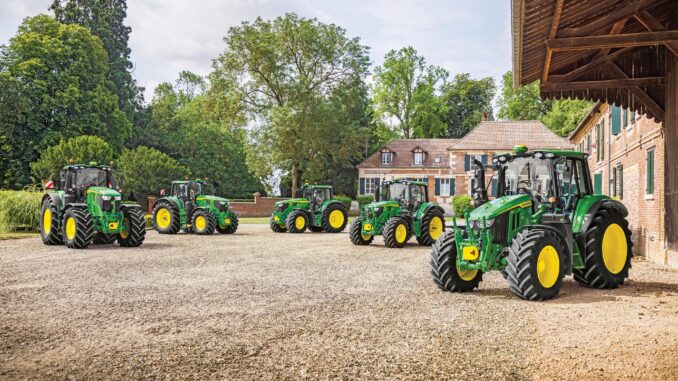
The John Deere 5065E is a 5E Series utility tractor aimed at light farm, acreage, loader, mowing, and general property work, and it uses a diesel engine with mechanical drivetrain, hydraulic, PTO, fuel, and electrical systems that matter when you are diagnosing faults or planning maintenance. This guide is built for owner-operators in the USA and Canada and covers practical troubleshooting, realistic DIY repairs, service intervals, parts ordering, and a large symptom-first FAQ .
John Deere 5065E overview
The John Deere 5065E sits in Deere’s 5E utility tractor range and shares many service patterns with nearby 5E models such as the 5055E and 5075E. On this platform, the systems owners most often deal with are the engine and fuel system, air intake, cooling system, transmission-hydraulic system, MFWD front axle if equipped, brakes, PTO/3-point hitch, and the starting/charging circuit.
From an owner perspective, that means most real-world issues show up as one of a few familiar symptoms: hard starting, stalling, low power, overheating, weak hydraulics, charging problems, or drivetrain complaints. Deere’s own manual also groups troubleshooting around engine, transmission, hydraulics, brakes, rockshaft/3-point hitch, remote hydraulics, and electrical systems, which is a useful way to structure diagnosis.
General overview of the John Deere 5065E
The John Deere 5065E is designed as a straightforward utility tractor rather than a lawn tractor, so owners are usually using it for loader work, rotary cutting, grading, hauling, tillage, and PTO jobs rather than finish mowing around a suburban yard. That matters because dust, fuel quality, long idle periods, and heavier drawbar or hydraulic loads shape the most common repair patterns.
The main service parts owners commonly buy include the engine oil filter RE519626, hydraulic oil filter RE45864, primary air filter RE282286, secondary air filter RE282287, and engine fuel filter RE60021 on Tier 2 versions or R536698 on FT4 versions. Deere also lists cab fresh-air filter RE198488, cab recirculation filter RE195491, and diesel particulate filter RE567056 where equipped, showing why exact emissions and cab configuration matter before ordering parts. Common Deere battery options sold through Deere channels include TY26442B and TY25879B, but battery fit can vary by tray, climate, and equipment package, so the safest route is always to confirm against the tractor PIN.
John Deere 5065E troubleshooting approach
The best way to troubleshoot a John Deere 5065E is to start with the symptom the owner actually sees, then work from the easiest and most failure-prone checks outward. That usually means confirming fuel supply, air flow, warning lights, fluid levels, battery condition, visible leaks, loose wiring, and recent service history before assuming a major component has failed.
For this tractor, the main symptom groups are:
-
Starting issues.
-
Running issues and low power.
-
Overheating and fluid leaks.
-
Transmission, clutch, steering, or drive complaints.
-
Hydraulic, PTO, and 3-point hitch faults.
-
Electrical and charging problems.
Emergency and immediate repair needs
Some John Deere 5065E problems need immediate attention because they either create a safety risk or can damage expensive parts quickly. Stop using the tractor right away if you have engine overheating, major fuel or hydraulic leaks, brake loss, strong driveline vibration, charging cable heat, or warning signs of restricted oil or coolant flow.
4.1 John Deere 5065E starting issues
If the tractor cranks poorly, will not crank, or starts and dies, the most common owner-level causes are battery condition, cable issues, fuel restriction, air in the fuel system, or neutral-start/safety faults. On a diesel utility tractor, repeated cranking without fixing the actual supply or electrical problem usually wastes time and can flatten the battery quickly.
Common causes:
-
Weak or failed battery.
-
Dirty or loose battery terminals.
-
Bad ground or damaged battery cable.
-
Fuel filter restriction.
-
Air in the fuel system after filter work or running low on fuel.
-
Neutral-start system fault.
Basic checks:
-
Confirm battery terminals are clean and tight.
-
Check that the tractor is in the correct start condition and the neutral-start system is not preventing crank.
-
Verify fuel level and drain any water/sediment from the fuel tank and fuel filter area.
-
Inspect the fuel filter service history and bleed the fuel system if it was recently opened.
-
Check for obvious cable, fuse, or ground issues before replacing parts.
4.2 John Deere 5065E running issues
If the John Deere 5065E starts but runs rough, smokes, stalls, or feels weak under load, think fuel delivery, restricted air intake, dirty filters, or maintenance that is overdue before assuming injector or pump failure. Many “low power” complaints on utility tractors turn out to be simple airflow or fuel-filter issues after dusty work.
Common causes:
-
Dirty primary or secondary air filter.
-
Restricted fuel filter.
-
Water-contaminated diesel.
-
Belt condition affecting cooling/fan performance.
-
Idle or linkage issues.
-
More advanced fuel-system faults.
Basic checks:
-
Inspect the air intake path and service the air cleaner if dirty.
-
Replace the fuel filter if the service interval is due or contamination is suspected.
-
Check for water or sediment in the fuel system.
-
Inspect hoses and clamps around the intake side.
-
Note whether the issue happens only under PTO or hydraulic load, which helps separate engine from driveline/hydraulic causes.
4.3 Vibration and noise on the John Deere 5065E
New vibration, rattling, or knocking should be treated seriously because utility tractors can loosen hardware, damage driveline components, or wear bearings fast when vibration is ignored. Front axle hardware, wheel hardware, PTO driveline setup, loose shields, and bearing problems are all worth checking early.
Common causes:
-
Loose wheel or axle hardware.
-
PTO shaft or implement driveline imbalance.
-
Front axle or hub wear.
-
Loose brackets or shielding.
-
Bearing wear in rotating components.
Basic checks:
-
Park safely and inspect wheel and axle hardware.
-
Isolate whether vibration appears at idle, while driving, or only with PTO engaged.
-
Check the implement driveline if the issue appears only under PTO use.
-
Inspect front axle pivot and steering points for looseness.
-
Stop operation if the vibration is sharp, sudden, or metal-on-metal.
4.4 John Deere 5065E overheating and leaks
Overheating or active fluid leaks are immediate-stop issues because they can lead to engine damage, hydraulic failure, fire risk, or expensive contamination problems. Deere specifically calls for checking coolant level, cleaning the grille/screens/radiator/oil cooler, and checking hoses and clamps for tightness as part of normal service because these are common weak points in real use.
Common causes:
-
Low coolant.
-
Dirty grille, radiator, or oil cooler.
-
Loose hose clamps.
-
Worn alternator/fan belt.
-
Hydraulic or fuel hose leaks.
-
Cooling system faults beyond owner-level service.
Basic checks:
-
Let the tractor cool completely before opening anything.
-
Check coolant level and look for visible leaks.
-
Clean packed debris from the grille, screens, radiator, and oil cooler.
-
Inspect the alternator/fan belt for wear and correct tension.
-
Check hose condition and clamp tightness.
4.5 John Deere 5065E transmission and drive problems
Hard shifting, weak pull, MFWD complaints, brake drag, or odd clutch engagement can come from simple adjustment issues or from wear that is beyond basic DIY repair. Deere’s service schedule includes clutch pedal free play checks, brake adjustment checks in some service literature, and MFWD oil checks, which tells you these systems need attention before they become major failures.
Common causes:
-
Incorrect clutch pedal free play.
-
Low transmission-hydraulic oil.
-
Dirty hydraulic/transmission filter.
-
MFWD oil neglect on equipped tractors.
-
Brake or linkage adjustment issues.
-
Internal transmission or axle wear.
Basic checks:
-
Check transmission-hydraulic oil level.
-
Confirm the hydraulic filter is not overdue.
-
Check clutch pedal free play against the operator literature.
-
Check MFWD axle oil level if equipped.
-
Stop at the dealer stage if symptoms include grinding, slipping under load, or internal noise.
4.6 John Deere 5065E electrical problems
Electrical issues often show up as no-crank, weak charging, blown fuses, dim lights, or intermittent starting. On this tractor, battery condition, connections, fusible link/fuse issues, and starter/alternator wiring are the first places to look before chasing rare component failures.
Common causes:
-
Weak battery.
-
Corroded terminals.
-
Damaged ground or positive cable.
-
Fuse or fusible link problem.
-
Charging-system fault.
-
Switch or wiring harness fault.
Basic checks:
-
Load-test or substitute a known-good battery.
-
Clean both battery terminals and ground points.
-
Inspect the positive cable and hold-down area for movement or corrosion.
-
Check fuses and the fusible link.
-
Measure charging voltage after start if the tractor will run.
DIY or dealer?
The John Deere 5065E has a fairly owner-serviceable layout for routine maintenance, but the line is usually this: basic filter, fluid, battery, belt, and cleaning jobs are realistic DIY tasks, while fuel-injection, internal transmission, hydraulic teardown, emissions hardware, and major electrical diagnosis are better left to a dealer or a very experienced independent technician.
Good DIY jobs:
-
Engine oil and filter service.
-
Air filter service.
-
Fuel filter replacement and basic fuel bleeding.
-
Battery cleaning or replacement.
-
Cooling package cleaning.
-
Basic belt inspection and replacement.
Advanced DIY or dealer jobs:
-
Injector or injection-pump diagnosis.
-
Clutch split work.
-
Internal transmission or axle repairs.
-
Hydraulic pump or valve teardown.
-
DPF or emissions-related repair on FT4 versions.
-
Complex electrical harness faults.
Skill level guide:
-
Beginner: Battery checks, air filter service, fluid-level checks, radiator screen cleaning.
-
Intermediate: Engine oil/filter change, fuel filter replacement, belt replacement, coolant service.
-
Advanced: Fuel bleeding after component replacement, clutch adjustments, deeper electrical testing, MFWD service work.
Parts for the John Deere 5065E
Before ordering parts for a John Deere 5065E, gather the full model name, the tractor Product Identification Number, the engine model and serial number, and whether the tractor is 2WD, MFWD, open station, cab, Tier 2, or FT4. That matters because several service items are shared across 5E models, but not every part fits every serial break or emissions package.
For parts quality, OEM is usually the safer choice for filters, belts, seals, electrical switches, and any fit-sensitive or safety-related item. Aftermarket can be fine for some batteries and routine consumables if the supplier clearly cross-references the Deere number and your tractor’s serial/emissions details.
John Deere 5065E manuals and diagrams
The official operator’s manual is the first place to check because it covers safety, controls, service intervals, identification-number locations, and owner-level service procedures. Deere’s filter overview document is especially useful for quick parts identification and interval confirmation for oil, hydraulic, air, fuel, and cab filters on North American 5E tractors.
Useful sources:
-
John Deere operator’s manual for service intervals, identification number sections, and owner maintenance procedures.
-
5E Series filter overview PDF for common service filter numbers and fluid capacities.
-
Shop.Deere.com for checking current OEM part listings and Deere terminology.
-
JDParts for exploded diagrams and serial-sensitive parts lookup once you have the PIN.
How to find John Deere 5065E model and serial numbers
These numbers matter because Deere parts fit can change by market, emissions package, cab/open-station setup, and serial break. They also reduce ordering mistakes when a dealer or online seller asks for exact tractor or engine details.
-
Park the tractor safely, shut it down, and let hot components cool.
-
Locate the tractor identification information in the manual’s identification-number section and find the tractor serial/PIN plate on the machine.
-
Record any front axle or MFWD serial number if your tractor is equipped that way, since Deere lists those numbers separately in the identification section.
-
Locate and record the engine serial number from the engine serial plate on the engine block.
-
Photograph all plates before ordering parts so you can confirm numbers later at the dealer counter or online.
Buying John Deere 5065E parts
The best strategy is to identify the exact Deere part number first, then compare source, price, and return policy. For common service items, online buying is usually fine; for serial-sensitive hydraulic, axle, electrical, or engine parts, the dealer counter is often the fastest way to avoid an expensive mistake.
-
Online: Check the OEM number, confirm whether your tractor is Tier 2 or FT4, and make sure the listing is PIN-sensitive where needed.
-
Dealer counter: Best for serial-break parts, wiring items, axle parts, and anything tied to a specific transmission or emissions package.
-
Retail stores: Fine for common consumables only if the packaging clearly cross-references the John Deere 5065E and the matching OEM number.
Useful links:
Step-by-step fitting guide for common John Deere 5065E parts
These are high-impact DIY jobs because they fix many starting, power, and reliability complaints before they become larger repairs.
Change the John Deere 5065E engine oil and filter
This service protects the engine and is one of the most important interval jobs on the tractor.
-
Warm the engine briefly, park safely, and shut it down.
-
Drain the engine oil into a suitable container.
-
Remove the old oil filter and install the new filter after lightly oiling the gasket.
-
Refill with the correct oil type and quantity for your configuration.
-
Start the engine, check for leaks, shut down, and verify the final oil level.
Replace the John Deere 5065E fuel filter
This job often helps with hard starting, weak running, and rough performance caused by restricted fuel flow.
-
Shut the tractor down and clean the area around the filter before opening the system.
-
Remove the old fuel filter and install the correct replacement for your Tier 2 or FT4 version.
-
Refill or prime as required by the system design.
-
Bleed the fuel system following the operator procedure if air has entered the lines.
-
Start the tractor and check closely for leaks or air-related stalling.
Service the John Deere 5065E air filters
Air restriction is a common cause of poor diesel performance, especially after dusty mowing, baling, or loader work.
-
Open the housing and remove the primary element carefully.
-
Inspect the primary and secondary elements and the housing for dust, damage, or moisture.
-
Replace dirty or damaged elements rather than trying to save badly loaded filters.
-
Clean the housing sealing surfaces and reinstall the correct elements in the right order.
-
Inspect the rest of the intake path and clamps before closing the system.
Replace the John Deere 5065E battery
Battery issues are behind many no-start complaints, especially after seasonal storage or repeated short runs.
-
Park safely, switch everything off, and note cable routing before removal.
-
Disconnect the negative cable first, then the positive.
-
Remove the hold-down and lift out the old battery safely.
-
Install the replacement battery that matches confirmed Deere fitment or approved cross-reference.
-
Connect positive first, then negative, secure the hold-down, and check crank performance.
Maintenance to prevent repeat problems
Regular maintenance on the John Deere 5065E mainly prevents three things: hard starting from neglected fuel or battery care, power loss from dirty air or fuel filters, and expensive cooling or hydraulic problems caused by ignored intervals. Because utility tractors often work in dust and under load, “looks fine” is not a good maintenance standard; interval-based service is the safer approach.
Focus areas:
-
Starting reliability: Keep the battery clean, terminals tight, and fuel system free of water or sediment.
-
Engine performance: Service air and fuel filters on schedule.
-
Fire and overheating prevention: Clean debris from grille, screens, radiator, and oil cooler.
-
Drive performance: Check transmission-hydraulic and MFWD oil levels regularly.
-
Electrical reliability: Inspect battery cables, fuses, and charging connections during routine service.
John Deere 5065E maintenance schedule
The operator’s manual lists 10-hour, 50-hour, 100-hour, 250-hour, 500-hour, 600-hour, 1000-hour, 1100-hour, annual, and 2-year/2000-hour service points for this tractor family. The North American 5E filter overview also confirms several common service intervals and filter numbers for 5065E tractors in the USA and Canada.
Daily / before each use
-
Check engine oil level.
-
Check coolant level.
-
Drain water and sediment from the fuel tank and fuel filter area.
-
Lubricate as necessary and inspect the tractor generally before operation.
Every 50 hours
-
Check transmission-hydraulic system oil level.
-
Check MFWD axle oil level if equipped.
-
Clean and check the battery.
-
Inspect all tires and lubricate front axle pivot pins and steering spindles.
First 100 hours
-
Change engine oil and filter.
-
Treat this as break-in service if the tractor is new-to-you or recently overhauled according to Deere guidance.
Every 250 hours
-
Change engine oil and filter.
-
Service the air cleaner.
-
Inspect and adjust the alternator/fan belt.
-
Lubricate the 3-point hitch and check the neutral-start system and clutch pedal free play.
Every 500 hours
-
Replace the fuel filter.
-
Clean cab filters at this stage on cab-equipped tractors, then replace annually.
Every 600 hours
-
Change MFWD axle oil if equipped.
-
Clean the engine crankcase vent tube.
-
Pack front wheel bearings on adjustable front axle versions, check hoses and clamps, lubricate rear axle bearings, and check engine idle speeds and front axle pivot pin condition.
Every 1000 to 1100 hours
-
Change transmission-hydraulic oil and filter.
-
Clean the transmission-hydraulic pickup screen.
-
Check and replace the water separator bowl at the 1100-hour point listed in the manual.
Annual / 2 years
-
Replace air cleaner elements annually.
-
Flush the cooling system every 2 years or 2000 hours.
-
Replace cab recirculation and fresh-air filters annually on cab tractors.
Seasonal checklist
-
Spring or preseason: Change overdue filters, clean the cooling package, check battery condition, and inspect belts and hoses.
-
Mid-season: Recheck air cleaner condition, battery cleanliness, and front axle or hydraulic oil levels, especially in dusty use.
-
Fall or storage prep: Complete due interval services and follow the tractor storage and return-to-service guidance in the operator’s manual.
Repair, upgrade, or replace?
For the John Deere 5065E, repair usually makes sense when the core tractor is structurally sound and the fault is limited to normal wear items, routine hydraulic or electrical service, or one moderate system issue. Upgrade makes more sense when the tractor is basically healthy but your work has grown into heavier loader, hydraulic, or comfort demands, while replacement becomes more realistic if you are facing repeated major drivetrain, engine, or emissions costs on a tired machine.
Repair if:
-
The issue is filters, battery, hoses, belt, routine fluid service, or straightforward adjustment.
-
The tractor starts, drives, and hydraulics still function normally apart from one clear fault.
Upgrade if:
-
You need more lift, hydraulic flow, PTO power, or cab comfort than this setup provides.
-
Repairs are moderate but recurring because the tractor is undersized for your current work.
Replace if:
-
The tractor needs major engine, transmission, clutch split, or repeated hydraulic overhaul work.
-
Corrosion, wiring deterioration, or neglect has created several expensive problems at the same time.
John Deere 5065E troubleshooting FAQ
1. Why will my John Deere 5065E not start?
Most no-start complaints come down to battery condition, poor cable connections, fuel restriction, air in the fuel system, or a neutral-start issue. Start with the battery and terminals, then verify fuel supply and recent filter work before assuming a major electrical or fuel-system failure.
2. Why does my John Deere 5065E crank slowly?
A weak battery, corroded terminals, poor ground, or a failing cable is the usual cause of slow cranking on this tractor. Clean and tighten all connections first, then test the battery under load rather than judging it by age alone.
3. Why does my John Deere 5065E start and then die?
That pattern often points to fuel starvation, air in the fuel system, or contamination in the filter or separator area. If the problem began right after service or after running low on diesel, bleed the fuel system and recheck for leaks on the suction side.
4. Why is my John Deere 5065E hard to start after sitting?
Long sits tend to expose weak batteries, dirty connections, stale or contaminated fuel, and marginal filter condition. Check battery voltage and terminals first, then inspect the fuel system for water or sediment and confirm the filter interval is not overdue.
5. Why is my John Deere 5065E losing power under load?
Low power under load is commonly caused by a restricted air cleaner, fuel filter restriction, or cooling/fan issues that reduce performance when the engine is worked harder. Service the air and fuel filters and inspect the intake and belt condition before moving on to injectors or pump diagnosis.
6. Why is my John Deere 5065E smoking more than usual?
Excess smoke usually means poor combustion, which can be caused by restricted air flow, fuel issues, or more advanced injector-related faults. Start with the air-cleaner system and fuel quality because those are the most common owner-level causes.
7. Why does my John Deere 5065E idle rough?
Rough idle can come from fuel contamination, a partially restricted filter, air leaks in the fuel system, or idle-speed issues. If routine service is current and the tractor still idles poorly, that is where dealer-level fuel-system diagnosis starts to make more sense.
8. Why does my John Deere 5065E stall when I throttle up?
That symptom often suggests the engine cannot get enough clean fuel or air as demand rises. Check the air filter, fuel filter, and any recent service or refueling event before assuming a larger mechanical fault.
9. Why is the battery on my John Deere 5065E always going flat?
Repeated battery drain usually points to a weak battery, poor charging, corrosion at the terminals, or a cable/connection issue. Deere’s maintenance guidance includes cleaning and checking the battery regularly for a reason, because neglect here causes many starting complaints.
10. Why is my John Deere 5065E not charging?
If the battery keeps going dead while running, inspect the alternator/fan belt, wiring, terminals, and charging voltage. Belt condition matters because Deere specifically includes alternator/fan belt inspection and adjustment in the service schedule.
11. Why does the John Deere 5065E overheat?
Low coolant, packed debris in the cooling package, loose hose clamps, or a worn belt are common causes. Clean the grille, screens, radiator, and oil cooler first because debris buildup is a very common real-world issue on utility tractors.
12. Why is coolant leaking on my John Deere 5065E?
Coolant leaks are often caused by hose issues, clamp looseness, or failures in the cooling system that need prompt attention. Do not keep running the tractor until you know whether the leak is minor seepage or enough to risk overheating.
13. Why is the John Deere 5065E pushing coolant out?
That can happen from overheating, trapped air after service, or deeper cooling-system problems. Start by checking coolant level, cleaning the cooling package, and inspecting hoses and belt condition before moving to more advanced diagnosis.
14. Why does my John Deere 5065E have a fuel leak?
Fuel leaks can come from filter seals, line connections, damaged hoses, or contamination-related service work gone wrong. Because diesel leaks create fire risk and can pull air into the system, stop the leak before continued use.
15. Why does my John Deere 5065E have hydraulic oil leaking?
Hydraulic leaks usually show up at hoses, couplers, filter areas, or seals and should be fixed early because dirt entry and oil loss can damage the system. Clean the area first so you can identify the true source instead of chasing oil that has spread across the chassis.
16. Why is the 3-point hitch on my John Deere 5065E slow or weak?
Weak hitch performance can be linked to low transmission-hydraulic oil, a restricted hydraulic filter, or internal hydraulic issues. Check oil level and service history first because those are simpler and more common than internal valve or pump failure.
17. Why will the PTO on my John Deere 5065E not work properly?
PTO complaints may come from linkage adjustment, clutch-related issues, operator setup, or problems that only appear under implement load. First isolate whether the PTO itself is failing or the attached implement driveline is the real source of the problem.
18. Why is my John Deere 5065E difficult to shift?
Hard shifting can result from clutch free-play problems, linkage issues, or deeper transmission wear. Because Deere includes clutch pedal free-play checks in the maintenance schedule, start there before assuming internal gearbox damage.
19. Why does my John Deere 5065E move poorly in MFWD?
Low MFWD oil, neglected axle service, or internal axle wear can all contribute to poor front-drive performance. Check the MFWD oil level and service status first, especially if the tractor has worked with a loader or on rough ground.
20. Why do the brakes on my John Deere 5065E feel weak?
Brake issues can come from adjustment, wear, contamination, or deeper system faults. Because braking is a safety issue, do not keep using the tractor if stopping distance has changed noticeably.
21. Why does my John Deere 5065E vibrate while driving?
Driving vibration often points to tires, wheels, axle hardware, front axle wear, or implement-related imbalance if something is attached. Check whether the vibration changes with road speed, engine speed, or PTO engagement because that helps narrow the source quickly.
22. Why does my John Deere 5065E vibrate only with the PTO engaged?
That usually suggests an implement driveline, PTO shaft, or attached equipment issue rather than a tractor engine issue. Disconnect the implement and compare behavior before opening up tractor-side components.
23. Why is there a knocking noise from my John Deere 5065E?
A knocking or sharp mechanical sound can be anything from loose hardware to a serious engine or driveline problem. If the noise is sudden, heavy, or load-related, shut the tractor down and inspect before more damage occurs.
24. Why is the John Deere 5065E air filter getting dirty so fast?
This tractor is often used in dust-heavy conditions, so fast loading is normal in mowing, grading, and hay or field work. What matters is servicing the filters on schedule and checking for intake leaks that could let dirt bypass the filter element.
25. Can I use aftermarket filters on a John Deere 5065E?
You can, but only if they are from a reputable supplier and cross-reference exactly to the Deere number for your version of the tractor. OEM is still the safer choice for fit-sensitive and engine-protection parts, especially when emissions or serial-break details are involved.
26. What oil filter does a John Deere 5065E use?
The North American 5E filter overview lists engine oil filter RE519626 for 5065E tractors in this family. Always confirm by PIN and market because Deere can revise applicability over time.
27. What hydraulic filter does a John Deere 5065E use?
The 5E North American filter overview lists hydraulic oil filter RE45864. It is one of the key routine service parts and should be matched carefully to the tractor’s exact configuration.
28. What fuel filter does a John Deere 5065E use?
It depends on the emissions version: the North American overview lists RE60021 for Tier 2 and R536698 for FT4 tractors. That is why emissions generation matters before you order routine fuel-system parts.
29. How often should I change the oil on a John Deere 5065E?
The operator literature shows an initial oil and filter change at 100 hours, then regular service at 250 hours, while the filter overview notes interval extension to 500 hours may apply when using Plus-50 II oil and a John Deere filter. Use the official interval that matches your oil choice, duty cycle, and local dealer guidance.
30. How often should I change the hydraulic oil and filter on a John Deere 5065E?
The family operator manual lists transmission-hydraulic oil and filter service at 1000 hours, along with cleaning the pickup screen. The North American filter overview separately lists the hydraulic filter for initial and recurring filter service intervals, so it is worth checking both sources for your exact maintenance plan.
31. How often should I replace the air filters on a John Deere 5065E?
Deere’s filter overview says to service the air filters every 250 hours or annually and as required by conditions, while the operator manual also calls for annual replacement of the air cleaner elements. In dusty work, condition matters as much as hours.
32. How often should I replace the fuel filter on a John Deere 5065E?
The operator literature and filter overview both point to a 500-hour fuel-filter interval for this tractor family. If you have contaminated fuel or water in the system, replacement may be needed sooner.
33. Where is the serial number on a John Deere 5065E?
The operator’s manual includes an identification-number section covering tractor serial identification, front axle or MFWD serial identification, and engine serial number recording. Use those plate locations and record them before ordering parts or booking service.
34. Is the John Deere 5065E a good DIY tractor to maintain?
Yes, for routine maintenance and lighter repairs it is relatively owner-friendly because Deere provides clear service intervals and the common jobs are filters, fluids, battery care, belt inspection, and cooling-system cleaning. It becomes less DIY-friendly once the problem moves into fuel injection, internal driveline work, or advanced hydraulics.
35. When should I stop troubleshooting and take my John Deere 5065E to a dealer?
Move to dealer-level help when the tractor has internal engine noise, repeated no-start after basic checks, transmission slip or grind, persistent hydraulic weakness after service, brake safety issues, or any emissions-system fault on FT4 versions. Those problems can become expensive quickly if the tractor keeps being used while the cause is still unknown.
Common hydraulic issues in John Deere 5E series tractors
Most common hydraulic issues on John Deere 5E series tractors cluster around slow or weak hydraulics, jerky operation, overheating when using rear SCVs, noisy pumps, and leaks or low fluid level. Many of these are maintenance- or setup-related (fluid level, filters, couplers, SCV position) rather than immediate pump failure, so a structured symptom‑first approach works well.
Main hydraulic symptom patterns
On 5E tractors (5055E, 5065E, 5075E, etc.) hydraulic complaints usually fall into a few clear patterns: no movement, weak or slow lift, jerky loader or 3‑point, noise/overheating, and visible leaks.
-
No movement at all: Loader, steering, and 3‑point may stop if fluid is very low, the pump is starved, or there is a serious internal fault.
-
Slow or weak lift: Loader or 3‑point lifts but lacks power, often worse when hot or at low engine speed.
-
Jerky or inconsistent operation: Loader arms or 3‑point hitch move in steps or chatter, often linked to air in the oil or suction side issues.
-
Overheating or SCV‑related issues: Extended use of rear SCVs in the wrong position, or high back‑pressure, can overheat the oil on some E‑series machines.
-
Leaks and cavitation noise: Hissing, whining, or “sucking” noises plus foamy oil can indicate low fluid, air in the system, or a suction side leak.
Typical causes on John Deere 5E hydraulics
Across these symptoms, a handful of causes show up repeatedly in 5E‑type troubleshooting.
-
Low or incorrect hydraulic/transmission oil
-
Caused by leaks, neglected checks, or wrong oil specification.
-
Leads to weak hydraulics, cavitation noise, and eventual pump damage if ignored.
-
-
Blocked filter or suction screen
-
Contaminated oil or overdue filter changes restrict flow.
-
Loader and 3‑point slow down, especially as the tractor warms up.
-
-
Air in the hydraulic system
-
Air enters through leaks on the suction side or after a major service.
-
Causes jerky movement, foamy oil, and noise; sometimes overheating.
-
-
SCV or remote valve misuse/overload
-
Some “E” series models are known to overheat hydraulics when SCVs are left partially engaged or in float with certain implements, overloading the system.
-
Shows up as hot oil, weak hydraulics, and sometimes warning odors from hot fluid.
-
-
External leaks and worn hoses
-
Age, UV exposure, and chafing damage hoses, seals, and couplers.
-
Persistent low fluid level and mess around couplers, cylinders, or lines are typical clues.
-
-
Internal wear or pump/valve issues
-
High hours, contaminated oil, or cavitation damage can reduce pump output.
-
Often only confirmed by proper pressure and flow testing.
-
Quick owner‑level checks (5E series)
Before assuming a major hydraulic failure, there are several high‑value checks an owner can do on a 5E using only basic tools.
-
Check hydraulic/transmission fluid level
-
Use the dipstick or sight glass per the operator’s manual.
-
Top up with the correct oil if low; if the level keeps dropping, start looking for external leaks.
-
-
Inspect for visible leaks
-
Look over hoses, steel lines, valves, SCV couplers, steering lines, and loader connections for wetness and drips.
-
Fix obvious leaks early; small leaks quickly become low‑oil and cavitation problems.
-
-
Confirm correct SCV and remote settings
-
For rear implements, ensure SCV levers are not “dead‑heading” oil against a closed return and are not left incorrectly in float.
-
Some E‑series hydraulic overheating complaints have been traced to SCV misuse or constant high load on a rear valve.
-
-
Check filter and service history
-
If hydraulic/transmission filters or oil are overdue, restricted flow is a prime suspect for weak hydraulics and noise.
-
On tractors that slow down as they warm up, a restricted suction path or filter is particularly likely.
-
-
Listen for unusual noises
-
Whining, knocking, or “sucking” sounds from the pump or transmission case can indicate low fluid, air, or internal issues.
-
If noise is severe or new, avoid continued use until the cause is understood.
-
When to move from DIY to dealer
After basic checks, certain red flags on a John Deere 5E hydraulic system justify involving a dealer or specialist.
-
Repeatedly low fluid with no obvious external leak.
-
Consistently low or high pressure when tested against spec, suggesting pump or valve issues.
-
Hydraulic oil overheating quickly, especially tied to SCV or complex implement setups.
-
Steering, brakes, and hitch all weakening together as the machine warms, despite correct level and clean filters.
-
New and persistent cavitation noise even after addressing level, leaks, and filters.
At that point, a proper pressure/flow test and internal inspection are more efficient (and safer for the pump and valves) than continued guesswork.
How to troubleshoot electrical starting problems on a 5065E
Electrical starting problems on a John Deere 5065E almost always come down to the battery, cables/grounds, key and safety circuits, or the starter/solenoid, so a structured check from “simple and visible” to “starter testing” works best. The outline below keeps everything at owner/DIY level and tells you when it is time to stop and involve a dealer or auto‑electrician.
1. Start with the symptom
First, decide exactly what the tractor is doing when you try to start it.
-
No crank at all; dash may or may not light.
-
Single click or repeated clicking, but no cranking.
-
Slow cranking.
-
Normal cranking speed but engine will not fire (electrical side looks OK; that’s more fuel/system).
Each pattern points you toward a slightly different focus, but all start with the same basic electrical checks.
2. Basic visual and safety checks
Before touching anything with a meter, confirm the obvious and the safety interlocks.
-
Battery and cables
-
Inspect battery posts for corrosion, loose clamps, or damaged cables.
-
Make sure the ground cable to the chassis/engine is clean and tight.
-
-
Safety/neutral conditions
-
Ensure the transmission/shuttle is in the correct neutral or park position and any clutch or brake pedal requirements are met.
-
If it cranks from the key sometimes but not others depending on lever or pedal position, suspect a safety switch or its linkage.
-
-
Fuses
-
Check the main fuses related to starting/ECU; a blown fuse can prevent the key circuit from energising the start relay.
-
If anything here looks wrong, correct it and retest before going deeper.
3. Battery condition and voltage checks
A weak battery or poor connections are the single most common causes of slow or no cranking.
-
Static battery test
-
With the tractor off, measure voltage across the battery posts; a healthy, charged 12 V battery should read around 12.6–12.8 V.
-
If it is much lower, charge or substitute with a known‑good battery before chasing wiring or starter faults.
-
-
Cranking voltage test
-
Connect the meter to the battery posts, have a helper turn the key to “start,” and watch the voltage while it attempts to crank.
-
A small drop is normal, but if voltage falls sharply (for example, well under 10 V) or the battery recovers quickly when you release the key, you may have a weak battery or bad connection.
-
If the battery tests bad or marginal, replace or properly charge it and re‑check starting before moving on.
4. Cable and connection tests
Even with a good battery, a dirty or loose connection can make a 5065E start hard or not crank at all.
-
Clean the terminals
-
Remove the cables from the battery (negative first), clean posts and clamps until shiny, and reinstall them tightly.
-
-
Inspect the ground path
-
Trace the negative cable to its chassis or engine connection; remove, clean, and tighten that connection as well.
-
-
Check for voltage drop
-
With the meter on the starter main stud and starter case, check voltage while cranking; if it is much lower there than at the battery, there is a drop in the cables or connections.
-
These steps address the “one dirty connection will make it start hard” problem that 5065E owners frequently encounter.
5. Understanding “no crank” vs “slow crank”
Use the behaviour and your tests so far to decide what to check next.
-
No crank, no click
-
Often a key switch, relay, fuse, or safety‑circuit issue, especially if lights work but the starter does not respond.
-
-
Click but no crank
-
Usually the solenoid is being energised but cannot pull in fully because of low voltage, bad contacts, or a failing starter.
-
-
Slow crank
-
Typically battery, cable, ground, or internal starter drag; check lubrication and oil grade only if very cold (thick oil can also load the starter).
-
If cabin/dash power is completely dead as well, return to fuses, main feed, and battery connections before suspecting the starter.
6. Testing the starter circuit on a 5065E
Once battery and cables check out, move to starter/solenoid testing at the starter itself.
-
Confirm full battery voltage to the starter main terminal
-
With the key off, you should see battery voltage at the large terminal on the solenoid.
-
-
Check the solenoid trigger wire
-
Have a helper turn the key to “start” while you measure the small solenoid terminal; you should see a clear voltage rise when the key is turned.
-
If there is no voltage to the small terminal, the problem is upstream (key switch, relay, safety circuit, or wiring).
-
-
Evaluate the starter itself
-
If the solenoid is receiving a proper signal and battery voltage is good but the starter does not crank or only buzzes, the starter is the likely fault.
-
5065E owners commonly confirm this combination (good battery, drop under load at the starter, solenoid engagement, no crank) before replacing the starter.
-
Physically, the starter on a 5065E is mounted in a tight area near the engine, so always disconnect the battery before removing it to avoid accidental shorting.
7. Other electrical fault patterns to watch for
There are a few additional electrical behaviours that can affect starting or point to wider electrical issues.
-
Charging issues
-
If the battery repeatedly goes flat, check the alternator/fan belt tension and look for loose or corroded charging connections; Deere specifically calls out loose belt and connections as causes of no‑charge and charge‑light complaints.
-
-
ECU or back‑feed oddities
-
Some 5065E electrical problems involve partial voltages or back‑feeding in the panel, such as seeing 5 V where battery voltage should be if a circuit is back‑feeding through lights or ECU circuits.
-
These are not typical DIY jobs; if you see strange panel readings, odd fuses energising other functions, or light circuits behaving oddly, move to dealer‑level diagnostics.
-
-
Repeated relay or fuse failures
-
Deere notes that repeated relay failures can indicate a failed diode that normally protects the circuit from arcing.
-
This is another situation where a professional diagnosis is more efficient than repeated parts swapping.
-
8. When to stop and call a dealer or auto‑electrician
Stop DIY diagnosis and seek professional help if:
-
You have confirmed a good battery and connections, but the starter circuit behaviour is inconsistent or intermittent in ways you cannot trace.
-
Dash or ECU behaviour is abnormal (odd voltages, back‑feed through unrelated circuits, repeated fuse blowing).
-
The tractor has widespread electrical symptoms beyond starting (lights, gauges, and hydraulics all misbehaving), suggesting a deeper harness or control‑module issue.
A dealer or experienced auto‑electrician can do detailed circuit tracing, scope checks, and control‑unit diagnosis that go well beyond safe DIY work.