
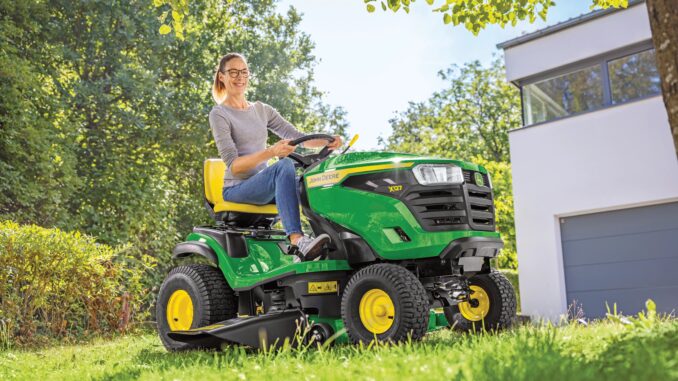
The John Deere X390 is a premium X300 Select Series lawn and garden tractor built for homeowners who want stronger hill control, better ride comfort, and heavier-duty mowing performance than entry-level lawn tractors usually offer. In practical terms, it suits larger home properties, regular mowing, bagging or mulching work, and owners who want clear guidance on repairs, troubleshooting, routine servicing, and realistic DIY limits before booking dealer work.
This guide is written for USA and Canada owners and follows a symptom-first approach, because most problems show up as hard starting, rough running, poor cut quality, belt noise, weak drive, or electrical faults long before you know which part failed. The sections below cover model overview, common service parts, troubleshooting, repair decisions, maintenance intervals, buying parts, fitting common items, and a detailed FAQ focused on real owner problems.
General overview of the John Deere X390
The John Deere X390 sits in Deere’s X300 Select Series lineup and shares its operator’s manual platform with the X330, X350, X354, X370, X380, X384, and X394 models. It is a lawn and garden tractor rather than a basic economy rider, and official Deere material positions it with 48-inch or 54-inch Accel Deep mower deck options and full homeowner support for parts, maintenance, and manuals.
Key systems on the John Deere X390 that matter most in repair work include:
-
Engine and fuel system, including engine oil, oil filter, fuel filter, spark plugs, and air filters.
-
Mower system, including mower deck belts, blades, gauge wheels, deck leveling parts, and spindle-related cut quality issues.
-
Drive system, including the traction belt, transmission oil, and transmission filter.
-
Electrical and safety system, including the battery, ignition switch, brake switch, RIO switch, fuse, and seat/brake/PTO safety logic.
Several John Deere X390 service parts owners regularly buy include the LG265 home maintenance kit, AM125424 oil filter, AM116304 fuel filter, M805853 spark plug, MIU12554 primary air filter, MIU12555 secondary air filter, UC35484 traction belt, MIU800986 transmission filter, TY25221B battery for USA and Canada, and mower belts and blades that vary by 48-inch or 54-inch deck setup.
John Deere X390 troubleshooting approach
The best way to diagnose a John Deere X390 is to start with the symptom you actually see, not the part you think is bad. A mower that cranks but will not start points you toward fuel, spark, air, battery state, or safety switch issues, while a mower that starts but cuts badly usually points toward blades, deck level, deck buildup, spindle wear, belt slip, or ground-speed issues instead.
The main symptom groups on the John Deere X390 are:
-
Starting issues, such as no crank, slow crank, or cranks-but-won’t-start faults.
-
Running issues, such as surging, misfire, smoke, weak power, or stalling under load.
-
Cut-quality problems, such as scalping, uncut strips, uneven height, clumping, or poor bagging or mulching results.
-
Vibration and noise, often linked to bent blades, worn pulleys, deck debris, loose hardware, or failing bearings.
-
Overheating and leaks, especially around cooling fins, engine shrouds, fuel lines, and oil service points.
-
Transmission and drive problems, such as weak hill performance, poor pedal response, or belt-related movement issues.
-
Electrical and safety-switch problems, including battery, ignition, PTO, brake, seat, and RIO circuit faults.
Emergency and immediate John Deere X390 repair needs
Some John Deere X390 problems need immediate attention because they affect safe stopping, blade control, fire risk, or can quickly damage expensive parts. If the machine has severe vibration, fuel leakage, smoking belts, overheating, or a safety-switch fault that allows unsafe operation, stop using it until the cause is confirmed.
4.1 John Deere X390 starting issues
Starting faults matter because repeated cranking can flatten the battery, flood the engine, or hide a failing switch or wiring problem. The X390 uses battery, ignition, brake, seat, PTO, and RIO-related systems that all have to work properly before the tractor starts and runs as designed.
Common causes:
-
Weak or failed battery.
-
Dirty or loose battery terminals.
-
Faulty ignition switch, brake switch, or seat/PTO safety input.
-
Plugged fuel filter or stale fuel.
-
Fouled spark plugs or dirty air filters.
Basic owner checks:
-
Confirm the PTO is off and the brake is fully applied.
-
Check battery terminals for looseness or corrosion and inspect the main fuse area.
-
Verify fresh fuel is in the tank and inspect the inline fuel filter.
-
Remove and inspect the spark plugs and air filter elements if cranking speed is normal but the engine will not fire.
-
If the tractor still will not crank or repeatedly loses electrical power, move to switch testing or dealer diagnosis.
4.2 John Deere X390 cut-quality problems
Poor cut quality usually shows up before a full breakdown, and ignoring it often accelerates blade, belt, spindle, and deck wear. On the X390, owners should look first at deck cleanliness, blade condition, deck level, and correct blade type for the 48-inch or 54-inch Accel Deep deck being used.
Common causes:
-
Dull, bent, or unbalanced blades.
-
Deck out of level.
-
Packed grass under the deck.
-
Worn or slipping mower belt.
-
Mowing too fast for grass height or moisture conditions.
Basic owner checks:
-
Park safely and inspect the underside of the deck for packed clippings.
-
Check blades for sharpness, bends, or edge damage.
-
Verify deck level and gauge wheel adjustment.
-
Inspect the mower drive belt for glazing, cracking, or slack.
-
Slow ground speed in heavy or damp grass and retest before ordering parts.
4.3 John Deere X390 vibration and noise
Sharp new vibration is never normal on a John Deere X390 and should be treated as an immediate stop-and-check issue because it can break belts, damage spindle bearings, or loosen hardware. Most mower-related vibration starts with blade damage, blade imbalance, deck debris, or pulley and bearing wear.
Common causes:
-
Bent blade after impact.
-
Blade installed incorrectly or not balanced after sharpening.
-
Debris wrapped around spindles or pulleys.
-
Worn idler pulley or spindle bearing.
-
Loose deck or engine mounting hardware.
Basic owner checks:
-
Shut the machine down immediately if vibration is severe.
-
Inspect both or all three blades, depending on deck size, for bends or impact damage.
-
Clear wrapped debris from spindle and pulley areas.
-
Spin pulleys and blade hubs by hand with the machine safely isolated, listening for roughness.
-
If vibration remains after blade correction, the repair is moving toward spindle, pulley, or deck hardware inspection.
4.4 Overheating and leaks on a John Deere X390
Heat-related trouble often builds slowly and shows up as hot smell, power loss, smoke, or repeated shutdown after mowing for a while. The X390 uses an air-cooled Kawasaki engine, so blocked intake screen areas, dirty cooling fins, and debris under the shrouds matter just as much as oil condition.
Common causes:
-
Dirty air intake screen or cooling fins.
-
Low or overdue engine oil.
-
Fuel seepage from cracked lines or loose clamps.
-
Oil leaks around filter or drain points after service.
-
Grass buildup around muffler and engine bay.
Basic owner checks:
-
Let the machine cool fully before inspection.
-
Clean the intake screen, engine fins, and visible debris around the muffler area.
-
Check engine oil level and confirm the filter is tight but not overtightened.
-
Inspect fuel lines and the inline filter area for wetness or smell.
-
If smoke, repeated overheating, or active leakage continues, stop using the tractor until repaired.
4.5 John Deere X390 transmission and drive problems
Drive complaints on the X390 often feel like weak response, poor hill pull, or the tractor moving less smoothly than it used to. Because this model has both a traction belt and serviceable transmission oil and filter, owners should not assume every drive fault means the transmission itself has failed.
Common causes:
-
Worn or slipping traction belt.
-
Incorrect or overdue transmission oil service.
-
Transmission filter restriction.
-
External linkage or pedal adjustment issue.
-
Internal transmission wear, especially on heavily used machines.
Basic owner checks:
-
Inspect the traction belt for wear, cracking, contamination, or loss of tension.
-
Check whether the transmission oil and filter are overdue at the 200-hour interval.
-
Make sure freewheel or push position is not accidentally engaged after moving the machine by hand.
-
Test drive on level ground before blaming hill performance alone.
-
If response remains weak after belt and service checks, dealer diagnosis is usually the sensible next step.
4.6 John Deere X390 electrical problems
Electrical issues on the John Deere X390 range from a dead machine to intermittent no-start, lights not working, PTO cut-out, or nuisance shutdown linked to switch logic. Because the machine relies on multiple interlocks, random part swapping often wastes money.
Common causes:
-
Weak battery or charging issue.
-
Corroded terminals or poor ground connection.
-
Failed ignition switch.
-
Brake switch or RIO switch fault.
-
Blown fuse or damaged wiring near vibration points.
Basic owner checks:
-
Start at the battery, cable ends, and ground path.
-
Check fuse condition and obvious connector damage.
-
Confirm the brake, PTO, and seat conditions are correct during starting tests.
-
Inspect the ignition switch and visible switch connectors.
-
Use a multimeter or move to dealer troubleshooting if faults are intermittent.
DIY or dealer? John Deere X390 repair decision guide
The John Deere X390 is very owner-serviceable for routine maintenance and a fair number of mechanical repairs, but the line is usually crossed when diagnosis needs electrical testing, deck timing beyond basic parts replacement, transmission internal work, or repeated no-start and drive complaints that remain after the standard checks.
Good DIY jobs
-
Engine oil and filter changes.
-
Air filter and fuel filter replacement.
-
Spark plug service.
-
Blade removal, sharpening, balancing, and replacement.
-
Deck cleaning, level checks, and common belt replacement.
-
Battery replacement and terminal cleaning.
Advanced DIY or dealer jobs
-
Electrical diagnosis involving switch circuits, charging output, or intermittent faults.
-
Transmission oil and filter service if access, cleanliness, or fluid handling is unfamiliar.
-
Spindle, pulley, or deck-housing repairs after impact damage.
-
Internal transmission or hydro-related repairs.
-
Engine internal work, compression problems, or persistent smoke.
Skill level guide
-
Beginner: Oil and filter changes, air filter replacement, battery service, blade inspection.
-
Intermediate: Spark plugs, fuel filter, deck belt replacement, deck leveling, blade sharpening and balancing.
-
Advanced: Electrical tracing, spindle replacement, transmission service, repeated no-start diagnosis, engine repair.
Parts needed for a John Deere X390, OEM vs aftermarket, and the information you need
Before ordering John Deere X390 parts, gather the full model name, Product Identification Number (PIN), engine model and serial number, and the deck size fitted to the machine because the 48-inch and 54-inch Accel Deep decks use different blade and secondary belt part numbers. This matters most when buying mower belts, blades, electrical parts, and any item that may vary by serial break or attachment setup.
OEM parts are usually the safest choice for belts, safety switches, ignition parts, and fit-sensitive deck components because exact dimensions and switch behavior matter on the X390. Aftermarket parts can be acceptable for some filters, blades, batteries, and tune-up items when the seller clearly cross-references the Deere number and the deck size or engine application is confirmed first.
John Deere X390 manuals, diagrams, and service literature
These sources are the most useful starting points when you need John Deere X390 diagrams, maintenance data, or official procedures:
-
John Deere operator’s manual platform – Best for official operation, service intervals, deck procedures, safety-system tests, and troubleshooting charts.
-
John Deere Manuals and Training – Deere’s main hub for buying or viewing operator, technical, and parts publications.
-
John Deere X390 replacement parts guide PDF – Fast reference for common service parts, fluids, filters, switches, belts, and deck-specific blade numbers.
-
John Deere owner support page for X390 – Useful for owner-facing access to maintenance items, parts, manual links, and support tools.
If you need repair procedures beyond owner-level maintenance, Deere’s technical publication route is the right next step because it is where Deere sells deeper service literature beyond the operator’s manual. For quick online parts shopping, the official parts guide is usually faster than guessing from generic listings because it already separates the 48-inch and 54-inch deck consumables.
How to locate model, serial, and engine numbers on a John Deere X390
These numbers matter because John Deere parts look similar across the X300 family, but deck setup, serial breaks, and engine application can still change the correct part number. Recording them before ordering saves time and cuts the odds of buying the wrong belt, blade, switch, or tune-up part.
-
Park the X390 on level ground, remove the key, and lower attachments safely before searching for tags.
-
Find the tractor Product Identification Number tag on the right side of the frame above or near the front axle area on X-series lawn tractors.
-
Record the full model and PIN exactly as shown on the identification plate.
-
Check the mower deck itself for its own identification information if you need deck-specific parts rather than tractor-only service parts.
-
Locate the engine model and serial directly on the Kawasaki engine shroud or engine label so filters, plugs, and engine-specific items can be verified correctly.
Buying John Deere X390 parts online and in physical stores
The best buying strategy is to identify the Deere OEM number first, then compare online and local sources using that number instead of searching only by model name. That approach is especially important for the John Deere X390 because deck belts and blades differ between the 48-inch and 54-inch configurations.
-
Online: Use the official owner support and manuals pages to confirm numbers first, then compare availability and price.
-
Dealer counter: Best for serial-sensitive parts, electrical items, and any case where the machine has been modified or the deck setup is unclear.
-
Retail stores: Fine for oil, batteries, spark plugs, and some aftermarket filters or blades, but only if the packaging clearly cross-references the X390 and the correct Deere number.
Useful sources include John Deere owner support for X390, John Deere manuals and publications, and 8TEN’s X390 parts listings for aftermarket comparison shopping once the OEM number is already known.
Step-by-step fitting guide for common John Deere X390 parts
Change the John Deere X390 engine oil and filter
This job helps starting, lubrication, and engine life because Deere lists engine oil and filter service at 100 hours or annually in the replacement guide, with break-in and routine service details covered in the operator’s manual family.
-
Run the engine briefly to warm the oil, then park safely, remove the key, and allow hot parts to settle.
-
Drain the engine oil into a suitable container following the operator’s manual procedure.
-
Remove the old oil filter and install a new AM125424 filter after lightly oiling the gasket.
-
Refill with the correct engine oil, listed as TY22029 Turf-Gard 10W-30, to the proper level.
-
Start the engine, check for leaks, shut down, and recheck the oil level after a short wait.
Replace the John Deere X390 air filter elements
Dirty air filters reduce power and can make the engine run rich, especially in dusty mowing conditions. The X390 parts guide lists MIU12554 as the primary filter and MIU12555 as the secondary element.
-
Open the air cleaner housing on the engine after parking safely.
-
Remove the primary and secondary elements carefully so dirt does not fall into the intake.
-
Clean loose debris from the housing without forcing dirt inward.
-
Install the new filters in the same order and orientation as removed.
-
Close the housing securely and inspect again after the next mow if dust conditions are severe.
Replace spark plugs on a John Deere X390
Fresh spark plugs help cure hard starting, weak firing under load, and rough running caused by worn electrodes or fouling. Deere lists M805853 plugs for the X390 replacement guide.
-
Let the engine cool fully and remove both plug leads.
-
Remove the old plugs and inspect them for heavy carbon, oiling, or damage.
-
Check the replacement plugs against the old ones before installation.
-
Install the new plugs carefully by hand first to avoid thread damage, then tighten correctly.
-
Refit the plug leads firmly and test start the engine.
Change blades and inspect the John Deere X390 mower belts
Blade and belt service is one of the highest-value DIY jobs on the X390 because many cut-quality complaints start here. The official parts guide lists different blades and secondary belts depending on whether the tractor has the 48-inch or 54-inch Accel Deep deck.
-
Park safely, remove the key, and isolate the mower so the blades cannot rotate unexpectedly.
-
Remove the blades and inspect for bends, cracks, uneven wear, or poor balance.
-
Install the correct replacement blades for your deck size, such as UC22009 for the 48-inch deck or UC22010 for the 54-inch deck.
-
Inspect the deck belts for glazing, cracks, frayed edges, or rubber dust around pulleys.
-
Replace worn belts with the correct primary and secondary belt numbers for your exact deck and then recheck deck level before mowing.
Maintenance to prevent John Deere X390 problems coming back
Regular maintenance does more than protect resale value on a John Deere X390. It directly reduces the most common owner complaints, especially hard starting, weak cutting performance, overheating from debris buildup, and avoidable belt or transmission wear.
Focus areas:
-
Starting reliability: Keep the battery charged, terminals clean, fuel fresh, and plugs and filters on schedule.
-
Cut quality: Keep blades sharp and balanced, deck level correct, and grass buildup removed from the underside.
-
Fire and overheating prevention: Clean debris from the engine screen, fins, muffler area, and top of the deck.
-
Drive performance: Watch traction belt condition and do transmission oil and filter service on time.
-
Electrical reliability: Inspect battery cables, switches, and visible harness routing before intermittent faults become no-start issues.
John Deere X390 maintenance schedule and year-round checklist
The John Deere X390 should be maintained from the official service interval chart, with more frequent attention in dusty, hot, or heavy-use conditions. The intervals below combine the operator’s manual family chart with the replacement parts guide for owner-friendly planning.
Daily / before each use
-
Check engine oil level.
-
Inspect the machine for loose hardware or obvious damage.
-
Check the mowing area and keep safety systems in working order.
-
Clear debris from engine screen, deck top, and muffler area as needed.
After first 25 hours
-
Change engine oil and filter.
-
Check and tighten loose hardware.
-
Check transmission oil level.
-
Check and clean air cleaner elements.
After first 50 hours
-
Change engine oil and filter again for break-in follow-up listed in Deere’s interval chart.
Every 25 hours
-
Check mower blades.
Every 50 hours
-
Check and adjust tire pressure.
-
Clean or service air cleaner elements, more often in dust.
-
Clean area around steering switches.
Every 100 hours or yearly
-
Check and clean battery.
-
Change engine oil and filter.
-
Inspect and regap spark plugs.
-
Clean cooling fins.
-
Check mower drive belt.
-
Replace fuel filter, spark plugs, and air filter elements according to the replacement guide schedule shown for annual or 100-hour service items.
Every 200 hours or every two years
-
Replace fuel filter according to the operator’s manual interval chart.
-
Replace transmission filter.
-
Change transmission oil using Low Viscosity Hy-Gard.
Annually
-
Check and tighten loose hardware.
-
Sharpen mower blades.
-
Inspect belts and replace worn ones.
Seasonal checklist
-
Spring: Change overdue oil, inspect battery, sharpen blades, level the deck, and fit fresh filters if needed.
-
Mid-season: Clean cooling fins, inspect belts, check tire pressures, and reassess blade sharpness after heavy growth periods.
-
Fall: Remove packed debris, inspect fuel system, stabilize fuel for storage if required, and prepare the machine according to Deere storage guidance.
Repair, upgrade, or replace a John Deere X390?
Most John Deere X390 owners should repair rather than replace when the core tractor is sound and the problem is limited to service parts, deck wear items, switches, or routine driveline maintenance because those repairs are normal and supported by Deere parts documentation. Upgrade or replacement becomes more sensible when repeated transmission, deck-housing, or engine problems stack up beyond the value of the machine or the owner’s available time and repair skill.
Repair if…
-
The issue is a belt, blade, battery, filter, plug, switch, or normal maintenance item.
-
The tractor still has strong engine and transmission performance overall.
-
The deck shell and frame are structurally sound.
Upgrade if…
-
You need different deck capability, more attachment flexibility, or heavier-duty use than the X390 is currently covering.
-
The repair list is growing and you want a newer machine before major driveline work starts.
Replace if…
-
The machine has combined engine, transmission, and deck structural issues at the same time.
-
Dealer estimates approach the practical value of the tractor.
-
Safety, reliability, and downtime matter more than preserving the existing unit.
Expanded John Deere X390 troubleshooting FAQ
1. Why will my John Deere X390 not start?
A no-start on the John Deere X390 usually comes down to battery condition, safety-switch logic, fuel delivery, spark, or airflow. Start with the simple checks first: PTO off, brake applied, battery connections clean, and fresh fuel in the tank. If it cranks strongly but still does not fire, inspect the fuel filter, plugs, and air filter before assuming a larger problem.
2. Why does my John Deere X390 click but not crank?
A click with no crank often points to a weak battery, poor cable connection, or starter circuit issue rather than a fuel problem. Check battery terminal tightness and corrosion first, then confirm the brake and PTO interlocks are in the correct position. If voltage and connections are good, switch or starter diagnosis is the next step.
3. Why does my John Deere X390 crank but not fire?
If the engine cranks normally but will not fire, focus on fuel, spark, and air. A restricted AM116304 fuel filter, fouled M805853 plugs, or dirty air filter elements can all cause this symptom. Stale fuel after storage is also common, so do not skip that check.
4. Why does my John Deere X390 start and then stall?
Start-then-stall behavior often means restricted fuel flow, contaminated fuel, or an intermittent safety or ignition fault. Check the inline fuel filter, tank fuel condition, and visible wiring first. Also make sure the seat and brake interlock conditions are correct during operation.
5. Why is my John Deere X390 running rough?
Rough running usually comes from old fuel, fouled plugs, dirty air filters, or partial fuel restriction. Remove and inspect the plugs, inspect both air filter elements, and check whether service is overdue at the 100-hour interval. If roughness remains under all conditions, deeper engine diagnosis may be needed.
6. Why is my John Deere X390 losing power in heavy grass?
Power loss in tall or damp grass can be normal if ground speed is too high, but it also points to dull blades, deck buildup, restricted airflow, or a tired engine tune-up. Start by cleaning the deck, sharpening blades, and checking the filters and plugs. The right blade type for your deck setup also matters for lift and discharge performance.
7. Why is my John Deere X390 smoking?
Smoke can come from spilled oil after service, clogged cooling areas, or internal engine issues depending on color and timing. First clean the engine area, verify oil level, and check for oil on hot surfaces such as near the muffler. Persistent smoke after cleanup needs further diagnosis before continued use.
8. Why is my John Deere X390 overheating?
Because the X390 uses an air-cooled engine, overheating often starts with blocked cooling fins, a dirty intake screen, or heavy debris around the engine shrouds. Low or overdue oil also adds heat stress. Clean the cooling system thoroughly before assuming internal engine trouble.
9. Why does my John Deere X390 cut unevenly?
Uneven cutting usually means the deck is out of level, blades are worn or bent, or tire pressures are inconsistent. Check deck level, blade condition, and tire pressure together because one bad setting can mimic a bigger problem. Also make sure the gauge wheels are adjusted correctly for your mowing height.
10. Why does my John Deere X390 leave strips of uncut grass?
Uncut strips are commonly caused by dull blades, slow blade tip performance from belt slip, or mowing too fast for conditions. Inspect the mower belt and blades before blaming the deck design. Wet grass and sudden direction changes can make the symptom worse.
11. Why is the John Deere X390 mower deck belt slipping?
A slipping deck belt usually shows up as weak cut quality, squeal, or rubber dust around pulleys. Check the belt for glazing, cracking, and width loss, and confirm you have the right belt for the exact deck size. Incorrect routing after previous service is another common cause.
12. What mower belt does a John Deere X390 use?
The answer depends on deck size. The 48-inch deck uses M169485 as the primary belt and M169500 as the secondary belt, while the 54-inch deck uses M169485 as the primary and M169486 as the secondary. Always verify the installed deck before ordering.
13. What blades fit a John Deere X390?
Blade choice depends on the deck fitted to the tractor. For the 48-inch deck, Deere lists UC22009 standard blades and M127673 mulch blades, while the 54-inch deck uses UC22010 standard blades and M152726 high-lift blades. Matching the blade to both deck size and mowing goal matters more than many owners expect.
14. Why is my John Deere X390 vibrating badly?
Severe vibration usually means a bent blade, blade imbalance, wrapped debris, or a pulley or spindle issue. Stop mowing immediately and inspect the deck before further use. Continuing to run the tractor with heavy vibration can damage bearings and belts quickly.
15. Can a bent blade damage my John Deere X390 spindle?
Yes, it can. A bent blade creates repeated shock and imbalance that can overload spindle bearings and related hardware. Replacing or correcting the blade early is much cheaper than waiting for bearing or housing damage to spread.
16. Why does my John Deere X390 make a squealing noise?
Squealing is often belt related, especially if it appears during PTO engagement or while mowing heavy grass. Inspect deck belts, traction belt, and pulleys for glazing, misalignment, or seized bearings. The noise may also show up briefly on cold starts if a belt is near the end of its life.
17. Why does my John Deere X390 drive weakly uphill?
Weak hill performance can come from traction belt wear, overdue transmission service, or general driveline wear rather than one dramatic failure. Start with belt condition and service history, especially the 200-hour transmission oil and filter interval. If level-ground response is also poor, the case for deeper transmission diagnosis gets stronger.
18. What transmission oil does the John Deere X390 use?
The X390 replacement guide lists TY22035 John Deere Low Viscosity Hy-Gard transmission oil, with about 2.8 L required. Deere also lists the transmission filter as MIU800986. Using the correct oil matters because drive feel and durability depend on the proper fluid characteristics.
19. When should I change the John Deere X390 transmission oil and filter?
The replacement guide lists the transmission filter and oil at 200 hours, while Deere’s operator information includes transmission service sections specific to X370, X390, and X394 models. If the machine is used hard or has unknown service history, earlier inspection is reasonable. Cleanliness matters during this job because hydrostatic systems do not tolerate dirt well.
20. Why does my John Deere X390 battery keep going flat?
Repeated flat-battery problems are usually caused by age, poor connections, charging problems, or leaving the tractor parked for long periods without maintenance charging. Start by cleaning terminals and checking cable tightness. If the battery is old and weak under load, replacement is often more realistic than repeated boosting.
21. What battery does a John Deere X390 use in the USA and Canada?
Deere’s replacement parts guide lists TY25221B as the 12-volt battery for Canada and USA applications. That is the safest starting point when matching case size and application. Always compare terminal layout before installation.
22. Why do the lights on my John Deere X390 not work?
Headlight failure may be as simple as a bulb, fuse, or connection issue, but it can also be tied to broader electrical problems if other circuits are acting up. Start with the bulb and fuse, then inspect the ignition-switch and harness area. Corrosion and vibration are common contributors on outdoor equipment.
23. What ignition switch fits a John Deere X390?
The official replacement parts guide lists AM133597 as the ignition switch. It is worth using the PIN to confirm the part before ordering because switch and harness variations can exist across model families. Cheap unverified switches often create more problems than they solve.
24. What safety switches are common on a John Deere X390?
The X390 uses multiple safety-related inputs, including brake, PTO, seat, and RIO logic covered throughout the operator’s manual family and parts guide. The replacement parts guide specifically lists a brake switch AMT469 and RIO switch M171126. These should be tested, not guessed at, when chasing intermittent no-start or cut-out problems.
25. Why does my John Deere X390 shut off when I engage the PTO?
If the engine dies when the PTO is engaged, start with safety switch logic, deck binding, and belt or spindle drag. A seat switch issue, PTO-related interlock condition, or a deck that is mechanically overloaded can all cause this symptom. Check for free blade rotation and obvious deck seizure before moving into electrical diagnosis.
26. How often should I change the oil on a John Deere X390?
Deere’s service chart calls for engine oil and filter changes at 100 hours or annually, with break-in oil service also listed at the first 25 and 50 hours in the interval chart family. The replacement guide also lists engine oil and filter at annual or 100-hour intervals. Heavy dust, heat, and repeated short runs justify more frequent checks.
27. How often should I replace the air filter on a John Deere X390?
The X390 replacement guide lists the primary MIU12554 and secondary MIU12555 air filters at 100-hour service intervals, with the operator chart also calling for more frequent cleaning or service in dusty conditions. If you mow in dry summer dust, inspect them sooner than the calendar suggests. A restricted filter quietly reduces power before it becomes obvious.
28. How often should I replace the fuel filter on a John Deere X390?
The official operator interval chart lists fuel filter replacement at 200 hours or every two years, while the replacement parts guide also flags the AM116304 fuel filter as a regular service item. If fuel quality has been poor or the machine sat unused, earlier replacement is sensible. It is a cheap part with a big effect on reliability.
29. Can I use aftermarket parts on a John Deere X390?
Yes, but use judgment. Aftermarket filters, blades, batteries, and some tune-up items can work well if they correctly cross-reference the Deere number and your exact deck or engine application. For belts, safety switches, and fit-sensitive items, OEM is usually the lower-risk choice.
30. Where can I find a John Deere X390 operator’s manual?
You can start with Deere’s online operator manual view for the X300 Select Series family and Deere’s manuals and training portal. The X390 owner support page also links owners toward manuals and maintenance information. Those official sources are better than random third-party downloads for safety and accuracy.
31. Where can I find John Deere X390 parts diagrams?
Deere’s manuals and publications portal and the X390 owner support page are the best official starting points, while the replacement parts guide gives a fast shortlist of common maintenance items. For detailed diagram lookup, use the Deere parts ecosystem rather than relying only on marketplace listings. That reduces ordering errors on deck-specific items.
32. How do I find the PIN on my John Deere X390?
On X-series lawn tractors, the identification tag is typically located on the right side of the frame above or near the front axle area. Record the full tag exactly before ordering parts or booking service. If the tag is dirty or hard to see, clean the area carefully rather than guessing from appearance alone.
33. Is the John Deere X390 realistic for DIY maintenance?
Yes, for most routine work. Oil service, filters, plugs, blades, belts, battery replacement, and deck checks are all realistic for owners with basic tools and safe lifting habits. Electrical tracing, internal transmission work, and persistent engine faults are where many owners sensibly switch to dealer help.
34. Should I repair or replace my John Deere X390?
Repairing usually makes sense when the issue is isolated to consumables, deck wear, or standard service items. Replacement becomes easier to justify when several major systems are failing at once or downtime is now costing more than the machine is worth to you. A structurally sound X390 with ordinary maintenance needs is normally worth fixing.