
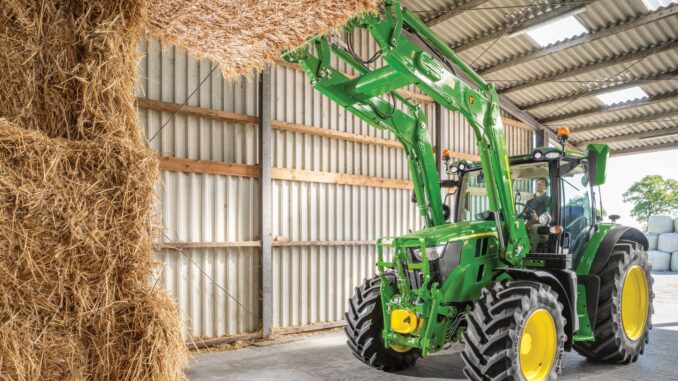
The John Deere 950 is a compact utility tractor from Deere’s 50 Compact Series, built by Yanmar and sold mainly as a small diesel work tractor for mowing, loader work, light grading, and general property jobs rather than as a suburban lawn tractor. It used a 1.7L three-cylinder Yanmar diesel, an 8-speed gear transmission, open-center hydraulics, and was offered in both two-wheel-drive and four-wheel-drive forms.
For owners in the USA and Canada, the John Deere 950 is still a practical machine to keep running because the basic systems are simple, durable, and well understood. This guide focuses on what owners actually need: common symptoms, realistic DIY repairs, where to find diagrams and manuals, which parts matter most, and how to decide when a problem is no longer a sensible home repair.
John Deere 950 model overview
The John Deere 950 sits in Deere’s older compact utility lineup alongside the 850 and 1050, with about 31 gross engine horsepower and around 27 PTO horsepower. It was built from 1978 to 1989 and is best thought of as a small acreage, estate, or hobby-farm tractor rather than a modern lawn-and-garden machine.
Key John Deere 950 systems owners usually deal with include:
-
Diesel engine and fuel system, including the tank, fuel lines, filter, glow/start circuit, and injector-related running issues.
-
Gear-drive transmission and clutch, especially on tractors that are hard to shift, creep, or lose PTO function.
-
Hydraulic and 3-point system, with open-center hydraulics and serial-number differences in capacity and PTO arrangement across production years.
-
Electrical system, including battery, charging, starting circuit, switches, and wiring aging issues common on older tractors.
Common service parts owners regularly buy for a John Deere 950 include engine oil filters, fuel filters, air cleaner elements, hydraulic filters, battery replacements, coolant and hoses, front axle lubricant for MFWD models, and clutch or brake wear items on higher-hour tractors. Exact Deere part numbers can change by serial number, engine version, and whether the tractor is early or later production, so the tractor PIN and engine details matter before ordering.
John Deere 950 troubleshooting approach
The best way to diagnose a John Deere 950 is to start with the symptom the owner sees, not with a random parts list. On an older compact tractor, many faults overlap, so “won’t start,” “starts but smokes,” “won’t move,” or “3-point weak” is a more useful starting point than guessing at the fuel filter, battery, or pump too early.
The main symptom groups on a John Deere 950 are:
-
Starting issues.
-
Running and power-loss issues.
-
PTO and implement-drive issues.
-
Clutch, transmission, and drive problems.
-
Hydraulic lift and steering problems.
-
Electrical and charging faults.
-
Leaks, overheating, vibration, and unusual noise.
John Deere 950 emergency repair needs
Some John Deere 950 problems need attention immediately because they can quickly turn a repairable issue into a major one. Fuel leaks, overheating, charging failures, severe clutch slip, brake problems, and abnormal driveline noise should not be ignored on a tractor this age.
Starting issues on a John Deere 950
If the John Deere 950 will not crank or cranks slowly, the problem may be electrical rather than fuel-related. Because the tractor uses a 12-volt negative-ground system with alternator charging, weak battery condition, cable corrosion, and poor grounds are common first checks.
Common causes:
-
Weak or failed battery.
-
Dirty or loose battery terminals.
-
Bad ground strap or corroded cables.
-
Faulty key switch, starter, or solenoid.
-
Clutch/start interlock issues where fitted or modified wiring on older machines.
Basic owner checks:
-
Check battery voltage and terminal tightness.
-
Clean both battery posts and cable ends.
-
Inspect the ground connection to chassis/engine.
-
Listen for a click at the solenoid when turning the key.
-
If it cranks but will not fire, move on to fuel delivery and air-in-fuel checks.
John Deere 950 running and power-loss problems
A John Deere 950 that starts but lacks power, smokes, or runs rough often has a fuel restriction, dirty air intake path, stale diesel, or injector/compression wear. On older compact diesels, long storage periods and contaminated fuel are frequent root causes.
Common causes:
-
Plugged fuel filter.
-
Air entering fuel lines.
-
Dirty air cleaner.
-
Old diesel fuel or water contamination.
-
Injector wear or low compression.
-
Restricted exhaust.
Basic owner checks:
-
Replace the fuel filter if service history is unknown.
-
Inspect fuel lines for cracking, wetness, or loose clamps.
-
Drain contaminated fuel if water or sludge is present.
-
Check and clean or replace the air filter element.
-
Note whether smoke is black, white, or blue, since that helps separate fuel, compression, and oil-burning faults.
John Deere 950 vibration and noise
A John Deere 950 with new vibration, rattling, or driveline noise should be inspected before more work is done. Noise can come from loose loader or mower mounting hardware, worn PTO driveline joints, wheel hardware, clutch parts, front axle components on 4WD tractors, or engine mounting points.
Common causes:
-
Loose wheel lugs or implement hardware.
-
Worn PTO shaft components.
-
Front axle wear on MFWD units.
-
Clutch or release-bearing noise.
-
Engine accessory or fan issues.
Basic owner checks:
-
Stop using the tractor under heavy load.
-
Check wheel nuts and visible frame hardware.
-
Remove or disconnect the implement to isolate tractor-versus-attachment noise.
-
Listen for changes with clutch pedal depressed.
-
Check PTO engagement and front axle operation separately if equipped.
Overheating and leaks on a John Deere 950
Overheating on a John Deere 950 matters because an older diesel can tolerate abuse for a while, then suddenly need expensive head or gasket work. Coolant leaks, blocked radiator fins, low coolant, slipping fan belt, or internal engine problems are the main concerns.
Common causes:
-
Low coolant.
-
Dirty radiator screen or fins.
-
Worn hoses or clamps.
-
Bad thermostat or water pump.
-
Head gasket failure on neglected tractors.
Basic owner checks:
-
Let the tractor cool fully before opening the system.
-
Check coolant level and visible hose condition.
-
Clean external debris from the radiator and screen.
-
Inspect belt condition and tension.
-
If coolant loss continues without an obvious leak, treat it as an advanced repair.
John Deere 950 transmission and drive problems
If the John Deere 950 is hard to shift, slips under load, or loses PTO drive, the clutch and linkage need attention quickly. TractorData notes that early and later production tractors differ in PTO setup, with later models after serial number 20001 using a live PTO with a two-stage clutch, which changes how some symptoms are interpreted.
Common causes:
-
Clutch wear or poor adjustment.
-
Linkage wear or binding.
-
Transmission wear.
-
Low or wrong hydraulic/transmission fluid.
-
PTO clutch-stage issues on later tractors.
Basic owner checks:
-
Verify the exact serial-number range of the tractor.
-
Check clutch free play and pedal travel.
-
Listen for grinding when selecting gears.
-
Confirm whether the PTO issue is engagement, slippage, or total non-operation.
-
Stop use if the tractor creeps badly or loses drive under load.
John Deere 950 electrical problems
Electrical faults on a John Deere 950 are often age-related rather than mysterious. The alternator is rated at 25 amps and the tractor uses a 12-volt system, so battery discharge, poor charging, and brittle wiring are normal areas to inspect first.
Common causes:
-
Failed alternator or regulator-related charging problem.
-
Dirty battery cables.
-
Bad key switch.
-
Old wiring insulation or poor repairs by previous owners.
-
Failed lights, gauges, or connectors.
Basic owner checks:
-
Check battery voltage before and after starting.
-
Confirm charge voltage rises with engine running.
-
Inspect fuse holders and connectors for corrosion.
-
Trace any non-factory wiring repairs.
-
Repair charging faults before assuming repeated battery failure.
DIY or dealer jobs on a John Deere 950
The John Deere 950 is one of the more DIY-friendly Deere compact tractors because the machine is mechanical, gear-driven, and less electronics-heavy than newer models. Even so, injector work, clutch splitting, hydraulic pump diagnosis, and major transmission repairs usually move beyond sensible driveway repair unless the owner already has the tools, lifting equipment, and experience.
Good DIY jobs for a John Deere 950
-
Engine oil and filter service.
-
Fuel filter replacement and basic fuel-system bleeding.
-
Air filter service.
-
Battery, cables, and terminal cleaning.
-
Coolant and hose inspection.
-
Fan/alternator belt inspection and replacement.
-
Greasing chassis and front axle points.
-
Basic lighting and wiring repairs.
-
Hydraulic fluid and filter service if the correct specification and procedure are confirmed first.
Advanced DIY or dealer jobs
-
Clutch adjustment diagnosis when PTO and drive symptoms overlap.
-
Splitting the tractor for clutch replacement.
-
Injector pump or injector service.
-
Internal transmission repairs.
-
Hydraulic pump, lift-cover, or internal 3-point repairs.
-
Front axle internal repairs on MFWD tractors.
-
Engine compression, head gasket, or internal diesel work.
Skill level guide
-
Beginner: filters, battery, coolant checks, greasing, light electrical fixes.
-
Intermediate: fuel bleeding, belt replacement, fluid changes, hose replacement, basic charging diagnosis.
-
Advanced: clutch work, hydraulic diagnosis, injector service, transmission disassembly, engine internal repair.
John Deere 950 parts, OEM vs aftermarket, and what to gather first
Before ordering John Deere 950 parts, gather the full model name, tractor serial number/PIN, engine details, and any attachment model information. This matters because Deere’s own references show production differences, especially around later serial-number PTO changes and hydraulic capacity differences after 1984.
For a John Deere 950, owners should confirm:
-
Full tractor model: John Deere 950.
-
Tractor serial number, found on the rear of the tractor below the PTO shaft.
-
Engine manufacturer/model details from the engine tag.
-
Whether the tractor is 2WD or 4WD.
-
Whether the tractor is early production or later production after serial number 20001.
-
Any attachment model number, such as a mid-mount mower or loader.
OEM versus aftermarket guidance for a John Deere 950 is fairly simple. Use OEM for hydraulic filters, fit-sensitive seals, clutch-related parts, and any safety-critical or serial-number-sensitive item, while good aftermarket options can be reasonable for batteries, some air and fuel filters, hoses, belts from known cross-reference brands, and general service consumables when the match is exact.
John Deere 950 diagrams and manuals
The most useful John Deere 950 references are Deere’s own technical publications site, Deere parts catalog resources, and a reputable model-reference source that helps confirm specs and serial-number changes. TractorData is useful for overview specs and serial location, while Deere publications are the better source for service procedure order and official maintenance intervals.
Useful sources:
-
John Deere Technical Information Store for official technical-publication access and Deere manual purchasing or viewing pathways.
-
John Deere parts catalog for diagrams, assemblies, and exact part-number confirmation by model and serial.
-
TractorData John Deere 950 page for production years, serial-number location, capacities, PTO changes, and overview specs.
-
MachineFinder 950 overview for a Deere-adjacent overview and buying-context reference, though not a substitute for the operator or technical manual.
How to find John Deere 950 serial and engine numbers
These numbers matter because John Deere 950 parts are not always safe to order by model name alone. Production-year changes, PTO differences, drivetrain variations, and aftermarket listing errors all make the serial number one of the most important details on the tractor.
Use this process:
-
Go to the rear of the tractor and look below the PTO shaft for the serial number plate. TractorData identifies this as the John Deere 950 serial-number location.
-
Record the full serial exactly as stamped, not just the last few digits.
-
Find the engine model and serial tag on the Yanmar diesel engine and note that information before ordering fuel, air, cooling, or engine service parts. The tractor uses a Yanmar 1.7L three-cylinder diesel.
-
Confirm whether the tractor is 2WD or 4WD, since front axle and steering parts differ.
-
If an attachment is involved, capture the attachment tag separately because mower deck, loader, and snowblower parts are attachment-specific rather than tractor-specific.
Buying John Deere 950 parts online and in stores
The best strategy is to identify the exact failed part on the tractor, use the serial number to confirm the Deere diagram, then compare OEM and aftermarket options only after the OEM reference number is known. That avoids one of the biggest mistakes with older Deere compact tractors: buying by website title alone.
Use these buying routes:
-
Online: Deere parts catalog is best for diagram confirmation, then compare that OEM number with known aftermarket suppliers.
-
Dealer counter: best choice for hydraulic, clutch, steering, front axle, and serial-sensitive engine parts.
-
Retail stores: acceptable for batteries, fluids, some belts, and cross-referenced filters only when packaging clearly matches the tractor or OEM number.
Helpful links:
-
John Deere Parts Catalog for diagrams and part lookups.
-
John Deere Technical Information Store for manuals.
-
TractorData 950 page for serial and spec confirmation.
John Deere 950 fitting guide for common service parts
These are the highest-value DIY jobs on most John Deere 950 tractors because they address a large share of hard-start, poor-running, overheating, and charging complaints. Always work on level ground, lower implements, shut the engine off, and remove the key before servicing.
Replacing the fuel filter on a John Deere 950
A new fuel filter often fixes hard starting, weak running, or rough operation after storage. Diesel contamination and air leaks are common on older compact tractors.
-
Shut off the fuel supply if equipped and place a container below the filter.
-
Remove the old filter carefully and note seal orientation.
-
Clean the mounting surface before fitting the new filter.
-
Install the new filter and tighten to the filter maker’s guidance.
-
Bleed air from the system as required by the manual before cranking.
-
Start the tractor and check for leaks immediately.
Servicing the air filter on a John Deere 950
A restricted air filter can cause smoke, poor power, and harder starting. This is a simple check that should happen early in any troubleshooting process.
-
Open the air cleaner housing and remove the outer element.
-
Inspect for heavy dust, oil contamination, or rodent nesting.
-
Replace the element if dirty or damaged rather than trying to save an old paper filter.
-
Clean the housing and dust outlet carefully.
-
Reassemble and make sure the cover seals properly.
Changing the engine oil and filter on a John Deere 950
Fresh oil and a new filter protect an older diesel better than almost any other routine job. This service is also a good time to inspect for metal debris, leaks, or coolant contamination.
-
Warm the engine slightly, then shut it down safely.
-
Drain the engine oil into a suitable container.
-
Remove the old oil filter and clean the sealing surface.
-
Install the correct replacement filter and refill with the correct oil grade from the operator manual.
-
Start the engine, confirm oil pressure behavior, then recheck the level after shutdown.
Replacing the battery and cleaning cables on a John Deere 950
Slow cranking on a John Deere 950 is often a battery-and-cable problem before it is a starter problem. The tractor uses a 12-volt system and TractorData lists a BCI 30H battery reference with 570 CCA.
-
Disconnect the negative cable first, then the positive.
-
Remove the old battery and clean the tray and hold-down.
-
Clean both cable ends until bright metal is visible.
-
Install the replacement battery with the correct terminal layout.
-
Reconnect positive first, then negative, and test cranking speed.
Maintenance that prevents repeat John Deere 950 problems
Regular maintenance matters more on a John Deere 950 than on many newer machines because age amplifies small issues. Dirty fuel, neglected cooling systems, weak batteries, and infrequent greasing are what turn a dependable compact tractor into a frustrating one.
Focus areas:
-
Starting reliability: keep the battery charged, cable ends clean, and fuel filter fresh.
-
Running quality: use clean diesel, maintain the air filter, and address smoke early.
-
Overheating prevention: keep the radiator area clean and watch hose and belt condition.
-
Drive performance: monitor clutch feel, shifting behavior, and PTO engagement before wear becomes severe.
-
Hydraulic reliability: use the correct fluid and filter, and fix leaks before contamination spreads.
John Deere 950 maintenance schedule
Deere operator-manual indexing for compact tractors shows service intervals such as after first 5 hours, 50 hours, 150 hours, 250 hours, and annual/two-year checkpoints, though owners should always confirm the exact applicable schedule for their serial-number range and manual edition. On a John Deere 950, the practical owner version of that schedule looks like this.
Before each use on a John Deere 950
-
Check engine oil level.
-
Check coolant level and look for leaks.
-
Inspect the tractor for loose hardware, wet hoses, and visible fuel leaks.
-
Check tire condition and inflation.
-
Confirm the area around the radiator and screen is clear.
Every 50 hours
-
Grease all applicable lubrication points.
-
Inspect battery terminals and charging condition.
-
Check fan/alternator belt condition and tension.
-
Inspect fuel system lines and clamps.
Every 150 to 250 hours
-
Change engine oil and filter according to the manual schedule and usage pattern.
-
Replace the fuel filter if due or if running quality suggests restriction.
-
Service the air cleaner and replace the element if required.
-
Check front axle lubricant on MFWD tractors.
Yearly or seasonally
-
Flush and renew coolant at the proper interval in the manual for the machine’s configuration.
-
Inspect hydraulic fluid condition and replace the hydraulic filter when due.
-
Check brakes, clutch adjustment, and PTO operation before heavy seasonal use.
-
Inspect hoses, boots, and aged wiring before they fail in service.
Seasonal checklist
-
Spring: service filters, inspect coolant system, grease the tractor, and test charging output before mowing or field work.
-
Mid-season: watch for dust-related air filter restriction and radiator blockage.
-
Fall: repair leaks, stabilize fuel if storing, and address weak batteries before cold weather.
-
Long storage: clean the machine, protect the electrical system, and avoid leaving contaminated fuel in the tank for months.
Repair, upgrade, or replace the John Deere 950?
A John Deere 950 is usually worth repairing when the core engine, transmission, and hydraulics are sound because the tractor is simple, durable, and still useful for acreage work. The harder decision comes when an inexpensive used tractor needs clutch work, major hydraulic repair, tires, steering parts, and engine work all at once.
Repair if:
-
The engine starts well and does not show major compression or coolant-loss symptoms.
-
The transmission works and the tractor’s issues are mainly maintenance-related.
-
Parts needs are limited to filters, hoses, battery, wiring, brakes, or minor hydraulic service.
Upgrade if:
-
You need hydrostatic drive, stronger loader performance, or easier parts support than an older gear-drive compact offers.
-
You use the tractor heavily enough that comfort, steering effort, or PTO convenience has become a limitation.
Replace if:
-
The tractor needs engine overhaul, clutch splitting, major hydraulic work, and multiple chassis repairs at the same time.
-
You cannot source serial-correct parts confidently or the machine has been heavily modified by previous owners.
John Deere 950 troubleshooting FAQ
1. Why will my John Deere 950 not start?
If the engine will not crank, start with the battery, terminals, ground strap, and starter circuit because old-cable resistance is common on tractors of this age. If it cranks but will not fire, move next to fuel delivery, air in the system, and filter restriction rather than guessing at injectors immediately.
2. Why does my John Deere 950 crank slowly?
Slow cranking usually points to a weak battery, dirty cable ends, poor grounds, or a tired starter. Since the tractor uses a 12-volt system and a 25-amp charging setup, a battery that never fully recharges can make every cold start worse.
3. Why does my John Deere 950 start and then die?
That often means fuel is reaching the engine briefly but not consistently. A restricted fuel filter, air leak in the suction side of the fuel system, or contaminated diesel is more common than a major engine failure.
4. Why is my John Deere 950 hard to start when cold?
Cold starts on an older diesel often become difficult when battery output, cable condition, fuel quality, and air leaks all decline together. Start with the simplest items first, then move toward injector and compression checks only if basic maintenance does not help.
5. Why is my John Deere 950 blowing black smoke?
Black smoke usually means too much fuel for the amount of air available, or the engine is being overloaded. A dirty air filter, intake restriction, or fuel-system issue is more likely than a catastrophic failure.
6. Why is my John Deere 950 blowing white smoke?
White smoke can point to incomplete combustion, cold running, injector problems, or in worse cases compression trouble. If the smoke stays after warm-up and the engine also runs rough, the tractor needs deeper diagnosis.
7. Why is my John Deere 950 using more fuel than normal?
A dirty air cleaner, injector wear, incorrect operating technique, dragging drivetrain components, or engine condition problems can all raise fuel use. Compare fuel usage only after filters, tire pressure, and load conditions are known to be normal.
8. Why does my John Deere 950 have low power?
Low power often comes from fuel restriction, dirty intake parts, stale fuel, or compression loss on a worn engine. Owners should check filters and fuel condition first because those are cheaper and far more common than internal engine faults.
9. Why is my John Deere 950 overheating?
Low coolant, a blocked radiator, weak belt drive, hose deterioration, thermostat problems, or water pump issues are the main suspects. Stop using the tractor under load until the cause is known because overheated diesels can become expensive very quickly.
10. Why is coolant disappearing from my John Deere 950?
External hose or radiator leaks are the first things to inspect, especially on an older machine. If no leak is visible and coolant keeps dropping, start considering internal engine problems and avoid continued operation until confirmed.
11. Why does my John Deere 950 battery keep going flat?
Repeated battery discharge often means the charging system is weak or the connections are poor, not just that the battery is old. Check charging voltage with the engine running before buying another battery.
12. Why are my John Deere 950 lights weak or inconsistent?
Dim or flickering lights usually trace back to low system voltage, dirty grounds, aged switches, or brittle connectors. On an older tractor, repairing corroded connections can fix more than replacing bulbs alone.
13. Why is my John Deere 950 hard to shift?
Hard shifting often points to clutch adjustment problems, linkage wear, or clutch drag. If the tractor also creeps with the clutch depressed, stop using it for heavy work until the clutch issue is sorted.
14. Why does my John Deere 950 grind when going into gear?
Grinding means the transmission input is still turning when it should be released. That usually means clutch drag, poor adjustment, or wear significant enough that a simple external adjustment may not be enough.
15. Why does my John Deere 950 move poorly under load?
If the tractor loses pull, slips, or bogs unusually, separate engine-power loss from clutch slip first. Engine issues change sound and smoke, while clutch problems usually show rising engine speed without matching ground speed.
16. Why is my John Deere 950 clutch slipping?
A slipping clutch can come from wear, contamination, or incorrect adjustment. Continued use under load can damage more parts, so this is one of the problems to address early rather than later.
17. Why is the PTO on my John Deere 950 not working?
The answer depends partly on serial number because early and later tractors used different PTO arrangements, with later units after serial number 20001 using live PTO with a two-stage clutch. PTO trouble may therefore be clutch-stage related rather than a simple external linkage fault.
18. Why does my John Deere 950 PTO stop under load?
That usually suggests clutch wear, incorrect adjustment, or driveline overload rather than a simple on/off problem. Check the implement first, then confirm clutch behavior and serial-correct PTO setup.
19. Why won’t the 3-point hitch lift on my John Deere 950?
Low hydraulic fluid, a restricted hydraulic filter, internal leakage, or hydraulic pump issues are the usual suspects. Start with fluid condition and filter service before assuming the pump is bad.
20. Why is the 3-point hitch on my John Deere 950 weak or jerky?
Jerky lift often points to air, contamination, worn hydraulic components, or control-valve issues. Weak lift can also show up when fluid is old, the filter is restricted, or the tractor is carrying more than it should.
21. Why is my John Deere 950 hydraulic system noisy?
Hydraulic noise can mean low fluid, aeration, restriction, or pump wear. Check fluid level and filter condition first because running a noisy hydraulic system too long can increase repair cost fast.
22. Why does my John Deere 950 leak hydraulic oil?
Leaks commonly appear at hoses, fittings, seals, and aging connections. Small leaks should still be fixed promptly because low fluid can create larger lift and steering problems later.
23. Why does my John Deere 950 steering feel heavy?
Manual steering versions naturally require more effort, but sudden heaviness can indicate front axle, tire, linkage, lubrication, or hydraulic-assist issues on equipped tractors. Heavy steering should always be checked before loader or front-implement work.
24. Why is my John Deere 950 front axle making noise?
On MFWD tractors, front axle noise can come from lubricant issues, wear, or internal damage. TractorData specifically notes the front axle lubricant requirement, so checking correct lubricant level and condition is a sensible early step.
25. Why is my John Deere 950 vibrating badly?
Vibration can come from the engine, PTO driveline, wheels, or mounted equipment. Remove the implement if possible and test again, because isolating the source early saves time and prevents replacing the wrong parts.
26. Why does my John Deere 950 make noise when I press the clutch?
Noise that changes with clutch pedal movement often points to clutch release components or related wear inside the bellhousing area. That is usually beyond basic DIY unless the owner is prepared for tractor splitting and clutch service.
27. Why does my John Deere 950 smoke more under load?
A diesel working hard will smoke more than at idle, but excessive smoke suggests the engine is not getting clean air or is receiving fuel inefficiently. Start with air and fuel service before assuming major engine wear.
28. How often should I service my John Deere 950?
The exact answer depends on the manual edition and how the tractor is used, but Deere maintenance indexing for compact tractors shows recurring checkpoints at first 5 hours, 50 hours, 150 hours, 250 hours, and annual intervals. For most owners, oil, filter, greasing, battery, and cooling-system checks are the core items to stay on top of.
29. What fluids does a John Deere 950 need?
The tractor needs correct engine oil, cooling-system coolant, hydraulic/transmission fluid, and on applicable MFWD units the correct front axle gear lubricant. Using the right specification matters more than using a random “tractor oil” that only seems close.
30. Where is the serial number on a John Deere 950?
The serial number plate is on the rear of the tractor below the PTO shaft. That is the first number to record before buying service or repair parts.
31. Are John Deere 950 parts still available?
Many maintenance and wear parts are still obtainable through Deere channels, parts resellers, and aftermarket suppliers, but availability depends heavily on the exact part and serial range. That is why diagram confirmation before purchase is especially important on this model.
32. Should I buy OEM or aftermarket John Deere 950 parts?
Use OEM when fit, safety, or serial sensitivity matters, especially with hydraulic filters, internal drivetrain parts, and clutch-related components. Aftermarket can make sense for batteries and some cross-referenced service items if the supplier clearly matches the part to your exact tractor details.
33. Is the John Deere 950 a good DIY tractor?
Yes, in many ways it is, because it is mechanical, durable, and less electronically complex than newer compact tractors. It is still important to recognize that clutch splitting, injector work, and internal hydraulic or transmission repairs are advanced jobs.
34. When is a John Deere 950 no longer worth repairing?
It becomes hard to justify when the tractor needs several major systems rebuilt at once, such as engine, clutch, hydraulics, steering, and tires together. A solid-running tractor with isolated faults is usually a very different and much more sensible repair case.
35. What is the most common mistake when repairing a John Deere 950?
The most common mistake is ordering parts by model name alone without checking the serial number, engine details, and actual failed component. On a long-production tractor with version differences, that approach wastes both money and time.