
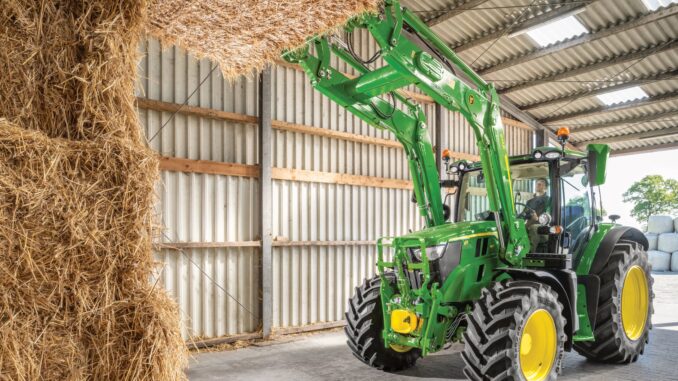
The John Deere 620 is a classic two-cylinder row-crop tractor from Deere’s 20 Series, built from 1956 to 1958 and aimed at general farm work rather than suburban mowing. It sits between the smaller 520 and larger 720 in the lineup, with about 44 hp drawbar and 48 hp PTO output, plus a 6-speed gear transmission and 540 PTO setup.
For today’s owner, the John Deere 620 is usually a hobby farm, acreage, parade, restoration, or light field tractor rather than a daily commercial machine. That means repair priorities often focus on starting, fuel delivery, ignition, clutch and brake adjustment, hydraulic response, steering wear, and safe operation rather than cosmetic perfection.
This guide covers how to troubleshoot the John Deere 620 by symptom, where DIY repair makes sense, which parts and documents matter most, and how to keep the tractor reliable with sensible maintenance. It is written for owners in the USA and Canada who are comfortable with routine service and some intermediate mechanical work, but still need clear lines between safe home repair and jobs better left to an experienced tractor shop.
General overview of the John Deere 620
The John Deere 620 belongs to Deere’s Two-Cylinder 20 Series and was sold in several forms including the row-crop 620, 620S standard, 620O orchard, and 620HC high-crop versions. Production totaled 20,848 tractors, and the machine was built in Waterloo, Iowa.
The core systems on the John Deere 620 are straightforward but very different from modern lawn and garden Deere equipment:
-
Engine and fuel system: 5.0L two-cylinder engine in gasoline, all-fuel, or LP variants, with fuel tank capacity varying by fuel type.
-
Drive system: 6-speed unsynchronized gear transmission with two-wheel drive.
-
Hydraulic system: up to 1200 psi hydraulic pressure, 8.9 gpm pump flow, and 1 or 2 valves depending on configuration.
-
PTO and hitch: rear 540 PTO and Category II rear hitch.
-
Electrical system: positive-ground electrical setup with two 6-volt batteries.
-
Steering and brakes: power-assist steering and mechanical contracting band brakes.
Common service and repair parts owners often look for on an older John Deere 620 include spark plugs, ignition components, carburetor kits, sediment bowl parts, air intake service items, battery cables, belts, hoses, brake and clutch wear parts, hydraulic seals, PTO shaft seals, light bulbs, switches, and tires. Deere’s official illustrated catalog and dealer network remain the best starting point for the exact part numbers because serial number breaks and fuel-type differences matter on vintage tractors.
John Deere 620 troubleshooting approach
The best way to diagnose a John Deere 620 is to start with the symptom the owner actually sees, not the part they think has failed. On a tractor of this age, one bad running complaint can come from ignition, fuel contamination, adjustment drift, worn wiring, old seals, or simple storage-related neglect, so a symptom-first approach saves time and prevents unnecessary parts buying.
Main symptom groups for the John Deere 620 usually include:
-
Hard starting or no-start.
-
Misfiring, poor running, or weak power.
-
Hydraulic lift or remote problems.
-
Clutch, transmission, or drive complaints.
-
Brake and steering issues.
-
Electrical faults and charging concerns.
-
Leaks, overheating, smoke, or unusual noises.
Emergency and immediate John Deere 620 repair needs
1. John Deere 620 starting issues
If the tractor will not start, starts only with towing, or cranks unevenly, address that before continued use. Hard starting on an older two-cylinder Deere often points to ignition, stale fuel, carburetor contamination, weak battery connections, or poor compression, and repeated starting attempts can damage starter components or flood the engine.
Common causes:
-
Weak or imbalanced 6-volt batteries.
-
Corroded battery cables or poor grounds.
-
Faulty ignition switch, wiring, magneto, or distributor components.
-
Fouled or incorrect spark plugs.
-
Dirty carburetor passages or restricted fuel flow from tank/sediment bowl.
-
Sticking valves or low compression on a worn engine.
Basic owner checks:
-
Confirm both batteries are charged and cable connections are clean and tight.
-
Check for clean fuel flow from the tank through the sediment bowl.
-
Inspect spark plugs for fouling, damage, or fuel wetness.
-
Verify spark before assuming a carburetor problem.
-
If compression seems low or one cylinder is much weaker, stop at diagnosis before buying tune-up parts.
2. John Deere 620 running and power loss
A John Deere 620 that starts but misses, smokes, lacks power, or surges under load should be repaired promptly because poor combustion can foul plugs, wash cylinders with excess fuel, and make field work unsafe. On these tractors, carburetion, ignition timing, governor adjustment, and fuel contamination are all frequent suspects.
Common causes:
-
Dirty or varnished carburetor.
-
Plugged fuel cap vent or sediment bowl restriction.
-
Incorrect ignition timing.
-
Bad plugs, wires, points, condenser, cap, or rotor.
-
Governor linkage wear or adjustment issues.
-
Engine wear causing poor compression.
Basic owner checks:
-
Drain old fuel if storage age is unknown.
-
Clean the sediment bowl and verify continuous fuel flow.
-
Inspect ignition parts and set tune-up items to spec from the operator or service literature.
-
Test under light load before blaming the governor.
-
Move to compression testing before major parts replacement.
3. John Deere 620 vibration and noise
A John Deere 620 naturally has a distinctive two-cylinder pulse, but new knocks, heavy vibration, driveline clatter, or rumbling bearings should never be ignored. Noise complaints can point to flywheel looseness, clutch problems, worn drivetrain parts, engine bearing wear, or attachment-related imbalance.
Common causes:
-
Loose flywheel or clutch-related wear.
-
Worn PTO driveline parts.
-
Bad wheel bearings or loose wheel hardware.
-
Engine internal wear.
-
Unbalanced mounted equipment.
-
Loose frame, hitch, or sheet metal components.
Basic owner checks:
-
Separate tractor noise from implement noise by disengaging PTO and removing attachments where practical.
-
Check wheel and hub security.
-
Listen for whether the sound changes with clutch engagement.
-
Stop using the tractor if there is a sharp knock, grinding noise, or flywheel movement.
-
Treat internal engine or clutch teardown as advanced work.
4. John Deere 620 overheating and leaks
Coolant, oil, fuel, or hydraulic leaks on a vintage tractor often get worse quickly because old seals and hoses tend to fail in groups. Overheating, fuel leakage, or major hydraulic seepage should be handled quickly because these issues can damage the engine, create a fire risk, or make the tractor unsafe to control.
Common causes:
-
Old coolant hoses or clamps.
-
Dirty radiator core or internal scale buildup.
-
Water pump or gasket leaks.
-
Carburetor flooding or fuel shutoff seepage.
-
Hydraulic line or seal leaks.
-
Engine oil leaks from gaskets and seals.
Basic owner checks:
-
Clean the radiator exterior carefully and check coolant level when cold.
-
Inspect for active drips rather than only old residue.
-
Shut off fuel at the sediment bowl when parked if seepage is suspected.
-
Check hydraulic oil level and look for hose cracking.
-
Avoid running the tractor hot “just to finish the job.”
5. John Deere 620 transmission and drive problems
Because the John Deere 620 uses a 6-speed unsynchronized gear transmission, owners should expect some gear noise and careful shifting, but grinding, jumping out of gear, clutch drag, or poor pulling power are repair signals. Continuing to use the tractor with clutch or transmission issues can lead to more expensive drivetrain damage.
Common causes:
-
Clutch adjustment problems.
-
Worn clutch facings or release components.
-
Internal transmission wear.
-
Brake drag making the tractor feel weak.
-
Final drive or axle issues.
-
Operator technique mismatch with unsynchronized gearing.
Basic owner checks:
-
Confirm brake drag is not the real cause of poor movement.
-
Check clutch pedal free play and linkage condition.
-
Test whether the issue appears in one gear or all gears.
-
Do not force shifts on an unsynchronized box.
-
Leave internal transmission diagnosis to an experienced shop unless you already do vintage tractor gearbox work.
6. John Deere 620 electrical problems
The John Deere 620 uses a positive-ground, dual-6-volt electrical setup, so many charging and starting problems trace back to wiring condition and battery health rather than a single failed component. Old harnesses, corroded terminals, weak grounds, and incorrect replacement parts are common on restored or part-restored tractors.
Common causes:
-
Dirty or loose cable ends.
-
Incorrect polarity after battery replacement.
-
Faulty switch or charging-system parts.
-
Brittle, cracked, or modified wiring.
-
Poor light or ignition connections.
-
Weak starter switch/contact issues.
Basic owner checks:
-
Confirm the system polarity matches the tractor’s original positive-ground setup.
-
Clean every major cable end before replacing expensive parts.
-
Inspect for overheated or non-original wiring repairs.
-
Check battery condition as a matched set rather than individually.
-
Treat charging-system rebuilds and harness replacement as intermediate-to-advanced jobs.
DIY or dealer? Repair decision guide for the John Deere 620
The John Deere 620 is very repairable compared with modern electronic equipment, but age adds complexity because wear, prior-owner modifications, and hard-to-find serial-number differences can turn a simple-looking job into a bigger one. In general, routine service, basic ignition and fuel work, and external adjustments are realistic DIY tasks, while internal engine, clutch, transmission, hydraulic pump, and major electrical restoration work are usually better for an experienced vintage tractor mechanic.
Good DIY jobs
-
Spark plug service and ignition tune-up inspection.
-
Battery and cable replacement.
-
Fuel sediment bowl cleaning.
-
Carburetor removal for basic cleaning or kit installation.
-
Hose, belt, and external seal replacement.
-
Fluid changes and lubrication.
-
Brake and clutch linkage inspection or adjustment.
-
Light electrical repairs such as bulbs, terminals, and simple switches.
Advanced DIY or dealer jobs
-
Carburetor overhaul if shafts or castings are worn.
-
Magneto or distributor rebuild.
-
Hydraulic pump or valve repair.
-
Clutch replacement or flywheel service.
-
Internal transmission work.
-
Cylinder head, valve, or compression-related engine repair.
-
Full rewiring or charging-system restoration.
-
Final drive, axle, or brake drum internal work.
Skill level guide
-
Beginner: batteries, plugs, fluids, grease points, sediment bowl cleaning, visual leak checks.
-
Intermediate: tune-up parts, carburetor service, external linkage adjustment, hose replacement, simple electrical diagnosis.
-
Advanced: clutch, internal brakes, hydraulic repair, head work, transmission teardown, full rewiring.
Parts needed for a John Deere 620, plus OEM vs aftermarket guidance
Before ordering John Deere 620 parts, gather four things first: the full model, the tractor serial number, the exact fuel type, and any engine tag information still present on the machine. Deere built gasoline, all-fuel, and LP versions, and the official parts catalog is the safest way to confirm serial-number-sensitive components.
Use this information before ordering:
-
Full model name: John Deere 620.
-
Serial number: the plate is on the right side of the tractor frame, below the belt pulley.
-
Engine/fuel variant: gasoline, all-fuel, or LP.
-
Existing part markings: especially on ignition, carburetor, lighting, and charging parts.
Key service and repair parts
OEM vs aftermarket guidance for the John Deere 620 is simple: use OEM or trusted Deere-specialist parts for fit-sensitive, safety-related, or serial-specific items such as clutch parts, hydraulic seals, brake components, electrical switches, and exact ignition pieces. Aftermarket can be perfectly acceptable for batteries, hoses, some tune-up parts, filters where applicable, and certain restoration consumables, but only when the cross-reference is tied to the actual component on the tractor rather than just the model name.
John Deere 620 parts diagrams and manuals
The most useful document sources for a John Deere 620 are the official Deere technical publications channel, Deere’s online parts catalog, and a reputable Deere-focused parts lookup site. TractorData is also useful as a quick reference for serial location, production years, configuration, and general spec confirmation.
Useful sources:
-
John Deere Technical Information Store for operator manuals and technical publications.
-
John Deere Parts Catalog for illustrated diagrams and OEM part-number lookup.
-
Green Farm Parts Deere parts lookup for diagram-based lookup and ordering once you know the part number.
-
Jacks Small Engines John Deere 620 diagrams for an additional illustrated lookup source.
What each source is best for:
-
Operator manual: lubrication points, service intervals, controls, safety, and maintenance basics.
-
Deere parts catalog: exploded diagrams and exact OEM numbers.
-
Dealer-focused aftermarket sites: checking availability and confirming whether a Deere number is still active.
How to locate John Deere 620 serial and model numbers
These numbers matter because vintage Deere tractors often changed parts during production, and many tractors now have replacement ignition, carburetor, charging, or hydraulic components. Ordering by “John Deere 620” alone is often not enough.
Steps to find the correct identification numbers:
-
Look on the right side of the tractor frame below the belt pulley for the serial number plate.
-
Record the full serial exactly as stamped before ordering anything.
-
Confirm whether the tractor is the standard row-crop 620 or another 620 variant such as 620S, 620O, or 620HC.
-
Check the engine and ignition components for tags or casting numbers if the tractor may have been modified.
-
Photograph the carburetor, distributor or magneto, generator, starter, and any existing part numbers before shopping.
Buying John Deere 620 parts online and in stores
The best buying strategy for a John Deere 620 is to use the official diagram first, write down the OEM number, then compare dealer, specialist, and reputable aftermarket sources. That avoids the biggest vintage-tractor mistake, which is ordering from a generic listing based only on model name.
-
Online: use Deere diagrams first, then search by OEM number on sites like John Deere Parts Catalog, Green Farm Parts, and Jacks Small Engines.
-
Dealer counter: best for serial-specific, safety-related, and ambiguous parts where a human can confirm supersessions or availability.
-
Retail stores: acceptable for batteries, bulbs, hoses, and some tune-up items only if the packaging clearly cross-references the exact tractor component in hand.
Step-by-step fitting guide for common John Deere 620 parts
Replacing spark plugs on a John Deere 620
Fresh plugs can cure hard starting, misfire, and weak running if ignition and fuel supply are otherwise sound.
-
Park the tractor safely, shut it off, and let the engine cool.
-
Remove one plug wire at a time so the leads do not get mixed up.
-
Remove the old plugs and inspect color, deposits, and wetness for clues about mixture or ignition problems.
-
Install the correct replacement plugs for the tractor’s exact fuel and ignition setup.
-
Refit the wires securely and test-start the tractor.
Cleaning the John Deere 620 sediment bowl
This is one of the first jobs to do on a stored or rough-running tractor because fuel restriction is common on older machines.
-
Shut off fuel at the tank.
-
Remove the sediment bowl carefully and empty contaminated fuel.
-
Clean the bowl and screen, then inspect the gasket.
-
Reassemble and reopen the fuel valve slowly.
-
Confirm you have steady fuel flow before moving on to carburetor work.
Servicing the John Deere 620 carburetor
A dirty carburetor often causes surging, poor starting, or fuel dripping.
-
Shut off fuel and remove the carburetor carefully.
-
Disassemble only on a clean bench so small parts are not lost.
-
Clean varnish and debris from jets and passages without damaging them.
-
Install the correct kit matched to the carburetor tag or casting, not just the tractor model.
-
Refit, test for leaks, and tune only by the manual after the tractor is fully warmed.
Replacing John Deere 620 battery cables or batteries
A weak 6-volt system often fails because of resistance in old cables rather than bad starter parts.
-
Confirm the tractor uses the original positive-ground arrangement before disconnecting anything.
-
Remove and clean cable ends, terminals, and grounding points.
-
Replace damaged cables with proper heavy-gauge equivalents suitable for 6-volt service.
-
Install matched batteries if replacing them as a set.
-
Recheck polarity and crank speed before assuming deeper electrical trouble.
John Deere 620 maintenance to prevent repeat problems
Regular maintenance matters even more on a vintage John Deere 620 because many failures begin with old fuel, weak electrical connections, neglected lubrication, or small leaks that become major repairs. A tractor that only sees occasional hobby use can deteriorate faster than a regularly worked machine if it is stored poorly.
Focus areas:
-
Starting reliability: keep the battery system clean, charged, and correctly grounded.
-
Running quality: use clean fuel, service the sediment bowl, and keep ignition parts in shape.
-
Fire and overheating prevention: fix fuel and oil leaks early, and keep the cooling system clean.
-
Drive performance: maintain clutch and brake adjustment before wear becomes damage.
-
Hydraulic reliability: check fluid condition, hoses, and seal leaks before use.
John Deere 620 maintenance schedule and year-round checklist
The operator’s manual is the authority for exact lubrication and service intervals, but the practical rhythm for a John Deere 620 should follow pre-use inspection, regular lubrication, seasonal fluid checks, and storage preparation. Because this is a classic tractor, calendar-based maintenance is often just as important as hour-based maintenance.
Daily / before each use
-
Check engine oil level.
-
Check coolant level when cold.
-
Check fuel shutoff, sediment bowl, and visible leaks.
-
Inspect tires, steering response, and brake function.
-
Confirm battery cables are secure.
Every 25 hours
-
Lubricate grease points.
-
Inspect ignition wires and plugs.
-
Check clutch and brake linkage adjustment.
-
Inspect hydraulic hoses and fittings for seepage.
Every 50 hours or yearly
-
Change engine oil if annual use is low but storage time is high.
-
Inspect and clean the cooling system exterior.
-
Clean the fuel system and check tank condition.
-
Check transmission/final drive lubricant condition per manual.
-
Inspect lights and wiring for cracked insulation.
Seasonal checklist
-
Spring: fresh fuel, battery check, leak inspection, lubrication, cooling-system inspection.
-
Mid-season: recheck plugs, fuel flow, and clutch/brake adjustment.
-
Fall or storage prep: shut fuel off, stabilize or drain fuel as appropriate, clean tractor, fix leaks, and maintain battery charge.
Repair, upgrade, or replace a John Deere 620?
For most owners, a John Deere 620 is worth repairing when the tractor is structurally sound, starts from a complete core, and only needs normal vintage-machine recommissioning. Replacement usually makes more sense only when the tractor has major internal damage, multiple missing systems, or the owner really needs a modern utility tractor rather than a classic two-cylinder machine.
Repair if…
-
The tractor is complete and largely original.
-
Problems are mostly fuel, ignition, wiring, brake, clutch adjustment, or external leaks.
-
Compression and transmission condition are still reasonable.
Upgrade if…
-
You want better reliability for light working use.
-
Wiring, lighting, tires, or charging components are tired but the tractor itself is sound.
-
You are already doing a partial restoration and can fix several systems together.
Replace if…
-
The engine, clutch, transmission, hydraulics, and electrical system all need major work at once.
-
The tractor is badly incomplete or unsafe.
-
Your real need is modern loader, PTO, or daily-use convenience rather than collector value.
John Deere 620 troubleshooting FAQ
1. Why will my John Deere 620 not start?
The most common causes are weak batteries, dirty cable connections, poor spark, stale fuel, or restricted fuel flow through the sediment bowl or carburetor. Because the John Deere 620 uses a positive-ground dual-6-volt system, voltage drop from corroded cables is a common issue. Start with battery condition, cable cleanliness, spark check, and fuel flow before assuming internal engine trouble.
2. Why does my John Deere 620 crank slowly?
Slow cranking usually points to battery condition, undersized or corroded cables, poor grounding, or starter switch resistance. On a 6-volt system, even small resistance losses matter more than they do on a 12-volt conversion. Clean every connection first, then test batteries as a matched pair.
3. Why does the John Deere 620 start but run on one cylinder?
This often comes from a bad plug, weak ignition component, fouled plug wire, carburetor imbalance, or a compression problem on one side. Swap simple ignition parts first, inspect plugs closely, and compare cylinder contribution before digging deeper. If one side stays dead, compression testing becomes important.
4. Why is my John Deere 620 missing under load?
A miss under load often means ignition weakness, fuel starvation, or timing issues rather than a simple idle adjustment problem. Check tune-up parts, fuel flow from the tank, sediment bowl cleanliness, and carburetor condition. If the tractor idles acceptably but fails under pull, governor and fuel delivery deserve close attention.
5. Why does my John Deere 620 have no power?
Power loss can come from poor ignition timing, stale fuel, blocked fuel delivery, low compression, or governor problems. The John Deere 620 was rated around 44 hp drawbar and 48 hp PTO when healthy, so a noticeably weak tractor needs systematic diagnosis. Test fuel, ignition, and compression before buying major parts.
6. Why is the John Deere 620 hard to start when hot?
Hot-start trouble usually points to ignition weakness, fuel percolation, marginal compression, or incorrect mixture settings. On older tractors, worn ignition parts often show up more clearly when heat builds resistance. Check spark quality hot, not just cold.
7. Why does my John Deere 620 backfire?
Backfiring may come from ignition timing errors, lean fuel delivery, sticking valves, or cross-connected plug wires after service. It can also happen when the engine is partially flooded and ignition is inconsistent. Verify wire routing and timing before adjusting the carburetor blindly.
8. Why is fuel leaking from my John Deere 620 carburetor?
Fuel dripping usually means float, needle, seat, or debris issues inside the carburetor. Old tractors also suffer from tank rust and sediment that quickly recontaminates a cleaned carb. Shut off the fuel when parked until the cause is fixed.
9. Why does my John Deere 620 stall after a few minutes?
This commonly points to restricted fuel flow, tank vent issues, sediment bowl blockage, or an ignition part that fails once warm. The pattern matters: a gradual fade suggests fuel starvation, while a sudden cutout often suggests ignition. Diagnose by symptom timing rather than replacing random parts.
10. Why does my John Deere 620 smoke?
Black smoke suggests rich fuel mixture, restricted air intake, or carburetor problems, while blue smoke usually points to oil burning and engine wear. White smoke may indicate coolant-related concerns or fuel issues depending on conditions. Watch when the smoke appears: startup, idle, load, or all the time.
11. Why is my John Deere 620 overheating?
Overheating can result from low coolant, blocked radiator fins, internal scale, water pump issues, or timing and mixture problems that make the engine run hot. Vintage tractors also suffer when debris accumulates in the cooling system over time. Do not keep working the tractor hot just because it still runs.
12. Why is my John Deere 620 leaking coolant?
Coolant leaks usually come from hoses, clamps, radiator seams, water pump areas, or gaskets. Small seeps on an older tractor often become major leaks once the system warms and pressure rises. Fix them early so overheating does not create a larger engine repair.
13. Why is my John Deere 620 leaking oil?
Oil leaks are common on tractors of this age and often come from gaskets, seals, governor housings, or general crankcase seepage. The key is separating normal vintage dampness from active dripping that lowers oil level or coats hot surfaces. Clean the area first so you can find the real source.
14. Why are the brakes weak on my John Deere 620?
Weak braking can be caused by worn mechanical brake parts, poor adjustment, contamination, or linkage issues. Since the tractor uses mechanical contracting band brakes, adjustment and wear condition both matter. Unsafe brakes should move to the front of the repair list immediately.
15. Why does my John Deere 620 pull to one side when braking?
Uneven brake adjustment or wear side-to-side is the usual cause. One brake may be grabbing harder, or the weaker side may be contaminated or worn. Correct adjustment and inspection are more important than trying to “drive around” the issue.
16. Why is the steering heavy on my John Deere 620?
Heavy steering may be normal at low speed with front weight or loader load, but worsening effort can indicate wear, poor front-end lubrication, tire issues, or trouble with the power-assist system. Check tire pressure and linkage condition first. If there is play plus high effort, plan for deeper inspection.
17. Why does my John Deere 620 clutch drag?
Clutch drag often shows up as hard shifting, gear clash, or the tractor creeping when the clutch is depressed. Adjustment problems are common, but worn internal parts are also possible. Because the transmission is unsynchronized, correct clutch function matters a lot for normal operation.
18. Why does the John Deere 620 grind going into gear?
Some gear clash can happen if shifting technique is rushed on a 6-speed unsynchronized transmission, but persistent grinding often points to clutch drag or linkage issues. Check free play and clutch release action first. If that does not solve it, internal wear may be involved.
19. Why does my John Deere 620 jump out of gear?
Jumping out of gear can mean internal transmission wear, shift rail or fork issues, or poor engagement caused by adjustment problems. This is not something to ignore because damage can spread. External linkage checks come first, but internal gearbox work is usually advanced repair.
20. Why won’t my John Deere 620 move properly?
If the engine runs but the tractor barely moves, check for brake drag, clutch slip, or gear engagement issues before assuming catastrophic transmission failure. A dragging brake can make the tractor feel weak or uneven. Clutch diagnosis should follow if the brakes are free.
21. Why is the PTO on my John Deere 620 not working right?
PTO issues may come from engagement problems, worn related components, or driveline trouble in the attached implement. Since the John Deere 620 uses a rear 540 PTO, match your troubleshooting to standard 540-rpm equipment. Separate tractor PTO faults from implement faults before buying parts.
22. Why are the hydraulics weak on my John Deere 620?
Weak hydraulics can be caused by low fluid, pump wear, valve issues, leakage, or internal seal problems. The tractor’s hydraulic system was rated around 1200 psi and 8.9 gpm, so poor lift response means the system deserves testing. Start with fluid level and visible leakage before assuming pump failure.
23. Why does my John Deere 620 hydraulic system chatter?
Hydraulic chatter often suggests air in the system, fluid condition problems, low oil level, restriction, or pump wear. Old hoses and fittings can also allow small air-entry issues that do not always show as obvious leaks. Check condition and level before chasing major components.
24. Why won’t my John Deere 620 charge the batteries?
Charging failure usually traces to wiring condition, generator or regulator issues, poor grounds, or battery problems. Because many vintage tractors have been rewired or partially converted over the years, never assume the current system matches factory layout. Confirm polarity and wiring before replacing charging parts.
25. Why do the lights on my John Deere 620 not work?
The cause is often simple: bad bulbs, corroded sockets, broken wiring, poor grounds, or switch failure. On tractors this old, cosmetic restoration can hide poor electrical connections underneath. Test the circuit systematically instead of replacing every light part at once.
26. Why does my John Deere 620 vibrate more than usual?
These tractors have a distinct operating pulse, but extra vibration may indicate loose flywheel components, mounting issues, worn bearings, bad tires, or implement imbalance. A sudden change matters more than the baseline “two-cylinder feel.” Stop and inspect if the vibration became noticeably worse all at once.
27. Why is there a knocking sound in my John Deere 620 engine?
A knock can range from harmless external looseness to serious internal engine wear. If the noise is sharp, load-related, or getting worse, do not keep running the tractor until the source is identified. Internal bearing, piston, or flywheel issues can become very expensive if ignored.
28. Why is my John Deere 620 serial number important when ordering parts?
The serial number helps separate production changes and confirms which version of a part fits your tractor. Deere placed the serial number plate on the right side of the frame below the belt pulley. On vintage equipment, this is often the difference between a correct repair and wasted money.
29. Where can I find John Deere 620 parts diagrams?
The best first stop is Deere’s online illustrated parts catalog, followed by Deere-focused parts sites that let you search by part number or model. Green Farm Parts explains how to use Deere’s illustrated catalog and then search by the resulting part number. Jacks Small Engines also offers a John Deere 620 diagram lookup page.
30. Where can I find a John Deere 620 operator’s manual?
Deere’s Technical Information Store is the main official source for operator manuals and technical publications, and TractorData also points users there from its John Deere 620 page. For maintenance and lubrication routines, the operator’s manual should be your baseline reference. Reprint sellers exist, but official Deere sourcing is the safest first step.
31. Is a John Deere 620 easy to work on?
Compared with modern electronically controlled equipment, the John Deere 620 is mechanically simple and very serviceable. The catch is that age, previous repairs, non-original parts, and vintage electrical systems can complicate diagnosis. It is easy to access, but not always easy to restore correctly.
32. Should I convert my John Deere 620 to 12 volts?
Many owners consider it for easier starting and simpler battery sourcing, but a properly maintained original 6-volt positive-ground system can work well too. The right choice depends on whether you value originality, parade/show use, or practical working reliability. If you convert, do it completely and correctly rather than mixing parts.
33. Is the John Deere 620 good for regular acreage work today?
Yes, within reason. Its row-crop design, 540 PTO, and moderate power still make it useful for light acreage tasks, shows, and hobby farm work, but it lacks modern safety, convenience, and attachment compatibility features. For daily loader work or modern operator comfort, newer utility tractors make more sense.
34. When should I stop DIY repair on a John Deere 620?
Stop when the repair moves into clutch splitting, internal engine work, transmission teardown, hydraulic internals, or major electrical restoration without clear wiring information. Those jobs are possible for skilled hobbyists, but mistakes get costly fast. A good rule is that external service is DIY territory; internal driveline and engine work is not for casual owners.
35. Is a John Deere 620 worth restoring?
For many owners, yes, because the John Deere 620 is a recognized member of Deere’s Two-Cylinder 20 Series with solid collector and hobby appeal. Value depends on completeness, engine condition, tires, sheet metal, and whether major systems are intact. A complete, running tractor is usually a much better restoration candidate than a cheap but incomplete parts machine.