
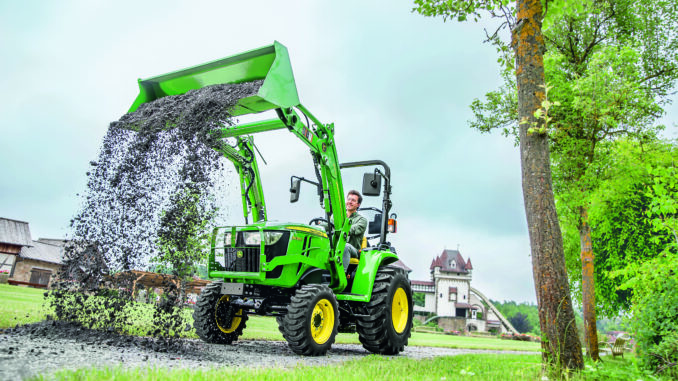
John Deere 3038 Serial Number Lookup, PIN Location, Parts & Year Guide
The John Deere 3038 designation needs a careful clarification before using any serial-number information. This guide covers the John Deere 3038E compact utility tractor, including North American and Worldwide/Export production versions documented under the 3038E name. John Deere has also used closely related 3038R and other 3038-series designations, but those are different tractors and must not be identified, serviced, or fitted with attachments using 3038E information alone.
The main machine Product Identification Number, usually called the PIN, is the most important number to record on a John Deere 3038E. It helps a John Deere dealer, parts supplier, mechanic, insurer, or prospective buyer distinguish the individual tractor from other machines with similar decals, equipment levels, engines, and production changes.
And See:
A complete John Deere 3038E PIN is useful when ordering parts, identifying the correct operator’s or technical manual, checking serial-range notes in the parts catalogue, confirming attachment suitability, investigating applicable safety actions, and assessing a tractor’s identity before a used-machine purchase. The engine serial number is separate and may also be required for engine-specific repair parts.
Important: Do not use information for a John Deere 3038R, 3032E, 3025E, 3036E, or another tractor as proof of identification, parts fitment, or serial-number interpretation for a 3038E. Confirm the complete machine PIN before ordering parts or accessories.
In this guide
-
Where to find the main John Deere 3038E PIN or serial number
-
How to identify and record the engine serial number
-
What a John Deere 3038E PIN can and cannot tell you
-
How to establish the tractor’s production period
-
Why parts catalogues use serial-number breaks
-
Maintenance and service implications of PIN-range differences
-
Attachment and implement compatibility checks
-
Recall, safety, used-buying, and missing-plate checks
Quick Guide: Where to Find the Serial Number on a John Deere 3038E
On the John Deere 3038E, the main Product Identification Number (PIN) is located on the tractor identification marking or plate specified for the applicable market and production version. Confirm the exact physical position against the operator’s manual or official John Deere parts information that matches the tractor’s PIN range before relying on a location shown for another 3038-series machine.
If you are in a hurry:
Park the tractor safely on level ground, stop the engine, set the parking brake, and remove the key.
Check the chassis, frame, and operator-platform areas identified in the correct operator’s manual for the tractor.
Look for “PIN,” “Product Identification Number,” “Product ID,” or “Serial Number.”
Use a torch and gently remove loose dirt with a soft brush and cloth.
Photograph the identification marking before and after cleaning.
Main Product Identification Number Location on the John Deere 3038E
Exact position on the tractor
The John Deere 3038E was sold in more than one regional configuration, including North American and Worldwide/Export versions. Features such as lighting, warning equipment, safety labels, and road-use equipment can differ between regional versions. The correct operator’s manual and official parts catalogue should therefore be selected using the full PIN, not only the 3038E model decal.
The most reliable approach is to consult the identification-number section of the correct manual for the machine’s production version. A John Deere dealer can also use the full PIN to confirm the official identification point, the tractor configuration, and the relevant parts-catalogue range.
Do not assume that an identification plate position shown on a 3038R, an earlier 3032E, or another John Deere compact tractor is correct for every 3038E.
What the PIN plate looks like
The John Deere 3038E identification information identifies the machine as an individual tractor and includes its Product Identification Number. Depending on market, age, and production version, the information may appear on an identification plate, label, or marked machine area.
Age and working conditions can make the number difficult to read. Common issues include:
-
Packed soil, grease, crop residue, and dust
-
Paint applied during cosmetic repairs
-
Faded or damaged labels
-
Surface corrosion near an identification area
-
Scratches or abrasion from clothing, tools, or implements
-
Missing decals confused with a missing legal machine-identification marking
Tips for old, dirty, or painted tractors
Use care when checking an older John Deere 3038E. The aim is to reveal and record the original information, not to alter it.
-
Brush away loose debris using a soft brush.
-
Wipe the area with a clean cloth.
-
Use a mild degreaser only where suitable for the surface.
-
Use angled light from a torch to make faint characters easier to see.
-
Take several photographs before and after cleaning.
-
Record every character exactly, including letters, symbols, and leading zeroes.
-
Compare uncertain characters carefully; letters and numbers can look similar when worn.
Never use a grinder, wire wheel, aggressive abrasive, punch, welding process, or chemical stripping method on an identification marking. Do not restamp, alter, manufacture, or fit a replacement PIN plate yourself.
Engine Serial Number on the John Deere 3038E
The engine serial number is separate from the tractor PIN. The main tractor PIN identifies the complete John Deere 3038E, while the engine number identifies the engine assembly and can be important when ordering engine-specific repair parts.
Engine identification may be needed for:
-
Fuel-system components
-
Engine electrical parts
-
Cooling-system parts
-
Belts and pulleys
-
Air-intake components
-
Fuel filters and fuel-water separator parts
-
Exhaust-filter or emissions-related service items
-
Major repair, overhaul, or replacement-engine work
Engine serial-number location
The engine identification number is normally found on an engine-mounted label or a stamped engine identification area. Its exact position can vary according to the engine version and production range fitted to the tractor.
Before ordering engine-specific components, identify both the engine model and the engine serial number. Use the correct John Deere operator’s manual, technical manual, official parts catalogue, engine documentation, or a John Deere dealer to confirm the precise location and application.
Engine variants and emissions equipment
The John Deere 3038E has been produced in different market and production configurations. Some documented 3038E versions include diesel exhaust-filter servicing and regeneration procedures, while equipment details can vary by market and production range.
This matters because engine-related parts, emissions components, fuel-system parts, belts, filters, and service procedures can differ. Do not order engine-specific parts from the tractor model decal alone. Confirm the engine identification and the full machine PIN first.
How to Read a John Deere 3038E Serial Number
Copy the complete Product Identification Number exactly as it appears on the tractor. A missing letter, incorrect digit, or character transposition can direct a parts lookup to the wrong serial range.
John Deere PINs can contain information related to the individual machine, such as manufacturing and configuration data, but individual character meanings should not be guessed unless they are confirmed for the exact 3038E production version. Dealer systems can use the complete PIN to identify information that is not obvious from the model decal.
PIN structure
John Deere 3038E documentation identifies the PIN as a unique product-identification number containing alphabetical and numeric characters. Some characteristics can relate to the manufacturing location, machine series, power class, configuration, model year, and build sequence.
However, the exact decoding rules can differ by production version and market. Use the complete PIN with a John Deere dealer rather than relying on generic online PIN decoders.
[MODEL CODE]-[PRODUCTION CODE]-[SEQUENCE NUMBER]Illustrative format only — this is not a real John Deere 3038E serial number and should not be used to identify a machine.
What the PIN can tell you
A complete John Deere 3038E PIN can help to:
-
Identify the individual tractor.
-
Select the correct parts-catalogue serial range.
-
Help a John Deere dealer identify the production period and configuration.
-
Match the tractor with the appropriate operator’s or technical manual.
-
Check machine-specific safety information or open campaigns.
-
Confirm that a proposed attachment is intended for the tractor configuration.
What the PIN cannot tell you on its own
A PIN is important, but it is not a complete machine history report. By itself, it may not prove:
-
The exact calendar year the tractor was first sold.
-
The tractor’s full original equipment specification.
-
The original selling dealer.
-
Complete maintenance history.
-
Current legal ownership.
-
Whether major components have been changed.
-
Whether a machine is stolen.
-
Whether finance is outstanding.
-
Whether an attachment currently fitted is correct for the tractor.
Finding the Year of Your John Deere 3038E from the Serial Number
John Deere has documented multiple 3038E production versions, including earlier North American versions, later Worldwide/Export versions, and model-year-specific replacement-parts guides. A single generic serial-number year chart should not be treated as definitive for every John Deere 3038E.
For example, documented replacement-parts guides identify Worldwide Edition production beginning with specified PIN prefixes and production ranges. Those references are useful for selecting the correct service information, but they should not be converted into a universal year-identification chart without verifying the exact PIN, market, and machine version.
The most dependable route is a dealer PIN lookup combined with the tractor’s original documentation and physical configuration.
-
Copy the full PIN exactly.
-
Check the official operator’s manual, parts catalogue, or verified serial-range information that applies to the machine.
-
Ask a John Deere dealer to search the complete PIN.
-
Compare the result with original sales paperwork, service records, emissions labels, decals, and equipment configuration.
-
Treat generic online serial-year charts cautiously unless they specifically identify the 3038E market and production range.
A dealer PIN lookup is normally more useful than trying to determine a 3038E’s age from an isolated serial-number fragment.
Using Your John Deere 3038E Serial Number to Order the Right Parts
The 3038E decal alone does not always identify the correct service part. John Deere produced 3038E tractors for different regions and production periods, and catalogued service items can vary by PIN range, engine version, equipment specification, and emissions-system configuration.
Use the full tractor PIN whenever you order drivetrain, hydraulic, electrical, chassis, loader-mounting, or operator-station parts. For engine-related parts, provide the engine model and engine serial number as well.
Understanding serial breaks
A serial break is a point in production where John Deere changed a part, system, supplier, design, or configuration. A parts catalogue may list one part before a specified number and another part from that number onward.
Common catalogue terms include:
Known serial breaks on the John Deere 3038E
Official John Deere parts information should be checked for each individual component and PIN range. A public, all-inclusive serial-break table should not be used as a substitute for the applicable official parts catalogue because changes can involve engine equipment, filters, belts, electrical components, hydraulic fittings, axle parts, lighting, emissions equipment, or attachment mounting arrangements.
Read every note in the relevant parts diagram, including references to early and late production, market version, optional equipment, and serial-number applicability.
Ordering parts correctly
-
Photograph and record the complete machine PIN.
-
Confirm that the plate identifies the tractor as a John Deere 3038E.
-
Identify the engine model and engine serial number for engine-related parts.
-
Use the official John Deere parts catalogue whenever possible.
-
Read every “before,” “after,” “serial number below,” and “serial number and above” note.
-
Compare the old part number, mounting arrangement, and visible component with the parts diagram.
-
Ask a John Deere dealer or knowledgeable supplier to verify uncertain parts before ordering.
Aftermarket catalogues sometimes group multiple production versions under one model name. That can be convenient for searching, but it is not proof that a part fits every 3038E.
Maintenance and Service Differences by Serial Range
The John Deere 3038E operator information includes scheduled maintenance covering engine oil, fuel and air filtration, cooling, hydraulic and transmission service, front axle service, electrical checks, safety interlock testing, PTO, steering, brakes, three-point hitch components, and loader-related maintenance.
Maintenance intervals and service requirements must match the correct operator’s manual and PIN range. Later Worldwide Edition 3038E guidance includes diesel-engine, fuel-filtration, air-filtration, transmission/hydraulic, axle, and exhaust-filter service information. Earlier and regional versions can have different service details.
Why the PIN matters for servicing
The tractor PIN helps determine which maintenance information applies to the machine. The engine identification can also affect:
-
Oil and fuel filter selection
-
Air-filter arrangement
-
Belt specification
-
Fuel-system service procedures
-
Electrical parts
-
Exhaust-filter or emissions-service requirements
-
Fluid capacities and approved lubricant specifications
Do not assume that a filter, belt, fluid capacity, or service interval listed for another 3038E version applies to your tractor. Use the operator’s manual and official parts information that match the exact PIN range.
Practical maintenance record
Keep the following details together in a secure off-machine record:
-
Full tractor PIN
-
Engine model and engine serial number
-
Hours at purchase
-
Service dates and hour readings
-
Oil, hydraulic-fluid, coolant, and filter records
-
Attachment identification numbers
-
Dealer repair invoices
-
Safety campaign or recall completion records
Attachment Compatibility for the John Deere 3038E by Serial Number
The John Deere 3038E is a compact utility tractor designed to work with rear implements, PTO-driven equipment, hydraulic equipment, and approved front-loader arrangements. Attachment fitment depends on more than the tractor’s model decal.
Compatibility can depend on:
-
The full tractor PIN and production version
-
Market configuration
-
Loader mounting frame and brackets
-
Hydraulic control-valve and coupler arrangement
-
Rear hitch configuration
-
PTO specification and implement driveline requirements
-
Tire size and wheel configuration
-
Required front or rear ballast
-
ROPS, lighting, and safety-equipment configuration
-
Attachment serial number and revision level
Verified attachment checks
John Deere documentation for the 3038E includes operation of rear implements, three-point hitch equipment, optional iMatch quick-attach equipment, hydraulic selective-control-valve equipment, and front-loader installation. However, exact attachment model fitment must be confirmed against the tractor’s specific PIN, market, and configuration.
Do not buy a used loader, backhoe, mower, snowblower, blade, tiller, or PTO implement solely because the seller says it “came off a 3038.” Confirm both the tractor PIN and attachment identification number before money changes hands.
Checking Recalls and Safety Notices Using Your John Deere 3038E PIN
Safety actions, service campaigns, and field improvements can apply only to certain production ranges, components, or equipment configurations. The full machine PIN allows a John Deere dealer to check the correct tractor record.
Use this process:
-
Record the complete tractor PIN exactly.
-
Contact a John Deere dealer and ask for a check of open safety campaigns, recall actions, and relevant product improvements.
-
Check official John Deere safety information for the market in which the tractor was sold or is used.
-
Keep a photograph and written record of the PIN with the tractor’s ownership and maintenance documents.
-
Ask for written confirmation when a safety action has been completed.
Using the John Deere 3038E Serial Number When Buying or Selling
A careful identification check can prevent expensive mistakes with used tractors. It can also help distinguish a genuine machine from one with incorrect paperwork, swapped components, or incomplete service records.
Checks for buyers
-
Check that the PIN plate or marking matches the available paperwork.
-
Confirm that the machine is actually a John Deere 3038E, not a similar 3038-series tractor.
-
Look for unusual rivets, disturbed paint, damaged mounting areas, altered characters, or a plate that appears inconsistent with the tractor.
-
Compare the tractor’s condition, features, and equipment with its documented configuration.
-
Confirm that engine, transmission, loader, and attachment numbers are not being presented as the machine PIN.
-
Use the PIN to check applicable parts ranges, attachment suitability, and possible safety actions.
-
Review service records against the tractor’s hour meter and overall condition.
-
Be cautious if the seller cannot explain a missing or inconsistent identification number.
-
Pause the purchase if there is a serious identity discrepancy.
Advice for sellers
A legitimate seller can make a 3038E easier to value by providing an accurate model description, hours, service records, clear photographs, and a reasonable explanation of fitted equipment.
Avoid posting a high-resolution public photograph of the complete PIN plate. Share the full number privately with a serious buyer, John Deere dealer, insurer, finance provider, or parts supplier when appropriate. Keep a written record of who received it.
What If You Cannot Find or Read the Serial Number?
Plate is dirty, painted over, or faded
Use strong angled lighting, a soft brush, and a clean cloth. Photograph the area at several angles and record every visible character. If paint obscures a number, do not use destructive methods to remove it.
Consult the operator’s manual that matches the tractor version or ask a John Deere dealer to identify the correct inspection point.
Plate is corroded or damaged
Record every readable character, including partial ones. Check original purchase paperwork, service invoices, warranty documents, insurance records, and dealer-maintained service history.
A dealer may be able to assist with identification from legitimate documentation and other original machine information. Do not attempt to improve the number by engraving, stamping, or replacing the plate yourself.
Plate is missing
Check for legitimate machine or component identification points, original documentation, dealer service records, and ownership records. A missing plate does not automatically establish wrongdoing, but it is a significant issue that should be resolved before a purchase, sale, registration, insurance claim, or major repair.
Never manufacture, restamp, alter, or install a replacement identification plate without official guidance and any required legal approval.
PIN does not match paperwork
A mismatch can result from:
-
A data-entry error
-
Incorrect paperwork
-
An engine number being mistaken for the machine PIN
-
An attachment identification number being recorded as the tractor number
-
A replacement component being confused with the whole-machine identity
-
A more serious ownership or theft-related concern
Resolve the discrepancy through a John Deere dealer and, where appropriate, the relevant authority before buying, selling, registering, or transporting the tractor.
John Deere 3038E Serial Number FAQ
Where is the serial number on a John Deere 3038E?
The main serial number is the tractor’s Product Identification Number, or PIN. The exact physical location should be confirmed using the operator’s manual or official John Deere information that matches the tractor’s market and production range. Do not rely on a location shown for a 3038R or another similar compact tractor.
What does the serial number on my John Deere 3038E identify?
The PIN identifies the individual tractor. John Deere and authorised dealers can use it to select applicable parts information, service documentation, configuration details, production-range notes, and relevant safety information. It is more useful than the 3038E model decal alone because tractors with the same model name can differ by market and production range.
Is the John Deere 3038E serial number the same as a VIN?
The terms are sometimes used casually in similar ways, but John Deere normally refers to the main tractor identifier as a Product Identification Number or PIN. Use the wording shown on the tractor and in the applicable John Deere documentation. For parts, service, and dealer checks, provide the full PIN exactly as recorded.
Is the Product Identification Number the same as the serial number?
For practical ownership and parts purposes, the terms are often used to describe the main unique machine identifier. John Deere documentation refers to the tractor number as the Product Identification Number, or PIN. Do not confuse it with the engine serial number, a transmission tag, a loader number, or an implement serial number.
Can I find the year of my John Deere 3038E from the serial number?
The full PIN can help a John Deere dealer establish the tractor’s production information, but a generic online chart should not be treated as a definitive year lookup for every 3038E. The model has documented regional and production-range variations. Confirm the complete PIN through a dealer and compare the result with original paperwork and machine labels.
Are official serial-number year charts available for the John Deere 3038E?
Official documentation includes production-range references for particular 3038E versions, including Worldwide Edition replacement-parts guidance. Those references are intended to identify the correct parts and service information. They should not be treated as a universal calendar-year chart unless the document specifically applies to the tractor’s exact market and PIN range.
How accurate are online John Deere 3038E serial-number year charts?
Accuracy depends on whether the chart clearly identifies the exact 3038E version, market, production range, and interpretation of the number. Many generic charts mix models, omit regional differences, or confuse production periods with retail model years. Use a dealer PIN lookup when an accurate age or configuration decision matters.
What is the difference between the machine PIN and engine serial number?
The machine PIN identifies the complete tractor. The engine serial number identifies the engine assembly. Use the machine PIN for tractor chassis, transmission, hydraulics, electrical, operator-station, and attachment-related questions. Use the engine number as well when ordering engine-specific parts, diagnosing engine issues, or carrying out engine repair work.
Where is the engine serial number on a John Deere 3038E?
The engine number is normally on an engine-mounted label or stamped identification area. Its exact location can differ by engine and production version. Check the correct model-specific manual or official engine documentation before searching. If the number is difficult to find, a John Deere dealer can help identify the correct inspection point from the tractor PIN.
Do I need the engine number or machine PIN to order parts?
For most tractor parts, begin with the full machine PIN. For engine components, provide both the machine PIN and the engine model and serial number. This is especially important for fuel-system, exhaust, cooling, electrical, belt, and engine-service parts because component specifications can change during production.
Why does the parts catalogue ask for a serial-number range?
The catalogue is identifying a serial break. John Deere may have changed a component, supplier, mounting arrangement, electrical system, engine feature, or hydraulic fitting during production. A part marked “serial number below” or “serial number and above” applies only to the stated side of that change.
What is a serial break on a John Deere 3038E?
A serial break is a documented point in production where a part or system changed. It does not necessarily mean the earlier tractor is defective or the later tractor is better. It simply means the parts catalogue needs the PIN range to identify the correct component, repair procedure, or related hardware.
Which John Deere 3038E parts are most likely to change by serial range?
Items that commonly require serial-range checking include filters, belts, fuel-system components, electrical parts, hydraulic fittings, axle components, emissions-related items, lighting equipment, loader mounting hardware, and safety-system parts. The correct answer for an individual tractor comes from the applicable official parts catalogue and complete machine PIN.
Does maintenance differ by serial number on a John Deere 3038E?
Basic maintenance categories are similar across the tractor family, but parts, capacities, approved products, procedures, and emissions-service requirements can vary by engine and production version. Use the operator’s manual and parts information that match the full PIN. Do not copy filter or fluid information from another 3038E without checking applicability.
Can filters change by serial number or engine version?
Yes. Engine-related filters and other service components can differ between production versions or engine configurations. This is why the machine PIN and engine identification should be recorded before ordering service parts. A filter that physically looks similar may not provide the correct fit, filtration level, sealing arrangement, or service specification.
How do I use a John Deere parts catalogue with my 3038E PIN?
Start with the exact 3038E model designation and select the correct market and production version. Read all serial-range notes and equipment qualifiers in the parts diagram. Compare the old part and machine configuration with the illustration. If the catalogue note is unclear, provide the full PIN and a photograph of the component to a John Deere dealer.
Can a John Deere dealer identify build details from the PIN?
A John Deere dealer can normally use the complete PIN to identify relevant production and configuration information in dealer systems. The information available may depend on the tractor’s market, age, and records. Provide the full number exactly as marked and ask the dealer to confirm the details relevant to your parts, service, attachment, or buying decision.
Can I check recalls or safety notices using my John Deere 3038E PIN?
Yes. Record the full PIN and ask a John Deere dealer to check for open safety campaigns, recall actions, or applicable product improvements. Such actions may apply only to specific production ranges or configurations, so a general search by model name alone is not enough for a reliable answer.
Is it safe to share a John Deere 3038E serial number online?
Share it carefully. A buyer, insurer, dealer, or parts supplier may reasonably need the complete PIN, but it is usually better to provide it privately to serious parties. Avoid publishing a sharp, high-resolution image of the entire identification plate in a public sales advert or social-media post.
What should I do if the serial plate is missing?
Stop short of trying to create or replace the identification marking yourself. Gather original paperwork, dealer records, service invoices, insurance records, and any legitimate machine identification details. Contact a John Deere dealer for guidance and involve the appropriate authority if ownership, theft, registration, or legal identity is in question.
How can I tell whether a serial plate has been tampered with?
Look for disturbed paint, unusual rivets or fasteners, scratches around the mounting area, inconsistent fonts or spacing, altered characters, a plate that does not appear to belong to the machine, or paperwork that does not match the tractor. These signs are not conclusive on their own, but they justify a dealer and ownership check before purchase.
Can I legally replace a damaged identification plate?
Do not replace, recreate, alter, or restamp a John Deere 3038E identification plate on your own. Requirements can vary by country and legal situation. Contact a John Deere dealer and, where applicable, the relevant registration, law-enforcement, or vehicle-authority body for proper guidance.
Why does the serial number not match my paperwork?
The problem may be a transcription error, an incorrect document, an engine or attachment number mistakenly recorded as the machine PIN, or a replacement-component number. It can also indicate a more serious identity issue. Resolve the mismatch before buying, selling, registering, insuring, or financing the tractor.
Do attachments for a John Deere 3038E depend on serial number?
They can. Fitment can depend on the tractor’s PIN range, market version, mounting brackets, hydraulics, hitch configuration, PTO requirements, tyres, ballast, and attachment revision. Always identify both the tractor PIN and the attachment serial number before buying used equipment.
Which loaders, backhoes, decks, or snowblowers fit a John Deere 3038E?
Attachment compatibility must be verified for the exact tractor and market version. The 3038E supports approved implement and loader arrangements, but a specific used attachment should not be assumed to fit from its appearance or from a seller’s claim. Give the tractor PIN and attachment identification number to a John Deere dealer before purchase.
Will an attachment from another John Deere model fit my tractor?
Not necessarily. Similar-looking compact tractors can use different frames, mounts, hydraulic connections, PTO arrangements, driveline lengths, electrical connections, ballast requirements, and safety equipment. An attachment may physically connect but still be unsuitable or unsafe. Confirm official fitment before attempting installation or operation.
Can I decode every character in my John Deere 3038E PIN?
Do not assume that every character can be decoded reliably from a public chart. John Deere PINs can include manufacturing and configuration information, but the exact interpretation must match the specific machine version. A John Deere dealer can check the complete PIN using the appropriate system.
Does the serial number show where my John Deere 3038E was built?
The PIN can contain manufacturing information, but the meaning of individual characters should not be guessed. The tractor’s market and production version also matter. Ask a John Deere dealer to interpret the complete PIN if build-location information is important for documentation, restoration, import, or resale purposes.
How should I record and store my John Deere 3038E PIN?
Photograph the identification marking clearly, then write the complete PIN in at least two secure places away from the tractor. Keep it with engine identification, purchase paperwork, insurance details, service records, and attachment numbers. Check each character carefully, including leading zeroes and letters that can be mistaken for numbers.
Can I still get parts for an early John Deere 3038E?
Many routine and repair parts may remain available, but availability depends on the individual component and production version. Begin with the full PIN, then use official John Deere parts information. If a part is discontinued, a dealer may be able to identify a supersession, repair option, or correct alternative.
How can I identify my tractor if the John Deere 3038E decals are missing?
Start with the main PIN, not styling or paint colour. The PIN, engine identification, original equipment, manuals, service records, and dealer records are more reliable than decals. A dealer can use the complete PIN to help confirm whether the tractor is a 3038E and identify the relevant parts information.
Does the serial number affect resale value?
The PIN does not automatically increase value, but a clear, legitimate, matching identification record makes a tractor easier to assess, insure, service, and resell. A missing, unreadable, altered, or inconsistent number can reduce buyer confidence and may complicate finance, insurance, registration, parts ordering, and ownership checks.
Are there known serial-number-related service bulletins for the John Deere 3038E?
A dealer can check the complete PIN for machine-specific safety actions, service campaigns, product improvements, and applicable service information. Do not rely on rumours, forum claims, or bulletin references intended for another 3038-series tractor. Use the exact machine PIN and applicable market information.
Who should I contact if I am still unsure about my John Deere 3038E serial number?
Contact an authorised John Deere dealer with clear photographs of the identification area, the complete readable PIN, the engine identification, and any ownership or service paperwork. If the number is missing, altered, or inconsistent with the documents, seek appropriate advice before buying, selling, registering, or transporting the tractor.