Kubota B and B01 Compact Tractor Models and Maintenance Guide
The Kubota B and B01 families cover several generations of small diesel compact tractors, from early gear-drive machines to modern hydrostatic models and discontinued premium cab tractors. They suit homeowners, acreage owners, hobby farmers, landscapers, and contractors who need one machine for mowing, loader work, garden preparation, driveway maintenance, and snow removal. Across the family, tractor size, transmission design, PTO equipment, and attachment compatibility vary considerably.kubotausa+1
This page is an across-time directory, bringing current B01 tractors together with publicly documented legacy B models and relevant B-prefix tractor-loader-backhoes. Use it to find model-specific guides, identify the right maintenance topics, and move from a symptom—such as difficult starting, weak hydraulics, or poor HST performance—to more detailed troubleshooting content.
The General Kubota Compact Tractor Guide provides the top-level overview. This directory concentrates on identifying B-family tractors and explaining the differences that matter when servicing, buying, or equipping one.
About the Kubota B and B01 Compact Tractor Series
The B name spans a much broader range than the current B01 lineup. Historical models extend from approximately 10–12 engine horsepower at the smallest end to around 33 horsepower in larger discontinued B tractors. Current US-market B01 literature lists approximately 20.9 horsepower for the B2301, 21.9 horsepower for the B2401, and 24.3 horsepower for the B2601. Published ratings can differ between markets, measurement standards, and brochure revisions, so the model number should not be treated as an exact horsepower figure.kubotausa+1
These are generally small-frame compact utility tractors rather than BX-style sub-compacts. Current B01 bare-tractor weights are roughly 1,300–1,650 pounds, depending on configuration; loaders, backhoes, cabs, ballast, and implements substantially increase operating weight. Older premium B models and dedicated B-prefix tractor-loader-backhoes occupy different weight and equipment classes.kubotausa+2
Transmission options include conventional gear drive and hydrostatic drive. Current B2301 and B2601 tractors use three-range HST, while the B2401 uses a nine-forward/three-reverse gear transmission. Earlier B tractors included both 2WD and 4WD configurations; current North American B01 models concentrate on 4WD. Glide Shift Transmission is not a defining B-family feature.kubotausa+1
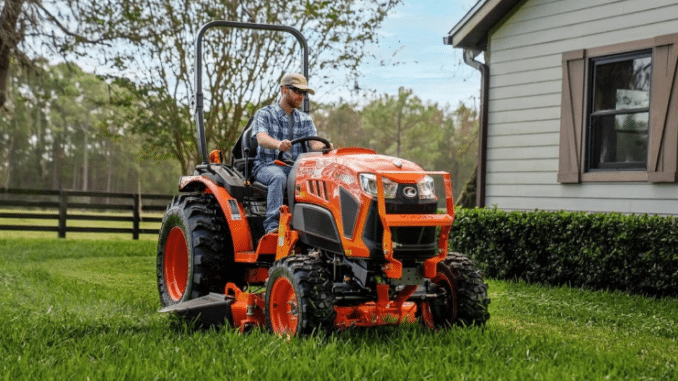
Equipment varies by generation. Depending on the model, owners may have hydraulic power steering, cruise control, a mid PTO, rear PTO, Category I three-point hitch, folding ROPS, LA-series loader, or compatible mid-mount mower. Selected discontinued premium B tractors offered factory cabs. Do not assume that these features apply to every B model: narrow tractors, economy versions, and Special Utility variants can have important omissions.kubotausa+2
Within Kubota’s compact lineup, BX emphasizes sub-compact property maintenance; B/B01 provides small-frame versatility; LX occupies the premium compact role; Standard L moves toward larger utility work; and Grand L offers a heavier premium compact platform. B/B01 tractors are particularly useful for mixed acreage work where maneuverability matters as much as implement capacity.kubotausa
Kubota B and B01 Compact Tractor Models (Option B: Table)
How to use this model directory
The tables below distinguish current B01 models, discontinued general-purpose B tractors, specialty configurations, and related B-prefix tractor-loader-backhoes.
Horsepower figures are approximate engine ratings, not PTO horsepower. Older published figures can use different rating conventions. The use-case column describes typical applications, not guaranteed compatibility with a particular implement.
This is a best-effort North American directory, not a factory-certified historical sales register. Public records do not consistently establish every model’s first or last sale date in both countries. “Current” refers to the cited US lineup; Canadian availability and individual configurations should be checked separately. Kubota Canada explicitly documents the B2301/B2601 B01 family.kubotausa+1
Current B01 models and documented configurations
Kubota’s current US materials list the B2301HSD, B2601HSD, B2401DT, and B2401DTN. The B01 brochure also documents the B2401DTWO package designation; it belongs under the B2401 rather than representing a separate horsepower model.kubotausa+1
| Model | Approx. HP / configuration / tractor class | Typical tasks / use case | See Specific Guide |
|---|---|---|---|
| B2301 / B2301HSD (current) | About 21 HP; 4WD; three-range HST; small-frame compact; mid and rear PTO | Finish mowing, loader work, snow removal, garden preparation | Kubota B2301 maintenance & troubleshooting guide |
| B2601 / B2601HSD (current) | About 24–26 HP depending on published rating; current US brochure specifies 24.3 HP; 4WD HST compact | Mixed acreage maintenance, loader work, tilling, grading, mowing | Kubota B2601 maintenance & troubleshooting guide |
| B2401 / B2401DT (current) | About 22 HP; 4WD; 9F/3R gear transmission; economy compact; DTWO package also documented | Rear mowing, cultivation, towing, grading, compatible loader work | Kubota B2401 maintenance & troubleshooting guide |
| B2401 Narrow / B2401DTN (current US specialty configuration) | About 22 HP; narrow 4WD gear tractor; approximately 35.4-inch minimum overall width in cited brochure | Nurseries, vineyards, orchards, spraying, narrow-row maintenance | Kubota B2401 Narrow specs and attachment overview |
The B2401 should not be marked discontinued simply because a dealer has no stock. Kubota’s current US B01 listing includes it. Likewise, the B2401 Narrow should not inherit the standard B2401’s loader or mower assumptions: its equipment suitability requires separate confirmation.kubotausa+1
Early and legacy B compact tractors
The following models form the early small-tractor portion of the directory. Gear and HST versions are separated where the distinction materially changes maintenance or parts identification. Public model records document separate B6100HST and B7100HST/HSD versions, along with gear/HST and 2WD/4WD variants of the B6200 and B7200.tractordata+5
| Model | Approx. HP / configuration / tractor class | Typical tasks / use case | See Specific Post |
|---|---|---|---|
| B6000 (legacy/discontinued) | About 10–13 HP depending on rating convention; very small gear-drive compact; attachment details require careful verification | Garden cultivation, light hauling, period-correct mowing and tilling | Kubota B6000 maintenance & troubleshooting guide |
| B4200 (legacy/discontinued) | About 12 HP; very small gear-drive compact | Garden work, light property maintenance, narrow-access tasks | Kubota B4200 maintenance & troubleshooting guide |
| B5100 (legacy/discontinued) | About 12 HP; gear drive; 2WD/4WD versions | Garden preparation, light mowing, hauling | Kubota B5100 maintenance & troubleshooting guide |
| B5200 (legacy/discontinued) | About 13 HP; small gear-drive compact; configuration varies | Mowing, cultivation, light rear-implement work | Kubota B5200 maintenance & troubleshooting guide |
| B6100 (legacy/discontinued) | About 14 HP; gear drive; B6100E 2WD and B6100D 4WD | Garden work, mowing, light material handling | Kubota B6100 maintenance & troubleshooting guide |
| B6100HST (legacy/discontinued) | About 14 HP; hydrostatic; 2WD/4WD variants | Mowing, landscaping, frequent forward/reverse work | Kubota B6100HST maintenance & troubleshooting guide |
| B6200 (legacy/discontinued) | About 15 HP; gear or HST; 2WD/4WD versions | Mowing, snow clearing, garden work, compatible loader use | Kubota B6200 maintenance & troubleshooting guide |
| B7100 (legacy/discontinued) | About 16 HP; gear-drive compact; configuration varies | Tilling, mowing, snow removal, light loader work | Kubota B7100 maintenance & troubleshooting guide |
| B7100HST / B7100HSD (legacy/discontinued) | About 16 HP; hydrostatic; early 2WD/4WD versions and later 4WD HSD version | Mowing, snow clearing, general property maintenance | Kubota B7100HST maintenance & troubleshooting guide |
| B7200 (legacy/discontinued) | About 17 HP; gear or HST; 2WD/4WD versions | Loader work, mowing, garden preparation, snow removal | Kubota B7200 maintenance & troubleshooting guide |
| B8200 (legacy/discontinued) | About 19 HP; larger early B chassis; gear/HST and drive configurations vary | Acreage mowing, loader work, tilling, grading | Kubota B8200 maintenance & troubleshooting guide |
| B9200 (legacy/discontinued) | About 22 HP; larger legacy B compact; gear/HST versions | Loader work, rear mowing, grading, small-acreage tasks | Kubota B9200 maintenance & troubleshooting guide |
B1550, B1750, B2150, and B1700–B2910 generations
These generations expanded the B family’s range of horsepower, transmission choices, and comfort features. The B1550/B1750/B2150 and B2410/B2710/B2910 groups appear in historical model indexes; North American parts records also document the B1700, B2100, and B2400. Exact drivetrain and PTO equipment should be established from the full model suffix.tractordata+2
| Model | Approx. HP / configuration / tractor class | Typical tasks / use case | See Specific Post |
|---|---|---|---|
| B1550 (discontinued) | About 17 HP; small compact; gear/HST and 2WD/4WD variants | Mowing, gardening, snow removal, light loader use | Kubota B1550 maintenance & troubleshooting guide |
| B1750 (discontinued) | About 20 HP; compact; gear/HST and drive configuration varies | Loader work, mowing, garden preparation | Kubota B1750 maintenance & troubleshooting guide |
| B2150 (discontinued) | About 24 HP; larger compact within its generation; gear/HST versions | Acreage mowing, loader work, tilling, driveway maintenance | Kubota B2150 maintenance & troubleshooting guide |
| B1700 (discontinued) | About 17 HP; small compact; configuration varies | Residential mowing, landscaping, snow removal | Kubota B1700 maintenance & troubleshooting guide |
| B2100 (discontinued) | About 21 HP; small-frame compact; gear/HST versions | Loader work, mowing, tilling, property maintenance | Kubota B2100 maintenance & troubleshooting guide |
| B2400 (discontinued) | About 24 HP; compact; transmission and drive configuration varies | Mixed acreage work, mowing, grading, loader use | Kubota B2400 maintenance & troubleshooting guide |
| B2410 (discontinued) | About 24 HP; HST compact | Mowing, landscaping, snow clearing, loader work | Kubota B2410 maintenance & troubleshooting guide |
| B2710 (discontinued) | About 27 HP; HST compact; larger B configuration | Rear mowing, loader work, tilling, estate maintenance | Kubota B2710 maintenance & troubleshooting guide |
| B2910 (discontinued) | About 30 HP; premium HST compact of its generation | Estate maintenance, loader work, larger rear implements | Kubota B2910 maintenance & troubleshooting guide |
B7300–B7800 and B7x10 generations
This group includes small mowing-oriented HST tractors, general-purpose gear/HST models, and the larger B7800. Narrow configurations deserve separate attention because their width, tires, stability, and attachment arrangements differ from standard tractors.tractordata+3
| Model | Approx. HP / configuration / tractor class | Typical tasks / use case | See Specific Post |
|---|---|---|---|
| B7300 (discontinued) | About 16 HP; small 4WD HST compact | Finish mowing, garden work, light snow clearing | Kubota B7300 maintenance & troubleshooting guide |
| B7400 (discontinued) | About 16 HP; small 4WD HST compact | Residential mowing, light landscaping, snow removal | Kubota B7400 maintenance & troubleshooting guide |
| B7500 (discontinued) | About 21 HP; 4WD; gear or HST | Mowing, loader work, tilling, snow clearing | Kubota B7500 maintenance & troubleshooting guide |
| B7500DTN (legacy narrow configuration) | About 21 HP; narrow gear-drive configuration; verify full identification | Nursery work, narrow-row cultivation, confined-access maintenance | Kubota B7500DTN buyer’s guide |
| B7410 (discontinued) | About 18 HP; economy compact; configuration-specific equipment | Mowing, garden preparation, light property work | Kubota B7410 maintenance & troubleshooting guide |
| B7510 (discontinued) | About 21 HP; gear or HST compact | Loader work, mowing, snow removal, tilling | Kubota B7510 maintenance & troubleshooting guide |
| B7510DTN (discontinued narrow configuration) | About 21 HP; narrow 4WD gear tractor; approximately 35.3-inch width in published specifications | Nursery work, spraying, narrow-row maintenance | Kubota B7510DTN specs and attachment overview |
| B7610 (discontinued) | About 24 HP; 4WD HST compact | Mixed acreage maintenance, mowing, loader work | Kubota B7610 maintenance & troubleshooting guide |
| B7800 (discontinued) | About 30 HP; larger B-family HST compact | Loader work, rear mowing, grading, garden preparation | Kubota B7800 maintenance & troubleshooting guide |
The B7500DTN is documented in historical tractor photographs, while the B7510DTN appears explicitly in model and dimension records. Neither should be confused with an ordinary tractor fitted with narrower aftermarket tires.tractordata+2
B20-series, premium B30/B50, and Special Utility tractors
The B2320/B2620/B2920 group preceded the modern small B01 tractors. Other models in this table represent the larger or more feature-rich historical B range. Kubota introduced the B2630 and B3030 as Premier B models, while the B3350SU was a simplified Special Utility version without a mid PTO or three-point position control.tractordata+2
| Model | Approx. HP / configuration / tractor class | Typical tasks / use case | See Specific Post |
|---|---|---|---|
| B2320 (discontinued/superseded) | About 23 HP; small-frame compact; gear/HST configurations | Mowing, loader work, snow removal, garden preparation | Kubota B2320 maintenance & troubleshooting guide |
| B2320 Narrow / B2320N (discontinued specialty configuration) | About 23 HP; narrow 4WD compact; verify complete suffix and equipment | Nursery, vineyard, spraying, narrow-row work | Kubota B2320 Narrow specs and attachment overview |
| B2620 (discontinued/superseded) | About 26 HP; small-frame 4WD HST compact | Mowing, loader work, tilling, driveway maintenance | Kubota B2620 maintenance & troubleshooting guide |
| B2920 (discontinued) | About 29 HP; small-frame 4WD HST compact | Mixed acreage work, mowing, loader operation | Kubota B2920 maintenance & troubleshooting guide |
| B2630 (discontinued) | About 26 HP; premium 4WD HST compact | Estate mowing, loader work, snow clearing | Kubota B2630 maintenance & troubleshooting guide |
| B3030 (discontinued) | About 30 HP; premium HST compact; ROPS and factory-cab versions | Estate maintenance, mowing, loader work, winter operation | Kubota B3030 maintenance & troubleshooting guide |
| B3000 (discontinued) | About 30 HP; premium HST compact associated with factory-cab configurations | Snow removal, estate maintenance, mowing, loader work | Kubota B3000 maintenance & troubleshooting guide |
| B3200 (discontinued) | About 32 HP; larger open-station B HST compact | Loader work, grading, rear mowing, acreage maintenance | Kubota B3200 maintenance & troubleshooting guide |
| B3300SU (discontinued) | About 33 HP; simplified Special Utility HST compact; verify PTO equipment before purchase | Loader work, grading, rear-implement operation | Kubota B3300SU maintenance & troubleshooting guide |
| B2650 (discontinued/superseded in North America) | About 26 HP; premium HST compact; ROPS and factory-cab configurations | Mowing, snow removal, loader work, estate maintenance | Kubota B2650 maintenance & troubleshooting guide |
| B3350 (discontinued/superseded in North America) | About 33 HP; premium HST compact; ROPS/cab versions; exhaust aftertreatment requires model-specific attention | Loader work, snow removal, rear mowing, acreage maintenance | Kubota B3350 maintenance & troubleshooting guide |
| B3350SU (discontinued) | About 33 HP; open-station Special Utility HST compact; no mid PTO or three-point position control | Loader work, grading, rear PTO implements | Kubota B3350SU maintenance & troubleshooting guide |
Historical records establish these base models, but global production dates should not automatically be used as USA/Canada sales dates. In particular, B2650 specifications and availability differ between markets.tractordata+2
Related B-prefix tractor-loader-backhoes
B20, B21, and B26 tractors deserve inclusion because owners frequently search for them alongside general-purpose B tractors. However, they belong to the dedicated tractor-loader-backhoe category and should not be treated as ordinary B01 tractors with an optional backhoe. Kubota Canada identifies the B26 separately as a tractor-loader-backhoe.kubota
| Model | Approx. HP / configuration / tractor class | Typical tasks / use case | See Specific Post |
|---|---|---|---|
| B20 (legacy/discontinued TLB) | About 20 HP; dedicated compact tractor-loader-backhoe | Trenching, drainage, landscaping, material handling | Kubota B20 maintenance & troubleshooting guide |
| B21 (discontinued TLB) | About 21 HP; dedicated compact tractor-loader-backhoe | Landscape construction, trenching, property improvements | Kubota B21 maintenance & troubleshooting guide |
| B26 (current documented North American TLB offering) | About 26 HP; dedicated compact tractor-loader-backhoe; separate from B01 | Excavation, drainage, loader work, contractor/property projects | Kubota B26 maintenance & troubleshooting guide |
Imported models and regional naming differences
A B-prefix model appearing in a worldwide tractor database does not prove that Kubota officially marketed it in the USA or Canada. International lists include B5000, B5001, B6001, B7000, B7001, B1200–B1902 families, Bulltra models, and various European-market B tractors. They should not be silently added to an official North American directory merely because used examples appear locally.tractordata+2
Similarly, B1830, B2230, B2530, B2050, B2350, and B3150 appear in international B-family records, but those records alone do not establish official USA/Canada distribution. Imported examples are better served by a separate “Kubota B-series imported tractor identification guide.”tractordata
For any uncertain tractor, record the full model designation, serial number, engine identification, transmission type, and original market before ordering filters, driveline components, mower parts, or loader mounts.
B and B01 Compact Tractor Maintenance Guides
Routine Service and Inspection Points
A useful B-family maintenance schedule starts with the exact operator’s manual. A B7100 gear tractor, B2601 HST tractor, B3350 cab tractor, and B26 TLB do not share one universal service chart. Kubota explicitly describes its general maintenance table as generic and directs owners to the model-specific manual.kubotausa
Before use, check engine oil, transmission/hydraulic fluid as instructed, coolant, fuel, tire condition, visible leaks, loose hardware, and safety-system operation. Clear debris from cooling screens and inspect mower or implement belts and blades. Stop to investigate abnormal noise or vibration rather than treating it as normal aging.kubotausa
The main recurring service areas are:
| Service area | Practical checks and maintenance | Important model differences |
|---|---|---|
| Engine oil and filter | Check level, leaks, oil condition, and service history; replace oil and filter at the specified interval | Capacity, viscosity, filter, and interval vary by engine |
| Air intake | Inspect restriction, intake hoses, clamps, and filter condition; service according to the manual | Single- and dual-element arrangements require different handling |
| Fuel system | Inspect filter bowl, hoses, contamination, water, and leaks | Bleeding procedures and filter arrangements vary |
| Transmission and hydraulics | Check level correctly; inspect filters, strainers where fitted, hoses, and leakage | Gear and HST systems may use different filters and service procedures |
| Front axle | Check oil level, seals, pivot, and service interval on 4WD tractors | Lubricant specification and drain/fill arrangement vary |
| Cooling system | Check coolant cold, radiator screen, fins, belt, hoses, and clamps | Cab tractors add condenser and cab-airflow maintenance |
| Grease points | Lubricate specified loader, backhoe, axle-pivot, steering, and implement fittings | Not every joint has a grease fitting |
| Electrical system | Inspect battery security, terminals, grounds, wiring, lights, and charging performance | Safety circuits differ substantially across generations |
These service areas align with Kubota’s general check points and the more detailed B2650/B3350 workshop maintenance checklist.kubotausa+1
Understanding service intervals
Check the initial-service requirements when a tractor approaches its first scheduled service—often around the 50-hour stage on these machines—but do not assume that engine oil, every hydraulic filter, and all transmission fluid are replaced together. Later charts commonly separate tasks into different hour-based intervals and calendar-based requirements. The correct combination comes from the specific manual.kubotausa+1
Dusty mowing, repeated cold starts, water exposure, and intensive loader or backhoe use justify closer inspections between scheduled services. They do not justify substituting an arbitrary fluid grade or extending the published interval.
“Kubota B and B01 compact tractor service interval checklist” should provide the cross-model starting point. “Kubota B and B01 engine oil, filters, and fluid service guide” should then separate capacities, filter references, and lubricant specifications by model.
Kubota describes Super UDT2 as a trans-hydraulic fluid for specified hydraulic, transmission, differential, final-drive, and wet-brake applications. That does not make it a universal replacement for every lubricant location on every legacy B tractor; follow the relevant specification.kubotausa
Mower, PTO, and Implement Maintenance
Mid-mount mower maintenance applies only to tractors equipped to operate the correct deck. Current B01 literature documents 54- and 60-inch mower options, but the availability of a deck within the family does not establish compatibility with every B01 configuration. The B3350SU, for example, has no mid PTO.kubotausa+1
For supported mower installations:
-
Set tire pressures before checking deck level.
-
Inspect deck hangers, lift linkage, gauge wheels, belt condition, and pulley alignment.
-
Check blade condition, balance, fastener torque, and spindle play.
-
Clean accumulated material from the deck and belt area.
-
Inspect gearbox oil and grease fittings where the mower manual requires them.
Rear PTO implements need attention to shaft shielding, universal joints, telescoping movement, locking devices, and working angles. Check shaft length whenever changing tractor, hitch arrangement, or quick hitch: a shaft that bottoms out can damage the driveline, while insufficient overlap can allow separation.
Before inspecting a mower or PTO shaft, park securely, lower the implement, shut down, remove the key, and wait for all movement to stop. Support raised equipment properly rather than trusting hydraulic pressure.
“Mower deck maintenance on Kubota B and B01 tractors” should cover mowing systems, while “PTO and implement driveline service for B and B01 models” should address rear-driven equipment.
Loader couplers, mounting pins, retaining devices, hoses, and attachment latches also need regular inspection. Clean couplers before connection and use the specified pressure-relief procedure before disconnecting. Current B01 equipment may include a multi-hose quick coupler and optional two-lever attachment coupler, so owners need instructions for the equipment actually fitted.kubotausa
Steering, Front Axle, Tires, and Chassis Maintenance
Chassis maintenance supports both tractor reliability and safe attachment use. Kubota’s inspection guidance includes tire condition, hardware security, safety switches, and abnormal vibration; its B2650/B3350 maintenance checklist additionally identifies front-axle pivot, toe-in, brakes, and wheel-bolt checks.kubotausa+1
Inspect the following:
-
Front-axle seals, pivot wear, and lubrication points.
-
Steering linkage, tie-rod ends, boots, and mounting hardware.
-
4WD driveline guards and joints where accessible.
-
Wheel nuts, rim hardware, and wheel-center condition.
-
Loader mounting bolts, frame brackets, and backhoe subframe.
-
Three-point hitch pins, stabilizers, lift arms, and top link.
-
Brake adjustment, parking brake, pedals, and operator-platform condition.
-
ROPS locking hardware, seat belt, and fitted safety switches.
Set tire pressures from the tire and tractor guidance for the actual load. Turf mowing and repeated loader work may require different setups; one generic pressure recommendation is unsuitable for the entire B range.
Use approved front/rear tire combinations on 4WD tractors. Tire diameter relationships matter, and replacing one axle’s tires with a superficially similar size can create driveline problems.
“Front axle and steering maintenance across Kubota B and B01 tractors” and “Tire, ballast, and chassis setup for Kubota B and B01 compact tractors” should provide the detailed follow-on guidance.
B and B01 Compact Tractor Troubleshooting Guides
Troubleshooting should begin with the full model designation and a clear description of the symptom. Record whether the fault occurs cold or hot, at idle or working speed, with an implement connected, or only under load. Those details help distinguish an operating issue from a fuel, electrical, hydraulic, or driveline fault.
Starting, Engine, Fuel, and Electrical Problems
No-start and hard-start conditions
First distinguish between an engine that does not crank, one that cranks slowly, and one that cranks normally without firing. They lead to different checks.
| Symptom | Initial diagnostic direction | Model-specific follow-up |
|---|---|---|
| No crank | Battery connections, ground path, fuse condition, starter circuit, control positions, safety interlocks | Wiring diagram and correct interlock sequence |
| Slow crank | Battery state and load capability, cable condition, grounds, starter performance, oil suitability | Cranking-system testing for the particular engine |
| Normal crank but no start | Fuel supply, shutoff control, glow-plug operation, air introduced during service | Fuel-system bleeding and starting procedure |
| Starts then stalls | Restricted fuel flow, contamination, venting, shutoff circuit, applicable interlocks | Model-specific fuel and electrical diagnosis |
| Hard starting in cold weather | Battery performance, preheat operation, fuel suitability, approved cold-start equipment | Correct preheat time and cold-weather instructions |
“Kubota B and B01 starting problems – diagnostics and fixes” should explain this first split, then route readers to the relevant model guide. Safety switches should be tested and repaired, not bypassed as a permanent fix. Kubota includes safety-switch and start-system inspection in its maintenance guidance.kubotausa+1
Do not loosen high-pressure injection components as an exploratory fuel test. Use the prescribed bleeding procedure, and avoid starting-fluid use unless the manufacturer explicitly authorizes it for that engine and starting system.
Smoke, rough running, overheating, and power loss
Smoke color narrows the investigation but does not identify a failed component on its own. Record when the smoke occurs, engine temperature, load, fuel condition, oil use, coolant loss, and whether the problem started after maintenance.
For overheating, inspect cooling screens, radiator airflow, belt condition, coolant level when cold, and hoses before assuming internal engine failure. Cab-equipped tractors may also have condenser screens and cab filters requiring attention.kubotausa+1
The broader “Engine and fuel system issues across B and B01 compact tractors” guide should connect these symptoms to model-specific checks. “Battery, charging, and electrical troubleshooting for Kubota B and B01 models” should cover voltage-drop testing, charging complaints, damaged wiring, and intermittent shutdowns.
B3350 and B3350SU regeneration-related symptoms
B3350/B3350SU exhaust-system diagnosis requires separate treatment from older mechanical-diesel B tractors. The shared operator’s manual describes regeneration conditions involving coolant temperature, exhaust temperature, and battery voltage, and warns against unnecessary interruption of regeneration. Shared manual coverage must not be mistaken for identical equipment on the B2650.manualslib
“Kubota B3350 regeneration and exhaust-system troubleshooting” should therefore sit beneath the model-specific B3350 guide. Repeated shutdowns, persistent warning indications, or unsuccessful regeneration warrant diagnosis using the correct manual and dealer guidance—not an emissions-system bypass.
Hydraulic, Loader, PTO, and Implement Problems
Weak or slow loader response
Begin by determining whether the problem affects the loader alone, one loader function, the three-point hitch, steering, or several systems.
Useful observations include:
-
Whether performance changes as the oil warms.
-
Whether engine speed materially changes response.
-
Whether the problem began after fluid, filter, or attachment work.
-
Whether a coupler is incompletely seated.
-
Whether the joystick returns correctly.
-
Whether hoses are kinked, damaged, or incorrectly connected.
-
Whether the attachment is heavier than the machine’s practical capacity.
Check fluid level and specification before assuming pump failure. Pressure and flow testing should use the correct test points, equipment, and specifications.
“Hydraulic and loader problems on Kubota B and B01 tractors” should provide the general diagnostic framework, with separate model posts for control-valve layouts, filters, suction arrangements, and test procedures.
Three-point hitch not lifting or holding
Inspect the hitch control setting, lowering-speed control, linkage condition, implement weight, fluid level, and any external interference. Confirm what hydraulic control system the tractor actually has before diagnosing its behavior.
A B3350SU does not have the same position-control arrangement as the premium B3350, so an instruction based on the premium tractor can mislead an SU owner.tractordata
Use “3-point hitch and PTO troubleshooting for B and B01 models” to separate hitch faults from PTO faults and explain configuration differences.
PTO engagement, vibration, and coupling problems
PTO engagement designs vary. Current B01 literature distinguishes the hydraulic independent PTO on the HST models from the transmission-driven PTO arrangement on the B2401 gear models. Diagnosis must follow the correct design rather than one generic adjustment procedure.kubotausa
For mower or implement vibration, stop and inspect blade condition, foreign material, driveline guards, shaft alignment, universal joints, gearbox mounts, and attachment fasteners. A damaged or incorrectly fitted driveline should not be tested at higher speed to see whether it “smooths out.”
“Implement vibration and driveline issues on Kubota B and B01 compact tractors” should connect these checks to mower, rotary-cutter, tiller, and snowblower guides.
Never use a hand to locate a hydraulic leak. Lower attachments, shut down, relieve pressure as instructed, and use appropriate leak-detection methods. A suspected hydraulic-injection injury requires immediate emergency medical attention.
Transmission, Drive, 4WD, and Traction Problems
HST complaints and loss of pulling power
Poor travel performance does not automatically mean a failed hydrostatic transmission. First record the selected range, engine speed, pedal use, terrain, load, brake condition, fluid level, and whether the problem occurs only after warming.
Current B2301/B2601 tractors provide low, medium, and high ranges. Selecting a suitable range is part of diagnosis: high range is not the starting point for heavy pushing or difficult low-speed work.kubotausa
“Transmission and drive problems on Kubota B and B01 tractors” should separate:
-
Engine power loss.
-
HST control or linkage faults.
-
Brake drag.
-
Incorrect range selection.
-
Fluid or filter problems.
-
Internal transmission faults requiring testing.
Gear-shift stiffness and 4WD engagement
On gear tractors, compare behavior with the engine stopped and running, and check the clutch procedure and adjustment specified for the model. Do not force a lever or assume an older transmission supports shifting techniques used on a newer synchronized tractor.
For 4WD complaints, distinguish a stiff lever from a system that engages but does not transmit drive. Tire mismatch, driveline loading, linkage issues, and mechanical failure require different investigations. Historical B tractors include both 2WD and 4WD versions, making accurate identification essential.tractordata
“4WD and traction issues across Kubota B and B01 models” should cover those distinctions.
Traction versus mechanical performance
Wheelspin, loss of steering authority with a loaded bucket, and inability to pull an implement can involve tractor setup as well as mechanical condition. Review tire type, surface, rear ballast, implement size, and operating technique before condemning the drivetrain.
“How ballast, tires, and terrain affect Kubota compact tractor performance” should explain the setup side of the problem. It should also make clear that ballast cannot make an overloaded tractor safe or eliminate rollover risk.
Attachments and Implements for the Kubota B and B01 Compact Tractor Series
B-family tractors can support a wide range of property-maintenance tools, but compatibility belongs to the individual tractor and attachment combination. Current B01 literature documents loaders, a matched backhoe, mid-mount mowers, snow equipment, and rear implements; historical models use different mounting systems and capacities.kubotausa+1
Common attachment choices
| Attachment or implement | Typical use | Main compatibility considerations |
|---|---|---|
| Front loader | Soil, mulch, gravel, manure, light material handling | Approved loader, mounting frame, valve, ballast, axle loading |
| Backhoe | Drainage, trenching, planting, landscaping | Approved subframe, hydraulic arrangement, seat and clearance |
| Mid-mount mower | Lawns and maintained acreage | Exact deck, mounting kit, mid PTO, lift arrangement |
| Rear finish mower | Larger maintained grass areas | PTO power, hitch geometry, implement weight, terrain |
| Rotary cutter / brush hog | Rough grass and suitable light brush | PTO power, cutting duty, weight, front-end stability |
| Rotary tiller | Gardens and seedbeds | PTO compatibility, working width, soil conditions, travel speed |
| Box blade | Driveway repair and material shaping | Tractor traction, implement width and weight |
| Grading scraper | Gravel-road and driveway maintenance | Tractor size, draft load, working width |
| Rear blade | Snow, gravel, light grading | Hitch clearance, blade width, traction, optional hydraulics |
| Snowblower | Repeated or deeper snowfall | Front versus rear mounting, PTO drive, hitch and subframe |
| Snow blade | Drives, yards, paths | Approved mount, trip protection, traction, hydraulic angling |
| Pallet forks | Suitable palletized loads and bulky materials | Attachment weight, load center, loader capacity, ballast |
| Grapple | Brush, branches, suitable loose material | Third-function/diverter hydraulics, couplers, attachment mass |
| Landscape rake | Stone, debris, seedbed preparation | Width, hitch fit, tractor maneuverability |
| Aerator or spreader | Turf and small-acreage maintenance | Hitch type, loaded weight, towing and terrain limits |
| Bagger or collection system | Grass and leaf collection | Exact mower compatibility, drive arrangement, rear clearance |
Match PTO requirements before buying
Engine horsepower is not PTO horsepower. In the cited B01 brochure, the B2301 has approximately 20.9 gross engine horsepower but 17.5 PTO horsepower, while the B2601 has approximately 24.3 gross engine horsepower and 19.5 PTO horsepower. Implement selection should use the appropriate PTO rating and account for working conditions.kubotausa
For older tractors, also verify PTO speed, direction, shaft arrangement, and engagement system. This is particularly important when identifying early tractors or imported equipment: a standard-looking hitch does not establish that every modern PTO implement is suitable.
Compare loader capacities on the same basis
Loader figures are easily misread. Kubota’s B01 brochure lists the LA435 at approximately:
-
948 pounds lift capacity at the bucket pivot pin at maximum height.
-
659 pounds lift capacity 19.7 inches forward at maximum height.
-
2,146 pounds breakout force at the bucket pivot pin.kubotausa
The breakout-force figure is not maximum-height lifting capacity. Pallet forks, quick-attach frames, and grapples also consume part of the available capacity, while the load’s distance ahead of the loader affects what the tractor can handle.
“Setting up loaders, mowers, and rear implements on Kubota B and B01 models” should explain these measurement differences alongside ballast and mounting requirements.
Check hitch, hydraulics, and mounting details
Current B01 tractors use a Category I three-point hitch, but pin category alone does not prove practical compatibility. Check implement weight, lift geometry, PTO-shaft length, top-link position, stabilizer clearance, and any quick-hitch requirements.kubotausa
A loader attachment coupler does not provide hydraulic grapple control by itself. A grapple needs a suitable third-function or diverter arrangement, correctly matched couplers, and secure hose routing. Likewise, rear hydraulic implements need the appropriate remote-valve setup; the B01 brochure documents optional rear remotes for HST models.kubotausa
For backhoes, use an approved mounting arrangement. The matched BH70 installation shown for B01 tractors is not interchangeable with every older B-family backhoe or with the dedicated B20/B21/B26 TLB arrangement.kubotausa+1
Choose equipment around the main job
For mowing-focused ownership, prioritize deck support, tire choice, maneuverability, turf impact, and attachment removal. For loader-focused ownership, prioritize ballast, visibility, suitable tires, load center, and repeated low-speed control.
For snow work, confirm the complete attachment system rather than buying a blower or blade by width alone. Front PTO-driven equipment can require the correct hitch, driveline, hydraulic connections, and controls. Kubota’s B01 brochure describes a matched front quick-hitch system for selected snowblowers, a sweeper, and a blade.kubotausa
“Attachments and implement options for Kubota B and B01 compact tractors” should provide the broad comparison. “Snow removal and seasonal attachment setup for Kubota B and B01 tractors” should cover winter preparation, mounting, storage, and traction.