
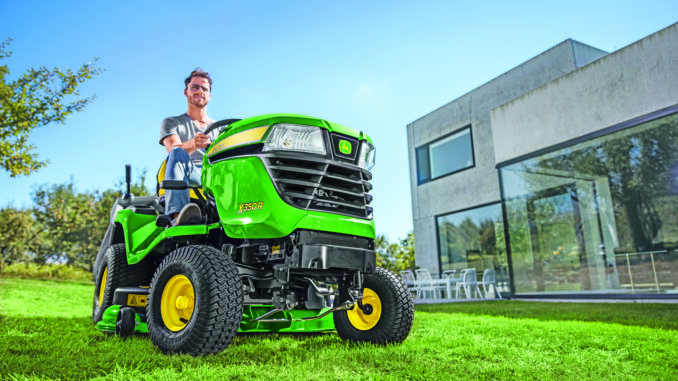
The John Deere 325 is a heavy-duty lawn and garden tractor built for homeowners who want more than a basic lawn tractor, with a liquid-cooled Kawasaki engine, shaft-driven deck setup, and hydrostatic drive that make it suitable for larger properties and more demanding mowing work. This guide is written for USA and Canada owners who want a practical, symptom-first article covering troubleshooting, repairs, maintenance intervals, parts, and realistic DIY limits before a problem turns into a bigger bill.
John Deere 325 model overview
The John Deere 325 sits in Deere’s older premium lawn and garden tractor class rather than the lighter D100-style homeowner range, and it was designed as a step up from entry-level lawn tractors for users who needed stronger mowing performance and more durable driveline hardware. Its key owner-facing systems are the engine and fuel system, mower drive and deck belts, hydrostatic transmission, steering and brakes, and the electrical and safety-interlock system that controls starting and operation.
For most owners, the John Deere 325 is used for regular mowing, leaf cleanup with attachments, and general estate work where cut quality and reliability matter as much as raw speed. In practice, the issues that show up most often are starting faults, poor running, belt wear, cut-quality complaints, and hydrostatic or traction concerns rather than major engine teardown problems.
General overview of the John Deere 325
From a service point of view, the John Deere 325 is straightforward to understand if you break it into systems. The engine side includes oil, fuel filter, spark plugs, air filter elements, and cooling fins/screen; the mower side includes blades, primary and secondary deck belts, deck leveling, and spindle-related wear; and the drive side centers on hydrostatic oil, transmission filters, and traction belts depending on configuration.
Common service parts owners regularly buy for the John Deere 325 include oil filter AM107423, fuel filter AM116304, transaxle oil filter AM120916, spark plugs M802138 or TY6081 depending on engine specification, paper air filter M137556, foam air filter MIU10955, battery TY25881, mower primary belt M117608, mower secondary belt M115776, traction drive belt M118048, and several blade options including M115495, M115496, M127673, and M135589. Because deck and engine variations matter, always confirm the exact deck size and serial information before ordering belts or blades.
Troubleshooting approach for the John Deere 325
The best way to diagnose a John Deere 325 is to start with the symptom the owner actually sees, not the part they think is bad. For example, “cranks but will not start,” “cuts unevenly,” “loses drive hot,” or “shakes when blades engage” all point you toward different systems and save time compared with replacing parts at random.
Main symptom groups on this tractor are:
-
Starting issues, including no crank, weak crank, and crank-no-start.
-
Running issues, including rough running, surging, smoke, and power loss.
-
Cut-quality problems, including uneven cut, uncut strips, clumping, and poor discharge.
-
Vibration and noise, often linked to blades, belts, pulleys, or loose hardware.
-
Overheating and leaks, especially around cooling fins, oil, and fuel system components.
-
Transmission and drive complaints, including weak motion, poor hill performance, or intermittent traction.
-
Electrical and safety-switch faults, especially when the machine will not crank or dies when a control is moved.
John Deere 325 immediate repair needs
Some faults on the John Deere 325 should be dealt with right away because they can become unsafe or can quickly damage expensive parts. A blade vibration problem, fuel leak, overheating issue, or hydrostatic drive fault under load should not be ignored just because the tractor still moves and mows.
1. John Deere 325 starting issues
If the John Deere 325 will not crank or cranks but will not fire, the main concern is getting the tractor safely and consistently operational rather than chasing the carburetor first. Deere’s service information puts starting diagnosis around basic checks such as oil level, fuel delivery, air filter condition, spark plug condition, and safety-system operation before deeper repair work.
Common causes:
-
Weak or failed battery.
-
Dirty or loose battery connections.
-
Faulty seat, brake, or PTO safety switch.
-
Plugged fuel filter AM116304.
-
Fouled or worn spark plugs.
-
Dirty air cleaner element or over-oiled precleaner.
-
Ignition-module issues on aging machines.
Basic checks:
-
Confirm the PTO is off, brake is fully applied, and the tractor is in the correct start position.
-
Check battery terminals for corrosion and verify the battery is charged.
-
Inspect the fuel filter and confirm fresh fuel is reaching the carburetor.
-
Remove and inspect spark plugs for fouling, wear, and correct gap.
-
Check the paper and foam air filter elements for blockage or damage.
2. John Deere 325 cut-quality problems
A poor cut on the John Deere 325 usually shows up as scalping, streaking, clumping, ragged grass tips, or uncut strips, and it matters because many owners assume the deck is worn out when the real issue is setup or routine service. Deere’s mower service guidance focuses heavily on blade condition, bent-blade checks, belt condition, and deck leveling front-to-rear and side-to-side.
Common causes:
-
Dull, bent, or unbalanced blades.
-
Incorrect blade type for the job.
-
Worn or slipping primary or secondary deck belt.
-
Deck out of level.
-
Packed grass buildup under the deck.
-
Ground speed too fast for grass conditions.
Basic checks:
-
Inspect blade edges, balance, and bolt tightness.
-
Measure for bent blades if the deck suddenly cuts unevenly.
-
Check primary and secondary deck belts for glazing, cracks, and lost tension.
-
Clean the underside of the deck and discharge area.
-
Recheck deck level before replacing parts.
3. John Deere 325 vibration and noise
Unusual vibration on a John Deere 325 is one of the most important symptoms to take seriously because it can damage spindles, loosen hardware, and make the machine unsafe. Deere specifically notes blade inspection, balancing, and bent-blade checks during mower service because these are common causes of sudden shaking after impact or blade wear.
Common causes:
-
Bent blade from striking an object.
-
Blade installed incorrectly.
-
Blade out of balance after sharpening.
-
Damaged belt or pulley.
-
Loose mower hardware.
-
Worn spindle bearings or deck components.
Basic checks:
-
Stop mowing immediately if vibration starts suddenly.
-
Inspect both blades for bends, cracks, and proper orientation.
-
Remove and balance blades if they were recently sharpened.
-
Check belt shields, pulleys, and visible spindle movement.
-
Do not keep mowing until the source is identified.
4. John Deere 325 overheating and leaks
Because the John Deere 325 uses a liquid-cooled engine, overheating and coolant-related neglect matter more than on simple air-cooled lawn tractors. Deere’s service information emphasizes checking coolant level, cleaning intake screens and cooling fins, and fixing leaks before continued use.
Common causes:
-
Low engine oil.
-
Dirty intake screen or cooling fins.
-
Low coolant level.
-
Fuel filter or line seepage.
-
Oil leak around filter or drain point after service.
-
Debris buildup from mowing in dusty or dry conditions.
Basic checks:
-
Check engine oil level on a cold engine.
-
Inspect coolant level and look for obvious seepage.
-
Clean the air intake screen and exterior cooling surfaces.
-
Inspect around the oil filter and drain valve for leaks after recent service.
-
Stop using the tractor if it is running hot or smells of fuel.
5. John Deere 325 transmission and drive problems
Drive complaints on the John Deere 325 often appear as weak uphill movement, poor response, or reduced traction after the tractor warms up. The service-parts guide identifies recurring hydrostatic service items such as transaxle oil filter AM120916 and Low Viscosity HY-GARD oil, which tells you the drive system depends heavily on correct fluid and filter condition.
Common causes:
-
Old or incorrect transmission oil.
-
Plugged or overdue transaxle filter.
-
Worn traction-drive belt.
-
External linkage adjustment issues.
-
Internal hydrostatic wear requiring dealer diagnosis.
Basic checks:
-
Confirm the correct John Deere Low Viscosity HY-GARD specification is being used.
-
Check service history for the transmission oil and filter change interval.
-
Inspect the traction-drive belt for wear or glazing.
-
Make sure the issue is not brake drag or a linkage problem.
-
If drive fades hot after correct fluid service, dealer-level testing is usually next.
6. John Deere 325 electrical problems
Electrical issues on an older John Deere 325 are often simple, but they can mimic bigger failures. A weak battery, poor ground, safety-interlock switch fault, or ignition-module problem can all produce intermittent no-start or sudden engine shutoff symptoms.
Common causes:
-
Battery failure or low charge.
-
Corroded terminals or ground strap.
-
Faulty PTO, seat, or brake switch.
-
Bad key switch or worn key connection.
-
Failed ignition module.
Basic checks:
-
Load-test or substitute a known-good battery first.
-
Clean both battery terminals and the ground connection.
-
Verify the tractor reacts normally to seat, brake, and PTO positions.
-
Inspect visible switch connectors for looseness or corrosion.
-
Treat intermittent spark loss as a possible ignition-module issue after basic checks.
DIY or dealer
The John Deere 325 is a good owner-serviceable tractor for routine work, but it crosses into dealer territory once diagnosis requires engine internal work, hydrostatic testing, or repeated electrical tracing. A sensible rule is that if the repair needs basic hand tools, safe lifting, and no special calibration, it is usually fair DIY territory; if it requires hydraulic diagnosis, internal transmission work, or hard-to-confirm electrical faults, dealer help is often cheaper in the long run.
Good DIY jobs
-
Engine oil and oil filter replacement.
-
Fuel filter replacement.
-
Air filter and foam precleaner service.
-
Spark plug inspection and replacement.
-
Mower blade removal, sharpening, balancing, and replacement.
-
Primary and secondary mower belt replacement.
-
Deck cleaning and leveling.
Advanced DIY or dealer jobs
-
Hydrostatic drive diagnosis beyond fluid and filter service.
-
Electrical intermittent faults involving ignition modules or safety circuits.
-
Spindle, steering, or brake repairs where wear has spread to multiple parts.
-
Carburetor or altitude-jet concerns, noting Deere says the carburetor is not owner-adjustable.
Skill level guide
-
Beginner: Oil, filter, battery, air filter, spark plugs, blade inspection.
-
Intermediate: Fuel filter, deck belt, blade balancing, deck leveling, common switch replacement.
-
Advanced: Hydrostatic service, electrical diagnosis with a meter, deck spindle repair, driveline troubleshooting.
John Deere 325 parts and part numbers
Before ordering parts for a John Deere 325, gather the full model name, tractor Product Identification Number, engine model and serial, and the exact mower deck size or attachment version. Deere’s own manuals split procedures and specs by model and mower configuration, while aftermarket parts guides list multiple blade and belt numbers for this tractor depending on setup.
OEM parts make the most sense for belts, safety switches, fit-sensitive deck parts, and anything where incorrect dimensions can create repeated failures. Aftermarket parts are usually acceptable for filters, batteries, and some blades, but only when the cross-reference clearly matches your exact John Deere 325 configuration and deck size.
Manuals and diagrams
For diagrams and service information, use sources that match the job. Deere’s owner support portal is the best starting point for official manuals, Deere’s online parts catalog is the best source for exploded diagrams and serial-sensitive part lookup, the Deere online manual pages are useful for service procedures, and Deere-focused parts retailers can be helpful for common maintenance kits and cross-checking service part numbers.
Useful links:
-
John Deere Owner Support for official operator-manual lookup and owner resources.
-
John Deere Parts Catalog for exploded diagrams and part verification.
-
John Deere online service pages for engine service procedures and maintenance instructions.
-
Green Farm Parts John Deere 325 maintenance guide for common maintenance parts and frequently purchased items.
How to find identification numbers on a John Deere 325
These numbers matter because belts, blades, spark plugs, and even some service procedures can vary by engine or deck setup. Deere’s manuals separate information by model and mower version, and parts listings show multiple valid numbers for the John Deere 325 depending on configuration.
-
Park the tractor safely on level ground and switch it off.
-
Locate the tractor Product Identification Number tag on the machine frame area specified in Deere identification sections for the model family.
-
Record the exact model as shown, including any deck designation if fitted.
-
Find the engine model and serial number on the engine tag before ordering ignition, fuel, or tune-up parts.
-
If buying deck parts, confirm the mower deck size and match that to the parts diagram before placing the order.
Buying John Deere 325 parts online and in stores
The best strategy is to identify the OEM number first, then decide where to buy. That reduces the risk of ordering a near-match belt or blade that physically fits but performs badly or wears out early.
-
Online: Best for price comparison and stock checking, but only after confirming the OEM number and any PIN-sensitive fitment.
-
Dealer counter: Best for serial-specific items, safety switches, technical clarification, and older-model parts where supersessions may apply.
-
Retail stores: Fine for common consumables such as batteries, spark plugs, and filters if the packaging clearly lists your exact John Deere 325 application.
Useful buying links:
Step-by-step fitting guide for common John Deere 325 parts
These are high-impact jobs because they directly affect reliability, mowing performance, and repeat breakdowns on the John Deere 325. The steps below follow the same basic safe-service logic shown in Deere’s service instructions.
Replace the John Deere 325 engine oil and filter
This job helps prevent starting wear, overheating, and long-term engine damage. Deere’s procedure centers on draining warm oil safely, replacing the filter correctly, and rechecking for leaks after startup.
-
Park on level ground, shut the engine off, and allow it to cool enough to work safely.
-
Place a drain pan under the drain valve and drain the oil completely.
-
Remove the old oil filter, wipe the sealing surface clean, and lightly oil the gasket on the new filter.
-
Install the new filter hand-tight until the gasket contacts, then tighten an additional half turn.
-
Refill with the correct oil, start the engine briefly, and recheck for leaks and final oil level.
Replace the John Deere 325 fuel filter
This job often fixes fuel starvation, weak running, or crank-no-start complaints caused by poor fuel flow. Deere notes replacing the filter when fuel is low and making sure the new filter arrow points in the direction of fuel flow.
-
Park safely, lift the hood, and place a pan under the filter area.
-
Slide the hose clamps away from the old filter with pliers.
-
Pull the hoses off the old filter and note the flow direction.
-
Install the new filter with the arrow pointing the same way as fuel flow.
-
Reposition the clamps, inspect for leaks, and test-run the engine.
Service the John Deere 325 air filter and foam precleaner
A clogged air cleaner can cause hard starting, rich running, and loss of power. Deere’s instructions separate the foam precleaner from the paper element and specifically say not to wash the paper element.
-
Release the air-cleaner cover latches and remove the cover.
-
Remove the foam precleaner and paper element.
-
Replace the paper element if dirty or damaged; do not wash it.
-
Wash the foam precleaner in warm water and detergent, let it dry, then apply a small amount of clean engine oil and squeeze it evenly through the foam.
-
Reassemble the air cleaner and secure the cover.
Replace blades or inspect the John Deere 325 mower belt
This job addresses vibration, poor cut quality, and weak mowing performance. Deere’s mower service instructions cover blade removal, blade-bolt torque, bent-blade checking, and the basic steps for primary and secondary belt replacement.
-
Raise or remove the mower deck as needed and park the tractor safely.
-
Block the blade with a piece of wood and remove the blade bolt, washer, and blade.
-
Sharpen and balance the blade or install a new one with the cutting edge facing the ground.
-
Tighten the blade bolt to 68 N·m (50 lb-ft).
-
For belt work, relieve belt tension, remove the old belt, inspect pulleys and shields, then fit the new belt exactly as routed on the deck.
Maintenance to prevent John Deere 325 problems returning
Regular maintenance does more than protect the engine; it directly prevents the most common owner complaints on the John Deere 325. Clean cooling surfaces reduce overheating risk, fresh filters improve starting and running, sharp balanced blades improve cut quality, and correct hydrostatic service helps preserve drive performance.
Focus areas:
-
Starting reliability: Battery condition, clean terminals, fresh fuel, fuel filter, plugs, and air filter service.
-
Cut quality: Sharp balanced blades, proper deck leveling, and belt inspection.
-
Fire and overheating prevention: Clean intake screen, engine fins, and remove dry debris accumulation.
-
Drive performance: Correct HY-GARD fluid and timely transaxle filter service.
-
Electrical reliability: Keep terminals clean and replace weak switches before they become intermittent faults.
John Deere 325 maintenance schedule
The exact schedule should always be cross-checked to your manual and conditions, but the published maintenance guidance for this tractor family gives a solid framework. Green Farm Parts lists oil service at 25/100/200-hour intervals, fuel filter at 200 hours, and transaxle oil filter plus Low Viscosity HY-GARD service at 50 hours, while Deere’s operator-manual pages call for routine daily checks of fuel, oil, transmission oil, and safety systems.
Daily or before each use
-
Test safety systems.
-
Check tire pressure.
-
Check fuel level.
-
Check engine oil level.
-
Check transmission oil level.
-
Look for fuel, coolant, or oil leaks.
After heavy use / dusty conditions
-
Clean the air intake screen and engine fins.
-
Remove grass and debris from the deck area.
-
Recheck blade condition if the tractor struck debris or cut quality changed suddenly.
Every 25 hours
-
Change engine oil under the maintenance-parts schedule shown for the model.
-
Grease as needed with the specified multipurpose grease.
Every 50 hours
-
Replace transaxle oil filters.
-
Service the hydrostatic system with the correct Low Viscosity HY-GARD oil per the maintenance listing.
Every 100 to 200 hours or yearly
-
Change engine oil and oil filter based on use and the listed interval pattern.
-
Replace the fuel filter at 200 hours.
-
Inspect or replace spark plugs as needed.
-
Replace air cleaner elements when dirty or damaged, and sooner in dusty work.
Seasonal checklist
-
Spring: Change oil if due, inspect blades and belts, test battery, and level the deck.
-
Mid-season: Clean cooling surfaces often, inspect filters, and correct any vibration early.
-
Fall or storage prep: Clean the deck thoroughly, inspect fuel system parts, and handle storage per Deere guidance after the last mowing cycle.
Repair, upgrade, or replace the John Deere 325?
For many owners, a John Deere 325 is still worth repairing if the core tractor is solid because it was built as a heavier-duty lawn and garden machine than many later budget tractors. The decision usually comes down to whether the problem is a normal wear-item issue or whether the tractor needs stacked repairs involving the engine, hydrostatic drive, deck, and electrical system at the same time.
Repair if:
-
The issue is limited to belts, blades, filters, battery, switches, or routine driveline service.
-
The tractor starts, steers, and drives well aside from one clear fault.
-
The deck and frame are still structurally sound.
Upgrade if:
-
You need different blade style, mulch kit, or bagging setup for better mowing results.
-
Your current deck setup no longer matches your lawn conditions or collection needs.
Replace if:
-
The tractor has major hydrostatic weakness plus deck wear plus recurring engine or electrical issues.
-
Repair cost is approaching the value of a proven working replacement machine.
-
Parts chasing has become serial-number sensitive and time-consuming across multiple systems.
John Deere 325 troubleshooting FAQ
1. Why will my John Deere 325 not start?
Start with the basics: battery charge, terminal corrosion, PTO position, brake switch, seat switch, and fuel supply. The John Deere 325 also relies on clean spark plugs, a working fuel filter, and a clear air filter, so a no-start can be electrical, fuel-related, or simply poor routine maintenance.
2. Why does my John Deere 325 crank but not fire?
If it cranks but does not start, think fuel or spark first. Check for stale fuel, a restricted fuel filter, fouled plugs, or an ignition issue before assuming the carburetor has failed, especially since Deere notes the carburetor is not intended as an owner-adjustable item.
3. Why does my John Deere 325 start hard when cold?
Cold-start complaints usually point to weak battery output, marginal spark plugs, stale fuel, or a dirty air-cleaner setup. On an older John Deere 325, a battery that still cranks can still be too weak to produce reliable cold starting under load.
4. Why does my John Deere 325 run rough at idle?
Rough idle often comes from fuel restriction, plug fouling, dirty air filter elements, or age-related ignition problems. Deere also notes that some surging at high throttle in neutral can be a normal emissions-related condition, so focus on whether the roughness affects real mowing performance.
5. Why is my John Deere 325 losing power while mowing?
Loss of power under load is usually linked to restricted air or fuel flow, dull blades, heavy grass conditions, or belt slippage in the mower system. Start by servicing filters and checking blade condition before assuming the engine itself is worn out.
6. Why does my John Deere 325 blow black smoke?
Black smoke generally means the engine is running rich, often because of restricted airflow or fuel-system issues. A dirty paper filter, incorrectly serviced foam precleaner, or other fuel-delivery problem should be checked before deeper engine work.
7. Why is my John Deere 325 overheating?
Overheating on this model can come from low coolant, blocked cooling surfaces, low oil, or debris packed around the engine area. Because the John Deere 325 is liquid cooled, do not treat heat symptoms casually the way some owners might with a simple air-cooled mower.
8. Why is there oil leaking from my John Deere 325?
Look first at recent service points such as the oil filter and drain valve. If the leak started right after maintenance, the cause is often a sealing issue, loose filter, or residue making a small leak appear larger than it really is.
9. Why does my John Deere 325 cut unevenly?
Uneven cutting usually comes down to deck level, blade condition, or bent blades rather than a bad deck shell. Deere’s mower procedures specifically call for checking for bent blades and correcting deck level front-to-rear and side-to-side.
10. Why does my John Deere 325 leave uncut strips?
Uncut strips usually mean blade edges are dull, blade type is wrong for the job, or ground speed is too high for the grass conditions. A worn or slipping deck belt can also reduce blade speed enough to create this symptom.
11. Why does my John Deere 325 leave clumps of grass?
Clumping usually happens when the deck is packed with wet material, the blades are dull, or the tractor is moving too fast in heavy growth. Cleaning the deck underside and matching blade type to mulching, discharge, or bagging use can make a noticeable difference.
12. Why are the grass tips ragged after mowing with my John Deere 325?
Ragged grass tips normally mean the blades are dull rather than the deck being out of level. Sharpening and balancing the blades correctly is the first fix to try.
13. Why does my John Deere 325 vibrate when I engage the mower?
Sudden vibration after PTO engagement usually points to a bent blade, unbalanced blade, damaged belt, or a pulley or spindle issue. Stop mowing immediately because continued use can damage bearings and loosen hardware.
14. Why does my John Deere 325 shake after I hit something?
The first suspect is a bent blade, followed by spindle or pulley damage. Deere’s service steps include measuring blade-tip position to confirm whether a blade is bent beyond acceptable limit.
15. Why is my John Deere 325 making a squealing noise from the deck?
A squeal from the deck area often means a worn or glazed belt, tension problem, or pulley-bearing issue. Inspect the primary and secondary belts first because they are common wear items on this tractor.
16. Why does the John Deere 325 mower belt keep coming off?
Repeated belt derailment usually means incorrect routing, worn pulleys, damaged belt guides, or using the wrong belt for the exact deck. Because the John Deere 325 has several belt numbers listed across configurations, verifying the correct OEM number matters.
17. What belt does a John Deere 325 use?
That depends on whether you are ordering the primary mower belt, secondary deck belt, or traction-drive belt, and on the exact deck setup. Common listings include M117608 for a mower primary belt, M115776 for a secondary belt, and M118048 for a traction-drive belt, but the deck and serial information should always be confirmed first.
18. What blades fit a John Deere 325?
Several blade options are listed for the John Deere 325, including standard, mulching, and high-lift styles. Examples shown in common parts listings include M115495, M115496, M127673, and M135589, but blade choice depends on deck size and whether you want side discharge, mulch, or bagging performance.
19. Why does my John Deere 325 cut lower on one side?
This usually means the deck needs leveling, though a bent blade or bent deck hardware can also cause it. Check the deck setup before replacing blades or spindles.
20. Why does my John Deere 325 scalp the lawn?
Scalping is often caused by deck height set too low, deck not level, anti-scalp wheel setup, or mowing uneven ground too quickly. It is usually a setup issue rather than a major mechanical failure.
21. Why won’t my John Deere 325 move properly?
If the tractor starts and revs normally but barely moves, focus on the drive system. Incorrect or overdue hydrostatic oil service, a restricted transaxle filter, or a worn traction belt are more likely than immediate internal transmission failure.
22. Why does my John Deere 325 lose drive when hot?
A drive system that weakens after warm-up often suggests hydrostatic fluid, filter, or internal wear issues. Start with the service history and correct fluid specification before assuming the transmission is beyond repair.
23. What transmission oil should I use in a John Deere 325?
The published lubricant guidance points to John Deere Low Viscosity HY-GARD for the transmission system on this model family. Using the correct fluid matters because hydrostatic response and long-term wear are sensitive to oil type.
24. How often should I change John Deere 325 transmission filters?
The commonly referenced maintenance guide for this model lists transaxle oil filters every 50 hours. As always, match that to your manual and your operating conditions, especially if the tractor sees heavy use or steep terrain.
25. Why does my John Deere 325 battery keep going flat?
A flat battery can be caused by age, poor charging, corroded terminals, or a parasitic drain. On older tractors, simply cleaning terminals and replacing a marginal battery often solves intermittent electrical complaints.
26. Why does my John Deere 325 only click when I turn the key?
A click with no crank usually means inadequate battery power, poor cable connections, or a starter-circuit issue. Before replacing expensive parts, clean and tighten the battery connections and test with a known-good battery.
27. Can a bad seat switch stop a John Deere 325 from starting or running?
Yes, safety switches can prevent starting or shut the engine down when controls are moved out of the expected position. If symptoms change when you shift your weight, release the brake, or engage the PTO, check the interlock system before chasing fuel problems.
28. How often should I change the oil in a John Deere 325?
Common maintenance listings for the John Deere 325 show oil service at 25, 100, and 200-hour intervals, depending on the maintenance cycle being followed. The safer owner approach is to use the official manual as the base and shorten intervals if the tractor works in dust, heat, or heavy mowing conditions.
29. How often should I replace the John Deere 325 fuel filter?
The service-parts schedule commonly used for this tractor lists the fuel filter at 200 hours. Replace it sooner if the tractor shows fuel starvation, has contaminated fuel, or has sat for long periods.
30. How often should I service the John Deere 325 air filter?
There is no benefit to waiting until the tractor runs badly. Deere’s instructions say to inspect the element and replace it when excessively dirty or damaged, and dusty mowing conditions can shorten that interval dramatically.
31. Can I use aftermarket parts on a John Deere 325?
Yes, but use them selectively. Aftermarket filters, batteries, and some blades are often fine if the cross-reference is exact, while OEM is usually the safer choice for belts, safety-critical parts, and fit-sensitive deck components.
32. Is the John Deere 325 worth repairing?
In many cases, yes, because it is a more substantial lawn and garden tractor than many lighter homeowner models. It is especially worth repairing when the problem is limited to routine wear items and the frame, deck, and hydrostatic drive are still fundamentally sound.
33. When should I take my John Deere 325 to a dealer?
Dealer help makes sense when the issue involves internal hydrostatic diagnosis, repeated electrical faults, carburetor or engine-performance issues that remain after basic checks, or any repair that needs specialized testing. Deere also notes that warranty repairs on emission-related systems must be handled by an authorized dealer.
34. Where can I find a John Deere 325 manual or parts diagram?
The best official starting points are Deere Owner Support for manuals and Deere’s online parts catalog for diagrams. Those sources are better than guessing from generic listings because they help confirm the exact deck, service parts, and serial-sensitive fitment.
35. What is the smartest way to troubleshoot a John Deere 325?
Start with the symptom, then work through the simplest likely causes in order: fuel, spark, air, belts, blades, fluid level, and safety switches. That symptom-first method matches the way Deere’s service material is organized and usually saves both time and money.
Troubleshooting John Deere 325 hydrostatic transmission issues
The John Deere 325 uses a hydrostatic transmission that is usually reliable, but issues with drive, hill-climbing, or performance when hot almost always trace back to fluid, filter, belt, or linkage problems before true internal failure. A symptom‑first approach makes it much easier to decide what is realistic DIY work and when it is time to involve a dealer.
Common John Deere 325 hydrostatic symptoms
Hydrostatic problems on a John Deere 325 tend to show up in a few predictable ways, and matching your symptom to the right checks saves a lot of guesswork.
Typical complaints:
-
Tractor barely moves or will not move at all in forward and/or reverse.
-
Tractor moves when cold but loses drive or gets very weak as it warms up.
-
Tractor surges, jerks, or hesitates when changing direction.
-
Tractor struggles on hills despite full throttle.
-
Hydrostatic whine, squeal, or unusual noise from the rear end.
For each of these, always note:
-
When the problem occurs (cold, hot, under load, always).
-
Whether both forward and reverse are affected.
-
Any recent work (fluid change, belt change, towing, impacts).
First checks: fluid, belt, and linkage
Most John Deere hydrostatic issues across lawn tractors are caused by low/old fluid, clogged filters, air in the system, or a slipping drive belt rather than internal transmission damage.
Key basic checks:
-
Fluid level and condition: Check with the machine on level ground; fluid should be clean and the correct Deere spec (Low Viscosity HY‑GARD).
-
Hydro filter condition: A clogged filter starves the hydro pump and reduces drive, especially under load.
-
Drive belt: Inspect the traction belt for cracks, glazing, stretching, or contamination; a slipping belt can perfectly mimic “bad transmission” symptoms.
-
Linkage: Make sure the motion pedals and linkages actually move the hydro control arm fully in both directions (no loose or bent linkage).
-
Bypass/free‑wheel lever: Confirm the tow/bypass valve is fully disengaged; if left partially open, the tractor will barely move.
If any of those are obviously wrong, correct them before assuming a major failure.
Symptom‑based troubleshooting on the John Deere 325 hydrostatic
1. Tractor will not move or barely creeps
Likely causes:
-
Bypass/free‑wheel lever still engaged or partially engaged.
-
Severely low or incorrect transmission fluid.
-
Very worn or broken traction drive belt or idler.
-
Clogged hydro filter or suction side restriction.
-
Internal hydro pump or motor failure (least common, but possible on high‑hour units).
Basic DIY checks:
-
Verify the bypass lever is set to “drive” and not “tow.”
-
Inspect the drive belt from engine to transmission for wear, glazing, or slack.
-
Check fluid level and top up with the correct Deere hydro fluid if low.
-
If fluid and belt look OK, consider replacing the hydro filter and fluid per the manual and purge air from the system (see purge section below).
-
If there is still almost no movement after those steps, it is time for dealer‑level pressure tests.
2. John Deere 325 loses drive when hot
This classic symptom—OK when cold, weak when hot—often indicates fluid, filter, or internal wear rather than a simple belt issue.
Likely causes:
-
Old, thin, or contaminated fluid that loses viscosity when hot.
-
Partially clogged filter that restricts flow as fluid thins.
-
Internal pump/motor wear causing loss of pressure at operating temperature.
Basic DIY checks:
-
Confirm the correct hydro fluid is being used; if not sure, plan a full fluid and filter change.
-
Replace the hydro filter with an OEM‑spec part and refill with fresh fluid.
-
Perform the purge procedure to remove air and then re‑test on level ground and a moderate slope.
-
If performance still drops sharply only when hot, internal wear is likely and dealer testing is the sensible next step.
3. Jerky, surging, or pulsing movement
Jerky movement is usually about air in the system, low fluid, or sticky linkages rather than complete transmission failure.
Likely causes:
-
Air trapped in the hydro system after fluid change or towing.
-
Low fluid level or small suction leak on the intake side.
-
Linkage misadjustment or binding at the pedal or hydro control arm.
Basic DIY checks:
-
Check fluid level and look for signs of aeration (foamy, milky fluid).
-
Inspect suction hoses, clamps, and fittings for leaks or cracks.
-
Lubricate and inspect the pedal and control linkages for free movement.
-
Purge the hydrostatic system following the steps in the next section.
4. Poor hill‑climbing or weak under load
If the tractor moves fine on flat ground but slows badly on hills, the hydro system may not be building enough pressure under load, but belts and fluid are still prime suspects.
Likely causes:
-
Slipping drive belt under heavy load.
-
Low or wrong fluid type reducing performance under load.
-
Clogged filter restricting flow when more volume is needed.
-
Internal hydro wear reducing pump or motor efficiency.
Basic DIY checks:
-
Re‑inspect the drive belt specifically for load‑related slip (shiny side, glazing, or belt dust).
-
Change hydro fluid and filter if age or condition is unknown.
-
Purge the system and retest on the same hill.
-
If the tractor still cannot climb after service, plan for dealer diagnosis with charge‑pressure testing.
Purging air from the John Deere 325 hydrostatic system
Air in the hydro system can cause weak drive, surging, and noise; most John Deere hydrostatic guides recommend a purge after fluid changes, belt changes, or towing.
A typical purge procedure:
-
Park on a level surface, set the parking brake, and safely raise the rear wheels on jack stands.
-
Make sure the hydro oil reservoir is filled to the correct level with the specified fluid.
-
Disengage the transmission or pull out the bypass lever per the operator’s manual.
-
Start the engine, throttle at low speed, and with the drive control in neutral.
-
Slowly move the drive control full forward and hold several seconds, then full reverse and hold several seconds; repeat this cycle 3–6 times to purge air.
-
Return controls to neutral, shut off the engine, and recheck fluid level, topping up as needed.
-
Re‑engage the transmission, remove from jack stands, then drive forward and reverse 5–6 feet several times to complete the purge.
Always cross‑check the exact purge steps against the John Deere 325 operator’s manual, but this generic procedure matches what most Deere hydrostatic resources recommend.
DIY vs dealer on John Deere 325 hydrostatic issues
Many hydrostatic problems are still in the “maintenance and setup” category and are realistic DIY jobs; once you move into pressure testing and internal repairs, it quickly becomes dealer work.
Good DIY hydro jobs:
-
Checking and correcting fluid level and fluid type.
-
Replacing the hydro filter with the correct OEM part.
-
Inspecting and replacing the traction drive belt and idlers.
-
Lubricating and adjusting external linkages and the bypass lever.
-
Performing a full purge procedure after service.
Dealer‑level jobs:
-
Charge‑pressure and case‑pressure testing to determine internal wear.
-
Rebuilding or replacing the hydro pump/motor or integrated transaxle.
-
Complex internal leak diagnostics or repeat failures after correct maintenance.
If basic fluid/filter/belt/linkage work and a correct purge do not restore performance, it is usually more cost‑effective to have a Deere dealer or hydrostatic specialist assess the tractor before ordering major parts.