
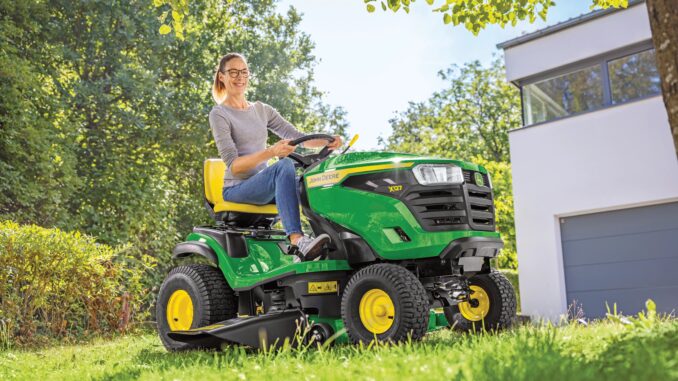
The John Deere L111 is a 100 Series lawn tractor built for homeowner mowing with a 42-inch mower deck, a gasoline engine, and a belt-driven mower and traction system. This guide is written for USA and Canada owners who want a practical John Deere L111 repair guide covering troubleshooting, common repairs, parts lookup, maintenance planning, and realistic DIY limits.
For most owners, the John Deere L111 is best suited to regular home lawn work rather than heavy ground-engaging jobs or commercial use. Because this model shares many homeowner-tractor design traits with the wider L100 family, the most useful repair strategy is symptom-first diagnosis: start with what the machine is doing, then narrow the likely system, part, or adjustment involved.
John Deere L111 model overview
The John Deere L111 sits in the L100 Series homeowner lawn tractor range and uses the familiar lawn-tractor layout of front engine, operator platform, rear transaxle drive, and a 42-inch mower deck. In practical terms, that means most owner problems fall into a few predictable systems: engine and fuel delivery, air intake and ignition, mower deck and blades, traction drive belt and transmission input, and basic electrical and safety interlock circuits.
Owners commonly end up buying the same service and repair items repeatedly on this model. Verified examples from Deere’s replacement parts guide include the flat mower deck belt GX20072, traction drive belt UC30568, air filter GY20575, fuel filter AM116304, oil filter AM125424, spark plug M78543, battery TY25221B for USA and Canada, mower blade GX20433, and several common switches such as rotary switch GY20074 and plunger switch GY20094.
John Deere L111 troubleshooting approach
A good John Deere L111 troubleshooting process starts with the visible symptom instead of replacing parts at random. On this tractor, the most common complaint groups are starting issues, poor running, weak or uneven cutting, vibration and abnormal noise, overheating or smoke, traction or drive loss, and electrical or safety-switch problems.
When diagnosing, check the easiest and highest-probability causes first. For example, a no-start complaint is more often related to fuel flow, battery condition, switch position, safety interlock status, dirty air intake, or ignition service items than to an internal engine failure on a homeowner machine.
John Deere L111 emergency repairs
Some John Deere L111 faults need immediate attention because they affect safe operation or can quickly damage more expensive components. If the tractor has severe blade vibration, active fuel leakage, burning smells around belts, repeated stalling on slopes, charging issues that leave it unable to restart, or a safety system that does not behave normally, it should not be used again until the cause is confirmed.
4.1 John Deere L111 starting issues
If the John Deere L111 cranks slowly, clicks, or will not crank at all, treat that as an immediate usability problem because repeated attempts can overheat wiring, flatten the battery, and delay finding the real fault. If it starts only occasionally, the problem can also leave the tractor stranded away from storage.
Common causes
-
Weak or failing battery.
-
Dirty or loose battery terminals.
-
Faulty plunger switch or reverse/pedal interlock issue.
-
Dirty spark plug or overdue ignition service.
-
Restricted fuel filter or stale fuel.
-
Air filter restriction.
Basic owner checks
-
Confirm the PTO is disengaged, brake is fully applied, and the tractor is in the correct start position.
-
Inspect battery terminals for corrosion and make sure cable connections are tight.
-
Check whether the engine cranks strongly or only clicks; a click-only symptom usually pushes the battery and connections higher on the suspect list.
-
Inspect the fuel filter, air filter, and spark plug service history.
-
If switches or cranking behavior are inconsistent, inspect the seat/brake/plunger-style safety circuits before buying ignition parts.
4.2 John Deere L111 cut-quality problems
A John Deere L111 that leaves strips, scalps the lawn, or throws clumps is usually warning you about deck condition, blade condition, setup, or grass buildup. These issues matter because poor cut quality often becomes belt strain, spindle load, and premature blade wear if ignored.
Common causes
-
Dull or bent blades.
-
Deck packed with grass debris.
-
Uneven tire pressure affecting deck level.
-
Worn or slipping mower belt GX20072.
-
Damaged gauge wheels or incorrect cutting-height setup.
Basic owner checks
-
Clean the underside of the deck once the engine is off and the spark plug is disconnected.
-
Check blade edges and look for bends, cracks, or imbalance.
-
Verify tire pressures are even side to side.
-
Inspect mower belt condition and tension feel.
-
Recheck deck level with a leveling gauge such as AM130907 if the cut is uneven across the width.
4.3 John Deere L111 vibration and noise
New vibration on a John Deere L111 should be treated as urgent because rotating mower parts can quickly damage spindle bearings, belts, or deck hardware. Sharp metallic noise, thumping, or heavy steering-wheel shake usually means the machine should be shut down before further mowing.
Common causes
-
Bent mower blade.
-
Blade mounting hardware loose.
-
Deck belt damaged or partially rolled.
-
Debris wrapped around blade spindle areas.
-
Muffler or shield hardware loose.
Basic owner checks
-
Stop mowing and inspect the deck for impact damage.
-
Check blades for bends and compare blade tip position side to side.
-
Inspect the mower belt for fraying, glazing, or twisted tracking.
-
Look for loose deck hardware, shields, and muffler fasteners.
-
Do not continue mowing until the source of vibration is identified.
4.4 John Deere L111 overheating and leaks
Smoke, hot-oil smell, or any visible leak on a John Deere L111 needs prompt attention because dry-running or fire risk can follow quickly. Grass-packed cooling areas and fuel or oil seepage are especially important on owner tractors used in dusty summer mowing conditions.
Common causes
-
Low engine oil level.
-
Dirty cooling fins or engine shrouds.
-
Plugged air filter.
-
Fuel filter or fuel-line seepage.
-
Oil filter or filler-cap sealing issue.
Basic owner checks
-
Let the engine cool and inspect oil level before restarting.
-
Check around the oil filter, filler cap, and fuel filter for wetness.
-
Clean grass and debris from engine cooling areas and around the muffler.
-
Inspect the air filter for heavy dirt loading.
-
If leak origin is unclear, stop use until the source is located.
4.5 John Deere L111 transmission and drive problems
If the John Deere L111 moves weakly, hesitates on inclines, or loses ground speed while the engine still sounds normal, focus on the traction side rather than the engine first. Drive complaints matter because a worn or slipping traction drive belt can leave the machine unusable and may damage pulleys if it continues to slip.
Common causes
-
Worn traction drive belt UC30568.
-
Belt contamination from oil or debris.
-
Belt routing issue after prior repair.
-
Linkage wear or adjustment issue.
-
Transaxle wear on higher-hour machines.
Basic owner checks
-
Inspect the traction drive belt for cracks, glazing, or missing material.
-
Check that pulleys rotate freely and the belt is routed correctly.
-
Verify no oil leak is contaminating the belt.
-
Compare drive behavior cold vs warm, because worsening when hot can point beyond a simple belt issue.
-
If the belt is sound but motion is still weak, dealer-level transaxle diagnosis may be more realistic.
4.6 John Deere L111 electrical problems
Electrical faults on the John Deere L111 often appear as no-crank, intermittent cutting out, lights not working, or PTO-related confusion. These faults matter because owners often misdiagnose them as battery or carburetor problems when the real cause is a switch, connection, or corroded terminal.
Common causes
-
Weak battery TY25221B.
-
Bad key switch or worn key.
-
Faulty plunger switch GY20094.
-
Reverse implement push switch AM124734 problem.
-
Loose ground or corroded battery cables.
-
Failed headlight bulb AD2062R, if the complaint is lighting only.
Basic owner checks
-
Clean and tighten battery terminals first.
-
Check whether other electrical functions work consistently.
-
Inspect visible switch connectors for looseness or damage.
-
Rule out an interlock issue before replacing major electrical parts.
-
If wiring has heat damage or repeated fuse issues, stop and trace the circuit carefully before further use.
John Deere L111 DIY or dealer repair guide
The practical line on the John Deere L111 is fairly clear: routine service, blades, filters, spark plugs, batteries, and many belt-related inspections are realistic for careful homeowners, while internal engine work, complex wiring diagnosis, and transaxle internals are usually better left to a dealer or experienced small-engine technician. Because this is a homeowner lawn tractor, many repairs are mechanically simple, but access, belt routing, seized hardware, and safety-switch diagnosis still catch out inexperienced owners.
Good DIY jobs on the John Deere L111
-
Air filter replacement.
-
Fuel filter replacement.
-
Spark plug replacement.
-
Oil and oil filter service.
-
Battery replacement.
-
Blade removal, sharpening, balancing, and refitting.
-
Mower deck cleaning and leveling.
-
Mower deck belt replacement if routing is documented.
Advanced DIY or dealer jobs on the John Deere L111
-
Traction drive belt replacement if access is limited or linkage removal is required.
-
Electrical troubleshooting involving interlocks, switches, or wiring continuity.
-
Repeated no-start diagnosis after normal service items have been ruled out.
-
Transaxle or drive-system problems beyond the belt.
-
Engine internal repair, compression issues, or heavy smoking.
Skill level guide
-
Beginner: Air filter, spark plugs, battery, deck cleaning, tire-pressure correction.
-
Intermediate: Oil and filter service, blade servicing, mower belt replacement, deck leveling.
-
Advanced: Drive belt replacement, switch diagnosis, electrical tracing, engine diagnostics.
John Deere L111 parts, OEM numbers, and ordering details
Before ordering John Deere L111 parts, collect the full model name, the Product Identification Number, the engine model and serial number, and confirmation that the tractor has the 42-inch deck. That information matters because even when the tractor model name is correct, engines, electrical parts, deck components, and running production changes can alter the correct replacement part.
For the John Deere L111, OEM parts are usually the safest choice for belts, fit-sensitive electrical items, switches, and safety-related components because routing, dimensions, and connector fit matter. Aftermarket parts can be fine for some filters, blades, batteries, and tune-up items, but only when the cross-reference is exact and the seller clearly lists the L111 with the correct deck and engine application.
John Deere L111 diagrams and manuals
Several reliable sources make John Deere L111 parts lookup much easier. The official Deere owner-information page is the best starting point for manuals and machine-specific support, while the Deere replacement parts guide gives a fast reference for common service items and numbers owners actually buy most often.
-
John Deere L111 owner information — official Deere landing page for operator resources and owner support.
-
John Deere L111 replacement parts guide PDF — quick-reference service parts sheet for the L111 with 42-inch deck.
-
John Deere lawn mower parts portal — official Deere parts and maintenance entry point with model and serial guidance.
-
Green Farm Parts John Deere L111 maintenance guide — Deere-focused aftermarket parts source with model-specific service list and common maintenance references.
Use the operator material first for safety, controls, and maintenance intervals, then use the parts guide and parts portal to confirm part numbers. For anything serial-sensitive or unclear, cross-check with a dealer before buying electrical or drive components.
How to find John Deere L111 serial and engine numbers
Correct identification is the difference between ordering once and ordering twice. Deere states that model and serial information is found on the machine identification tag, while the engine number is located directly on the engine itself.
-
Park the tractor safely on level ground, shut it off, and let hot parts cool.
-
Locate the John Deere identification tag on the tractor and record the full model and serial details exactly as shown.
-
Confirm the mower deck size before ordering deck belts, blades, or gauge-wheel parts, because the L111 parts guide referenced here is for the 42-inch deck.
-
Find the engine model and serial on the engine shroud or engine label and take a photo for accuracy.
-
Keep all numbers together in your phone or maintenance log before ordering online or visiting a dealer counter.
Buying John Deere L111 parts online and in stores
The best strategy for John Deere L111 parts buying is to start with an OEM number, then compare availability, shipping, and seller confidence. That reduces the chance of buying a visually similar but incorrect belt, blade, or switch.
-
Online: Use the Deere owner page, Deere parts portal, or Deere-focused parts retailers, and always match the OEM number plus model/deck information.
-
Dealer counter: Best for serial-sensitive, electrical, control, and safety-related parts where fit errors are expensive.
-
Retail stores: Fine for common consumables such as some spark plugs, batteries, air filters, or oil, but only when packaging clearly cross-references the John Deere L111 and the exact OEM number.
Useful starting points:
John Deere L111 fitting guide for common parts
Replacing the John Deere L111 air filter
A fresh air filter helps the engine breathe correctly and can improve hard starting, poor running, and black-smoke complaints.
-
Park safely, switch off the engine, and disconnect the spark plug wire.
-
Open the air-filter housing and remove the old filter element.
-
Clean loose debris from the housing without pushing dirt into the intake.
-
Install the new GY20575 filter, making sure it seats properly.
-
Refit the cover securely and reconnect the spark plug wire.
Replacing the John Deere L111 fuel filter
A restricted fuel filter can cause lean running, surging, stalling, or poor restart behavior once the engine is warm.
-
Work in a ventilated area away from ignition sources and let the engine cool.
-
Clamp the fuel line if needed to reduce spillage.
-
Remove the old inline filter and note the fuel-flow direction.
-
Install the new AM116304 filter in the same direction.
-
Secure the line, check for leaks, and restart only after confirming dry connections.
Replacing the John Deere L111 spark plug
Spark plug service is one of the quickest fixes for weak starting and uneven running on homeowner tractors.
-
Let the engine cool fully and remove the spark plug lead.
-
Remove the old plug with the correct socket.
-
Compare the new M78543 plug to the old one and confirm condition clues such as heavy soot or oiling before installation.
-
Thread the new plug carefully by hand first to avoid cross-threading.
-
Tighten to the correct spec from the operator information and reconnect the plug lead.
Replacing John Deere L111 mower blades
Sharp, balanced blades are central to cut quality and help reduce deck vibration and grass tearing.
-
Disable the tractor, remove the ignition key, and disconnect the spark plug wire.
-
Raise the deck safely for access and block the blade from turning.
-
Remove the old blade hardware and inspect the blade and spindle area for damage.
-
Install the correct replacement blade, such as GX20433 where applicable, in the proper orientation.
-
Tighten hardware correctly, then test for smooth operation and improved cut quality.
Replacing the John Deere L111 mower deck belt
A worn mower deck belt can cause weak blade speed, poor cut quality, squealing, or failure of the deck to drive at all.
-
Lower the deck, remove the key, and disconnect the spark plug wire.
-
Note or photograph the belt routing before removal.
-
Remove belt guards as required and slip the old GX20072 belt off the pulleys.
-
Route the new belt exactly as designed and check it sits fully in each pulley groove.
-
Refit guards and test engagement at low throttle first before returning to normal mowing.
John Deere L111 maintenance to prevent repeat problems
Regular maintenance is what keeps a John Deere L111 from turning minor wear into larger repair bills. Deere’s own service references emphasize recurring attention to oil, filters, spark plugs, belts, blades, and general inspection, which matches the most common homeowner complaints seen on this model.
Focus areas for preventing repeat failures:
-
Starting reliability: Keep the battery charged, terminals clean, and ignition/fuel service items current.
-
Cut quality: Sharpen or replace blades, clean the deck underside, and keep tire pressures even.
-
Fire and overheating prevention: Remove grass buildup from cooling areas, muffler surroundings, and the top of the deck.
-
Drive performance: Inspect the traction drive belt and keep oil off the belt path.
-
Electrical reliability: Protect connectors, replace weak batteries early, and avoid ignoring intermittent switch behavior.
John Deere L111 maintenance schedule
The Deere replacement parts guide for the L111 with 42-inch deck lists repeating service intervals for key items at 50/100/150/200/250 hours, with grease as needed. Deere’s broader lawn-mower maintenance guidance also stresses daily oil checks, seasonal oil service, air-filter care, blade service, deck cleaning, and inspection of belts and hoses.
Daily or before each use on the John Deere L111
-
Check engine oil level.
-
Inspect the machine for loose hardware, leaks, and visible belt or deck damage.
-
Clear grass and debris from the deck, engine area, and muffler surroundings.
-
Confirm tires are properly inflated for even cutting.
Every 8 hours or frequent-use check
-
Reinspect deck underside and discharge area for packed grass or debris buildup.
-
Watch for developing blade vibration or belt noise during regular operation.
-
Clean heavy dust from intake and cooling areas sooner in hot or dirty conditions.
Every 25 hours on the John Deere L111
-
Inspect mower blades for sharpness, bends, and balance need.
-
Check belt condition for cracking, glazing, or fraying.
-
Inspect battery terminals and visible wiring for corrosion or looseness.
Every 50 hours or yearly
-
Change engine oil and replace the oil filter according to Deere’s service references.
-
Replace or service the spark plug if due.
-
Inspect or replace the air filter depending on condition and service interval.
-
Inspect the fuel filter and replace if due or flow is restricted.
Every 100 to 200 hours
-
Replace the air filter by the listed Deere interval if not done sooner.
-
Replace the fuel filter and spark plug by scheduled service timing where applicable.
-
Recheck traction and mower belts more critically, especially on older homeowner tractors.
Seasonal checklist
-
Spring: Change oil if due, inspect battery condition, service air and fuel filters, inspect blades, and clean the full deck and engine area.
-
Mid-season: Recheck blades, belt wear, and debris accumulation if mowing weekly in heavy growth.
-
Fall or end of season: Clean the machine thoroughly, inspect belts and blades, stabilize the fuel approach according to operator guidance, and address any weak-start issue before storage.
John Deere L111 repair, upgrade, or replace?
For most owners, a John Deere L111 is worth repairing when the issue is still in the normal homeowner-tractor zone: service items, blades, belts, switches, battery, and routine deck work. The case for replacement grows when drive problems, repeated electrical faults, severe deck damage, or major engine wear stack up at the same time on an older machine.
Repair the John Deere L111 if…
-
The problem is a filter, spark plug, battery, belt, blade, or switch.
-
The deck shell and frame are still structurally sound.
-
The engine starts and runs reasonably well once basic service is completed.
Upgrade if…
-
You want better mulching or cut performance through fresh blades and a fully sorted deck setup.
-
You are repeatedly mowing larger lawns than a basic homeowner tractor handles comfortably.
-
You are replacing multiple wear items anyway and want the machine brought back to reliable seasonal condition.
Replace if…
-
The engine, transaxle, and deck all need major work together.
-
Parts cost approaches the value of a cleaner, newer tractor.
-
The machine has chronic electrical and drive issues that remain after normal repairs.
John Deere L111 troubleshooting FAQ
1. Why will my John Deere L111 not start?
The most common John Deere L111 no-start causes are battery weakness, poor cable connections, interlock-switch issues, stale fuel, clogged fuel filtration, or overdue spark plug and air filter service. Start with the simple checks: brake position, PTO disengaged, battery-terminal condition, fuel quality, and whether the engine is cranking strongly or only clicking.
2. Why does my John Deere L111 just click when I turn the key?
A click without proper cranking usually points to low battery voltage, poor cable connections, or a starter-circuit issue rather than a fuel problem. Clean and tighten the terminals first, then confirm the battery is healthy before chasing more complex causes.
3. Why does my John Deere L111 crank but not fire?
If the engine cranks normally but will not start, think fuel delivery, spark, air restriction, or interlock-related ignition interruption. A dirty air filter, restricted AM116304 fuel filter, or overdue M78543 spark plug are all realistic first checks.
4. Why does my John Deere L111 start and then die?
This symptom often suggests partial fuel starvation, dirty intake service parts, or a failing connection that drops out once vibration begins. Check the fuel filter, fuel quality, air filter condition, and battery/cable tightness before assuming carburetor failure.
5. Why is my John Deere L111 running rough?
Rough running usually means the engine is not getting a clean balance of air, fuel, and ignition. Service the air filter, spark plug, and fuel filter first, then inspect for stale fuel or loose electrical connections.
6. Why does my John Deere L111 surge at mowing speed?
Surging often comes from restricted fuel flow, intake restriction, or fuel that has degraded in storage. It can also happen when a dirty deck or dull blades overload the engine in heavy grass.
7. Why does my John Deere L111 lose power in thick grass?
That usually means blade speed is dropping under load. Common reasons are dull blades, deck buildup, a worn GX20072 mower belt, or an engine that is overdue for routine service.
8. Why is my John Deere L111 cutting unevenly?
Uneven cutting often comes down to deck level, tire-pressure mismatch, dull blades, or gauge-wheel and deck-setup problems. Clean the deck, check tire pressures, inspect blades, and then recheck deck level.
9. Why does my John Deere L111 leave strips of grass?
Strips usually mean the blades are not cutting cleanly across the full deck path. Dull blades, uneven deck height, belt slip, or packed grass under the shell are the first areas to inspect.
10. Why does my John Deere L111 scalp the lawn?
Scalping is often caused by deck height set too low, uneven ground, incorrect deck leveling, or tire-pressure differences. Gauge-wheel setup and overall deck adjustment also influence how badly the deck follows ground contours.
11. Why are John Deere L111 blades not spinning fast enough?
If blades spin but seem weak, the mower belt may be worn or slipping, the deck may be overloaded with debris, or the engine may not be producing full power. Start with belt condition, blade condition, and deck cleanliness.
12. Why does my John Deere L111 deck belt keep slipping?
Repeated belt slip points to wear, glazing, contamination, pulley issues, routing problems, or a deck that is under unusual drag from buildup or damaged spindle areas. Verify the correct GX20072 belt and inspect the pulley path carefully.
13. Why does my John Deere L111 shred or burn mower belts?
Belts usually fail early when they are misrouted, run on damaged pulleys, or operate in a deck with excess drag. Continued use after squealing starts can quickly destroy a good belt, so inspect the full belt path before fitting another.
14. Why is my John Deere L111 vibrating badly?
Severe vibration usually means a bent blade, damaged blade hardware, wrapped debris, or impact damage in the deck area. Stop mowing immediately and inspect the blades and deck before using the machine again.
15. Why does my John Deere L111 make a knocking or rattling noise?
Noise can come from loose blade hardware, deck shields, muffler parts, or objects caught in the mower deck. Engine knock is more serious, but most sudden mowing-related rattles begin with the deck and external hardware.
16. Why is my John Deere L111 smoking?
Smoke can come from oil on hot surfaces, overfilled oil, dirty cooling areas, or an engine problem. First determine whether the smoke is from an external spill or from the exhaust, then stop use until oil level and leak condition are checked.
17. Why does my John Deere L111 smell hot while mowing?
A hot smell often means debris is building around the engine or muffler, the deck belt is slipping, or the engine is laboring in heavy grass. Cleaning and belt inspection are sensible first steps.
18. Why does my John Deere L111 leak fuel?
Any fuel leak should be treated as urgent because of fire risk. Check around the inline fuel filter, hose connections, and fuel cap area, and do not continue operating until the leak source is confirmed and fixed.
19. Why does my John Deere L111 leak oil?
Oil leaks commonly appear around the filter area, filler cap area, or from engine wear on older machines. Clean the area first, then monitor exactly where fresh oil appears before ordering parts.
20. Why won’t my John Deere L111 drive properly?
If engine speed seems normal but ground speed is weak, inspect the UC30568 traction drive belt and the pulley path before blaming the transaxle. Belt wear and contamination are easier and cheaper to solve than internal transmission problems.
21. Why does my John Deere L111 move slowly uphill?
Weak uphill drive often highlights belt slip, belt wear, or a transaxle that is getting tired under load. Start with the traction belt and any signs of oil contamination before assuming the transmission needs major work.
22. Why does my John Deere L111 stop moving when hot?
If drive fades after warming up, the issue may be beyond a basic belt problem, especially on an older machine. Inspect the belt first, but repeated hot-drive fade is often where dealer-level diagnosis becomes more worthwhile.
23. Why won’t my John Deere L111 crank unless I move the pedal or brake?
That usually points to a safety interlock or plunger-style switch issue rather than to the engine itself. Check pedal/brake position and inspect related switch condition and connectors before replacing unrelated parts.
24. Why do the lights on my John Deere L111 not work?
If the tractor runs normally but the lights do not work, the complaint may be limited to the bulb, switch, or wiring rather than the charging system. Deere lists AD2062R as the headlight bulb in the L111 replacement parts guide.
25. Why does my John Deere L111 battery keep going flat?
A battery can repeatedly discharge because of age, poor cable connections, charging issues, or long storage with insufficient maintenance charging. Start by cleaning the terminals and testing battery condition before replacing other electrical parts.
26. What is the correct mower deck belt for the John Deere L111?
The Deere replacement parts guide for the John Deere L111 with 42-inch deck lists GX20072 as the flat mower deck belt. Always verify the deck size before ordering because the right belt depends on the installed deck version.
27. What is the traction drive belt for the John Deere L111?
Deere lists UC30568 as the traction drive belt for the John Deere L111 covered by the 42-inch deck replacement guide. Because drive complaints are easy to misdiagnose, inspect belt condition and routing before assuming a transmission fault.
28. What air filter does the John Deere L111 use?
The Deere quick-reference parts guide lists GY20575 as the air filter for this machine configuration. It is one of the most important routine service items for starting and running quality.
29. What fuel filter fits the John Deere L111?
The listed inline fuel filter is AM116304 in Deere’s replacement parts guide. A restricted fuel filter can cause poor running, stalling, or weak restart behavior, so it is a sensible maintenance item to replace on schedule.
30. What oil filter fits the John Deere L111?
The Deere replacement guide lists AM125424 as the engine oil filter for the L111 covered here. Match that number against the machine and engine information before final purchase, especially on used tractors.
31. What spark plug does the John Deere L111 use?
The quick-reference Deere guide lists M78543 as the spark plug. On older tractors, it is still wise to compare the removed plug and engine data before ordering because previous owners sometimes fit alternative service parts.
32. How often should I service my John Deere L111?
Deere’s L111 parts guide repeats key service intervals at 50/100/150/200/250 hours for several major service items, and Deere’s lawn-mower maintenance guidance also emphasizes daily checks plus seasonal oil, blade, belt, and air-filter attention.
33. Where can I find a John Deere L111 manual?
The safest first stop is Deere’s official L111 owner-information page, which points owners toward operator support resources. For common service parts, Deere’s dedicated replacement parts guide PDF is also extremely useful.
34. Should I buy OEM or aftermarket parts for my John Deere L111?
OEM is usually the better choice for belts, switches, and other fit-sensitive or safety-related items because exact dimensions and connector fit matter. Aftermarket can work well for some maintenance parts when the cross-reference is exact and the seller clearly supports the L111 application.
35. When should I stop repairing my John Deere L111 and replace it?
Replacement makes more sense when major engine wear, weak drive performance, deck damage, and recurring electrical faults are all present together. If the machine mainly needs normal service parts and a few common repairs, keeping it going is usually the more sensible option.