
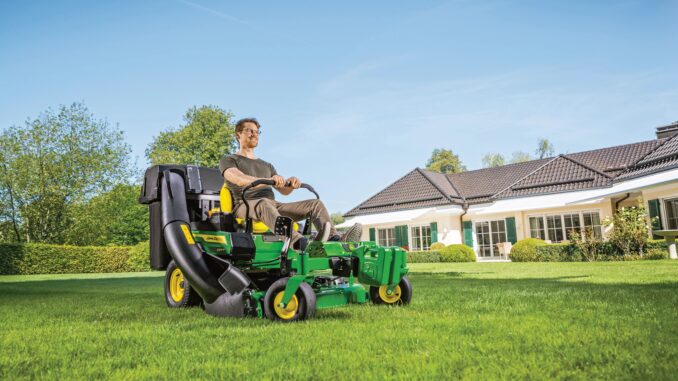
John Deere Z300 Series Lawn and Garden Tractor Models and Maintenance Guide
The John Deere Z300 Series is a residential zero-turn mower range designed for homeowners and property owners who want to mow more efficiently than they can with a conventional lawn tractor. Its dual lap-bar controls independently operate the rear drive wheels, allowing tight turns around trees, garden beds, fence lines, and other obstacles while reducing the uncut grass left at the end of a mowing pass.
The range includes gasoline-powered and electric zero-turn mowers, with deck sizes broadly covering compact-to-large residential lawns. This page acts as a central directory for model-specific guides, maintenance information, troubleshooting content, mower-deck service, drive-system checks, and compatible accessory guidance. Use it as a starting point before moving to the guide for the exact mower model, deck configuration, engine, battery system, and serial-number range.
For broader riding-mower information, see the General John Deere Lawn and Garden Tractor Guide. Although the Z300 range is related to John Deere’s wider lawn and garden equipment family, it is a residential zero-turn mower series rather than a conventional lawn tractor or garden tractor series.
About the John Deere Z300 Lawn Mower Series
John Deere’s Z300 Series is positioned as a residential ZTrak zero-turn mower family for regular mowing of medium and larger home lawns, landscaped properties, and acreage-style residential sites with substantial turf to cover. The key benefit is manoeuvrability: instead of steering with a front steering wheel, the operator uses two lap bars to control the left and right rear drive wheels independently. Moving one wheel faster than the other turns the mower, while moving the wheels in opposite directions allows a near-zero-radius turn.
Gasoline Z300 models generally use single- or twin-cylinder gasoline engines, with the main modern residential range commonly covering approximately 20 to 24 hp, depending on model, production year, engine supplier, and market. Current and later-generation models commonly use V-twin engines on larger-deck versions, while earlier Z300 models include several engine and deck combinations. Electric Z300 models use sealed lithium-ion battery systems rather than a gasoline engine, fuel tank, spark plugs, or conventional engine-oil service schedule.
Mower decks across the series commonly range from 42 inches to 54 inches. Many gasoline and electric models use an Accel Deep mower deck, designed with a deep deck shell and a relatively flat upper surface to support grass movement and cutting performance. Deck construction, deck lifting method, blade type, discharge arrangement, and MulchControl compatibility vary by model and year.
The Z300 Series uses dual hydrostatic wheel-drive transmissions. This arrangement provides smooth speed control, quick directional changes, and the ability to mow efficiently around obstacles. Most models have an electric PTO switch to engage the mower blades, while deck lift is commonly operated by a foot pedal or lever arrangement.
Typical Z300 work includes routine residential mowing, open-lawns mowing, landscaped properties, mowing around trees and beds, and faster weekly mowing on larger lawns. Compatible models may accept bagging equipment, mulch kits, approved tow-behind carts, sun canopies, and selected comfort or storage accessories.
The Z300 sits above conventional lawn tractors for manoeuvrability and mowing speed, but it is not a replacement for a garden tractor. An X300 Series lawn tractor can be more suitable where steering-wheel operation and lawn-tractor versatility are priorities. An X500 Series garden tractor is better suited to heavier towing and certain garden-oriented duties, while the X700 Series is John Deere’s heavy-duty garden tractor family. For larger properties or more demanding mowing, the Z500, Z700, and commercial Z900 zero-turn mower ranges provide a step up in capacity, construction, and available features.
Zero-turn mowers require careful operation on slopes, wet grass, loose soil, ditches, banks, drop-offs, and rough terrain. A mower can lose traction, slide, turn unpredictably, or become unstable if it is used outside appropriate operating conditions. Always follow the operator’s manual for slope guidance, turning technique, towing limits, and safe mowing practices.
John Deere Z300 Lawn Mower Models
Specifications, engine brands, deck choices, accessories, and equipment packages can vary by production year, dealer configuration, country, and serial-number range. Identify the exact model and product identification number before ordering parts, choosing accessories, checking belt routing, or following a repair procedure.
Z300 Lawn Mower Maintenance Guides
Z300 Series maintenance depends on the exact mower, engine, battery system, deck configuration, and year of manufacture. A gasoline Z300 requires engine, fuel, air-filter, spark-plug, and cooling-system attention, while an electric model has different battery, charging, electrical, and traction-drive considerations. In all cases, use the correct operator’s manual and engine documentation for the mower in front of you.
Routine Service and Checks
Before mowing, check engine oil on gasoline models, inspect the mower for leaks and loose parts, verify tire pressures, and clear debris from the deck, engine area, and drive components. A short walk-around inspection often prevents damage to belts, blades, pulleys, tires, and electrical parts.
Gasoline models need regular engine-oil and filter service at the interval specified for the engine and operating conditions. Check the oil level before use and do not overfill. Replace the air filter and pre-cleaner as required, especially if the mower operates in dry, dusty, sandy, or debris-heavy conditions. Inspect spark plugs, ignition wiring, fuel lines, fuel filters, fuel caps, and fuel-tank vents during scheduled servicing.
Fresh fuel is important for gasoline Z300 mowers. Long storage periods can lead to stale fuel, restricted carburetor passages, poor starting, surging, and fuel-system deposits. Use suitable fuel-storage practices, avoid storing old untreated gasoline for extended periods, and follow the mower and engine instructions before seasonal storage.
Keep the engine cooling screen, cylinder-head cooling areas, muffler zone, and hydrostatic-drive cooling areas clear of grass, leaves, dust, and chaff. Restricted cooling airflow can cause engine overheating, reduced performance, shortened belt life, and hydrostatic-drive problems.
Battery maintenance on gasoline models includes checking terminal cleanliness, cable condition, charging performance, fuse condition, and secure mounting. On electric models, inspect the charging lead, battery housing, connectors, safety interlocks, and the area around the charging equipment. Follow the manufacturer’s battery-charging and storage guidance, particularly during cold weather or extended non-use.
Useful internal guide targets include:
-
Z300 Series lawn mower service interval checklist
-
DIY maintenance for John Deere Z300 zero-turn mowers
-
John Deere Z300 engine oil, filter, and air-cleaner service guide
-
Z300 zero-turn mower seasonal storage and recommissioning checklist
Mower Deck, Cutting Quality, and Belt Care
The mower deck has a major influence on cut quality, mowing speed, fuel use, battery runtime, and the load placed on the engine or traction system. Grass buildup under the deck can restrict airflow, reduce discharge performance, promote corrosion, and contribute to uneven cutting. Clean the underside of the deck after mowing damp, tall, or clumping grass, but use safe service procedures first.
Inspect blades regularly. Replace blades that are cracked, bent, badly worn, or damaged by stones, roots, wire, or other obstacles. Sharpen blades when their cutting edge becomes rounded or dull, but keep the blade set balanced. An unbalanced blade can cause vibration that damages spindle bearings, deck hardware, pulleys, and mounts.
Check deck belts for cracks, glazing, frayed edges, missing material, excessive looseness, and signs of slipping. A squealing belt, burning-rubber smell, sudden loss of blade drive, or belt debris around the pulleys can point to a worn belt, seized pulley, damaged spindle, incorrect belt routing, or grass buildup around a pulley or idler.
Deck leveling matters. If one side cuts lower than the other, inspect tire pressures first, then check deck hangers, deck wheels, lift-link adjustment, blade condition, and deck-level settings. A mower deck normally needs the correct side-to-side level and the correct front-to-rear pitch or rake for its specific design.
Anti-scalp wheels should be adjusted for the expected mowing height and terrain. They are intended to reduce deck contact with high spots, not to carry the full weight of the deck during normal mowing. Incorrect settings can lead to scalping, wheel damage, poor deck performance, and uneven cutting.
Before working near blades, belts, pulleys, or spindles, stop the mower, disengage the PTO, park safely, remove the key, allow hot parts to cool, and prevent accidental starting. On electric models, follow the required power-isolation procedure before deck service.
Useful internal guide targets include:
-
Mower deck maintenance and cutting quality on John Deere Z300 zero-turn mowers
-
Deck belt and spindle service for John Deere Z300 lawn mowers
-
How to level a John Deere Z300 mower deck
-
John Deere Z300 uneven cut, scalping, and striping guide
Steering Controls, Drive System, and Chassis Maintenance
The lap bars, dual hydrostatic drives, rear tires, front caster wheels, and chassis all contribute to predictable zero-turn performance. If the mower pulls to one side, turns unevenly, fails to track straight, or responds differently from left to right, begin with basic checks before assuming that a transmission has failed.
Inspect lap-bar movement and neutral return. The controls should move smoothly and return to the intended neutral position when released. Look for loose mounts, worn bushings, damaged dampers, bent linkage, loose fasteners, or excess movement in the control assembly. Incorrect control adjustment can make a mower creep in neutral, track poorly, or respond differently between left and right turns.
Inspect drive belts, transmission cooling areas, cooling fans, pulleys, and belt guides. A damaged drive belt, contaminated pulley, blocked cooling area, or failing idler can reduce drive performance. Keep the area around hydrostatic drives clean, as packed grass and debris can trap heat.
Rear tire pressure has a direct effect on traction, deck level, straight tracking, and turning response. Check that both rear tires are inflated evenly within the mower’s stated range. Inspect for punctures, damaged sidewalls, low tread, valve leaks, and differences in tire diameter caused by uneven inflation or replacement with an incorrect tire.
Check front caster wheels, caster forks, yokes, bearings, wheel hardware, and grease points where fitted. Loose caster hardware can cause wandering, vibration, abnormal noise, or poor control over rough ground. Also inspect the frame, deck lift linkage, seat mounts, foot platform, deck hangers, safety switches, and parking-brake components.
Useful internal guide targets include:
-
Steering-control and drive-system maintenance across John Deere Z300 zero-turn mowers
-
John Deere Z300 hydrostatic drive and traction-system inspection guide
-
Front caster wheel and chassis maintenance for Z300 Series mowers
Z300 Lawn Mower Troubleshooting Guides
A reliable diagnosis starts with the correct information: exact model number, product identification number, production year, engine or battery type, deck size, hours of operation, recent repairs, maintenance history, fuel age, and a clear description of when the fault occurs. A no-start condition after winter storage requires a different approach from a mower that starts normally but stalls under load after twenty minutes of mowing.
Starting, Engine, and Fuel / Ignition Problems
If a gasoline Z300 will not crank, start with the battery, cable connections, fuse, starter circuit, brake or parking-brake position, PTO switch position, lap-bar position, and safety-interlock system. Many apparent starter failures are caused by a weak battery, corroded connection, poor ground, blown fuse, faulty switch, damaged wiring, or an interlock condition that prevents cranking.
If the engine cranks but will not start, check fuel condition, fuel level, fuel flow, air-filter condition, spark-plug condition, ignition performance, and signs of water or contamination in the fuel system. Old gasoline can cause hard starting, rough running, surging, and stalling. A blocked fuel filter, restricted fuel line, faulty tank vent, contaminated carburetor, or ignition fault can cause similar symptoms.
An engine that starts but loses power in tall grass may have a clogged air filter, restricted cooling airflow, dull blades, packed deck, poor fuel flow, weak ignition, or mowing conditions that overload the mower. Mowing very tall, wet, or dense grass too quickly can overload even a healthy mower. Raise the deck, reduce ground speed, mow in a different pattern, or take a partial-width pass when conditions are demanding.
For electric Z300 mowers, a no-start or no-drive concern may involve battery state of charge, charger operation, connector condition, interlock status, power-isolation setting, key or control position, electrical faults, or battery temperature conditions. Follow the electric mower’s model-specific diagnostic and safety procedures rather than applying gasoline-engine troubleshooting steps.
Useful internal guide targets include:
-
John Deere Z300 lawn mower starting problems – diagnostics and fixes
-
Engine and fuel-system issues across John Deere Z300 zero-turn mowers
-
John Deere Z300 battery, charging, starter, and safety-switch troubleshooting guide
-
Z300 mower engine loses power or stalls under load guide
Mower Deck, PTO, and Cutting Performance Problems
If the PTO will not engage, check that the engine is running correctly, the operator is seated where required, the safety system is satisfied, the PTO switch is functioning, and the deck belt is present and correctly routed. A faulty PTO switch, blown fuse, damaged wiring, weak battery, failed PTO clutch, damaged connector, or safety-interlock problem can prevent blade engagement.
If the blades stop in heavy grass, inspect the deck belt, idler pulleys, deck pulleys, spindles, blade condition, and underside of the deck. Wet grass buildup and an overloaded deck can make the belt slip or cause the engine to bog down. Slow down, reduce mowing width, raise the deck slightly if conditions allow, and avoid trying to cut excessive grass height in one pass.
Uneven cutting may result from low tire pressure, a deck that is out of level, dull or bent blades, worn blade spindles, incorrect anti-scalp-wheel adjustment, excessive mowing speed, or uneven terrain. A striping or missed-grass problem can also be caused by poor deck airflow, an incorrect blade type, grass that is too wet, or an unsuitable mowing pattern.
Vibration is a warning sign that should not be ignored. Stop the mower and inspect for a bent blade, missing blade material, loose blade bolt, damaged spindle, failing pulley, debris wrapped around a shaft, cracked deck component, or a problem with a caster wheel or tire. Continued operation with strong vibration can cause expensive damage.
Useful internal guide targets include:
-
PTO and deck-engagement problems on John Deere Z300 lawn mowers
-
Cut quality and deck-vibration issues on John Deere Z300 models
-
John Deere Z300 deck belt keeps coming off or breaking guide
-
Z300 mower blades will not engage or stop under load guide
Drive, Hydrostatic Transmission, and Traction Problems
A Z300 that will not move forward or reverse may have the parking brake engaged, drive-release controls in the wrong position, a damaged drive belt, a belt-routing problem, a traction-drive linkage issue, or a hydrostatic-drive fault. Check simple external causes first, especially after the mower has been transported, serviced, or stored.
If one rear wheel drives weakly or does not drive at all, inspect the tire, tire pressure, drive belt, pulleys, linkage, cooling area, and any visible damage around the affected side. Compare left and right response carefully. A difference in tire pressure can make the mower pull to one side even when the hydrostatic drives are functioning normally.
Slow travel speed, poor hill performance, transmission noise, excess heat, or loss of response after long mowing periods can be linked to blocked cooling airflow, worn drive components, a slipping belt, poor traction, tire problems, heavy mowing conditions, or a hydraulic-drive issue. Do not assume that hydrostatic transmission failure is the only possible explanation.
Traction is especially important when mowing damp grass, loose soil, uneven ground, slopes, and turns. A zero-turn mower can lose grip when it is turned too sharply or operated across unsuitable slopes. Do not rely on a Z300’s dual-drive design to overcome unsafe terrain. Avoid ditches, banks, drop-offs, wet slopes, and conditions outside the manufacturer’s guidance.
This hub should eventually lead readers to model-specific content such as a Z320M maintenance and troubleshooting guide, Z330R problems and fixes overview, Z345M service guide, Z355E buyer’s and repair guide, or Z370R Electric troubleshooting guide.
Useful internal guide targets include:
-
Drive and hydrostatic transmission problems on John Deere Z300 zero-turn mowers
-
Traction and hill-performance issues across John Deere Z300 models
-
John Deere Z300 mower will not move or one wheel will not drive guide
-
Z300 zero-turn mower tracking and lap-bar adjustment guide
Attachments, Accessories, and Equipment for the John Deere Z300 Series
The Z300 Series is primarily a mowing platform. It can be more versatile than a walk-behind mower, but it does not offer the ground-engaging-implement capability of a conventional garden tractor. Attachment options depend on the exact mower model, deck width, deck generation, year, serial-number range, and dealer-supported configuration.
Compatible Z300 models may support mulch-control systems, mulching blades, mulch plugs, bagging systems, high-lift blades, selected seat accessories, sun canopies, storage accessories, light-duty rear hitches, and approved utility carts. These can improve mowing performance, grass handling, comfort, and routine property maintenance.
Mulching systems can be useful where grass is cut frequently and clippings can be returned to the turf. Bagging systems are useful for collecting clippings, leaves, and light lawn debris, but fitment varies significantly by deck size and model. A collection system designed for a 42-inch mower deck may not fit a 48-inch or 54-inch deck, and some legacy deck configurations have different bagging limitations.
A rear hitch does not automatically mean that a mower is approved for substantial towing. Before using a cart, sweeper, aerator, spreader, or other tow-behind equipment, check the specific mower’s approved towing capacity, hitch design, terrain restrictions, braking requirements, operator guidance, and accessory instructions. Overloading a residential zero-turn mower can reduce steering control, increase belt and drive-system stress, create unsafe stopping distances, and damage the frame or hitch assembly.
Traditional garden-tractor attachments such as snow blowers, front snow blades, rear tillers, ploughs, cultivators, sleeve-hitch implements, and substantial ground-engaging tools are generally outside the intended role of the Z300 Series unless a specific mower is expressly designed and approved for the equipment. A dedicated lawn tractor, garden tractor, or utility vehicle is often the more suitable choice for that work.
Before buying an accessory, confirm the following:
-
Exact mower model and product identification number
-
Production year and serial-number range
-
Mower-deck width and deck generation
-
Deck shell, discharge configuration, and blade type
-
PTO or belt-drive requirements
-
Hitch arrangement and approved towing rating
-
Electrical requirements for lights or powered equipment
-
Tire traction, terrain conditions, and safe operator control
-
Model-specific manuals, parts diagrams, and confirmed fitment
Useful internal guide targets include:
-
Attachments and accessory options for John Deere Z300 zero-turn mowers
-
Setting up and using baggers, mulch kits, and yard accessories on John Deere Z300 mowers
-
John Deere Z300 towing and utility-cart safety guide