Kubota Skid-Steer and Track Loader Snow Removal: Models, Parts, and Repairs
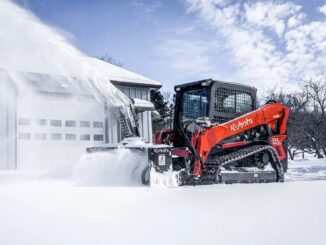
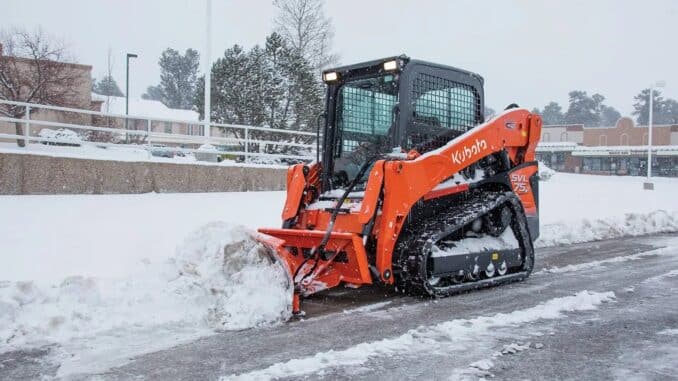
Kubota SSV skid-steer loaders and SVL compact track loaders can clear snow with compatible hydraulic snowblowers, pushers, angle blades, snow buckets, and rotary brooms. They can also handle approved spreaders and winter material-handling attachments.
For owners, the critical issue is compatibility between the loader and attachment. A snowblower that fits the quick-attach plate may still have the wrong hydraulic motor, flow requirement, pressure rating, case-drain arrangement, or electrical controls. Kubota offers different auxiliary-hydraulic configurations, and attachment specifications must match the actual machine—not simply its advertised horsepower.kubotausa+1
This guide covers current and legacy US SSV and SVL models, snow-removal attachment selection, replacement parts, undercarriage and tire maintenance, common repairs, and winter troubleshooting. It is written for owners maintaining an existing loader or buying a used machine and attachment package.
Kubota Skid-Steer and Compact Track Loader Models
Kubota’s wheeled skid steers use the SSV designation. Its rubber-track compact loaders use SVL.
These families share some operating tasks, but their drivetrains, running gear, service procedures, and parts applications are different.
Kubota SSV skid-steer models
| Base model | Configurations found in US parts and sales systems | Owner’s identification priority |
|---|---|---|
| SSV65 | Standard and separately identified control/cab configurations, including SSV65P | Complete model, serial number, controls, cab, auxiliary hydraulics |
| SSV75 | SSV75, SSV75C, SSV75P, SSV75PC | Exact configuration and applicable serial range |
The SSV65 and SSV75 are Kubota’s established US wheeled skid-steer models. Kubota’s parts system separates multiple configurations and serial ranges, while its sales configurator also identifies the SSV65P separately.kubotausa+2
Do not infer every feature from one suffix. Confirm the machine’s control layout, cab equipment, coupler, and hydraulic options against its identification and build information.
Kubota SVL compact track loader models
| Model | Generation or status | Main parts and repair consideration |
|---|---|---|
| SVL75 | Original-generation loader | Original engine, hydraulic, control, and undercarriage applications |
| SVL90 | Original larger loader | Separate parts and service information from SVL90-2 |
| SVL75-2 | Following-generation mid-size loader | Numerous serial-specific parts applications |
| SVL90-2 | Following-generation larger loader | Verify complete model and production specification |
| SVL95-2s | Later larger loader | Preserve the “-2s” designation and serial number |
| SVL65-2 | Smaller-frame loader | Machine-specific hydraulics, tracks, cab, and service parts |
| SVL65-2s | Updated smaller-frame loader | Do not assume all SVL65-2 components interchange |
| SVL75-3 | Later mid-size loader | Updated controls, hydraulics, electronics, and service procedures |
| SVL97-2 | Larger loader | Exact hydraulic, emissions, cooling, and undercarriage configuration |
| SVL97-3 | Later larger loader | Generation-specific controls, attachment setup, and repair information |
Kubota literature and dealer service resources document the original SVL75/SVL90, SVL75-2/SVL90-2, SVL95-2s, and later models. Kubota also publishes a separate SVL65-2s brochure.kubotausa+4
Kubota’s current US SVL overview still lists the SVL65-2, SVL75-3, SVL97-3, and SVL97-2. Because website listings and dealer stock can overlap during model changes, establish the actual machine specification rather than relying on “current model” descriptions.kubotausa
Cab and equipment variations
Parts catalogs may add a cab designation or separately list configurations within a base model.
For example, Kubota catalogs the SVL75-2C and SVL65-2C separately in applicable assemblies. It also divides some SVL75-2 cabin components by serial range.shop.kubotausa+2
Before ordering, record whether the loader has:
-
Open or enclosed operator station.
-
Heater and air conditioning.
-
Mechanical or hydraulic attachment coupler.
-
Standard-flow or high-flow hydraulics.
-
Case-drain connection.
-
Attachment electrical connector.
-
Installed counterweights.
-
Original or replacement tracks or tires.
Identify the Loader and Attachment Before Ordering Parts
A winter setup normally involves at least two separate parts systems: the loader and the attachment.
A snowblower’s motor, chute valve, hoses, bearings, and cutting edge usually belong to the attachment catalog—not the loader catalog.
Keep a complete identification record
Record:
-
Loader model and serial number.
-
Engine identification.
-
Cab and control configuration.
-
Hydraulic option package.
-
Attachment model and serial number.
-
Hydraulic motor identification.
-
Electrical control-kit identification.
-
Coupler type.
-
Track or tire specification.
-
Any approved counterweight kit.
Photograph data plates, hose connections, electrical plugs, and the complete installation before disassembly.
Use the correct manuals
| Document | Main purpose |
|---|---|
| Loader operator’s manual | Safe operation, routine maintenance, approved fluids, normal checks |
| Loader workshop manual | Diagnosis, measurements, repair procedures |
| Loader parts catalog | Machine components and serial applicability |
| Attachment operator’s manual | Operating limits, adjustments, lubrication, safety |
| Attachment parts catalog | Motor, valve, shaft, bearing, wear-part, and control identification |
| Accessory instructions | Wiring kits, adapters, counterweights, cameras, or hydraulic options |
Serial changes are not theoretical. Kubota’s SVL95-2s fuel-system catalog and SVL75-2 parts listings divide components by production range.shop.kubotausa+1
An exploded drawing does not replace a repair procedure. It may not explain pressure release, bearing fits, hose routing, calibration, or safe component removal.
Kubota Loader Snowblowers: Attachment Families
Kubota by Land Pride offers hydraulic snowblowers for compatible loaders. Their auger, impeller, chute, and controls must be matched to the carrier’s hydraulic and electrical equipment.
SBL25 snowblowers
The SBL25 family consists of fully hydraulic front-mounted snowblowers. Land Pride describes a 24-inch impeller, 16-inch auger, and four-blade impeller arrangement.landpride
Identify the complete attachment model and hydraulic motor configuration before ordering parts.
Do not assume another SBL25 of similar width has the same motor, hoses, valve block, or operating requirements.
SBL30 and SBL35 snowblowers
Land Pride’s SBL30 and SBL35 families include 74-inch and 84-inch skid-mounted snowblowers. Published features include an optional fold-over chute, optional bolt-on wings, and different skid-shoe choices.landpride
These accessories create additional parts and clearance considerations.
Check whether the attachment has:
-
Standard or fold-over chute.
-
Bolt-on wings.
-
Particular skid-shoe arrangement.
-
Appropriate hydraulic motor.
-
Correct electrical control package.
Compact snowblower applications
Smaller attachment families should not be assumed suitable merely because the loader can lift them. Likewise, a larger blower should not be chosen simply because its mounting plate fits.
The correct application must cover attachment weight, hydraulic supply, operating controls, and safe visibility.
Hydraulic Flow, Pressure, and Case Drain
Hydraulic matching is the most important technical check when purchasing a loader snowblower.
Standard flow versus high flow
Kubota’s published SSV literature identifies:
| Loader | Published standard auxiliary flow | Published optional high flow |
|---|---|---|
| SSV65 | 18.0 US gpm | 28.0 US gpm |
| SSV75 | 20.9 US gpm | 30.4 US gpm |
These figures come from the cited SSV brochure. Confirm the installed machine configuration and applicable specifications before selecting an attachment motor.data.powerequipmentdata
Do not assume high flow is fitted because a loader has extra couplers or an attachment-control switch.
On SVL machines, obtain the specification for the exact model and hydraulic package. Kubota catalogs separate high-flow service-port components on machines such as the SVL75-3.shop.kubotausa
Why flow and pressure are different
Flow influences motor speed and available hydraulic power. Pressure relates to the force or torque the circuit can develop within its design.
A higher-flow carrier is not automatically better for every attachment. Exceeding the motor’s permitted flow can damage it, while insufficient flow can produce poor performance.
Do not adjust relief settings to compensate for an incorrectly matched attachment.
Case-drain requirements
Some hydraulic motors require a separate case-drain connection.
Where required:
-
Use the specified connection.
-
Keep it clean.
-
Route it correctly.
-
Follow the attachment’s connection sequence.
-
Do not substitute an ordinary return connection without approval.
Incorrect case-drain arrangements can damage motor seals or internal components.
Electrical controls
Confirm connector type, pin assignment, controller compatibility, and required adapter kit.
A plug that physically connects does not prove the wiring is correct. Do not jumper pins or apply battery power experimentally to an unidentified attachment circuit.
Snowblower Wear Parts and Repairs
Skid shoes and cutting edge
Inspect for:
-
Uneven wear.
-
Worn-through shoes.
-
Loose fasteners.
-
Distorted mounts.
-
An edge worn toward its bolt holes.
-
Housing damage.
Set working clearance for the surface using the attachment manual.
Gravel requires particular care because loose stones can enter the blower and become projectiles.
Auger and impeller
With the attachment lowered, engine stopped, key removed, hydraulic pressure relieved as instructed, and all motion stopped, inspect:
-
Bent auger flights.
-
Cracked welds.
-
Loose hardware.
-
Wrapped debris.
-
Housing-contact marks.
-
Damaged impeller blades.
-
Abnormal shaft movement.
Never reach into the auger, impeller, or chute. Stored energy can move components after power is disconnected.
Stop using the blower if unexplained vibration develops.
Bearings and shafts
Look for loose flanges, damaged seals, corrosion, worn supports, and excessive movement.
A failed bearing may result from a bent shaft, misalignment, water entry, or housing distortion. Replacing the bearing alone can leave the original cause unresolved.
Bearing work may require pullers, pressing equipment, controlled support, and attachment-specific instructions.
Hydraulic motors
A motor that leaks, runs slowly, overheats, or makes abnormal noise may have an internal fault—or may be receiving the wrong supply conditions.
Before replacing it, establish:
-
Correct flow configuration.
-
Correct direction of operation.
-
Proper return connection.
-
Case-drain condition, where required.
-
Mechanical freedom of the driven assembly.
-
Hydraulic oil condition.
Motor diagnosis and pressure testing require suitable equipment. Do not dismantle a motor based only on a symptom.
Protective devices
Use the attachment’s specified protective components.
Do not assume a hydraulic blower has the same shear-bolt arrangement as a tractor PTO blower. Identify the actual design before buying spares or replacing hardware.
Quick-Attach Coupler Parts and Repairs
Snow and ice can prevent a coupler from engaging fully.
Daily inspection
Check:
-
Attachment mounting plate.
-
Locking pins or wedges.
-
Retainers.
-
Linkage.
-
Hydraulic cylinders, where fitted.
-
Hoses.
-
Cracked welds.
-
Bent or worn mating surfaces.
Clear packed ice before coupling.
Verify engagement using the loader and attachment instructions. Do not rely only on a switch position or the sound of a hydraulic cylinder.
Worn or damaged mounts
A loader may still pick up an attachment despite worn coupler parts.
Excessive movement, incomplete pin engagement, or distorted mounting plates requires repair before use.
Structural cracks and improvised welding need qualified assessment.
Hose routing
Check clearance through the attachment’s permitted movement.
Hoses must not pull tight, rub the tracks or tires, become trapped in the coupler, or contact rotating parts.
Replace damaged hoses with correctly rated assemblies. Never inspect a suspected high-pressure leak with bare hands.
SSV Tire, Wheel, and Drive-System Maintenance
Wheeled skid steers have different winter service priorities from compact track loaders.
Tires
Inspect:
-
Tread.
-
Cuts and sidewall damage.
-
Pressure.
-
Load rating.
-
Matching size and configuration.
-
Wheel condition.
-
Fasteners.
Do not fit a different tire arrangement without checking approval and the effect on clearance and operation.
Winter-oriented tires may be useful, but compatibility and rated capacity remain essential.
Chains
Before fitting chains, verify loader approval, correct sizing, and clearance around the chassis, hoses, and attachment.
Skid steering creates substantial tire scrub. Follow the approved chain arrangement and operating limitations.
Stop immediately if chains strike the machine.
Drive-system faults
Loss of drive, abnormal noise, leakage, or uneven response can involve more than a tire problem.
Routine owner checks should remain within the manual. Internal drive, hydraulic motor, axle, and chaincase diagnosis requires the correct workshop information.
Do not keep operating a loader with unexplained propulsion noise.
SVL Tracks and Undercarriage Repairs
Undercarriage condition has a major effect on winter reliability.
Clean before freezing
Remove packed snow, slush, mud, and debris from:
-
Rollers.
-
Idlers.
-
Sprockets.
-
Track frames.
-
Steps.
-
Quick-attach mechanisms.
Park where drainage is possible.
Do not force a frozen machine to move. Safely thaw and clean it using an approved method.
Track tension
Check tension using the procedure for the exact loader.
Do not tighten tracks by appearance. Excess tension increases component loading; insufficient tension can contribute to derailment.
Grease-type tensioning mechanisms can contain stored pressure. Never remove fittings or release pressure without the specified procedure.
Track replacement
Confirm:
-
Width.
-
Pitch.
-
Link count.
-
Internal guide arrangement.
-
Approved application.
-
Tread suitability.
-
Clearance.
A track advertised for “Kubota SVL75” is not enough unless the exact application is confirmed.
Do not assume every track pattern performs equally on ice.
Rollers, idlers, and sprockets
Inspect for leakage, loose hardware, abnormal wear, damaged flanges, and rough operation.
Kubota describes sealed, lifetime-lubricated lower rollers on the SVL75-2/SVL95-2s family. Do not drill or modify a sealed roller to add grease.kubotausa
Track handling and undercarriage replacement can involve heavy components and stored tension. Use approved lifting and support procedures.
Snow Pushers, Blades, Buckets, and Brooms
Pushers and angle blades
Inspect cutting edges, shoes, side plates, pivots, cylinders, hoses, and any trip mechanisms.
Do not ram frozen banks or hidden obstacles. Spring-loaded protection must be serviced according to the attachment instructions.
Snow buckets
Check mounting plates, edges, welds, and load limits.
A large bucket full of wet snow may exceed the loader’s safe operating capability. Attachment volume is not a permitted load rating.
Rotary brooms
Inspect brush wear, bearings, drive components, guards, and adjustment mechanisms.
Hydraulic compatibility remains essential. Keep people away from thrown debris.
Spreaders and pallet forks
Verify attachment weight, loaded material weight, controls, and visibility.
Keep palletized salt and grit low during travel. Use the loader’s rated limits for the actual configuration rather than assuming all published capacity figures are directly comparable.
Kubota publishes SSV rated operating capacity at 50% of tipping load, while its SVL literature commonly gives compact-track-loader capacity at 35%. Those figures should not be compared without understanding the basis.kubotausa+1
Cold-Weather Maintenance for Kubota Loaders
Fuel and water contamination
Use winter-suitable diesel and service the water separator as instructed.
No. 2 diesel generally provides higher energy content, while approved winter blends and No. 1 diesel can improve severe-cold flow.
Use approved anti-gel before fuel develops cold-flow problems. Never add gasoline, alcohol, or unapproved solvents.
Repeated filter restriction requires investigation rather than repeated filter replacement alone.
Batteries and starting
Inspect terminals, grounds, cables, and hold-downs.
Use approved starting aids and heaters. Do not use starting fluid unless expressly permitted.
Never charge a frozen, cracked, swollen, or leaking battery.
Oils and hydraulics
Use the specified engine oil and hydraulic fluid for the machine and temperature range.
Do not make an unverified low-temperature fluid conversion or mix incompatible products.
Warm the engine and hydraulic system according to the manual. Cycle permitted functions slowly before applying heavy load.
Cooling and emissions equipment
Clear cooling screens and air passages. A loader can overheat in freezing weather if snow blocks airflow.
Test coolant protection using the specified coolant and procedure.
Emissions equipment differs by generation. Follow the exact warning and regeneration instructions. Never bypass sensors or modify emissions components as a repair shortcut.
Cab, Door, Heater, and Visibility Repairs
Inspect:
-
Door operation.
-
Seals.
-
Wipers and washers.
-
Heater airflow.
-
Defroster outlets.
-
Mirrors.
-
Cameras.
-
Work lights.
-
Emergency exit provisions.
Keep snow and ice out of door tracks and latches where applicable.
Do not defeat an interlock to operate with a damaged door or control system.
Kubota catalogs cab filters and sealing components separately, sometimes with serial changes. Identify the actual assembly before ordering.shop.kubotausa+1
Refrigerant work, serious coolant contamination, and complex electrical diagnosis require qualified service.
Daily Winter Operating Checklist
Before starting
-
Inspect leaks, hoses, wiring, and fluid levels.
-
Check tires or tracks.
-
Clear steps, windows, lights, cameras, and cooling areas.
-
Inspect coupler engagement.
-
Check hoses and electrical connections.
-
Inspect the attachment with power isolated.
-
Test alarms and safety systems.
Warm-up
-
Follow the cold-start procedure.
-
Allow the engine and hydraulics to warm as instructed.
-
Operate permitted functions slowly without load.
-
Confirm steering, braking, travel, and attachment response.
-
Begin work gradually.
Do not use one universal warm-up time for every SSV and SVL.
During work and shutdown
Travel slowly, avoid abrupt turns, and keep loads low.
Stop if visibility, traction, vibration, or warning indicators become unsafe.
At shutdown, park on firm level ground, lower the attachment, isolate power, and remove packed snow and corrosive residue.
Troubleshooting Loader Snow-Removal Problems
| Symptom | Likely causes | Safe first checks | Professional service needed |
|---|---|---|---|
| Blower does not operate | Flow setting, coupler, control, motor, or mechanical fault | Isolate power; check approved connections and setup | Pressure, motor, valve, or internal drive diagnosis |
| Weak discharge | Excess feed, wrong flow, blockage, drive fault | Reduce speed and confirm attachment configuration | Persistent weakness or abnormal noise |
| Strong vibration | Debris, bent components, bearing damage | Stop immediately | Rotating-assembly repair |
| Motor seal leaks | Seal damage, return restriction, case-drain issue | Stop and inspect visible routing | Motor and circuit diagnosis |
| Chute sticks | Ice, binding, control fault | Thaw safely and inspect accessible components | Hydraulic or electrical repair |
| Coupler will not lock | Packed ice, wear, distortion, linkage fault | Clean and inspect safely | Damaged mounts, cylinders, or structure |
| Hydraulics are slow | Cold fluid, low level, restriction, fault | Warm correctly and check routine items | Persistent weak response or noise |
| Track loader will not move after freezing | Frozen undercarriage, propulsion fault | Do not force movement; thaw and inspect safely | Track or drive-system damage |
| Track repeatedly derails | Tension, wear, damage, operation | Stop and inspect using the manual | Undercarriage repair |
| Engine loses power | Fuel restriction, load, engine or emissions fault | Check approved routine items | Repeated warnings or power loss |
| Windows fog | Moisture, airflow, heater fault | Clear vents and use controls correctly | Coolant leakage or persistent heating fault |
Safe Repairs and Seasonal Storage
Never work beneath raised loader arms without the manufacturer’s approved support device installed according to instructions.
Never rely on hydraulic pressure, an unstable jack, or an attachment alone to support the machine.
Routine owner work includes cleaning, inspection, lubrication, and manual-listed adjustments. High-pressure hydraulics, internal propulsion repairs, structural cracks, ROPS/FOPS changes, and complex electrical faults require qualified personnel.
For storage:
-
Remove salt, mud, and debris.
-
Allow equipment to dry.
-
Lubricate specified points.
-
Protect exposed metal.
-
Cap couplers.
-
Label detached controls and hoses.
-
Store attachments on appropriate supports.
-
Record outstanding repairs.
Before restarting, inspect for rodents, leaks, damaged wiring, missing guards, and loose hardware.
Frequently Asked Questions
Will any skid-steer snowblower fit a Kubota SSV or SVL?
No. The mounting plate is only one requirement. Hydraulic flow, pressure, case drain, controls, weight, and visibility must also match.
Does my loader have high flow?
Confirm through the machine’s build information and applicable documentation. Extra couplers or a switch do not establish the installed configuration.
Can I operate a standard-flow blower in high-flow mode?
Only if the attachment manufacturer explicitly permits the supplied flow and configuration. Excess flow can damage the motor.
Are SVL75 and SVL75-2 parts interchangeable?
Only where the correct catalog confirms it. They are separate generations with different service applications.kubotausa+1
Are SVL65-2 and SVL65-2s identical?
No blanket interchange should be assumed. Kubota publishes the SVL65-2s separately, and updated components require the correct application.kubotausa
Are tracks always better than tires on ice?
No. Track design, surface conditions, attachment load, and operating technique matter. Do not assume tracks guarantee braking or steering grip.
Why does my snowblower motor leak?
Possible causes include seal damage, return restrictions, case-drain problems, or an incorrectly matched circuit. Stop and diagnose rather than simply replacing the seal.
Should I force a frozen track loader to move?
No. Safely thaw and clean the undercarriage using the approved procedure before checking for damage.
Repair the Complete System Before Severe Weather
Keep one identification record for the loader, attachment, hydraulic configuration, and controls.
Resolve damaged guards, worn couplers, recurring leaks, vibration, track problems, and warning indicators before winter service. Use the loader and attachment manuals together, and obtain proper diagnosis before replacing expensive motors, pumps, or drive assemblies.