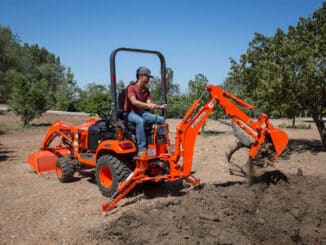
Kubota offers both loans and leases across its tractor lineup, and the best option depends on how long you’ll keep the machine, how hard it will work, and whether you’re a homeowner or a business.
Why Kubota Tractor Financing Matters
A new Kubota tractor is a major capital purchase, so very few buyers pay cash outright. Kubota Credit Corporation and participating dealers bridge that gap with tailored loans and leases, letting you match payments to farm income, landscaping contracts, or household budgets.
Choosing between a loan and a lease is not just about the monthly payment; it’s about ownership, tax treatment, hours of use, and your upgrade cycle. Understanding these trade‑offs by tractor series will help you avoid over‑financing or locking into the wrong structure for how you actually use the machine.
How Kubota Loans Work
With a retail loan, you buy the tractor, and Kubota (or another lender) spreads the cost over time with fixed monthly instalments. You own the tractor from day one, build equity as you pay down principal, and keep the machine once the last payment is made.
Key characteristics of Kubota‑style loans:
-
Terms commonly range from 24 to 84 months, with larger tractors sometimes financed out to 120 months.
-
Monthly payments include principal and interest, and your credit score heavily influences the APR you’re offered.
-
Down payments are often 10–20 % of the purchase price, although some promotions advertise 0 % down on selected models.
Loans work best when you plan to run the tractor for many years, rack up hours, and want an asset you can eventually operate payment‑free or trade in. Businesses may also be able to deduct interest and claim depreciation, but tax advice should always come from a qualified professional.
How Kubota Leasing Works
Leasing gives you the right to use a tractor for a set period while Kubota (or a leasing partner) retains ownership on paper. At the end of the lease, you usually have options to return the tractor, renew the lease, or buy the machine at a predetermined price under a lease‑to‑own structure.
Typical features of Kubota tractor leases:
-
Terms often run 24, 36, 48, or 60 months, with application‑only approvals up to around 150,000 USD in some programmes.
-
Monthly lease payments are usually lower than comparable loan payments because you’re financing use, not full ownership.
-
Some leases bundle maintenance or offer fleet‑style benefits, especially in turf and commercial programmes.
Leasing is attractive when you prioritise cash‑flow, expect to upgrade often, or need tractors primarily for contract work where payments can be matched to job revenue. Many businesses can treat lease payments as an operating expense, which may simplify accounts, though the exact benefit is situation‑dependent.
Loans vs Leasing: Key Differences
Financing Compact Tractors: BX & B Series
Compact tractors like the Kubota BX Series and B Series are popular with homeowners, smallholders, and light commercial users. These machines are usually in the 18–30+ hp range and often come as tractor‑loader‑mower packages.
Loans on BX/B Series
-
Many buyers use 60–72‑month loans so that payments stay modest without stretching too far.
-
Promotions sometimes include 0 % APR for up to 60 or even 84 months on selected compact and standard L models, which can spill into neighbouring horsepower classes.
Leasing on BX/B Series
-
Leases are less common for purely residential use but may be offered to landscape contractors who use compact tractors intensively.
-
Commercial turf programmes that include compact tractors and mowers may bundle fleet rebates, lease options, and seasonal payment structures.
Example scenario – hobby farmer
A small acreage owner finances a BX‑series tractor at an example 6 % APR over 60 months; guidance from one financing article suggests that a 25,000 USD tractor could land around 480 USD per month on a five‑year dealer loan. A lease might reduce that monthly figure but require the owner to watch hour limits and return conditions, which may not suit long‑term hobby use.
Financing Standard L & Grand L Series
The Kubota L Series and Grand L Series are core compact utility tractors for acreage owners, small farms, and estate maintenance. They often qualify for headline promotions that anchor Kubota’s marketing campaigns.
Loans on L/Grand L
-
Dealers regularly advertise 0 % APR on standard L and Grand L models for terms up to 60 or 84 months, sometimes with no money down.
-
Buyers usually choose between 0 % APR or sizeable cash‑back rebates worth several thousand dollars, with one dealer citing rebates of 3,000–5,000 USD or more depending on the model.
Leasing on L/Grand L
-
Commercial users, such as landscapers and property‑maintenance firms, may lease these tractors as part of turf or fleet programmes.
-
Terms at 36–60 months with options to trade into a newer tractor help businesses keep equipment fresh without large capital outlay.
Case study – acreage owner choosing between offers
An acreage owner eyeing a Grand L package is offered 0 % APR for 72 months or a 4,500 USD cash discount if they pay cash or take a standard‑rate loan at 5.99 %. If they plan to keep the tractor for a decade and value cash in the bank, the 0 % loan may make more sense; if they have surplus cash and want the absolute lowest total cost, taking the rebate and a shorter, low‑rate bank loan can win on overall spend.
Financing M Series Utility & Hay Tractors
The Kubota M Series includes mid‑range utility and hay tractors used on livestock and arable farms. These machines cost significantly more, so structure and term length are even more important.
Loans on M Series
-
Special offers frequently include 0 % APR for 36 months or slightly higher promotional rates (for example, 0.99 % for 48 months or 1.99 % for 60 months) with 0 % down on selected M‑series models.
-
Standard‑rate financing can run at fixed APRs around the mid‑single digits for up to 84 months on certain M6 or similar tractors.
Leasing on M Series
-
Larger M‑series tractors are prime candidates for lease‑to‑own programmes when farms want predictable costs and regular upgrades across a small fleet.
-
Dealers and leasing partners can structure seasonal payments tied to crop or hay seasons, easing pressure in low‑revenue months.
Case study – livestock farm
A cow‑calf operation wants a new M‑series loader tractor primarily for hay and feeding. With good credit, they can either:
-
Take 0 % for 60 months and own the tractor outright after five years, or
-
Enter a 48‑month lease with lower monthly payments and a purchase option.
If they expect to run high hours and keep the tractor for ten years or more, a loan aligns better with their long‑term ownership model. If they prefer to refresh tractors every four years to avoid downtime and repair costs, leasing may fit better, particularly if maintenance support is bundled into the lease.
Financing Specialty & High‑Horsepower Tractors (M7, M8)
Flagship tractors such as the Kubota M7 and M8 compete in full‑size row‑crop and heavy utility segments and require bigger tickets. Financing needs here look much closer to heavy‑equipment deals than to residential compact purchases.
Loans on M7/M8
-
Some dealers advertise 0 % APR or alternative cash discounts on M7 tractors, with standard‑rate finance available at around 5.49 % APR for up to 60 months in certain programmes.
-
Given the higher price, farms may stretch terms to the longer end of dealer options to keep monthly payments workable, accepting more total interest where promotional 0 % is not available.
Leasing on M7/M8
-
Leasing can be particularly attractive for large arable farms that run predictable annual hours and rotate tractors on a set schedule.
-
Application‑only approvals up to high amounts and flexible 24–60‑month terms allow farms to line equipment replacement with crop cycles and yield expectations.
Case study – arable farm fleet strategy
A 1,500‑acre grain farm wants two M7 tractors primarily for planting and grain cart work. They compare:
-
A 60‑month loan at a competitive fixed rate, where they own the tractors at the end and then run them for several more seasons debt‑free, versus
-
Back‑to‑back 48‑month leases, returning tractors before major component overhauls and always running newer units.
If the farm has strong balance sheets and wants to build equity in iron, the loan strategy may be best. If uptime and latest technology matter more than long‑term ownership, leases provide predictable costs and turn‑key replacement cycles.
When Loans Make More Sense
Loans tend to win when:
-
You will run the tractor for many years or until it’s effectively worn out.
-
You want to build equity in equipment that you can later trade or sell.
-
You qualify for very low or 0 % APR on the exact tractor you want, making ownership cheaper over time than repeated leasing.
-
You prefer not to worry about end‑of‑lease inspection, hour caps, or condition penalties.
For many homeowners with BX, B, or L‑series tractors, a straightforward fixed‑term loan is the simplest and most intuitive structure. Farms running only a few tractors and planning to keep them into high hours often see loans as the most cost‑effective route, especially when coupling promotional APRs with strong maintenance practices.
When Leasing Comes Out Ahead
Leases often shine in these situations:
-
You need lower monthly payments to preserve working capital or cash reserves.
-
You plan to trade frequently and want to avoid owning ageing equipment with growing repair risk.
-
You are building a commercial mowing, landscaping, or snow business that relies on having late‑model equipment for image and reliability.
-
Your accountant confirms that treating lease payments as operating expenses gives you clearer or more favourable tax treatment.
Kubota’s turf and fleet programmes highlight this logic by combining leases, fleet discounts, and options like Ever‑Go loaner tractors to keep commercial operators productive even when a machine is down.
In tight credit environments, leasing can also be easier to obtain for growing businesses that don’t want to load too much long‑term debt onto their balance sheet.
Practical Checklist: Choosing Between Loan and Lease
Before you sit down at a Kubota dealer desk, work through a simple checklist:
-
Planned ownership horizon – How many years do you realistically plan to keep this tractor, and how many hours per year will it work?
-
Cash‑flow vs total cost – Are you more sensitive to the size of the monthly payment, or to the total cost of financing over the life of the deal?
-
Upgrade habits – Do you tend to run equipment until it’s tired, or do you like to always have relatively new machines?
-
Tax and accounting – For business users, has your accountant suggested favouring depreciation and ownership, or keeping assets off the balance sheet with leases?
-
Promotions on your target series – What 0 % APR, low‑rate, or cash‑back programmes currently exist on the specific Kubota series (BX, B, L, Grand L, M, M7, M8) you’re shopping?
Once you’ve answered those questions, you and your dealer can structure a Kubota loan or lease that fits how your operation actually works, rather than forcing your business or smallholding to fit the finance.
Kubota Loans vs Leasing FAQ
1. What’s the main difference between a Kubota loan and a Kubota lease?
A loan lets you own the tractor from day one and pay it off over time, keeping it when the last payment is made. A lease lets you use the tractor for a set term while the finance company owns it, with options at the end to return, extend, or buy depending on the lease type.
2. Which is cheaper: loan or lease?
It depends on what you mean by “cheaper”:
-
A lease typically has a lower monthly payment over the same term because you’re financing use, not the full value.
-
A loan often has a lower total cost if you keep the tractor for many years after it’s paid off, since you’re not constantly replacing it.
For long‑term keepers, loans usually win on total cost; for frequent upgraders, leasing can be cheaper on a year‑by‑year cash basis.
3. When does a loan make more sense than a lease?
A loan usually makes more sense if:
-
You plan to keep the tractor well beyond the finance term.
-
You expect to rack up high hours and don’t want to worry about lease hour limits.
-
You value equity (you want an asset you can later sell or trade).
-
You qualify for a 0% or very low APR on the model you want.
Homeowners and long‑term farm users commonly fall into this category.
4. When does leasing make more sense than a loan?
Leasing tends to be better if:
-
You want lower monthly payments and need to protect cash‑flow.
-
You prefer to upgrade every few years and always run late‑model equipment.
-
You’re building or scaling a commercial operation where uptime and image matter.
-
Your accountant tells you that treating payments as an operating expense works better for your books.
This is common for commercial mowing, landscaping, and construction fleets.
5. Is leasing only for businesses, or can homeowners lease too?
Leasing programmes are primarily targeted at business and commercial users, especially in turf and construction, but availability to consumers varies by dealer and country. Some homeowners may be able to lease, particularly higher‑value equipment, but most personal‑use buyers go with a straightforward loan.
6. Are lease payments always lower than loan payments?
For the same tractor and term, lease payments are usually lower, because:
-
The lease bases finance on the tractor’s depreciation and residual value, not the full purchase price.
-
At the end of the term, the tractor either goes back or requires a buy‑out to own it.
However, if you stretch a loan much longer than the lease, you could end up with similar or even lower monthly payments—at the cost of paying interest over more years.
7. What happens at the end of a Kubota lease?
That depends on the lease type, but typical options are:
-
Return the tractor and walk away (subject to hour/condition limits).
-
Renew/extend the lease on the same machine.
-
Buy the tractor for a pre‑agreed residual amount (lease‑to‑own).
Your lease contract will spell out the available options and the buy‑out figure, if there is one.
8. Do leases have hour limits or condition requirements?
Yes, most equipment leases include:
-
A maximum number of hours over the lease term or per year.
-
Expected return condition (normal wear allowed, excessive damage chargeable).
Exceeding hour limits or returning a badly damaged tractor can result in end‑of‑term charges. Loans, by contrast, do not have formal hour caps—you simply bear the resale impact of high hours.
9. Can I convert a lease into a loan later?
Often, yes: if your lease has a purchase option, you can effectively convert it to ownership by:
-
Paying the residual/buy‑out in cash, or
-
Financing the residual with a new loan (subject to approval).
The terms of that new loan depend on your credit and the age/condition of the tractor at the time.
10. Do I still need a down payment if I lease?
Sometimes you do, sometimes you don’t:
-
Many lease deals require little or no money down, just the first payment and fees.
-
Some structured leases still require a capitalised cost reduction (a form of down payment) to get to the payment level you want.
With loans, dealers more commonly expect 10–20% down unless a promotion specifies otherwise.
11. Can I claim tax benefits on a leased Kubota tractor?
For business users, lease payments are often treated as deductible operating expenses, while loan interest and depreciation are handled differently. The details are highly jurisdiction‑ and situation‑specific; you should always ask your accountant which structure gives you the best tax result for your operation.
12. Is it easier to get approved for a lease than for a loan?
Approval standards can be similar, but in some cases:
-
Leases may be slightly more forgiving on borderline credit if there’s a strong residual value and business case.
-
Loans may be simpler for straightforward consumer deals with strong personal credit.
In either case, your credit history, income, debt‑to‑income ratio, and business profile (for commercial deals) all matter.
13. Does leasing affect my credit differently than a loan?
Both loans and leases are credit obligations:
-
They may appear on your credit file, with on‑time payments helping and missed payments hurting.
-
Defaulting on either can lead to repossession and negative marks.
From a credit‑scoring standpoint, a Kubota lease is usually treated much like any other instalment account.
14. What if I decide to keep a leased tractor long‑term?
If your lease includes a buy‑out option, you can:
-
Buy the tractor at the agreed residual amount at the end, or
-
Refinance that residual into a new loan.
If your lease doesn’t have a clear purchase option, you’d have to negotiate with the lender, so it’s best to choose a lease‑to‑own structure from the start if long‑term ownership is likely.
15. Do I build equity with a lease like I do with a loan?
Not really. With a loan, each payment reduces the principal you owe and builds equity in the tractor. With a lease, you’re paying for the right to use the tractor; you don’t own it unless and until you exercise a purchase option and pay the residual.
16. Can I trade in a leased Kubota before the lease ends?
Possibly, but it’s more complex than trading a financed tractor:
-
You’ll need to know your early termination or payoff amount on the lease.
-
The dealer may roll any remaining obligation into a new lease or loan, or you may have to cover a shortfall.
With loans, trading in is usually simpler: the dealer pays off your loan and applies any positive equity (or shortfall) to the new deal.
17. Are loan interest rates and lease “implicit rates” the same?
Not exactly:
-
Loans quote a clear APR; you can see exactly what interest you’re paying.
-
Leases often focus on monthly payment and residual, and the implicit finance rate is buried in the structure.
You can compare total out‑of‑pocket cost over the term (monthly payments plus any fees and residual) on both options to decide which is better, even if the lease’s implied interest rate isn’t obvious.
18. For a homeowner on a few acres, is leasing ever better than a loan?
Leasing can be attractive if you:
-
Want lower payments in the near term.
-
Don’t plan to keep a compact tractor for more than a few years.
-
Like the idea of regularly upgrading to newer models.
However, most homeowners who plan to keep the tractor for 10+ years are better off with a loan, especially if they can secure a promotional low or 0% rate.
19. For a growing landscaping or turf business, is a loan or lease better?
Many growing turf and landscaping businesses choose leases or fleet‑style programmes because:
-
They prioritise cash‑flow and uptime.
-
They want to refresh equipment frequently to reduce breakdowns.
-
Lease payments fit cleanly into operating budgets.
That said, some operators prefer loans to build equity and eventually run older equipment with no payment for a while. The right choice depends on your growth plans and appetite for running older machines.
20. What questions should I ask my dealer before choosing loan vs lease?
Good questions include:
-
“What are my monthly payments and total cost over the term for both options?”
-
“Does this lease have hour limits, and what are the penalties for going over?”
-
“Is there a buy‑out option on the lease, and how much is the residual?”
-
“What promotional rates or rebates apply to this model if I choose a loan instead?”
-
“Are there any fees for early payoff or early termination on either option?”
Getting those answers in writing makes it much easier to compare apples to apples.
21. Can I switch from a lease mindset to a loan at the last minute?
Often yes, as long as:
-
You haven’t signed final lease documents yet; or
-
Your lease includes a clearly defined buy‑out option you’re happy with.
If you’re still deciding, ask the dealer to prepare side‑by‑side quotes for both structures on the same model and term. That way, you can compare numbers calmly at home before signing anything.