
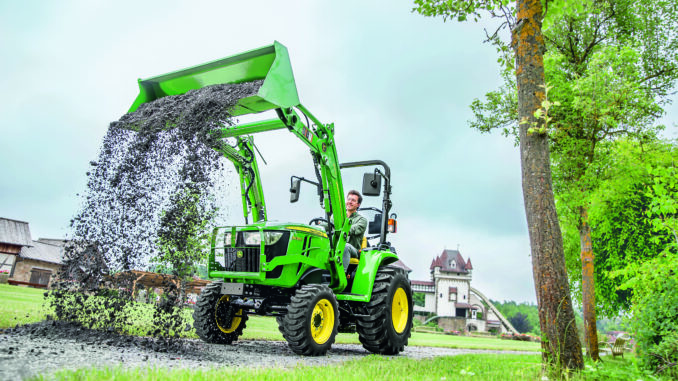
The John Deere 2040 is a utility tractor built for heavier property work, light farm use, loader work, and PTO-driven jobs rather than basic suburban mowing, so owners usually care most about hard starting, hydraulic performance, brakes, steering, charging issues, and general service access rather than deck or cut-quality problems.
The operator’s manual shows it uses a 540 rpm rear PTO, a closed-center hydraulic system rated to 155 bar (2250 psi), wet-disk brakes, and service intervals that extend through daily, 50-hour, 100-hour, 200-hour, 500-hour, and 1000-hour checks.
John Deere 2040 model overview
The John Deere 2040 sits in Deere’s 40 Series utility tractor family and was designed as a more capable machine for mixed-duty property and agricultural work, including drawbar pulling, three-point hitch work, PTO jobs, and loader-style tasks. The manual also notes operating engine speed generally falls between 1500 and 2500 rpm, with standard PTO speed reached at about 2100 rpm, which matters when diagnosing “low power” complaints that are really throttle-setting problems.
For most owners in the USA and Canada, this guide should focus on the systems that actually create downtime:
-
Engine and fuel system, including filters, bleeding, cold starts, and injection-related faults.
-
Cooling system, because overheating can quickly damage an older diesel.
-
Hydraulic and transmission system, especially if steering, hitch, remotes, or braking feel weak.
-
Electrical system, starter, alternator, lights, battery, and safety-related starting faults.
This guide covers practical repair decisions, symptom-based troubleshooting, routine maintenance, common service parts, and a large FAQ written for owners who can handle basic service but still need a clear line between realistic DIY work and dealer-level repair.
General overview of the John Deere 2040
The John Deere 2040 uses a 3.9L four-cylinder diesel engine and is commonly described at around 70 engine horsepower, though exact configurations can vary by market and serial range. Searchable references also note partially synchronized transmission options and its role as a mid-size utility tractor rather than a lawn tractor.
Key John Deere 2040 systems that matter in repair work include:
-
Fuel system: tank, filters, transfer pump, injection pump, and injectors.
-
Cooling system: radiator, grille screens, coolant passages, and belt-driven fan.
-
Electrical system: battery, starter, alternator, circuit protection, and lighting circuits.
-
Hydraulic system: closed-center hydraulics, steering, brakes, selective control valves, and three-point hitch.
Common service parts owners typically shop for include fuel filters, air cleaner elements, engine oil and filters, fan belts, batteries, lights, and sometimes brake or hydraulic-related parts depending on condition. Deere’s own parts shop lists AR50041 as a John Deere fuel filter number used in Deere applications, though fit should always be confirmed against the tractor’s serial and engine details before ordering.
John Deere 2040 troubleshooting approach
The best way to diagnose a John Deere 2040 is to start with the symptom the owner actually sees: “cranks but won’t start,” “starts then dies,” “hydraulics weak when hot,” “battery keeps going flat,” or “brakes feel poor.” That matters because older tractors often have several age-related issues at once, and replacing parts by guesswork usually gets expensive quickly.
Main symptom categories on a John Deere 2040 include:
-
Starting issues, especially cold-weather hard starting, weak battery, starter drag, or air in the fuel system.
-
Running issues, such as smoking, uneven idle, loss of power, or stalling under load.
-
Overheating and leaks, especially coolant loss, plugged screens, or belt problems.
-
Hydraulic, steering, and brake issues, since the tractor uses a closed-center hydraulic system and wet brakes.
-
Electrical problems, including charging faults, warning lamps, lighting, and starter/alternator problems.
Emergency John Deere 2040 repair needs
Some problems on a John Deere 2040 should be addressed immediately because they affect safe operation or can damage expensive assemblies quickly. Brake weakness, overheating, severe fuel or hydraulic leaks, major charging faults that leave the tractor stranded, and abnormal drivetrain or hydraulic noises all fall into that category.
John Deere 2040 starting issues
If the tractor cranks slowly, needs starting fluid too often, or will not fire after sitting, treat it as a starting-system problem rather than a “bad tractor” problem. The operator’s manual includes diesel starting-fluid guidance and references cold-weather starting aids, which shows Deere expected cold-start challenges to be managed carefully rather than ignored.
Common causes:
-
Weak or aging battery.
-
Dirty or loose cable connections.
-
Worn starter or poor cranking speed.
-
Air in the fuel system or restricted fuel filters.
-
Glow/cold-start aid issues, depending on configuration.
Basic owner checks:
-
Confirm battery voltage and clean both cable ends.
-
Check fuel level and look for signs of contaminated diesel.
-
Replace the fuel filter if service history is unknown.
-
Bleed the fuel system if the tractor recently ran out of fuel or the filter was changed.
-
Avoid repeated starting-fluid use unless the tractor is equipped for it and instructions are followed exactly.
John Deere 2040 running and power problems
When a John Deere 2040 starts but lacks power, smokes excessively, or dies under load, the issue is often fuel delivery, restricted air intake, incorrect operating rpm, or deeper injection wear. The manual specifically notes the normal working speed range and the PTO-speed target, so “weak PTO performance” can sometimes be traced to simple engine-speed setup before assuming an internal fault.
Common causes:
-
Clogged fuel filters.
-
Restricted air cleaner.
-
Fuel system air leaks.
-
Injector or injection pump wear.
-
Engine operated too far below intended working rpm.
Basic owner checks:
-
Inspect and service the air cleaner.
-
Replace the fuel filter(s).
-
Check for cracked fuel hoses or seepage around fittings.
-
Verify throttle linkage reaches full travel.
-
Test under load at the proper operating rpm.
John Deere 2040 overheating and leaks
Overheating should never be treated as “normal for an old tractor” because the manual emphasizes warm-up, radiator service, grille screens, fan belt attention, and cooling-system service. A diesel that runs hot can move quickly from a maintenance issue to a head-gasket or major engine repair.
Common causes:
-
Low coolant level.
-
Plugged radiator fins or grille screens.
-
Loose or worn fan belt.
-
Internal cooling-system restriction.
-
Water pump or thermostat problems.
Basic owner checks:
-
Check coolant level only when the engine is cool.
-
Clean external debris from screens and radiator fins.
-
Inspect fan-belt condition and tension.
-
Look for seepage around hoses, pump, and radiator.
-
Stop using the tractor if temperature continues to climb.
John Deere 2040 hydraulic, brake, and drive problems
Because the John Deere 2040 relies on hydraulics not just for implements but also for steering and wet brakes, hydraulic faults are often more serious than owners expect. Weak steering, brake feel changes, hitch hesitation, or poor remote performance can all point to hydraulic oil condition, restriction, internal leakage, or pump wear.
Common causes:
-
Low or dirty transmission-hydraulic oil.
-
Restricted filters or strainers.
-
Pump wear or internal hydraulic leakage.
-
Brake or control adjustment issues.
-
Hot oil thinning out a weak system.
Basic owner checks:
-
Verify the correct oil level.
-
Check service history for hydraulic oil and filter changes.
-
Note whether the problem is worse when hot.
-
Inspect for external leaks at lines and couplers.
-
Stop operation if steering or braking becomes unsafe.
John Deere 2040 electrical problems
Older tractors often develop charging and lighting problems from corrosion, vibration, and age rather than one dramatic component failure. The John Deere 2040 manual references the alternator, starter, lights, flasher, circuit breaker, and battery service, which tells you the electrical system deserves routine inspection rather than only emergency attention.
Common causes:
-
Weak battery.
-
Corroded grounds or terminals.
-
Worn alternator.
-
Failing starter or solenoid.
-
Damaged wiring around heat or vibration points.
Basic owner checks:
-
Load-test the battery.
-
Clean and tighten grounds.
-
Check charging voltage with the engine running.
-
Inspect the belt driving the charging system.
-
Repair damaged wiring before it causes a no-start or fire risk.
DIY or dealer repair guide for the John Deere 2040
The usual line on a John Deere 2040 is simple: routine service, filters, fluids, belts, battery work, basic bleeding, hose replacement, and minor electrical fixes are realistic DIY jobs, but injection-pump work, internal hydraulic diagnosis, brake teardown, clutch splitting, and engine internal repair are normally dealer or experienced-ag-shop territory. That line is even more important on the 2040 because a wrong hydraulic or fuel-system diagnosis can create expensive secondary damage.
Good DIY jobs:
-
Engine oil and filter service.
-
Air cleaner and fuel filter service.
-
Battery replacement and cable cleaning.
-
Fan-belt inspection and replacement.
-
Cooling-system cleaning and hose replacement.
Advanced DIY or dealer jobs:
-
Injection pump timing or overhaul.
-
Injector testing.
-
Internal hydraulic troubleshooting.
-
Wet-brake repair or clutch adjustment beyond basic checks.
-
Any tractor-splitting work.
Skill level guide:
-
Beginner: Filters, fluids, battery, cleaning screens, visual inspections.
-
Intermediate: Belt replacement, fuel bleeding, hose changes, basic charging tests.
-
Advanced: Hydraulic diagnosis, brake repair, starter rebuilds, injector and pump work.
John Deere 2040 parts, OEM numbers, and ordering info
Before ordering John Deere 2040 parts, gather the full model name, the tractor serial/PIN, the engine identification details, and any transmission or regional configuration details you can confirm. Deere publication guidance stresses that serial interpretation matters because part changes often follow production breaks, and aftermarket sellers also expect exact model information before they can match components correctly.
The operator’s manual index confirms the service categories owners most often need parts for, including air cleaner, fuel filters, alternator, starter, batteries, fan belt, radiator, brakes, lights, and transmission-hydraulic oil service.
OEM vs aftermarket guidance:
-
Use OEM for belts, hydraulic-system parts, brake-related parts, and fit-sensitive electrical or fuel components.
-
Quality aftermarket can be acceptable for some filters, batteries, lights, and common wear items if the part clearly cross-references to the exact John Deere 2040 setup.
-
Avoid guessing on serial-break parts, because 40 Series tractors often changed details across production runs.
John Deere 2040 manuals and parts diagrams
A good John Deere 2040 repair workflow starts with the operator’s manual, then the parts diagram, then the technical/service manual if the job moves beyond routine maintenance. That order saves time because many “repair” problems turn out to be adjustment, lubrication, bleeding, or service-interval issues already covered in the operator information.
Useful sources:
-
John Deere 2040 operator’s manual copy for service intervals, lubrication points, operating specs, storage, and troubleshooting.
-
John Deere Technical Information Store for official publication lookup and technical documentation searches.
-
Green Farm Parts Deere parts lookup for illustrated parts searching after you already know the correct OEM number.
-
John Deere Shop parts listing example for AR50041 as an example of how Deere presents OEM parts data online.
How to locate John Deere 2040 serial and engine numbers
These numbers matter because older tractors often have production changes, optional equipment differences, and engine variations that affect filters, belts, electrical components, and hydraulic service parts. Deere’s own serial-number guidance explains that machine series codes and sequential numbers are used to identify configuration differences, which is exactly why “2040 parts” is often not specific enough by itself.
Use this process:
-
Find the tractor identification plate or stamped serial area on the tractor chassis and record it exactly as shown.
-
Check the engine itself for its separate model and serial identification.
-
Record any transmission or configuration details if present.
-
Compare those numbers against the operator’s manual and parts lookup before ordering.
-
Keep a photo of every tag so you can verify it with online sellers or the Deere parts counter.
Buying John Deere 2040 parts online and in stores
The best strategy is to identify the exact OEM part number first, then compare OEM and quality aftermarket availability second. That reduces returns and is especially important on a tractor like the John Deere 2040, where serial breaks and running changes can make “close enough” parts a bad gamble.
Where to buy:
-
Online: use Deere’s own parts listings or a Deere-focused parts site once you have the part number and serial details.
-
Dealer counter: best for hydraulic, brake, fuel-system, and serial-sensitive parts.
-
Retail farm stores: acceptable for oil, coolant, generic batteries, and some filters only when packaging clearly confirms exact fit.
Useful links:
John Deere 2040 fitting guide for common parts
These are the most realistic high-value DIY jobs for a John Deere 2040 because they solve many no-start, low-power, overheating, and charging complaints without moving into deep tractor teardown. Always park on level ground, shut the engine off, remove the key, and let hot components cool before service.
Replacing the John Deere 2040 fuel filter
A fuel filter change often fixes hard starting, weak power, and stalling after storage because contaminated diesel and restricted flow are common on older tractors. The manual also references fuel filters and bleeding, which means this is a routine service task rather than an unusual repair.
-
Shut the tractor down and close any fuel shutoff if equipped.
-
Clean dirt from around the filter housing before removal.
-
Remove the old filter and verify the old seal comes off with it.
-
Install the correct new filter and seal.
-
Refill or prime as appropriate, then bleed the fuel system if needed.
-
Start the tractor and check carefully for leaks.
Servicing the John Deere 2040 air cleaner
A restricted air cleaner can cause smoke, lazy throttle response, and poor fuel efficiency. The manual lists air cleaner service and even references the rubber dust unloading valve, so intake restriction is a known routine maintenance point on this tractor.
-
Open the air-cleaner housing carefully so dirt does not fall into the intake.
-
Inspect the primary element and housing for dust, chaff, and damage.
-
Clean the housing and dust valve area.
-
Replace the element if dirty, oil-soaked, torn, or unknown in age.
-
Reassemble carefully to avoid unfiltered air leaks.
Checking and replacing the John Deere 2040 fan belt
A weak fan belt can reduce cooling and charging at the same time, which makes it one of the highest-value checks on any older utility tractor. The manual specifically covers fan-belt tension and alternator service, connecting this one belt to two major systems.
-
Let the engine cool fully.
-
Inspect the belt for glazing, cracks, fraying, or looseness.
-
Check pulley alignment and condition.
-
Adjust belt tension to specification or replace the belt if worn.
-
Restart the tractor and confirm proper charging and cooling airflow.
Battery and cable service on the John Deere 2040
A large share of “won’t start” complaints come from cable resistance rather than the battery itself. The manual includes battery and starter service sections, so cable condition should always be checked before condemning harder-to-reach components.
-
Disconnect the ground cable first.
-
Clean both terminals and cable ends until bright metal is visible.
-
Inspect cables for corrosion under insulation, broken strands, or heat damage.
-
Reinstall tightly, connecting the ground last.
-
Load-test the battery and verify charging voltage after startup.
Maintenance that prevents John Deere 2040 failures
Most John Deere 2040 problems become expensive only after owners ignore basic service signals for too long. Regular filter changes, cooling-system cleaning, hydraulic oil monitoring, battery care, and fast leak checks are the best way to prevent fuel-system air issues, overheating, hydraulic weakness, and charging trouble.
Focus areas:
-
Starting reliability: keep the battery strong, cables clean, and fuel filters fresh.
-
Engine performance: service the air cleaner and maintain clean fuel flow.
-
Fire and overheating prevention: clean debris from screens and radiator, and watch belt condition.
-
Hydraulic performance: keep transmission-hydraulic oil and filters on schedule.
-
Electrical reliability: inspect wiring, lights, charging output, and grounds regularly.
John Deere 2040 maintenance schedule
The operator’s manual includes service checkpoints by interval, including as-required, daily or 10-hour, 50-hour, 100-hour, 200-hour, 500-hour, 1000-hour, spring/fall, and annual tasks. Because serial ranges and options vary, owners should treat the official manual for their specific tractor as the final authority, but the following structure matches the manual’s maintenance framework.
Daily / before each use
-
Check engine oil level.
-
Check coolant level and temperature awareness.
-
Inspect for fuel, oil, coolant, or hydraulic leaks.
-
Check tire condition and obvious hardware looseness.
-
Clean screens and debris from the front of the cooling system as needed.
Every 50 hours
-
Lubricate scheduled grease points per the manual.
-
Inspect fan belt tension and condition.
-
Check battery condition and terminals.
-
Inspect front axle and steering-related points.
Every 100 hours
-
Service the engine oil and filter according to the manual schedule and use conditions.
-
Inspect or service the air cleaner.
-
Review filter and strainer service points listed in the maintenance chart.
Every 200 hours
-
Service fuel filters and related filter/strainer items as scheduled.
-
Inspect brake and hydraulic operation closely.
-
Review transmission-hydraulic oil service needs against the manual.
Every 500 to 1000 hours
-
Complete the major interval services listed in the manual, including deeper filter, fluid, and system checks.
-
Inspect charging, starter, cooling, and fuel-system components more closely if the tractor sees seasonal or irregular use.
Seasonal checklist
-
Spring: change overdue fluids, inspect hoses and belts, test battery and charging output.
-
Mid-season: clean the cooling package often and monitor for hydraulic weakness under heat.
-
Fall or pre-storage: address leaks, stabilize fuel practices, clean the machine thoroughly, and follow tractor-storage procedures from the manual.
Repair, upgrade, or replace the John Deere 2040?
A John Deere 2040 is usually worth repairing when the engine, transmission, hydraulics, and chassis are fundamentally sound, because many downtime issues come from ordinary wear parts and deferred maintenance rather than catastrophic failure. Replacement becomes more sensible when the tractor needs multiple major systems rebuilt at once or when the owner’s workload has outgrown its capability or condition.
Repair if:
-
The issue is limited to filters, belts, battery, hoses, cooling, starter, alternator, or basic fuel-system service.
-
Hydraulics and drivetrain are generally strong.
Upgrade if:
-
You need better cold-weather convenience, lighting, seating, or more modern hydraulics for frequent use.
-
The tractor still works but no longer matches the attachment or workload demands.
Replace if:
-
It has major engine, hydraulic, brake, and transmission faults at the same time.
-
Parts chasing and downtime now cost more than moving to a newer utility tractor.
John Deere 2040 troubleshooting FAQ
1. Why will my John Deere 2040 not start?
If the engine cranks but will not start, begin with the battery, cable connections, fuel supply, and fuel-filter condition before assuming injection failure. On older 2040 tractors, restricted fuel flow or air in the fuel system is often more common than a major pump failure, especially after sitting or after a recent filter change.
2. Why does my John Deere 2040 crank slowly?
Slow cranking usually points to a weak battery, dirty cable ends, poor ground connection, or a tired starter. A diesel utility tractor needs strong cranking speed to light off cleanly, so even minor resistance in old cables can make the tractor act like it has a deeper fuel problem.
3. Why does my John Deere 2040 need starting fluid?
Occasional cold-weather aid is one thing, but routine dependence on starting fluid usually means weak cranking speed, fuel-delivery problems, poor compression, or cold-start system issues. The manual includes starting-fluid guidance, but it should be used carefully and not as a substitute for proper diagnosis.
4. Why does my John Deere 2040 start and then die?
That symptom often points to fuel starvation, air leaks in the fuel supply, contaminated fuel, or a partially blocked filter. It can also happen after maintenance if the system was not bled correctly, so always revisit the last thing that was serviced.
5. Why is my John Deere 2040 low on power?
Low power is commonly caused by dirty filters, restricted intake airflow, air in the fuel system, or operating the engine below the intended working rpm. Because the tractor is designed to work in a defined rpm range, check throttle setting and PTO-speed setup before assuming internal engine wear.
6. Why does my John Deere 2040 smoke black?
Black smoke usually means too much fuel for the amount of air available, which often comes from a restricted air cleaner, overloading, or fuel-system issues. Start with the air cleaner and intake path because that is cheaper and more common than an injection rebuild.
7. Why does my John Deere 2040 smoke white?
White smoke on startup can be caused by cold combustion, weak cranking, poor injector spray, or compression issues. If it clears as the tractor warms up, focus first on battery health, cranking speed, and normal cold-start conditions before moving to advanced engine testing.
8. Why does my John Deere 2040 overheat?
Overheating usually comes from low coolant, blocked screens, dirty radiator fins, fan-belt problems, or internal cooling-system faults. Since the manual specifically highlights radiator, grille-screen, and cooling-system service, external blockage is one of the first things to inspect.
9. Why is my John Deere 2040 losing coolant?
Coolant loss can come from hoses, clamps, the radiator, the water pump area, or internal engine problems. Any unexplained loss should be taken seriously because repeated overheating can turn a manageable cooling repair into a cylinder-head job.
10. Why is the John Deere 2040 battery always flat?
A battery that repeatedly goes flat may be old, undercharged, or being drained by poor charging output or bad cable connections. Check battery condition first, then verify alternator operation and belt condition before replacing electrical parts at random.
11. Why is my John Deere 2040 not charging?
A no-charge problem often comes from a loose or worn belt, bad alternator, poor wiring, or corroded terminals. Because the alternator and fan-belt systems are linked in practical diagnosis, belt inspection should happen early in the troubleshooting process.
12. Why are the lights weak on my John Deere 2040?
Dim lights usually mean low charging voltage, poor grounds, corroded connectors, or aged bulbs and switches. On an older tractor, voltage drop through the wiring can be just as important as the alternator itself.
13. Why does the John Deere 2040 lose hydraulic power when hot?
That usually points to worn hydraulic components, internal leakage, restricted filters, or oil condition problems that get worse as the oil thins with heat. If steering, hitch, and remotes all weaken together, think system-wide hydraulic wear rather than one isolated control issue.
14. Why is the three-point hitch slow on my John Deere 2040?
A slow hitch can be caused by low hydraulic oil, filter restriction, internal hydraulic leakage, or control-valve issues. Begin with fluid level and service history because neglected oil and filter intervals are common on older utility tractors.
15. Why is the steering hard on my John Deere 2040?
Hard steering often indicates low hydraulic supply, a hydraulic pump problem, contaminated oil, or front-end mechanical resistance. If the steering gets worse along with hitch or brake symptoms, focus on the shared hydraulic system first.
16. Why do the brakes feel weak on my John Deere 2040?
The 2040 uses hydraulically actuated wet-disk brakes, so weak or uneven braking can point to hydraulic issues, wear, contamination, or adjustment-related faults. Because braking is a safety-critical system, stop using the tractor if pedal feel changes sharply or braking becomes unpredictable.
17. Why is my John Deere 2040 leaking hydraulic oil?
Hydraulic leaks often appear at hoses, fittings, couplers, or seals around frequently used circuits. Even a modest leak matters because it can lower oil level, attract dirt, and eventually affect steering, brakes, or hitch performance.
18. Why does my John Deere 2040 PTO seem weak?
A weak PTO complaint may be true loss of engine power, incorrect engine rpm, clutch-related issues, or driveline load beyond what the tractor can comfortably handle. The operator’s manual notes that standard PTO speed is reached around 2100 rpm, so rpm verification should happen before deeper teardown.
19. Why does my John Deere 2040 vibrate more than normal?
Abnormal vibration can come from loose hardware, engine misfire, driveline imbalance, worn couplers, or attachment issues rather than the tractor alone. If vibration appeared suddenly, stop and inspect immediately because loose rotating components can damage surrounding parts quickly.
20. Why is there a knocking noise in my John Deere 2040 engine?
Engine knock can range from combustion-related noise to serious internal wear. If the noise is new, load-related, or accompanied by power loss, smoke, or low oil-pressure warning behavior, stop running the tractor until the cause is identified.
21. Why does my John Deere 2040 idle poorly?
Poor idle is commonly linked to dirty fuel, filter restriction, injector issues, throttle-linkage problems, or air in the fuel system. On an older diesel, a small supply-side issue often shows up at idle before it becomes obvious under heavier load.
22. Why does my John Deere 2040 stall under load?
Stalling under load often points to restricted fuel delivery, contaminated fuel, weak lift/transfer pump performance, or deeper injection problems. It can also happen when the tractor is being lugged below its intended working speed.
23. Why is the John Deere 2040 hard to start in winter?
Cold diesel starting gets harder when battery performance drops, fuel flow is reduced, compression is tired, or the engine is simply not getting enough cranking speed. The manual references a coolant heater option and starting-fluid procedure, which shows Deere expected cold-start support in harsh conditions.
24. Why should I not overuse ether on a John Deere 2040?
Starting fluid can help in the right setup, but excessive use can hide the real fault and increase risk if used carelessly. Deere’s instructions stress caution because ether is highly flammable and should only be used correctly and briefly.
25. Why is my John Deere 2040 air cleaner always dirty?
These tractors often work in dusty conditions, and the intake system can load up quickly if service is delayed or the dust valve is neglected. Frequent restriction usually says more about operating environment and maintenance interval than about a defect in the tractor.
26. Why does the John Deere 2040 fan belt keep slipping?
Repeated belt slip usually means incorrect tension, worn belt material, pulley wear, alignment problems, or contamination from oil or coolant. Fix the underlying cause rather than simply tightening the belt over and over.
27. Why does my John Deere 2040 have fuel in the oil?
Fuel dilution can happen when the engine spends too much time idling cold or if there is a deeper injection-related issue. The operator’s manual specifically warns that prolonged idling can lower coolant temperature and contribute to oil dilution and sludge formation.
28. Why does my John Deere 2040 run better at higher rpm?
The engine is designed to work within a specified speed range, and many PTO or hydraulic complaints improve when the engine is operated where Deere intended. Running too slowly under load can make a healthy tractor feel weak and smoky.
29. Why is my John Deere 2040 leaking from around the radiator area?
That can be a hose, clamp, radiator core, cap area, or water-pump-related leak. Clean the area first, then recheck so you are tracing fresh coolant rather than old residue.
30. Why does my John Deere 2040 sit unused and then develop problems?
Storage often leads to weak batteries, stale or contaminated fuel, stuck components, corrosion, and seal seepage. The operator’s manual includes tractor-storage and return-to-service guidance because inactivity itself is a real maintenance condition, not just “nothing happening.”
31. How often should I service a John Deere 2040?
The operator’s manual organizes maintenance by daily or 10-hour, 50-hour, 100-hour, 200-hour, 500-hour, 1000-hour, seasonal, and annual intervals. The exact tasks should always be matched to the manual and your tractor’s real usage, but the key point is that this tractor has a structured service schedule and should not be maintained only when something fails.
32. What parts should I buy first for a newly purchased John Deere 2040?
For a new-to-you tractor, the smartest starting basket is usually engine oil and filter, fuel filter, air-cleaner service parts, coolant, battery inspection items, and a fan belt if condition is unknown. Those basics solve a large share of reliability issues and give you a clean baseline before chasing less obvious faults.
33. Should I use OEM parts on a John Deere 2040?
OEM parts are the safest choice for belts, hydraulic parts, fuel-system parts, and anything serial-sensitive or safety-critical. Aftermarket can work well for some consumables, but only when the fitment clearly cross-references to the correct 2040 configuration.
34. When is a John Deere 2040 repair no longer worth it?
Repairs usually stop making sense when the tractor needs major engine, hydraulic, brake, and transmission work at the same time, especially if the machine also has structural wear or severe neglect. A single bad subsystem can still be worth fixing, but stacked major failures usually change the math quickly.
35. Is the John Deere 2040 a good DIY tractor?
Yes, for owners comfortable with regular service and intermediate mechanical work, the 2040 is a realistic DIY machine for maintenance, belts, filters, battery work, fuel bleeding, and basic diagnosis. It becomes less DIY-friendly once the job moves into injection, internal hydraulics, wet brakes, or split-tractor repairs.