
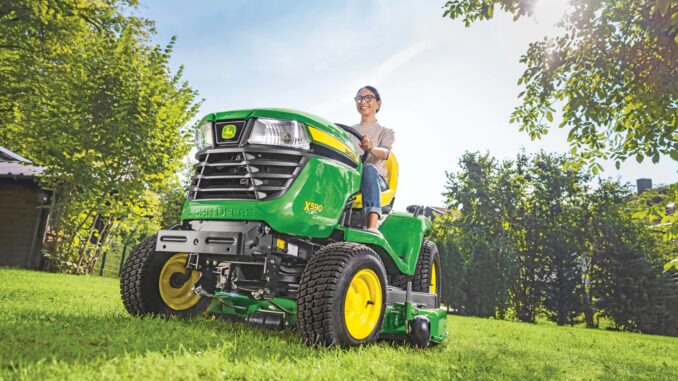
The John Deere GX lawn and garden tractor series is a premium garden tractor line built for homeowners and acreage owners who need more capability than a basic lawn tractor. These machines are well suited to larger residential lawns, mixed mowing and towing work, and year-round property maintenance that may include snow removal, bagging, hauling, and general yard tasks.
This page is designed to work as a central hub for the GX series. It can conceptually route readers to model-specific guides, maintenance content, and troubleshooting content for individual tractors across the range. It also fits naturally under a broader General John Deere Lawn and Garden Tractor Guide, which would serve as the top-level hub for the company’s lawn and garden tractor families.
About the John Deere GX Lawn and Garden Tractor Series
The John Deere GX series occupies the premium end of the homeowner lawn and garden tractor market. In practical terms, these tractors were built for owners who wanted a heavier machine, stronger driveline components, and broader attachment capability than entry-level lawn tractors usually provide. They are especially relevant for users maintaining larger lawns, long drives, mixed terrain, and properties where the tractor is expected to do more than simply mow grass.
Across the series, engine output is generally in the upper-teen to around 20 horsepower range, depending on model. Most GX tractors are fitted with V-twin gasoline engines and hydrostatic transmissions, giving them smoother control for mowing around obstacles, reversing, and working on varied terrain. Compared with lighter lawn tractors, GX machines typically feel more planted, more durable, and better suited to regular towing, attachment work, and longer mowing sessions.
From a chassis standpoint, the GX family belongs in the garden tractor class rather than the lighter lawn tractor category. That means heavier frames, larger tires, stronger front axle components, and a design better suited to repeated use with mower decks, snow equipment, baggers, and pull-behind yard tools. These are still 2WD tractors, but the extra weight, tire options, and higher-spec components improve traction and overall control compared with basic residential machines.
Typical features across the GX series may include hydrostatic drive, electric PTO engagement, heavier mower deck options, cruise control, stronger steering and axle components, and on some models premium features such as power steering or liquid cooling. In use, that makes the GX line a good fit for estate mowing, leaf collection, snow removal, towing utility carts, and other jobs that demand more than a simple riding mower.
In the wider John Deere lineup, the GX series sits above basic lawn tractor families and below the larger, more specialized heavy-duty garden tractors. For many owners, it represents a strong middle ground: more capable than entry-level residential equipment, but still compact and user-friendly enough for everyday homeowner use.
John Deere GX Lawn and Garden Tractor Models
The table below is an across-time index of known John Deere GX lawn and garden tractor models sold in the USA and Canada. It includes current-era legacy references, discontinued machines, and superseded models where public information has been widely circulated. Where exact specifications vary by year or configuration, approximate figures are used.
And See
As an across-time index, this GX table is intentionally broader than a current sales list. It is meant to help owners, buyers, and parts researchers locate model-specific information even when the tractor is older, superseded, or long discontinued.
GX Lawn and Garden Tractor Maintenance Guides
Routine Service and Checks
Routine maintenance across the GX series starts with the standard service items that matter most on lawn and garden tractors: engine oil, oil filter, air filter, fuel filter where fitted, spark plugs, battery condition, belts, and blades. Because many GX tractors are now legacy machines, consistent service matters even more than it does on newer equipment. A well-maintained GX tractor can remain highly capable for years, but neglected service often leads to hard starting, poor cut quality, belt failures, and hydrostatic drive complaints.
A practical maintenance schedule for the GX series should include pre-season inspection, mid-season checks, and end-of-season storage service. Owners should monitor engine oil condition, clean or replace air filtration components, inspect fuel lines for age-related cracking, and keep cooling fins or screens free of debris. On models with additional premium features, owners should also stay alert to steering system condition, electrical switch function, and any cooling-system service points that may apply.
Useful internal resource names for this section could include GX lawn and garden tractor service interval checklist, DIY maintenance for GX lawn tractors, GX seasonal maintenance guide, and GX engine service schedule overview.
Mower Deck, Cutting Quality, and Belt Care
Mower deck care is one of the most important maintenance areas on the GX series because many owner complaints trace back to deck setup, worn blades, neglected belts, or dirty spindle assemblies rather than the tractor itself. Regular blade sharpening, deck leveling, and underside cleaning help preserve cut quality and reduce unnecessary strain on belts and spindle bearings. On older tractors, deck shell corrosion and worn gauge wheels can also affect how evenly the machine cuts.
Deck belts should be inspected for cracking, glazing, stretching, and edge wear. Idlers and tensioners should move freely, and spindle assemblies should be checked for looseness, roughness, or noise. If a GX tractor leaves strips, scalps on turns, or cuts unevenly side to side, the cause is often a combination of blade condition, tire pressure differences, and deck leveling rather than a more serious machine defect.
Useful internal guide names here could include Mower deck maintenance and cutting quality on GX tractors, Deck belt and spindle service for GX lawn and garden tractors, and GX mower deck leveling and blade care guide.
Steering, Axle, and Chassis Maintenance
Because GX tractors are heavier and more capable than light lawn tractors, steering and chassis maintenance deserves its own focus. Owners should regularly inspect tie rod ends, steering linkages, front axle pivot areas, wheel bearings, bushings, and the general condition of the front axle assembly. Excessive play in the steering wheel, wandering on flat ground, uneven front tire wear, or clunking over rough surfaces can all point to wear in these areas.
Basic chassis care should also include checking wheel hardware, seat mounts, foot platform condition, deck lift linkage wear, and the condition of any hitch or attachment points. On older GX machines, small amounts of looseness can gradually turn into poor steering response or uneven mowing performance if left uncorrected.
Useful internal guide names for this part of the maintenance hub could include Steering and front axle maintenance across GX lawn and garden tractors, GX chassis inspection guide, and GX steering play and front wheel alignment guide.
GX Lawn and Garden Tractor Troubleshooting Guides
Starting, Engine, and Fuel / Ignition Problems
Starting and running issues are some of the most common reasons owners search for help on GX tractors. Typical complaints include no-start conditions, slow cranking, hard starting after storage, rough idle, stalling under load, surging, and loss of power in tall grass. On older garden tractors, these problems often come from stale fuel, dirty carburetor circuits, weak batteries, poor ground connections, worn spark plugs, clogged filters, or safety switch faults.
A troubleshooting hub for this part of the GX series should guide readers through a logical order of checks: battery and cable condition first, cranking and starter operation next, then ignition, fuel delivery, air flow, and compression-related concerns. It should also distinguish between cold-start issues, hot-start issues, and load-related running problems, because each symptom often points to a different set of likely faults.
Useful internal guide names include GX lawn and garden tractor starting problems – diagnostics and fixes, Engine and fuel system issues across GX tractors, and GX no-start and hard-start troubleshooting guide.
Mower Deck, PTO, and Cutting Performance Problems
Deck and PTO complaints are especially common on tractors that still mow regularly after many seasons of use. Owners may report that the deck will not engage, the blades stop in heavy grass, the mower vibrates, the cut is uneven, or the machine leaves uncut strips. In many cases, the root cause is worn belts, weak PTO engagement, bent blades, bad spindle bearings, incorrect deck pitch, or accumulated debris restricting normal operation.
A good troubleshooting section should separate engagement problems from cutting-quality problems. A deck that will not turn at all is a different issue from a deck that turns but cuts poorly. That distinction helps readers find the right conceptual route into model-specific deck guides and repair posts.
Useful internal guide names include PTO and deck engagement problems on GX lawn tractors, Cut quality and deck vibration issues on GX models, and GX mower deck noise and spindle failure guide.
Drive, Transmission, and Traction Problems
Drive-related problems on GX tractors usually show up as weak ground speed, delayed motion, poor hill performance, slipping, unusual transmission noise, or a complete loss of drive. Since these tractors are commonly used for towing, slope mowing, and attachment work, transmission performance has a direct effect on how useful the machine feels in everyday use. Owners may also notice traction limitations in wet grass, on inclines, or during snow work, especially when ballast, tire choice, or tread condition are not well matched to the task.
This troubleshooting hub should explain the difference between true transmission failure and external issues such as worn drive belts, linkage adjustment problems, overheated hydrostatic components, or tire-related grip limitations. That matters because many tractors that feel weak in use do not actually need a full transmission repair.
Useful internal guide names include Drive and transmission problems on GX lawn and garden tractors, Traction and hill performance issues across GX models, and GX hydrostatic drive and travel speed troubleshooting guide.
Attachments and Implements for the GX Lawn and Garden Tractor Series
One of the main reasons the GX series remains popular is its usefulness with attachments and implements. Depending on the specific model and configuration, GX tractors can commonly be used with mid-mount mower decks, bagging systems, snow blades, snow blowers, utility carts, sweepers, aerators, dethatchers, and other pull-behind lawn and garden tools. For many owners, that flexibility is what separates a real garden tractor from a basic riding mower.
Attachment compatibility depends on more than just whether the implement physically fits the tractor. Owners also need to consider horsepower, deck size, frame type, attachment mounting points, PTO or belt-drive requirements, lift system compatibility, and any electrical demands from accessories. Snow equipment in particular tends to work best when the tractor is properly ballasted and matched with suitable tires or traction aids.