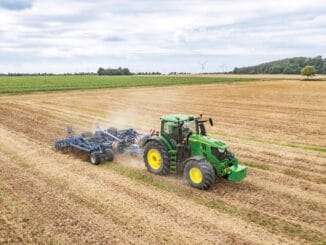
If you are searching for a practical John Deere 9RX repair guide, the first thing to understand is that “9RX” refers to a family of four-track articulated tractors rather than one single machine. John Deere’s 9RX lineup includes multiple high-horsepower variants, and exact parts, filters, oil capacities, and service intervals can change by model and serial range.
That said, most owners are looking for the same core help: what the John Deere 9RX is, what commonly goes wrong, which repairs are realistic outside the dealership, where to find parts diagrams and manuals, and which service items are most important for reliability. This guide covers troubleshooting, maintenance, common parts, manuals, and a detailed FAQ in plain English.
John Deere 9RX overview
The John Deere 9RX sits in Deere’s high-horsepower 9 Series tractor lineup as the four-track option, designed for serious draft loads, flotation, and traction in demanding field conditions. Current and recent 9RX machines use heavy-duty powertrains, high-capacity hydraulic systems, suspended cabs, and wide track options intended for large implements and long working days.
Key systems on a John Deere 9RX include the engine and fuel system, air intake and cooling system, emissions system on applicable machines, hydraulic and transmission system, undercarriage and track assemblies, steering and articulation components, and the cab/electrical/control system. These are the areas owners most often monitor when a tractor begins showing starting issues, power loss, warning messages, fluid leaks, track wear, or ride-quality complaints.
Common service parts owners often buy for the John Deere 9RX family include engine oil filters, primary and secondary fuel filters, primary and secondary air filters, cab fresh-air and recirculation filters, transmission or hydraulic filters, vent filters, and selected undercarriage service items. On 9420RX, 9470RX, and 9520RX models, Deere’s filter overview lists RE572785 as the engine oil filter, RE539465 and RE533910 as the fuel filters, and R553819 and R344420 as the primary and secondary air filters.
John Deere 9RX troubleshooting approach
The best way to diagnose a John Deere 9RX is to start with the symptom the operator actually sees, not the part they assume is bad. For example, “slow crank after sitting,” “derates under load,” “hydraulic response feels weak,” or “one track area is running hot” are all better starting points than jumping straight to batteries, injectors, or pumps.
Main symptom categories on the John Deere 9RX usually include starting issues, running or power-loss issues, overheating and cooling-system faults, hydraulic or transmission complaints, track and undercarriage wear or noise, electrical warnings, and cab-control problems. Because these tractors are electronically managed and highly integrated, symptom-first diagnosis saves time and reduces expensive parts swapping.
John Deere 9RX immediate repair needs
Some John Deere 9RX problems should be treated as immediate stop-and-repair issues because they can create safety hazards or quickly turn into major failures. Any major hydraulic leak, hot bearing or roller condition, serious coolant loss, track alignment problem, brake or steering warning, or repeated engine derate with alarms deserves immediate attention.
1. John Deere 9RX starting issues
If the tractor cranks slowly, will not start, or shows electrical faults during start-up, the problem may be as simple as low battery condition or as complex as a sensor or fuel delivery issue. Repeated start attempts without diagnosis can overwork the starter, discharge the batteries, and waste time during narrow working windows.
Common causes:
-
Weak batteries or poor cable connections.
-
Dirty or restricted fuel filters.
-
Air in the fuel system after service.
-
Faults in safety, control, or start-enable circuits.
-
Sensor or controller issues triggering a no-start condition.
Basic owner checks:
-
Check battery voltage, terminal tightness, and visible corrosion.
-
Confirm there is clean fuel in the tank and no obvious contamination.
-
Inspect recent service work, especially any filter changes.
-
Check for active warnings on the display before repeated cranking.
-
If the tractor still will not start, move to dealer-level diagnostics.
2. John Deere 9RX power-loss and running issues
A John Deere 9RX that starts but lacks power, surges, smokes excessively, or derates under load often points to air, fuel, cooling, or emissions-related problems. On high-horsepower tractors, even a moderate restriction can become obvious once the machine is under a serious field load.
Common causes:
-
Plugged primary or secondary fuel filters.
-
Restricted air filters.
-
Cooling-package contamination.
-
Emissions-related faults on equipped models.
-
Sensor issues affecting fueling or protection logic.
Basic owner checks:
-
Check the display for derate or engine-system messages.
-
Inspect air restriction indicators and intake components.
-
Review fuel-filter hours against service interval.
-
Clean external debris from cooling areas as allowed by the manual.
-
If the machine still derates under load, stop and schedule diagnostic testing.
3. John Deere 9RX track, vibration, and noise problems
Unusual vibration, rumbling, chirping, heat, or uneven ride quality on a John Deere 9RX can point to undercarriage wear, alignment issues, roller or idler problems, or track damage. These issues matter because the undercarriage is one of the most expensive systems on the tractor.
Common causes:
-
Worn or damaged track assemblies.
-
Roller or idler lubrication problems.
-
Alignment or tension issues.
-
Debris packed into undercarriage components.
-
Damaged drive lugs or wheel components.
Basic owner checks:
-
Walk around the tractor and inspect both track systems fully.
-
Look for cuts, chunking, abnormal wear, or leakage.
-
Check for unusual heat after operation if safe to do so.
-
Remove packed debris where operator-safe and approved.
-
Escalate quickly if a roller, idler, or alignment issue is suspected.
4. John Deere 9RX overheating and leaks
Overheating, coolant smell, low coolant level, or fluid appearing under the tractor should never be ignored on a John Deere 9RX. High-load field operation can turn a small leak or restricted cooler into a shutdown or severe engine damage event.
Common causes:
-
Coolant loss from hoses, clamps, or components.
-
Dirty cooling package.
-
Engine-oil or hydraulic-fluid leaks.
-
Failed caps, seals, or fittings.
-
High ambient load combined with restricted airflow.
Basic owner checks:
-
Confirm coolant and engine-oil levels before restarting.
-
Inspect for obvious leaks around hoses, fittings, and coolers.
-
Clean external debris from accessible cooling surfaces.
-
Do not remove caps hot or continue heavy pulling while overheating.
-
Call the dealer if fluid loss is active or warnings return immediately.
5. John Deere 9RX hydraulic and transmission problems
If hydraulic functions slow down, SCVs act erratically, steering feels abnormal, or transmission-related alerts appear, the problem may be low fluid, filter restriction, contamination, or an electronic control issue. Because the hydraulic and transmission systems are central to implement control and traction performance, delayed diagnosis can affect both productivity and component life.
Common causes:
-
Low hydraulic or transmission fluid.
-
Restricted filters.
-
Contaminated oil.
-
SCV, sensor, or controller faults.
-
Internal component wear.
Basic owner checks:
-
Verify fluid level at the correct temperature/check condition.
-
Review filter service hours.
-
Inspect hoses and couplers for leaks or damage.
-
Separate tractor issues from implement issues where possible.
-
Move to professional diagnostics for persistent hydraulic alarms or drive faults.
6. John Deere 9RX electrical and display issues
Modern John Deere 9RX tractors rely heavily on electronic controls, so warning messages, dead displays, communication faults, and intermittent operation often trace back to power supply, connectors, sensors, or controllers. These faults can mimic mechanical problems, which is why display codes and operating conditions matter so much.
Common causes:
-
Low system voltage.
-
Loose grounds or corroded connectors.
-
Sensor failures.
-
Software or controller faults.
-
Harness damage in high-vibration areas.
Basic owner checks:
-
Confirm battery condition first.
-
Inspect visible harness routing and connectors.
-
Record any codes or warning messages exactly.
-
Check whether the fault appears only hot, cold, or under load.
-
Use dealer diagnostics for recurring electronic faults.
John Deere 9RX DIY or dealer repair guide
The line on a John Deere 9RX is usually clear: routine service, inspection, and simple filter-based maintenance are realistic for a skilled owner or farm shop, while electronic diagnostics, major hydraulic work, undercarriage rebuilds, and internal engine or transmission repair are dealer or specialist jobs. That line matters because the cost of a wrong repair on a 9RX is much higher than on a lawn tractor or compact utility machine.
Good DIY jobs
-
Engine oil and filter changes.
-
Fuel, air, and cab filter replacement.
-
Daily inspection and leak checks.
-
Cleaning cooling areas and removing debris.
-
Greasing approved lubrication points.
-
Basic battery service and terminal cleaning.
Advanced DIY or dealer jobs
-
Fuel-system diagnosis beyond filter replacement.
-
Emissions-system troubleshooting.
-
Hydraulic pressure diagnosis.
-
Track alignment and undercarriage component replacement.
-
Steering, articulation, or transmission fault diagnosis.
-
Controller, harness, or display-network troubleshooting.
Skill level guide
-
Beginner: Daily checks, fluid-level checks, cab filters, visual inspections.
-
Intermediate: Engine oil and filter service, fuel and air filter replacement, greasing, battery work.
-
Advanced: Structured diagnosis using service information and test procedures, but still short of internal hydraulic, powertrain, or undercarriage rebuild work.
John Deere 9RX parts, OEM vs aftermarket, and what you need before ordering
Before ordering John Deere 9RX parts, gather the exact model designation, full Product Identification Number, engine model details where relevant, and any serial-range information tied to the tractor. This matters because the 9RX family spans multiple horsepower classes and at least two engine groupings in Deere’s published filter overview, with part numbers changing between 9420RX/9470RX/9520RX and 9570RX/9620RX.
OEM parts are the safest choice for filters tied to exact fit, emissions-related items, hydraulic and transmission filtration, vent filters, and any safety-critical or serial-sensitive part. Aftermarket can be acceptable for selected consumables when the cross-reference is exact and the supplier is reputable, but on a John Deere 9RX it is wise to be conservative because downtime costs usually outweigh small savings.
Where to find John Deere 9RX parts diagrams and service manuals
The most useful sources for John Deere 9RX diagrams and manuals are Deere’s operator-manual channels, Deere parts support pages, and established Deere parts sellers that organize listings by exact model. Cross Implement’s John Deere manuals page points users to operator manuals, technical manuals, and parts catalogs, while Deere’s filter and maintenance information page is referenced directly in the 9RX filter overview PDF.
Useful links:
-
John Deere 9RX Series overview — useful for lineup context, horsepower range, transmission type, hydraulics, and track options.
-
John Deere filter overview PDF for 9RX track tractors — useful for service part numbers, intervals, and fluid capacities on listed 9RX models.
-
Cross Implement John Deere manuals portal — useful starting point for locating operator manuals and technical publications.
-
Sloan Express John Deere 9RX 640 parts page — useful example of a Deere-focused aftermarket/model lookup page, but always verify exact fit by PIN.
John Deere 9RX model, serial, and engine numbers
These numbers matter because the John Deere 9RX is a series, not one single fixed specification machine. The correct PIN and model information help prevent mistakes with filters, undercarriage parts, hydraulic components, and serial-break changes.
Steps to locate them:
-
Find the tractor Product Identification Number plate on the machine frame area specified in the operator or technical literature for your exact 9RX model.
-
Record the full model designation exactly as shown, not just “9RX.”
-
Confirm the engine model and serial details from the engine identification label if engine-related parts are being ordered.
-
Match this information against the manual, Deere parts system, or dealer lookup.
-
When in doubt, give the full PIN to the dealer counter before buying parts.
Buying John Deere 9RX parts online and in stores
The best strategy for John Deere 9RX parts is to use online sources for research and number confirmation, then verify any serial-sensitive item before checkout. For expensive filters, hydraulic parts, electrical components, and anything under the tractor, the PIN should drive the order rather than a generic model-name search.
-
Online: best for checking OEM numbers and comparing availability; use Deere-linked manual resources and model-specific parts pages first.
-
Dealer counter: best for serial-sensitive, hydraulic, electrical, emissions, and undercarriage parts.
-
Retail stores: acceptable mainly for basic consumables only when the packaging clearly cross-references the exact OEM number and tractor model range.
Useful URLs:
Step-by-step John Deere 9RX fitting guide for common parts
Changing the John Deere 9RX engine oil filter
This service helps protect the engine under sustained heavy loads and should follow the interval for your exact model group. Deere’s published 9RX filter overview lists RE572785 for 9420RX/9470RX/9520RX and RE574468 for 9570RX/9620RX.
-
Park safely, lower implements, shut down, and follow lockout procedures.
-
Confirm the exact oil filter part number from the model and PIN.
-
Drain the oil according to the operator manual.
-
Remove the old filter, clean the mounting surface, and install the new filter correctly.
-
Refill with the correct oil specification and quantity for the tractor.
-
Start, check for leaks, shut down, and recheck level.
Replacing John Deere 9RX fuel filters
Fuel filter service helps prevent hard starting, low power, and nuisance derates caused by restricted fuel flow. Deere’s filter overview lists different primary and secondary filters depending on whether the tractor is in the 9420RX-9520RX group or the 9570RX-9620RX group.
-
Confirm the exact primary and secondary filter numbers before opening anything.
-
Clean the area around the filters to reduce contamination risk.
-
Remove the old filters and install the replacements as directed in the manual.
-
Prime or bleed the system exactly as required for that engine and fuel system.
-
Start the tractor and check for leaks or abnormal running.
-
If the engine will not clear air or continues to fault, stop and diagnose rather than continuing to crank.
Replacing John Deere 9RX air filters
Air-filter service helps protect power output and reduces the risk of dust ingestion in dirty field work. Deere lists R553819 as the primary air filter and R344420 as the secondary air filter, both shown as quantity two in the 9RX filter overview.
-
Open the intake housing carefully and note filter orientation.
-
Remove the old elements without knocking dirt into the intake path.
-
Wipe out loose debris only as approved; do not improvise aggressive cleaning.
-
Install the new filters in the correct positions and seat them fully.
-
Reassemble the housing and check restriction indicators afterward.
Replacing John Deere 9RX cab air filters
Cab filters matter more than many owners think because long-hour comfort and HVAC performance depend on them. Deere’s overview lists RE284091 for the fresh-air filter and RE291412 for the recirculation filter, both at 1000 hours or annually.
-
Identify both cab filter locations from the operator manual.
-
Remove covers carefully to avoid damaging tabs or seals.
-
Replace the old filters with the airflow direction correct.
-
Clean out loose debris in the housing area.
-
Refit covers securely and confirm HVAC airflow improves.
John Deere 9RX maintenance to prevent repeat problems
Regular maintenance on a John Deere 9RX is mostly about preventing expensive downtime rather than just extending part life. Clean air flow, clean fuel, correct fluid levels, scheduled filtration changes, and close undercarriage inspection do more to prevent failures than reactive repair after a warning light appears.
Focus areas:
-
Starting reliability: Maintain batteries, clean connections, and fuel filtration.
-
Engine performance: Stay on fuel, air, and oil service intervals.
-
Fire and overheating prevention: Keep debris out of cooling areas and hot zones.
-
Hydraulic performance: Watch levels, leaks, and filter condition.
-
Undercarriage life: Inspect tracks, rollers, idlers, and debris buildup regularly.
John Deere 9RX maintenance schedule and year-round checklist
Because Deere’s publicly accessible 9RX filter overview is strongest on filters, capacities, and long service intervals, the checklist below is conservative and should be paired with the exact operator manual for your model and PIN. The listed intervals below come from Deere’s 9RX filter overview where available.
Daily / before each use
-
Check engine oil level.
-
Check coolant level.
-
Inspect for fuel, oil, hydraulic, or coolant leaks.
-
Inspect tracks and undercarriage for visible damage or abnormal wear.
-
Remove debris from cooling and engine areas where accessible.
Every 400 to 500 hours
-
Replace engine oil filter based on model group, 500 hours on 9420RX/9470RX/9520RX, 400 hours on 9570RX/9620RX.
-
Replace primary and secondary fuel filters based on model group, 500 or 400 hours respectively.
Every 1000 hours or yearly
-
Replace primary air filters.
-
Replace secondary air filters.
-
Replace cab fresh-air filter.
-
Replace cab recirculation filter.
Every 1500 hours
-
Replace fuel tank vent filters.
-
Replace DEF tank vent filter.
-
Replace transmission vent filter.
-
Replace listed axle oil filters and hydraulic/transmission-related filters as specified for the tractor.
Every 3000 to 4500 hours
-
Replace the crankcase breather filter element on listed 15L applications at 3000 hours.
-
Replace the DEF tank dosing unit at 4500 hours where specified.
Seasonal checklist
-
Pre-season: Change overdue filters, inspect tracks, inspect cooling package, verify all fluids and warnings are clear.
-
Mid-season: Recheck air filtration, debris buildup, leaks, and undercarriage condition.
-
Post-season: Clean thoroughly, correct leaks, replace overdue filters, and store with service records updated.
John Deere 9RX repair, upgrade, or replace?
With a John Deere 9RX, the question is usually whether to repair a subsystem now, overhaul a higher-hour machine more strategically, or step into a newer tractor when electronics, emissions, undercarriage, and hydraulic needs start stacking up at once. Because these machines are expensive and highly productive when healthy, repair is often justified if the engine, transmission, and undercarriage fundamentals are still strong.
Repair if…
-
The issue is isolated to maintenance items, sensors, hoses, filters, or minor leaks.
-
The undercarriage is still in usable condition.
-
The machine otherwise performs well under load.
Upgrade if…
-
You need more hydraulic capacity, newer control tech, or improved operator comfort.
-
Downtime is becoming costly during peak field windows.
-
The tractor is still valuable enough to trade while running well.
Replace if…
-
Major undercarriage, engine, and hydraulic issues are arriving together.
-
Repeated electronic or emissions faults are reducing dependability.
-
Repair costs are approaching the value of a more productive replacement unit.
John Deere 9RX troubleshooting FAQ
1. Why will my John Deere 9RX not start?
The most common starting causes are weak batteries, poor cable connections, restricted fuel filters, or an electronic fault preventing normal start-up. Start with battery condition and any active warnings on the display, then review recent fuel-filter or electrical work before assuming a major failure.
2. Why does my John Deere 9RX crank slowly?
Slow cranking usually points to low battery state, cable resistance, poor grounds, or a starter circuit issue. On a large electronically managed tractor, voltage drop can create several false symptoms at once, so battery and cable checks come first.
3. Why does my John Deere 9RX start and then derate under load?
That usually suggests fuel restriction, intake restriction, cooling problems, or an engine-management fault. The tractor may feel fine at idle but lose power badly once draft load rises, which is why filter condition and warning history matter.
4. Why is my John Deere 9RX low on power?
Low power often comes from clogged fuel filters, dirty air filters, or a derate condition tied to sensors or emissions controls. Check the easy service items first, then move to diagnostics if the machine still cannot hold load.
5. Why is my John Deere 9RX using more fuel than normal?
Higher fuel use can come from dirty filters, improper operating conditions, prolonged derate behavior, cooling issues, or calibration problems. If operating practice has not changed, inspect maintenance items and look for related warnings.
6. Why does my John Deere 9RX overheat?
Overheating on a 9RX is commonly linked to coolant loss, restricted airflow through the cooling package, or heavy-load operation with a dirty machine. Stop early, because overheating a high-horsepower tractor can create very expensive damage fast.
7. Why is my John Deere 9RX leaking coolant?
Coolant leaks may come from hoses, clamps, fittings, or cooling-system components. Even a small recurring loss should be fixed quickly because cooling margins shrink fast when the tractor is working hard.
8. Why is my John Deere 9RX leaking hydraulic oil?
Hydraulic leaks often show up at hoses, couplers, fittings, cylinders, or related components. Because hydraulic oil loss can affect steering, SCV performance, and system protection, active leaks are a stop-and-repair issue.
9. Why is my John Deere 9RX hydraulic system slow?
Slow hydraulic response can mean low fluid, restricted filtration, contamination, or an electronic control problem. Start by confirming fluid level and service history before assuming internal hydraulic wear.
10. Why are my John Deere 9RX SCVs acting erratically?
Erratic SCV behavior may be caused by low oil, contamination, connection issues, or control-system faults. It is also worth separating tractor problems from implement valve or hose problems before deeper diagnosis.
11. Why does my John Deere 9RX ride rough?
Rough ride complaints often trace back to track condition, undercarriage wear, debris buildup, or component wear in the running gear. Cab suspension and ballast setup also affect operator feel, but unusual vibration should never be ignored.
12. Why is my John Deere 9RX vibrating under load?
Vibration under load can come from undercarriage wear, track damage, driveline-related issues, or uneven component loading. Because undercarriage problems are expensive, inspect early and avoid running the tractor until the source is clearer.
13. Why is one side of my John Deere 9RX undercarriage hotter than the other?
That can indicate roller, idler, alignment, lubrication, or track-related distress. Heat is often one of the first warning signs of an undercarriage problem that should be inspected before the tractor returns to heavy field work.
14. Why is my John Deere 9RX track wearing unevenly?
Uneven wear can result from alignment issues, improper setup, field conditions, or worn running components. On a four-track tractor, wear patterns are valuable diagnostic clues, so take photos and compare both sides before ordering parts.
15. Why does my John Deere 9RX pull to one side?
A pull or steering imbalance can be caused by track issues, steering-system problems, or uneven resistance in the undercarriage. It can also reflect field conditions, but a consistent pull on flat ground deserves mechanical inspection.
16. Why is my John Deere 9RX showing an electrical warning?
Electrical warnings often come from low voltage, connector issues, sensor problems, or network communication faults. Record the exact code and the operating conditions when it appears, because intermittent electronic faults are much easier to solve with good notes.
17. Why did my John Deere 9RX display go blank?
A blank or rebooting display may point to power-supply issues, loose connections, a failing module, or controller communication trouble. Start with battery condition and visible connectors before assuming the display itself has failed.
18. Why is my John Deere 9RX battery going flat?
Battery drain can come from age, charging faults, poor connections, or parasitic draw. Because these tractors depend heavily on stable system voltage, repeated low-voltage operation can create several secondary electronic complaints.
19. How often should I change the engine oil filter on a John Deere 9RX?
It depends on the model group in Deere’s published filter overview. The listed interval is 500 hours for 9420RX, 9470RX, and 9520RX, and 400 hours for 9570RX and 9620RX.
20. How often should I change fuel filters on a John Deere 9RX?
Deere’s filter overview lists 500-hour replacement for the 9420RX, 9470RX, and 9520RX group, and 400-hour replacement for the 9570RX and 9620RX group, or as indicated. Exact manual guidance for your serial range should still be checked.
21. How often should I replace John Deere 9RX air filters?
The published 9RX filter overview lists primary and secondary air filters at every 1000 hours or annually, whichever occurs first. Dusty conditions may still require more frequent inspection.
22. How often should I replace John Deere 9RX cab filters?
Deere lists both the fresh-air and recirculation cab filters at 1000 hours or annually in the 9RX filter overview. If HVAC airflow drops sooner, inspect them earlier.
23. What is the engine oil filter part number for a John Deere 9RX?
It depends on the exact model. Deere lists RE572785 for 9420RX, 9470RX, and 9520RX, while RE574468 is listed for 9570RX and 9620RX.
24. What are the fuel filter part numbers for a John Deere 9RX?
For 9420RX, 9470RX, and 9520RX, Deere lists RE539465 and RE533910. For 9570RX and 9620RX, Deere lists RE561968 and RE574467.
25. What are the air filter part numbers for a John Deere 9RX?
The Deere filter overview lists R553819 as the primary air filter and R344420 as the secondary air filter, each shown as quantity two in the listed 9RX applications.
26. Where can I find a John Deere 9RX operator manual?
A good starting point is Deere-linked operator-manual portals such as Cross Implement’s John Deere manuals page, along with Deere dealer manual pages and technical publication channels. Always match the manual to the exact 9RX model and serial range.
27. Where can I find John Deere 9RX parts diagrams?
Parts diagrams are usually best sourced through Deere parts systems, dealer parts counters, and established Deere-focused parts suppliers that organize listings by model. Model-specific aftermarket pages can help, but the PIN should confirm fit before purchase.
28. Should I buy OEM or aftermarket John Deere 9RX parts?
OEM is the safer choice for serial-sensitive filters, hydraulic and transmission items, electrical components, and safety-critical parts. Aftermarket may be reasonable for selected consumables, but only when the cross-reference is exact and quality is proven.
29. Is a John Deere 9RX realistic for DIY repair?
Routine service and basic inspection work are realistic for a capable owner or farm shop. Major hydraulic, electronic, transmission, emissions, and undercarriage work usually belongs with a Deere dealer or a specialist with the correct tools and data.
30. What should I check first when buying used John Deere 9RX parts?
Check exact model, serial range, and whether the part matches your tractor’s configuration. With 9RX machines, using the wrong serial-break part can waste time and create more downtime than the original problem.
31. How important is undercarriage inspection on a John Deere 9RX?
It is one of the most important checks on the whole machine because undercarriage wear is costly and often progressive. Small signs like heat, noise, uneven wear, or leakage can point to much larger repair bills if ignored.
32. Why does my John Deere 9RX warning light return after I changed filters?
A repeated warning after filter service may mean the problem was not actually the filter, the wrong part was installed, air remains in the system, or a separate electronic fault is present. Review the exact code and the service steps before replacing more parts.
33. Can a dirty cooling package cause John Deere 9RX power loss?
Yes, restricted cooling airflow can contribute to overheating and protective derate behavior under load. Heavy field debris and dust make cooling maintenance especially important on high-horsepower tractors.
34. Why should I keep my John Deere 9RX PIN handy when ordering parts?
Because the 9RX is a family of tractors with model and serial differences, the PIN helps confirm the exact filter set, service parts, and any serial-break components. It is the fastest way to avoid ordering mistakes.
35. What is the best overall maintenance habit for a John Deere 9RX?
Consistent inspection before small problems turn into downtime is the best habit. On a John Deere 9RX, clean airflow, timely filter changes, leak checks, and close undercarriage monitoring usually prevent the most expensive avoidable failures.