
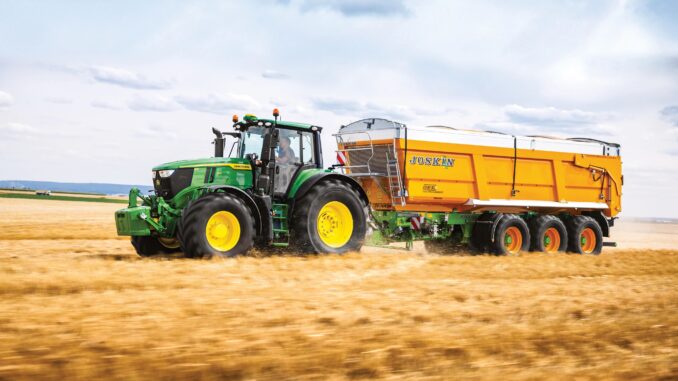
John Deere 7020 Series Tractor Models and Maintenance Guide
The John Deere 7020 Series name has been used for more than one very different tractor family in North America. It can refer to the original 7020 articulated four-wheel-drive tractor built from 1971 to 1975, and to the much later 7020 Series row-crop and utility tractors sold during the early-to-mid 2000s, including the 7220, 7320, 7420, 7520, 7720, 7820, and 7920 families.
This page is a practical across-time directory for owners, buyers, restorers, and DIY maintainers of John Deere 7020 Series tractors. It is intended as a hub for model-specific maintenance guides, repair information, common-problem articles, specifications references, and troubleshooting content. For smaller compact machines, start with the General John Deere Compact Tractor Guide; this particular 7020 Series index covers larger agricultural tractors rather than sub-compact or compact tractors.
The 7020 designation spans tractors used for serious field work, hay production, loader duties, livestock operations, tillage, planting support, snow work, transport, and high-output PTO applications. The original 7020 is a heavy articulated 4WD machine, while the later 7020 Series models are conventional-framed utility and row-crop tractors with substantially more modern hydraulics, transmission choices, cab options, and electronic systems.
About the John Deere 7020 Series
The John Deere 7020 Series is not a compact tractor series in the modern sense. It includes large agricultural and row-crop tractors, generally ranging from roughly 140 hp in the original 7020 four-wheel-drive tractor to approximately 170 PTO hp in the later 7920. The later 7020 Series also included lower-power models such as the 7220, which sat in the roughly 95 PTO hp class.
The original John Deere 7020, produced from 1971 through 1975, was an articulated four-wheel-drive tractor manufactured in Waterloo, Iowa. It used a turbocharged 6.6-litre, six-cylinder diesel engine and was built for heavy draft work. It had four-wheel drive, large equal-sized tyres, a closed-centre hydraulic system, a 1,000-rpm rear PTO, and an operating weight around 18,495 lb. Its tested PTO output was about 146 hp, while tested drawbar output was approximately 128 hp.tractordata+2
The later 7020 Series introduced in the early 2000s was a more conventional large utility and row-crop tractor line. John Deere initially announced 7220 through 7520 models with approximately 95 to 125 PTO hp, with transmission choices that included partial powershift and IVT options. Later 7720, 7820, and 7920 models expanded the range into roughly 140 to 170 PTO hp territory.tractordata+1
Typical features across the later family included:
-
Two-wheel-drive and mechanical-front-wheel-drive configurations, depending on model and market specification.
-
Open-station and cab-equipped tractors, with high-crop variants offered on selected models.
-
Independent rear PTO systems, normally with 540/1,000-rpm capability on many models.
-
Closed-centre, pressure-and-flow-compensating hydraulic systems for remote valves, loaders, rear linkage control, and hydraulic implements.
-
Partial powershift, PowrQuad-style, AutoQuad-style, and IVT transmission availability depending on model, production year, and specification.
-
Electro-hydraulic controls for PTO, differential lock, hydraulic remotes, and other functions on many later models.
-
Front hitch and front PTO availability on certain specifications.
-
Compatibility with heavy rear-mounted implements, balers, mowers, loaders, planters, forage equipment, cultivation equipment, grain carts, snow equipment, and transport trailers.
The later 7020 tractors sit above modern John Deere compact families such as the 1, 2, 3, and 4 Series. They are closer in role and capacity to full-size utility, row-crop, and livestock-farm tractors. They should therefore be maintained and diagnosed as larger agricultural machines, particularly where high-pressure hydraulics, wet-clutch PTO systems, powershift/IVT drivetrains, electronic controls, and heavy three-point-hitch loads are concerned.
John Deere 7020 Series Tractor Models
The table below is an across-time USA/Canada directory. Model availability, transmission options, high-crop versions, cab choices, and exact horsepower ratings could vary by year and market. The 7020 name also covers both the original articulated model and the later conventional-framed 7020 Series family.
The original 7020 is particularly important to distinguish from the later 7020 Series line. The first-generation articulated model was produced from 1971 to 1975 and used an 8-speed or 16-speed partially synchronized transmission arrangement, four-wheel drive, closed-centre hydraulics, and a 1,000-rpm PTO.tractordata+1
The later 7220, for example, was available in two- or four-wheel-drive form and used a 6.8-litre six-cylinder diesel. It had an independent electro-hydraulic rear PTO, closed-centre PFC hydraulics, and a Category II rear hitch. The 7420 was similarly available in conventional row-crop and high-crop forms, with approximately 135 engine hp and 115 PTO hp.tractordata+2
John Deere’s later 7720, 7820, and 7920 models formed the upper end of the 7020 range, with published PTO ratings of 140 hp, 155 hp, and 170 hp respectively at launch.tractordata
7020 Series Tractor Maintenance Guides
Routine Service and Checks
A consistent service routine matters more on a 7020 Series tractor than on many smaller tractors because these machines often work under high drawbar load, operate large PTO equipment, carry substantial hydraulic loads, and may accumulate long hours during hay, planting, feeding, or harvest periods.
Use the operator’s manual and serial-number-specific technical literature as the final authority for service intervals, fluid specifications, capacities, and filter part numbers. Changes between production years, engine configurations, transmission types, and optional equipment can be significant.
Routine inspection and servicing should include:
-
Check engine oil level before daily operation, especially before extended field work or PTO operation.
-
Inspect coolant level only when the engine is cold, and keep the radiator, screens, oil cooler, and air-conditioning condenser clear of chaff and dust.
-
Drain water and contamination from fuel-system components where fitted, particularly after storage or when fuel quality is uncertain.
-
Replace engine oil and filters at the interval specified for the engine and duty cycle.
-
Inspect the air-cleaner restriction indicator, primary element, safety element, intake piping, and pre-cleaner arrangement.
-
Check hydraulic/transmission fluid level correctly, using the prescribed parked position and temperature procedure for the model.
-
Change hydraulic/transmission filters and oil on schedule, particularly after a used-tractor purchase, clutch or brake repairs, hydraulic component failure, or suspected contamination.
-
Grease loader pivots, steering components, axle pivots, three-point-hitch pivots, driveline joints, drawbar hardware, and attachment pivot points at the correct intervals.
-
Inspect brakes, clutch or transmission controls, parking brake operation, steering response, tyre condition, wheel fasteners, and front-axle oil level.
Useful internal-link targets for this section include:
-
“7020 Series tractor service interval checklist”
-
“DIY maintenance for John Deere 7020 Series tractors”
-
“John Deere 7020 engine oil, filters, and cooling-system guide”
-
“7020 Series hydraulic and transmission fluid service guide”
-
“Pre-season inspection checklist for John Deere 7020 tractors”
Owners of the original articulated 7020 should pay special attention to articulation-joint condition, driveline wear, steering linkage, axle seals, hydraulic hoses, tyre matching, and the condition of the older charging and starting systems. The original tractor used a 6.6-litre diesel with approximately 17 qt of engine-oil capacity and approximately 32 qt of coolant capacity, making correct fluid levels especially important before heavy work.tractordata
Hydraulics, Loader, and 3-Point Hitch
Hydraulic maintenance is central to reliable operation on the later 7020 Series tractors. These machines commonly use high-capacity closed-centre hydraulic systems to operate rear remotes, power steering, loaders, three-point hitches, front hitches, hydraulic trailer equipment, and demanding implements.
Before diagnosing a weak loader or hitch, begin with basics:
-
Confirm correct hydraulic/transmission oil level and correct oil specification.
-
Inspect hydraulic filters and note whether service history is known.
-
Check for oil leaks at couplers, valves, cylinders, hoses, steering lines, loader pipes, and rear remote outlets.
-
Make sure quick couplers are clean and fully seated.
-
Verify that external hydraulic implements are not holding a spool valve partly open.
-
Inspect loader pins, bushings, grease points, cylinders, mounts, and frame hardware.
-
Check rear-hitch sensing and linkage components for damage, corrosion, binding, or incorrect adjustment.
On tractors with PFC hydraulics, a complaint such as slow hydraulics can result from low oil, an obstructed filter, suction-side leakage, a sticking selective control valve, internal cylinder leakage, pump wear, priority-valve problems, or a load-sensing issue. Do not assume that a hydraulic pump has failed until filters, oil condition, couplers, valve positions, external leaks, and cylinder bypass have been evaluated.
Useful related guides include “Hydraulic maintenance and leak diagnosis on John Deere 7020 tractors,” “Loader and three-point-hitch maintenance for John Deere 7020 Series,” and “John Deere rear remote valve and hydraulic coupler troubleshooting.”
Transmission and Drivetrain
Transmission care depends heavily on which 7020 Series tractor you own. The original articulated 7020 used a Syncro-Range-based partially synchronized transmission, while later models could be fitted with partial powershift, more advanced powershift-style transmissions, or IVT systems.tractordata+1
For every transmission type, check for:
-
Correct transmission/hydraulic oil level and clean fluid.
-
Water contamination, metallic debris, burnt odour, foaming, or unusual fluid colour.
-
Delayed engagement after starting.
-
Harsh or slipping shifts under load.
-
Abnormal transmission noise, especially when hot.
-
Proper clutch-pedal or inching-pedal operation where applicable.
-
Differential-lock function and release.
-
Front-wheel-drive engagement and disengagement.
-
Front-axle oil levels, driveshaft condition, universal joints, seals, and hub leaks.
-
Brake response and parking-brake adjustment.
-
Correct tyre sizes and matched rolling circumference on MFWD tractors.
A useful cross-model article is “Transmission and driveline maintenance across John Deere 7020 Series tractors.” Separate articles can then address specific transmission families, such as “John Deere 7020 Series IVT operating checks and fault symptoms” and “Powershift transmission service and troubleshooting on 7020 tractors.”
7020 Series Tractor Troubleshooting Guides
Starting, Engine, and Fuel Problems
Common complaints on older and later 7020 Series tractors include no-crank conditions, slow cranking, hard cold starts, starts-then-stalls faults, fuel starvation, uneven running, overheating, black smoke, poor PTO performance, and loss of power under load.
Start diagnosis with the simplest and lowest-cost checks:
-
Confirm battery condition, terminal cleanliness, grounds, battery-cable integrity, starter connections, and charging-system output.
-
Check that safety switches, neutral-start interlocks, PTO switches, clutch switches, and range-selector conditions permit starting.
-
Verify that there is clean fuel in the tank and that the fuel shut-off is open.
-
Drain water from separators and inspect fuel filters for restriction.
-
Check for air leaks on the suction side of the fuel system.
-
Confirm that the air filter and intake plumbing are not restricted.
-
Look for overheating, low coolant, damaged fan belts, plugged radiator screens, or malfunctioning thermostats.
-
Check whether the loss of power occurs only under PTO load, only under drawbar load, or in all conditions.
The original 7020’s electrical system and fuel system deserve careful attention because age-related corrosion, poor earth connections, deteriorated hoses, contaminated tanks, worn starters, and outdated replacement parts are common restoration and reliability concerns.
Helpful internal links include “John Deere 7020 Series tractor starting problems – diagnostics and fixes,” “Engine and fuel-system issues across 7020 Series models,” and “John Deere diesel power-loss troubleshooting under load.”
Hydraulic and Loader Performance Issues
Slow loader response, weak lift capacity, jerky hydraulic movement, rear-hitch failure, drifting cylinders, noisy pumps, and remote-valve problems can interrupt work quickly. A symptom-based diagnostic process is usually more useful than replacing major parts immediately.
If the loader or hitch is weak, determine whether:
-
The problem affects every hydraulic function or only one circuit.
-
Hydraulic oil level and filter condition are correct.
-
The problem is worse when cold, worse when hot, or constant.
-
The engine is reaching normal governed speed.
-
A remote coupler is incorrectly connected or partly restricted.
-
A loader cylinder drifts internally under load.
-
A hydraulic cylinder rod is damaged or seals are leaking.
-
A selective control valve is sticking, bypassing, or not returning to neutral.
-
An attachment has an internal hydraulic restriction or incompatible coupler setup.
Create model-specific content beneath broader hub articles such as “Hydraulic performance problems on John Deere 7020 tractors,” “Loader won’t lift or is slow on John Deere 7020 Series models,” and “Three-point hitch will not raise, lower, or hold position.”
Transmission, Drive, and PTO Problems
Drive and PTO symptoms can range from simple linkage or electrical faults to expensive clutch-pack, valve-body, driveline, or transmission repairs. The first aim should be to identify the operating conditions that produce the failure.
Common symptoms include:
-
Tractor will not move in one or more ranges.
-
Tractor moves but lacks pulling power.
-
Drive engagement is delayed or harsh.
-
Transmission slips when hot or under heavy draft load.
-
MFWD does not engage, disengage, or pull correctly.
-
Differential lock does not lock or release.
-
PTO will not engage.
-
PTO engages but stops under load.
-
PTO speed is unstable.
-
PTO warning lights or electronic fault indications appear on later models.
Before operating a tractor with a suspected transmission, PTO, or driveline fault, avoid repeated high-load testing. Continuing to operate with low hydraulic pressure, contaminated oil, slipping wet clutches, abnormal drivetrain noise, or uncontrolled PTO engagement can turn a repairable issue into major component damage.
Useful hub content includes “Drive and transmission problems on John Deere 7020 Series tractors,” “PTO won’t engage or drops out across 7020 Series models,” and “MFWD, differential-lock, and front-axle troubleshooting for John Deere tractors.”
Attachments and Implements
The 7020 Series was intended for a far wider range of implements than a compact tractor. Attachment suitability depends not only on engine horsepower but also on PTO rating, hitch category, hydraulic flow, remote-valve capacity, front-axle capacity, ballast, tyre choice, transmission configuration, and the terrain being worked.
Common implements and attachments include:
-
Front-end loaders for feed, manure, bulk material, pallet, bale, and general farm work.
-
Rear-mounted rotary cutters, flail mowers, batwing mowers, finish mowers, and pasture equipment.
-
Mower-conditioners, rakes, tedders, balers, bale wrappers, bale spears, and bale handlers.
-
Rear blades, box blades, land planes, cultivators, harrows, discs, subsoilers, and heavy tillage equipment.
-
Seed drills, planters, fertiliser spreaders, sprayers, rollers, and other crop-support implements.
-
Snow blowers, snowploughs, rear blades, loader buckets, and hydraulic snow equipment.
-
Grain trailers, forage trailers, slurry equipment, and other drawbar-mounted equipment.
For front-loader work, use sufficient rear ballast and make sure front-axle loading stays within the tractor’s approved limits. For heavy three-point implements, confirm lift capacity, hitch category, stabiliser arrangement, top-link capacity, PTO speed, and implement driveline length. An incorrectly sized PTO shaft can bottom out or separate during hitch movement, while an improperly matched implement can overload the tractor, hitch, tyres, or front axle.