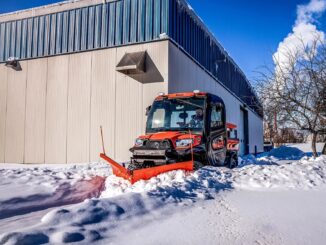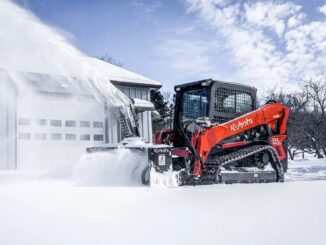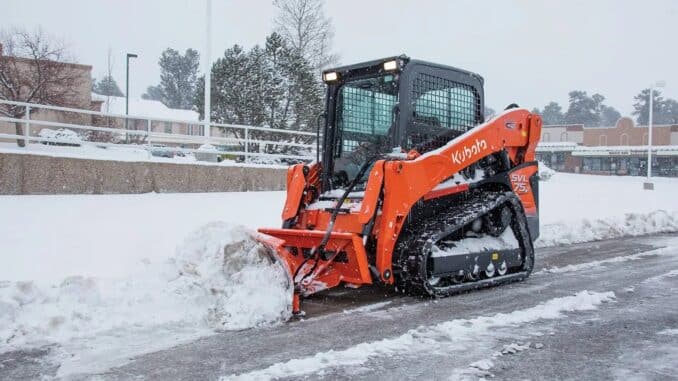
Kubota Winter Maintenance: Preparing Equipment for Cold-Weather Service
Preparing Kubota equipment for winter service means inspecting the machine, completing overdue maintenance, checking fuel and fluids, testing the battery and cooling system, and verifying snow attachments, traction, and ballast before freezing weather arrives.
The priority is readiness: a machine that starts successfully may still have cold hydraulic fluid, unsuitable fuel, inadequate coolant protection, or an unsafe attachment installation. Kubota recommends a comprehensive preseason inspection followed by model-specific fluid selection, battery checks, cleaning, and proper warm-up.kubotausa
This guide covers Kubota tractors, RTV utility vehicles, front mowers, skid steers, compact track loaders, wheel loaders, and other equipment that may remain in service through winter. It also explains how preparation differs for machinery entering seasonal storage.
Start With the Correct Kubota Model and Winter Job
Winter preparation should match the equipment, its installed attachments, and the work ahead.
A diesel compact tractor clearing a driveway has different requirements from a gasoline RTV carrying a salt spreader. A compact track loader also needs undercarriage attention that does not apply to a wheeled tractor.
Identify the complete equipment configuration
Record:
-
Machine model and serial number.
-
Engine and fuel type.
-
Transmission type.
-
Cab or open operator station.
-
Installed tire or track specification.
-
Attachment model and serial number.
-
Hydraulic and PTO equipment.
-
Ballast or counterweight arrangement.
-
Relevant service history.
Keep the operator’s manual and attachment instructions together. Use the exact model and production application when ordering filters, belts, hoses, batteries, or installation components.
Decide between active winter service and storage
| Winter plan | Main preparation priorities |
|---|---|
| Daily snow removal | Starting reliability, winter fuel, hydraulics, traction, visibility, attachment condition |
| Occasional winter use | Battery maintenance, suitable fuel, dependable access, inspection before each use |
| Winter farm or yard work | Cold-weather fluids, lighting, material handling, braking, safe travel |
| Long-term storage | Cleaning, fuel-system preparation, battery care, corrosion and rodent prevention |
| Stored mower with a winter-working power unit | Separate storage preparation for the mower and operating preparation for the machine |
Do not prepare a machine for months of storage and then assume it can be started and loaded immediately without further checks.
Kubota Winter Inspection Checklist
Inspect the machine while there is time to obtain parts and arrange repairs.
Kubota specifically recommends checking cracked hoses, worn belts, loose connections, fluid levels, tire or track condition, and corrosion before winter.kubotausa
Walk around the machine
Look for:
-
Fresh oil, fuel, coolant, or hydraulic leaks.
-
Cracked or damaged hoses.
-
Loose clamps.
-
Worn belts.
-
Damaged wiring.
-
Loose fasteners.
-
Missing guards.
-
Worn attachment locks.
-
Bent brackets.
-
Structural cracks.
-
Damaged steps and handrails.
Clean suspicious areas before further inspection so old residue does not conceal a new leak.
Check brakes, steering, and safety systems
Confirm normal operation of:
-
Service brakes.
-
Parking brake.
-
Steering.
-
Travel controls.
-
PTO controls.
-
Safety interlocks.
-
Warning lights.
-
Horn and alarms, where fitted.
-
Seat belt and protective structure.
Kubota includes parking brake, speed controls, safety switches, fasteners, and implement condition in its daily maintenance checkpoints.kubotausa
Do not bypass an interlock to keep a winter attachment operating.
Record faults rather than relying on memory
Make a repair list with the symptom, location, and operating conditions.
Photograph damage and note displayed fault codes before clearing warnings or disconnecting the battery. A useful record can make professional diagnosis faster and reduce unnecessary parts replacement.
Clean Kubota Equipment Before Freezing Weather
Cleaning is an inspection task as well as a corrosion-prevention measure.
Kubota identifies undercarriages, wheel wells, loader arms, attachment connections, steps, cooling systems, and radiator screens as important winter cleaning areas.kubotausa
Remove summer debris
Clear away:
-
Grass.
-
Crop residue.
-
Mud.
-
Twine and net wrap.
-
Leaves.
-
Fertilizer residue.
-
Old salt deposits.
-
Material trapped around guards and brackets.
Debris can hide damage, retain moisture, obstruct airflow, and attract rodents.
Protect sensitive components
Follow the manual’s washing instructions.
Avoid directing high-pressure water into electrical connectors, bearings, seals, instrument panels, or air-intake openings. Allow the equipment to dry before freezing conditions or enclosed storage.
Clean cooling screens and air passages
Cold outside temperatures do not prevent overheating.
Packed snow, ice, and debris can obstruct airflow. Inspect the radiator screen, cooler area, engine intake, and other cooling passages applicable to the machine.
Do not damage fins or force contamination deeper into the cooling pack.
Preparing Kubota Diesel Fuel Systems for Winter
Diesel-powered equipment needs clean fuel suitable for the temperatures expected during operation—not simply whatever remains from summer.
Kubota warns that fuel stored during warmer months may have different cold-weather suitability from winterized fuel.kubotausa
Understand No. 1 and No. 2 diesel
No. 2 diesel generally provides greater energy content, but its cold-flow characteristics can become a problem as temperatures fall.
No. 1 diesel or an approved winter blend may offer improved severe-cold performance. However, fuel properties, biodiesel content, engine requirements, and local conditions vary.
Do not use a universal blending ratio or substitute a general temperature chart for the machine’s fuel requirements.
Know what gelling means
As diesel cools, wax crystals can form and restrict filters.
-
Cloud point describes when visible wax crystals begin to appear.
-
Cold-filter-plugging behavior concerns the fuel’s ability to pass through a filter as it cools.
-
Pour point describes bulk flow under a test condition; it does not guarantee reliable filtration.
A machine can lose power from a restricted filter before the fuel appears completely solid.
Use anti-gel correctly
Use only a treatment approved for the engine and fuel.
-
Add it before cold-flow problems develop.
-
Follow the specified treatment rate.
-
Mix and circulate it as directed.
-
Confirm suitability for the fuel’s biodiesel content.
-
Avoid stacking several additives without approval.
Anti-gel does not remove the need for clean, winter-suitable fuel.
Drain water and inspect filters
Service the water separator or sediment bowl according to the manual.
Check fuel caps, vents, transfer containers, and storage tanks for water entry. Replace filters when due or when diagnosis establishes a restriction.
Repeated filter plugging needs investigation. Wax, water, microbial contamination, and other debris are different problems.
If fuel has already gelled
Stop repeated starting attempts.
Follow the approved recovery procedure, which may involve safely warming the machine and servicing restricted filters. Do not use open flames, improvised heaters, or unapproved solvents.
Never add gasoline or alcohol to diesel fuel.
Gasoline Kubota Equipment Needs Different Preparation
Gasoline-powered RTVs and mowing equipment require their own procedures.
Do not apply diesel additives, diesel storage instructions, or diesel starting practices to them.
For equipment remaining in service
Use fresh fuel meeting the engine’s requirements.
Inspect the fuel system for leakage, damaged hoses, loose connections, and contamination. Replace service items according to the applicable schedule.
For seasonal storage
Follow the engine’s specified procedure.
Depending on the machine, that may involve fresh stabilized fuel or proper draining. Do not universally instruct owners to leave every gasoline tank full or empty.
Air-cooled versus liquid-cooled engines
An air-cooled engine needs clean cooling fins and airflow passages.
A liquid-cooled engine also needs coolant inspection and freeze protection. Do not apply radiator or coolant procedures to an air-cooled model.
Kubota Battery Maintenance Before Winter
A marginal battery may work in mild weather and fail when cold starting demand increases.
Kubota recommends cleaning terminals, checking connections, testing weak batteries, and considering a maintainer for equipment stored for extended periods.kubotausa
Inspect the complete starting circuit
Check:
-
Battery case.
-
Hold-down hardware.
-
Terminals.
-
Cable condition.
-
Ground connections.
-
Corrosion.
-
Loose or damaged connectors.
-
Accessory wiring.
A slow-cranking engine does not automatically mean the battery itself has failed.
Charge and test
Use a charger compatible with the battery chemistry and specification.
Check electrolyte only on serviceable flooded batteries. Do not open sealed batteries or assume every machine uses the same battery type.
Never charge a frozen, cracked, swollen, or leaking battery.
Prevent accessory drain
Lights, spreader controllers, displays, cameras, and other accessories can contribute to discharge.
A repeatedly flat battery may indicate a charging fault, parasitic drain, poor connection, or excessive electrical demand. A larger battery does not necessarily correct the cause.
Storage options
Where permitted:
-
Fully charge the battery before storage.
-
Disconnect it according to the manual.
-
Use a compatible automatic maintainer.
-
Inspect charge periodically.
-
Store a removed battery upright in a dry, ventilated, protected location.
Kubota advises following the machine’s battery-storage procedure rather than assuming removal is always necessary.kubotausa
Winter Engine Oil, Transmission Fluid, and Hydraulics
Low temperatures increase fluid viscosity. This can slow lubrication, hydraulic movement, steering response, and transmission operation.
Use approved fluids
Check the specification for:
-
Transmission fluid.
-
Hydrostatic drive.
-
Hydraulic system.
-
Front axle.
-
Final drives.
-
Wet brakes.
-
Grease.
Do not assume every Kubota machine uses the same fluid in every compartment.
Avoid unverified hydraulic-oil conversions
A tractor’s shared transmission-hydraulic fluid is not interchangeable with an excavator’s separate hydraulic oil simply because both operate hydraulic cylinders.
Kubota’s lubricant guidance distinguishes transmission-hydraulic applications from excavator and compact-track-loader hydraulic applications.kubotausa
Use the exact model’s approved product and temperature guidance. Do not change to an “arctic” oil by guesswork.
Change contaminated or overdue fluids
Complete service that is due before winter work begins.
Investigate milky oil, unusual debris, recurring low levels, or unexpected discoloration. Do not assume a fluid change alone corrects internal damage or water entry.
Grease the specified points
Service applicable:
-
Loader pins.
-
Steering joints.
-
Articulation joints.
-
PTO universal joints.
-
Attachment pivots.
-
Exposed mechanisms.
Use compatible grease and the specified interval. Do not drill sealed components to add lubrication.
Coolant and Freeze Protection
For liquid-cooled equipment, inspect the cooling system before freezing weather arrives.
Check the complete system
When safe, inspect:
-
Radiator.
-
Expansion or recovery tank.
-
Hoses.
-
Clamps.
-
Cap.
-
Heater hoses.
-
Coolant condition.
-
Evidence of leakage.
Never remove a hot pressure cap.
Test rather than guess
Use an appropriate tester and the specified coolant.
Confirm both freeze protection and service condition. A mixture may appear adequate on a freeze test while still needing replacement because of age or contamination.
Do not mix incompatible coolant types or assume more concentrate always provides better protection.
Kubota’s winter guidance emphasizes checking the mixture for adequate regional freeze protection and following model-specific recommendations.kubotausa
Inspect engine heaters
Where fitted, check approved block or coolant heaters, cords, plugs, and connections before they are needed.
Replace damaged electrical equipment. Keep connections protected and follow the heater’s installation and operating instructions.
Prepare Snow Attachments Before Mounting Them
A reliable power unit cannot compensate for a damaged or incomplete attachment.
Snowblower checks
With power isolated, inspect:
-
Auger.
-
Impeller.
-
Bearings.
-
Shafts.
-
Gearbox or reduction drive.
-
Cutting edge.
-
Skid shoes.
-
Chute.
-
Deflector.
-
Guards.
-
Protective fasteners.
-
Mounting locks.
-
Hydraulic hoses.
-
Electrical controls.
Use only specified shear bolts or other protective components.
Do not install stronger hardware to conceal repeated failures.
Blades and pushers
Inspect edges, shoes, pivots, cylinders, hoses, side plates, and trip mechanisms.
Do not adjust loaded springs without the approved procedure.
Spreaders
Check the hopper, feed mechanism, spinner, bearings, motor, controller, wiring, and mounting.
Confirm the permitted material. A spreader intended for dry rock salt may not be suitable for damp sand or every blend.
Verify the installation package
For a front snowblower, check the tractor-specific hitch, PTO driveline, controls, clearances, and ballast.
For a loader attachment, verify coupler engagement, hydraulic flow, pressure, return arrangement, case drain where required, and electrical compatibility.
Do not operate an attachment merely because it physically connects.
Tires, Tracks, Chains, and Ballast
Tires
Check the installed size, condition, load rating, and pressure.
Use the pressure specified for the tire and operating load. Do not lower pressure by guesswork to improve snow traction.
Chains
Verify approval, sizing, tension, and clearance around:
-
Fenders.
-
Steering components.
-
Suspension.
-
Brake hoses.
-
Hydraulic lines.
-
Bodywork.
Stop immediately if chains strike the machine.
Tracks and undercarriage
On compact track loaders, remove packed snow and slush before it freezes around rollers, sprockets, idlers, and frames.
Do not force a frozen undercarriage to move.
Check track tension using the exact model’s procedure. Tensioning mechanisms can contain stored pressure.
Ballast
Use the arrangement prescribed for the machine and attachment.
Wheel weights, liquid ballast, a ballast box, and a rear implement do not necessarily produce the same balance.
Extra weight does not authorize exceeding tire, axle, hitch, or transport limits.
Equipment-Specific Winter Preparation
| Kubota equipment | Additional priorities |
|---|---|
| BX, B, LX, and L tractors | PTO guards, front hitch, mower conflicts, hydraulic controls, ballast |
| MX and M tractors | Correct PTO mode, implement weight, remotes, tires, transport configuration |
| F-Series front mowers | Front attachment drive, hitch locks, steering, approved weights |
| RTV utility vehicles | Plow mounts, suspension requirements, payload, spreader electrical load |
| SSV skid steers | Tires, coupler locks, hydraulic options, cab and interlocks |
| SVL track loaders | Undercarriage cleaning, track tension, couplers, hydraulic compatibility |
| R-Series wheel loaders | Articulation joint, steering, coupler, tires, full-turn stability |
| Excavators and tractor-loader-backhoes | Hydraulic warm-up, stabilizers where fitted, approved tools, frozen-ground limits |
| Stored mowers and implements | Residue removal, lubrication, safe support, corrosion and rodent protection |
Do not transfer a tractor fluid, ballast, or attachment procedure to another equipment family without checking its instructions.
Cab Heat, Lighting, and Operator Visibility
Inspect the cab or enclosure before the first storm.
Check:
-
Heater performance.
-
Defroster outlets.
-
Wipers.
-
Washer system.
-
Door and window seals.
-
Mirrors.
-
Cameras.
-
Front and rear lights.
-
Beacon and reflective markings where required.
-
Emergency exit provisions.
Manage condensation with appropriate ventilation. Wet clothing and snow carried inside can increase moisture.
Cold stress, fogged windows, and bulky clothing can reduce concentration and control. Wear close-fitting clothing, suitable gloves, and slip-resistant boots without loose items near rotating components.
Never idle equipment in an enclosed building.
Daily Kubota Cold-Weather Operating Checklist
Before starting
-
Walk around the machine.
-
Inspect leaks, wiring, hoses, and fasteners.
-
Check applicable fluids and fuel.
-
Service the water separator when required.
-
Inspect tires or tracks.
-
Check chains and ballast.
-
Clear steps, windows, lights, and intakes.
-
Confirm attachment locks and connections.
-
Test safety systems.
During warm-up
-
Follow the model’s cold-start procedure.
-
Use glow plugs and approved heaters only as designed.
-
Allow the engine and hydraulic system to warm as instructed.
-
Operate permitted hydraulic functions slowly without load.
-
Confirm steering, braking, travel, and attachment response.
Do not use starting fluid unless expressly permitted.
Kubota recommends using the operator’s manual for the appropriate warm-up procedure rather than applying one fixed time to every machine.kubotausa
During operation
Watch temperatures, warning indicators, unusual noises, vibration, and hydraulic response.
Avoid shock-loading cold equipment. Reduce travel speed and attachment feed rate when conditions demand it.
Stop if steering, braking, visibility, or attachment operation becomes unsafe.
At shutdown
Park on firm, level ground and lower attachments.
Remove packed snow, ice, and salt. Inspect for new leaks or damage, follow refueling instructions, and connect approved heaters or maintainers only after safe shutdown.
Troubleshooting Common Winter Problems
| Symptom | Possible causes | Safe first checks | When professional service is needed |
|---|---|---|---|
| Engine cranks slowly | Battery, cables, oil, starter fault | Charge/test battery and inspect connections | Persistent electrical or starting fault |
| Diesel starts then loses power | Wax, water, restricted filter, other fuel fault | Check fuel suitability and separator | Recurrent restriction or injection fault |
| Hydraulics are slow | Cold fluid, low level, restriction, wrong product | Warm correctly and check routine items | Persistent weakness or unusual noise |
| Attachment will not operate | Connections, controls, protective failure, drive fault | Isolate power and inspect manual-listed components | Internal drive, pressure, or electrical diagnosis |
| Battery repeatedly discharges | Weak battery, charging fault, drain, accessories | Inspect and test permitted items | Charging or parasitic-drain diagnosis |
| Heater is weak | Airflow, controls, coolant, heater fault | Check safe routine items | Leakage or persistent poor heat |
| Track loader will not move after freezing | Frozen undercarriage or drive fault | Do not force movement; thaw and inspect safely | Undercarriage or propulsion damage |
| Chains strike the machine | Wrong size, loose fit, poor clearance | Stop immediately | No approved fitment solution |
| Coolant protection is inadequate | Dilution, wrong mixture, contamination | Test safely and identify specification | Serious contamination or leakage |
When to Use a Kubota Dealer or Qualified Technician
Routine owner maintenance includes cleaning, inspection, approved lubrication, and manual-listed adjustments or service.
Arrange qualified help for:
-
High-pressure hydraulic leaks.
-
Fuel-injection repairs.
-
Internal transmission or hydrostatic faults.
-
Structural cracks.
-
ROPS or FOPS damage.
-
Complex electrical faults.
-
Refrigerant work.
-
Emissions-system faults.
-
Damaged batteries.
-
Serious coolant contamination.
-
Unverified fluid conversions.
-
Unsafe attachment modifications.
Never search for a hydraulic leak with bare hands.
Never work beneath equipment supported only by hydraulics, a loader, or an unstable jack.
Preparing Unused Equipment for Winter Storage
Store on a clean, dry, level, well-drained surface.
-
Remove debris and corrosive material.
-
Allow equipment to dry.
-
Lubricate specified points.
-
Protect exposed metal.
-
Cap disconnected couplers.
-
Follow fuel and battery storage instructions.
-
Remove rodent attractants.
-
Label any safely fitted intake or exhaust protection.
-
Record repairs.
Use approved stands or stable supports to keep implements off damp ground. Raising an attachment for storage means supporting it properly—not leaving it suspended.
Use a suitable fitted cover without trapping persistent moisture.
Frequently Asked Questions
When should I prepare my Kubota for winter?
Complete inspections and repairs before freezing conditions and seasonal parts demand. Test the machine and attachments while there is time to correct faults.
Do all Kubota machines need No. 1 diesel?
No. Fuel requirements depend on the engine, temperature, fuel properties, and manufacturer instructions. Gasoline equipment must not receive diesel treatment advice.
When should I add anti-gel?
Use an approved treatment before cold-flow problems develop, following the specified rate and mixing procedure.
How long should a Kubota warm up?
Follow the model’s manual. Engine, hydraulic system, temperature, and fluid specification affect the procedure.
Can I use thinner hydraulic oil for winter?
Only if approved for the exact machine. Shared transmission-hydraulic systems and separate hydraulic reservoirs can have different requirements.
Should I remove the battery?
Follow the manual and storage conditions. A compatible maintainer or approved disconnection may be appropriate; removal is not universal.
Should the fuel tank be full during storage?
Follow the specific machine’s instructions. Diesel condensation guidance should not be applied universally to gasoline fuel systems.
Can I leave the attachment raised overnight?
Lower it safely whenever possible. Do not rely on hydraulic pressure for storage or maintenance support.
Does four-wheel drive eliminate the need for ballast?
No. Four-wheel drive does not establish correct attachment balance or guarantee grip on ice.
Complete Repairs Before Winter Service Begins
Finish overdue maintenance, verify fuel and freeze protection, test starting performance, and inspect the complete attachment installation.
Keep a record of service dates, fluid specifications, parts replaced, and unresolved faults. A dependable winter machine needs more than a successful start: it must steer, brake, lift, and operate its attachment safely under the conditions ahead.