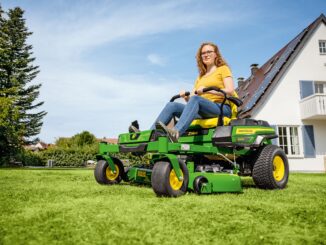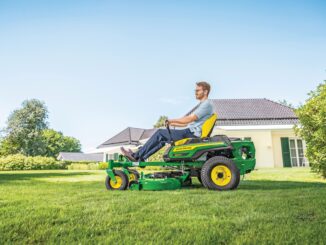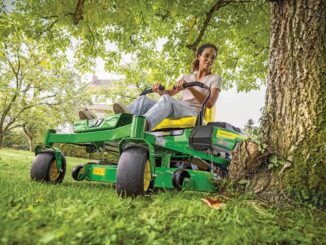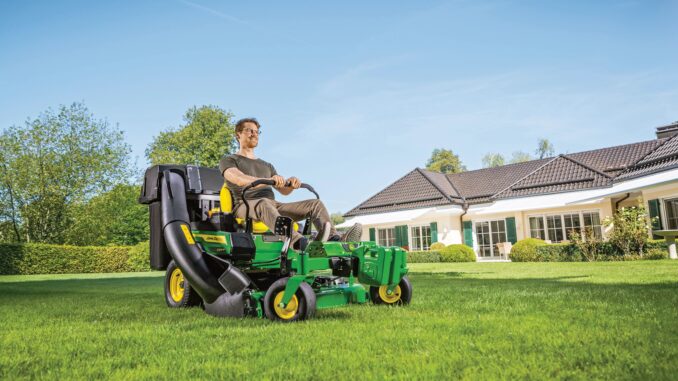
Typical lawn tractors handle up to 2-3 acres effectively. This capacity depends on factors like deck size, terrain, and maintenance, making them ideal for suburban or small rural properties. Beyond that, heavier-duty options like garden tractors or zero-turn mowers become more practical.
Defining Lawn Tractors
Lawn tractors are compact riding mowers with steering wheels, designed primarily for grass cutting on residential lawns. They feature deck widths from 38-54 inches and engines of 15-24 HP, distinguishing them from push mowers or commercial equipment.
Unlike garden tractors, which have mid-mounted decks, higher HP (often 24+), and attachment capabilities for towing or snow removal, lawn tractors prioritize maneuverability in tighter spaces.
A simple rule: divide deck size (in inches) by 12 for approximate max acres; a 48-inch deck suggests around 4 acres theoretically, but practical limits are lower due to turns and fatigue.
Acreage Capacity Guidelines
Industry standards recommend lawn tractors for 0.5-3 acres. For under 1 acre, a 42-inch deck suffices; 1-2 acres needs 48-54 inches; over 2 acres pushes limits unless flat terrain.
These estimates assume 5-7 mph mowing speed and minimal obstacles; real-world use halves effective coverage on hilly lots.
Key Factors Influencing Capacity
Terrain significantly impacts usability: flat lawns allow full speed, but slopes over 15 degrees reduce safe operation and increase time by 50%.
Grass type and height matter—tall, wet grass clogs decks, dropping productivity 20-30%; dry, short turf maximizes efficiency.
Operator skill and mowing pattern (straight lines vs. spirals) can shave 10-20% off time; frequent turns on obstacle-heavy yards limit larger decks.
Mowing Time Calculations
A 42-inch lawn tractor covers 1-1.9 acres/hour at optimal conditions. For 2 acres: roughly 1-1.5 hours, plus 15-30 minutes for emptying clippings or turns.
Formula: Time (hours) = Acres / (Deck width ft * Speed mph * Efficiency factor). Efficiency is 0.7-0.85 for lawn tractors due to overlaps.
On 3 acres with hills, expect 2.5+ hours versus 1 hour for zero-turns, highlighting why lawn tractors suit moderate use.
Comparisons to Other Mowers
Lawn tractors lag zero-turns in speed (4-8 mph vs. 11+ mph) but excel on slopes and offer steering familiarity.
Garden tractors handle 3+ acres with attachments but are bulkier for storage. Compact tractors (25+ HP) suit 5-10 acres but cost more.
Popular Models and Specs
John Deere S30 (22 HP, 54-inch deck) excels for 2 acres with twin-cylinder reliability. Cub Cadet XT1 (24 HP, 46-inch) suits 1-2 acres, praised for cut quality.
Husqvarna YTH24V54 (24 HP, 54-inch) handles 2-3 acres well on varied terrain. Expect $2,500-$4,500 price range for 2026 models.
Maintenance for Peak Performance
Daily: Clean deck to prevent clogs, check oil/fuel. Weekly: Sharpen blades, inspect belts—dull blades add 20% mowing time.
Seasonal: Change oil (50 hours), replace air filter, winterize with stabilizer. Proper care extends life to 1,000+ hours, sustaining acreage capacity.
Neglect raises fuel use 15-25% and risks breakdowns on larger lots.
Tips for Larger Acreage
Mow in bands, alternate directions to avoid ruts; start edges for efficiency. Mulch or side-discharge for speed on 2+ acres.
Upgrade to bagger for clippings; segment mowing into sessions for 3 acres. For 4+ acres, pair with string trimmer for obstacles.
Fuel planning: 1-2 gallons/acre; carry extra for remote areas.
Cost and Efficiency Analysis
Initial cost: $2,000-$5,000; operating ~$5-10/acre (fuel/labor). Versus hiring: $40-80/acre, saving $200+ yearly on 2 acres.
ROI in 1-2 years for frequent use; factor storage ($500 shed if needed).
Long-term: Resale holds 50-70% after 5 years with maintenance.
When to Upgrade
Exceed 3 acres? Switch to zero-turn or garden tractor for 30-50% time savings. Hilly? Prioritize 4-wheel steer models.
Budget for attachments if towing needed; otherwise, lawn tractors max at mowing.
What acreage and terrain are you mowing? This clarifies the best fit.
1 acre flat lawn
What kind of lawn tractor you need
For 1 acre, aim for:
-
Cutting deck: 42–46 inches – this is large enough to keep mowing time reasonable but still easy to maneuver in and out of driveways and gates.
-
Engine power: 16–20 HP – gives plenty of torque for a clean cut, even if the grass is a bit long or you want to mulch aggressively.
-
Transmission: Hydrostatic – smooth forward–reverse control makes it easy to pivot around trees, beds, and edges.
A mid‑range lawn tractor in this spec can typically mow 1 acre in about 30–45 minutes, depending on how straight your rows are and how many turns you make.
Example setup for 1 acre (flat)
Let’s assume:
-
Lawn tractor with a 42‑inch deck.
-
Mowing speed of about 4–5 mph.
-
Efficiency factor of 0.75 (to account for overlap and turns).
Using a quick formula:
Time (hours)≈Acres(Deck width in feet)×(Speed in mph)×0.75
For 42 inches ≈ 3.5 ft:
Time≈13.5×4.5×0.75≈0.085 hours per acre≈30–35 minutes
That’s very realistic for a tidy, flat 1‑acre lawn with a competent operator.
Typical 1‑acre‑friendly models
These are common consumer‑grade tractors often recommended for ~1 acre:
-
John Deere X3xx–X5xx series (e.g., X350 with 42‑inch Accel‑Deep deck)
-
18–20 HP, 42‑inch deck, hydrostatic, designed for “up to 8,000 m²” (about 2 acres), so 1 acre is well within its sweet spot.
-
Good cut quality, mulch/bag options, and easy to store.
-
-
Cub Cadet XT1 / XT2 series (42–46‑inch)
-
Around 17–21 HP, 42–46‑inch decks, popular for 1‑acre lawns due to price and reliability.
-
-
Similar value‑oriented brands (STIGA, Toro, Husqvarna consumer tractors)
-
Many 42‑inch models are rated for 0.5–1.5‑acre lawns, so they’re also a good fit for a flat 1‑acre yard.
-
For a flat 1‑acre, you do not need a 54‑inch deck or commercial‑grade zero‑turn; a 42‑inch lawn tractor is usually the best balance of speed, cost, storage, and ease of use.
How to mow your 1‑acre efficiently
Because your terrain is flat, small changes in pattern can make a noticeable difference:
-
Mow in straight strips from one side to the other, then turn and come back the opposite way.
-
Alternate direction each week (ehort rows one week, long rows the next) to prevent grain and ruts.
-
Cover long edges first, then mow the main body of the yard in wider lanes.
With a 42‑inch lawn tractor on flat ground, you can usually knock out 1 acre in one session of roughly 30–45 minutes, including a quick stop to empty the bag or clean the deck if needed.
When you might want something else
For 1‑acre flat lawn, a lawn tractor is usually ideal, but a few alternatives exist:
-
Zero‑turn with 42–46‑inch deck
-
Often listed as the “best” mower for 1‑acre because it’s faster and more maneuverable.
-
Main downside is higher price and less sensation of “tractor‑like” steering.
-
-
Compact rear‑engine rider or even a push mower
-
A powerful push mower can handle 1 acre if you’re happy to take longer, but for long‑term comfort a riding mower is usually preferred.
-
If you tell me roughly your budget and whether you’d like to add attachments (cart, spreader, leaf blower), I can suggest a few specific 42‑inch models that would be a perfect fit for your 1‑acre flat lawn.
Pros and cons of zero-turn vs lawn tractor for 1 acre
Zero‑turn mower (for 1 acre)
Pros
-
Much faster – zero‑turns often mow 40–60% quicker than lawn tractors because they turn on the spot and cruise at higher speeds (around 8–11 mph rather than 4–7 mph).
-
Excellent maneuverability – zero‑radius turns let you weave around trees, beds, and obstacles without constant stopping and backing up, which saves time on a 1‑acre with landscaping.
-
Cleaner cut patterns and stripes – tight‑turn control and low deck‑to‑ground clearance typically give a sharper, more professional finish on flat ground.
Cons
-
Less stable on slopes – rear‑wheel‑drive design and higher center of gravity make them less confidence‑inspiring on inclines than lawn tractors.
-
Harder to learn – dual‑lever steering feels unusual at first; some users find it tiring or uncomfortable compared with a steering wheel.
-
Limited attachments – most zero‑turns are mowing‑only; they can’t easily tow carts, spreaders, or snowblowers like a lawn tractor can.
Lawn tractor (for 1 acre)
Pros
-
Familiar, truck‑like feel – steering wheel and more predictable handling make it easier to drive for beginners and feel more “tractor‑like” on varied terrain.
-
More versatile – many lawn tractors accept hitches, carts, sprayers, and even some snowblowers or spreaders, so you can use it beyond mowing.
-
Often lower cost – for similar deck size and engine output, a lawn tractor is usually cheaper than a comparable zero‑turn.
Cons
-
Slower and less agile – wider turning radius and lower top speed mean more passes and longer mow times on a 1‑acre lawn, especially if there are many obstacles.
-
Less precise around edges – you often need multiple turns or a string trimmer to get clean lines next to beds and trees.
-
Larger footprint – frames and decks are often bulkier, so storage and gate clearance can be tighter than with a compact zero‑turn.
Simple comparison table (1‑acre flat lawn)
Which should you pick for 1 acre?
For a flat 1‑acre lawn with trees, beds, or odd‑shaped sections, a 42–46‑inch zero‑turn will usually be the quicker, more enjoyable choice if you don’t mind the lever controls.
For a nearly flat 1‑acre where you also want to tow small loads, or you prefer a tractor‑like feel, a 42‑inch lawn tractor is the more practical and versatile option.
If you tell me whether your 1‑acre is mostly open grass or has a lot of beds/trees, and whether you want to add attachments later, I can narrow this down to one recommendation.
Zero-turn safety tips on gentle slopes
Know the slope limits
-
Max angle: Avoid operating a zero‑turn on slopes over about 15°; many manuals specifically forbid steeper than that.
-
Rough check: As a rule‑of‑thumb, if the incline is more than about 1 ft rise per 4 ft horizontal distance, it is already in the 14‑15° range and should be treated with caution.
If any part of your property feels “too steep” or unfamiliar, hand‑trim or use a walk‑behind mower instead.
Choose the right direction and speed
-
Mow up and down, never side‑to‑side.
-
Always run the mower parallel to the fall line (up and down the slope), not across it; this greatly reduces tipping risk.
-
-
Go slow and steady.
-
Use a low, steady speed; avoid sudden acceleration or hard braking, which can break traction on even gentle slopes.
-
-
Avoid sharp turns on the incline.
-
If you need to turn, return to flatter ground first; turning on a slope increases the risk of sliding or destabilizing the machine.
-
Keep the mower and operator safe
-
Inspect the area before mowing.
-
Clear rocks, branches, and debris, and watch for drop‑offs, ditches, or soft spots near the slope edge.
-
-
Use proper tires and maintenance.
-
Good tread and proper tire pressure improve traction; dull blades or a clogged deck increase resistance and can lurch the mower on a slope.
-
-
Wear safety gear.
-
Hearing protection, sturdy footwear, and eye protection are basic; also follow any PPE specified in the owner’s manual.
-
Additional practical tips
-
Avoid mowing wet grass on slopes.
-
Wet grass reduces traction and makes sliding or tipping more likely, even on gentle inclines.
-
-
Stay away from drop‑offs.
-
Keep a safe distance from edges, ponds, or retaining walls; never operate on the very edge of a bank.
-
-
Respect your comfort level.
-
If the slope feels “iffy” even though it’s under 15°, step off and mow a smaller area or use a different tool; zero‑turns are great but not worth the risk if you’re not confident.
-