
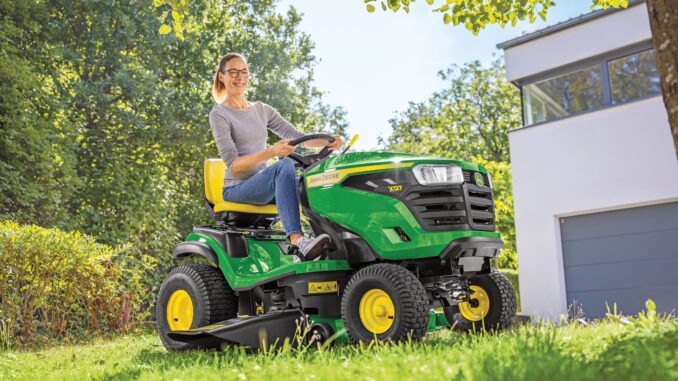
The John Deere X758 is a diesel-powered Signature Series lawn and garden tractor built for owners who want more than a basic lawn mower, with 4-wheel drive capability and compatibility with multiple mower deck sizes and seasonal attachments. This guide is written for USA and Canada owners who want a practical, symptom-first reference covering repair decisions, troubleshooting, routine maintenance, parts planning, and common ownership questions.
John Deere X758 model overview
The John Deere X758 sits in Deere’s heavy-duty Signature Series range and shares its platform with the X750 and X754 models. It is commonly used for larger residential properties where owners need dependable mowing, stronger traction, and year-round capability for jobs such as bagging, towing, snow work, and leaf cleanup.
Compared with lighter lawn tractors, the X758 is built around a diesel engine, hydrostatic drive, and more substantial chassis and hydraulic systems, which makes maintenance quality more important and parts identification more critical when ordering components. Owners usually come to this model looking for a machine that can mow cleanly in season but also handle attachment work without stepping up to a compact utility tractor.
General overview of the John Deere X758
The John Deere X758 uses a diesel engine and hydrostatic drive system, and owners will usually be dealing with four main systems when diagnosing problems: engine and fuel, mower deck and blade drive, transmission and traction, and electrical and safety interlock circuits. Because this machine is commonly paired with 48-inch, 54-inch, or 60-inch decks, some service parts vary by deck size even when the tractor itself is the same.
Key systems and components to know on this model include:
-
Engine and fuel system, including the air filters, fuel filter, glow plug-related starting components, oil filter, cooling screen area, and diesel fuel supply parts.
-
Mower system, including deck belt, spindle assemblies, gauge wheels, mower blades, deck level, and PTO engagement components.
-
Drive system, including hydrostatic transaxle filters, hydraulic fluid, traction hardware, tires, and 4-wheel drive-related driveline components.
-
Electrical system, including ignition switch, battery, fuses, seat switch, PTO switch logic, and brake/safety interlock inputs that can prevent starting or blade engagement.
Common service parts owners regularly buy for the X758 include the engine oil filter M806418, fuel filter MIU804763, primary air filter M113621, secondary air filter M123378, transaxle filter AM131054, low-viscosity Hy-Gard TY22035, ignition switch AM133596, battery TY25876, and deck-specific blades and belts.
John Deere X758 troubleshooting approach
The best way to diagnose an X758 is to start with the exact symptom the owner sees, because a no-start problem, poor cut, weak traction, or unusual vibration usually points toward different systems. Replacing parts too early often wastes money on this model, especially when the real issue is a plugged filter, safety switch input, belt wear, poor deck setup, or missed maintenance.
Main symptom groups for the John Deere X758 include:
-
Starting issues, such as no crank, slow crank, hard starting, or glow/start circuit complaints.
-
Running issues, such as power loss, surging, smoke, rough running, or stalling under load.
-
Cut-quality problems, such as uneven cut, uncut strips, clumping, scalping, or poor discharge.
-
Vibration and noise, often linked to blades, belts, pulleys, deck spindles, or driveline wear.
-
Overheating and leaks, including debris-packed cooling areas, oil leaks, fuel seepage, or hydraulic leaks.
-
Transmission and drive problems, such as weak pull, loss of traction, abnormal hydro behavior, or poor hill performance.
-
Electrical and safety switch issues, including PTO no-engage, intermittent starting, display faults, or interlock-related shutdowns.
Emergency and immediate John Deere X758 repair needs
Some X758 problems should be addressed immediately because they create a safety risk or can quickly damage expensive components. If the machine has severe vibration, an active fuel or oil leak, overheating signs, failed steering or braking response, or a mower deck issue that could throw parts, stop using it until the cause is confirmed.
John Deere X758 starting issues
Starting trouble usually shows up as no crank, clicking, slow turnover, or a crank-no-start condition, and it matters because repeated attempts can drain the battery and hide the real cause.
Common causes:
-
Weak battery or poor cable connections.
-
Blown fuse or faulty ignition switch.
-
Brake, seat, or PTO safety input not in the correct state.
-
Restricted fuel supply or plugged fuel filter.
-
Dirty air filters or cold-start system issues on the diesel engine.
Basic checks:
-
Confirm the PTO is off, parking brake is correctly set, and the operator presence conditions match the manual’s start logic.
-
Check battery voltage, terminals, ground connection, and main fuse condition.
-
Inspect the fuel level, fuel shutoff path if fitted, and filter condition.
-
Check whether the engine cranks normally but does not fire, which often points more toward fuel, air, or glow-related issues than a switch problem.
John Deere X758 cut-quality problems
Cut-quality complaints usually show up as ragged grass, uneven height, scalping, or rows of uncut grass, and they matter because owners often blame blades when deck level, belt condition, or mowing setup is the real issue.
Common causes:
-
Dull, bent, or mismatched blades.
-
Incorrect tire pressure affecting deck height.
-
Deck out of level front-to-rear or side-to-side.
-
Worn deck belt or weak blade speed.
-
Wet grass, excess ground speed, or overgrown conditions.
Basic checks:
-
Set tire pressures correctly before touching deck adjustment.
-
Clean the underside of the deck and inspect the blades for damage or heavy wear.
-
Check deck level with a proper gauge such as Deere’s leveling tool.
-
Inspect the mower drive belt for glazing, cracking, stretch, or poor tension.
John Deere X758 vibration and noise
Vibration or unusual noise should never be ignored because a loose blade, failing spindle, or damaged pulley can quickly damage the deck or create a hazard.
Common causes:
-
Bent or unbalanced blades.
-
Debris wrapped around spindle shafts or pulleys.
-
Worn spindle bearings or idlers.
-
Damaged deck belt or pulley misalignment.
Basic checks:
-
Shut the engine off, remove the key, and inspect the deck underside safely.
-
Check blade tightness and compare all blades for matching wear.
-
Spin pulleys and spindle areas by hand with the belt removed if needed, listening for roughness.
-
Replace damaged blades or suspect belt components before further use.
John Deere X758 overheating and leaks
Overheating, hot-running behavior, or visible leaks need prompt attention because diesel engines and hydro systems can suffer expensive damage if lubrication or cooling is compromised.
Common causes:
-
Cooling fins or screens packed with debris.
-
Low engine oil or overdue oil service.
-
Fuel, oil, or hydraulic seepage from hoses, seals, or filters.
-
Heavy operation in dusty or high-heat conditions without increased cleaning intervals.
Basic checks:
-
Clean debris from cooling areas and inspect air passages around the engine.
-
Verify engine oil level and look for signs of diluted or dirty oil.
-
Check around filters, hoses, and fittings for fresh wetness after operation.
-
Stop using the machine if warning signs continue after cleaning and fluid checks.
John Deere X758 transmission and drive problems
Drive complaints on the X758 often feel like weak traction, slow response, or inconsistent hydrostatic performance, and they can worsen quickly if fluid or filter issues are ignored.
Common causes:
-
Overdue hydraulic/transaxle service.
-
Restricted transaxle filters.
-
Tire or traction setup problems.
-
Driveline or linkage issues that need closer inspection.
Basic checks:
-
Review whether the machine is due for transaxle fluid and filter service.
-
Check for external leaks or signs of contaminated fluid around service points.
-
Confirm tire condition and pressure are correct for traction and mowing stability.
-
Escalate to dealer diagnosis if the tractor still pulls weakly after maintenance basics are covered.
John Deere X758 electrical problems
Electrical issues on this model often show up as intermittent no-starts, PTO engagement faults, dead lights, or safety-related shutdowns. These faults matter because many are caused by switch inputs or connection problems rather than a major component failure.
Common causes:
-
Weak battery or dirty terminals.
-
Ignition switch wear.
-
Faulty seat, brake, or PTO switch input.
-
Blown fuse or wiring connection issue.
Basic checks:
-
Clean and tighten battery connections first.
-
Check fuses and inspect accessible harness plugs for looseness or corrosion.
-
Test the starting sequence with PTO off and brake fully applied.
-
Use the machine’s diagnostic test mode if the operator’s information matches your tractor version, or move to dealer testing for persistent faults.
John Deere X758 DIY or dealer repair decision guide
The X758 is owner-serviceable for routine maintenance and many straightforward repairs, but diesel fuel-system work, deeper hydrostatic diagnosis, and electrical faults beyond simple switch or fuse checks usually cross the line into advanced DIY or dealer territory. As a rule, if the job needs special test equipment, driveline splitting, hydraulic diagnosis, or exact factory adjustment data, dealer support is usually the safer choice.
Good DIY jobs
-
Engine oil and oil filter service.
-
Air filter and fuel filter replacement.
-
Blade sharpening or blade replacement.
-
Deck cleaning, leveling, and deck belt replacement where access is straightforward.
-
Battery, bulbs, and basic switch or fuse checks.
Advanced DIY or dealer jobs
-
Hydrostatic or 4-wheel-drive driveline diagnosis.
-
Repeated no-start issues after battery, switch, and filter basics have been checked.
-
Electrical harness tracing and control-module-related faults.
-
Major engine repairs, injector or glow-system diagnosis, or internal transmission work.
Skill level guide
-
Beginner: oil changes, filters, blade inspection, battery service, deck cleaning.
-
Intermediate: deck belt replacement, deck leveling, blade replacement, fuel filter swaps, basic electrical checks.
-
Advanced: hydro service beyond routine filters, electrical fault tracing, driveline component work, engine diagnosis requiring test equipment.
John Deere X758 parts needed, OEM vs aftermarket, and what information you need
Before ordering parts for an X758, gather the full tractor model, the Product Identification Number (PIN), the engine model and serial information, and the exact deck size or attachment model installed on the tractor. That matters because belts, blades, filters, switches, and attachment parts can change by serial range, engine version, and mower deck specification.
OEM parts are usually the safer choice for belts, fit-sensitive deck parts, filters with critical sealing dimensions, and anything tied to safety systems or exact routing. Aftermarket parts can be fine for batteries, some blades, and some filters, but only when the cross-reference is exact and the seller clearly states compatibility with the X758 and your deck version.
Where to find John Deere X758 parts diagrams and service manuals
Owners should use a small set of dependable sources rather than random listings because the X758 has serial-sensitive parts and multiple deck combinations. These are the most useful places to start:
-
Official operator’s manual: good for operating instructions, safety information, service points, and maintenance basics for X750/X754/X758 tractors.
-
Later Deere operator’s manual edition: useful for updated Deere operator information for X750, X754, and X758 tractors.
-
JD/X758 parts catalog sources such as PC11850 references: useful for exploded diagrams, deck-specific part lookups, and common replacement parts.
-
Green Farm Parts X758 maintenance page: useful for quick service part cross-checking and common maintenance items by interval.
For true repair procedures beyond owner maintenance, Deere technical publications or dealer service information are the better route than general parts sites.
How to locate John Deere X758 model, serial and engine numbers
These numbers matter because Deere can change parts across production runs, and the correct deck belt, switch, filter, or engine-related part may depend on the exact machine identification.
-
Confirm the tractor model from the hood decals and the identification label data rather than relying on appearance alone.
-
Locate the tractor Product Identification Number plate on the machine frame area as described in the operator information for X750/X754/X758 tractors.
-
Record the full PIN exactly, including all digits, because dealers and online catalogs may use the serial break to separate parts.
-
Find the engine identification label on the engine itself and record the engine model and serial number before ordering engine service items.
-
Identify the deck size or attachment tag separately, since blade, belt, wheel, and spindle parts differ by deck version.
Buying John Deere X758 parts online and in physical stores
The best buying strategy is to confirm the OEM number first, then compare trusted online and local options instead of searching by model name only. That reduces the risk of ordering the wrong belt, blade, or filter set for your specific deck or serial range.
-
Online: start with Deere-linked parts pages or specialist Deere parts sellers, confirm the OEM number, then compare shipping and stock; useful starting points include shop.deere.com, greenfarmparts.com, and Deere manual pages for specification checks.
-
Dealer counter: best for PIN-sensitive parts, wiring components, hydro parts, and anything you are not fully sure about.
-
Retail stores: acceptable for common consumables such as batteries, some blades, and universal maintenance supplies, but only if the packaging clearly cross-references the X758 and the exact deck type.
John Deere X758 fitting guide for common parts
These are some of the highest-impact DIY service jobs on the X758 because they affect starting, reliability, cut quality, and overall lifespan.
Engine oil and filter on a John Deere X758
Regular oil and filter changes help protect the diesel engine and are one of the most important services on this model.
-
Warm the engine briefly so the oil flows better, then park safely, switch off, and remove the key.
-
Drain the engine oil into a suitable pan and remove the old oil filter.
-
Lightly oil the gasket on the new M806418 filter and install it to the correct snugness described in the service instructions.
-
Refill with the correct engine oil grade for your conditions, then verify the level on the dipstick after running and rechecking.
-
Inspect for leaks around the drain point and filter after restart.
John Deere X758 air filter service
Air filter service helps prevent hard starting, smoke, and power loss, especially in dusty mowing conditions.
-
Open the air cleaner housing and remove the primary and secondary elements carefully.
-
Check for heavy dust loading, oil contamination, or damaged sealing surfaces.
-
Replace the primary M113621 and secondary M123378 elements if dirty or damaged rather than trying to salvage badly restricted filters.
-
Clean the housing and sealing areas before installing the new elements.
-
Reassemble carefully so the housing seals properly.
Fuel filter replacement on the John Deere X758
Replacing the fuel filter helps prevent hard starting, power loss, and stalling from restricted fuel flow.
-
Park the tractor safely and work with clean hands and clean containers to avoid contaminating the diesel system.
-
Remove the old fuel filter element and note hose routing or flow direction if applicable.
-
Install the correct replacement filter, typically MIU804763 in Deere listings for the X758, after confirming by serial and engine details.
-
Check for leaks after startup and confirm the engine responds cleanly under load.
John Deere X758 blades and deck belt
Sharp blades and a healthy deck belt do more for cut quality than most owners expect, especially on larger properties.
-
Raise and secure the deck area safely, then remove the key and isolate accidental starting risk.
-
Inspect blades for bends, cracks, and uneven wear, and replace or sharpen as needed.
-
Inspect the deck belt for glazing, cracking, stretching, or burned spots from slipping.
-
Install the correct belt for your exact deck version and route it exactly as shown in the deck diagram.
-
Recheck blade torque, belt seating, and deck level before mowing normally.
Maintenance to prevent John Deere X758 problems reoccurring
Most repeat X758 problems come from skipped cleaning, overdue filters, dull blades, and delayed belt or fluid service rather than sudden major failures. A regular maintenance routine usually costs far less than correcting hydro, electrical, or deck damage after symptoms have been ignored.
Focus areas:
-
Starting reliability: keep the battery clean, fuel fresh and clean, and air and fuel filters on schedule.
-
Cut quality: maintain blade sharpness, correct deck level, clean deck underside, and proper tire pressure.
-
Fire and overheating prevention: remove dry debris from engine cooling areas and around hot components.
-
Drive performance: service the transaxle filters and fluid at the required intervals and watch for leaks early.
-
Electrical reliability: keep terminals tight and clean, and do not ignore intermittent safety-switch symptoms.
John Deere X758 maintenance schedule and year-round checklist
The exact maintenance chart depends on the tractor version and usage conditions, but Deere-linked schedules for the X758 show recurring attention to blades, tire pressure, air filtration, oil and filter service, battery care, cooling fins, mower drive belt checks, steering filters, and fuel filter replacement. If the tractor works in dust, heavy heat, or frequent short-run conditions, service may need to be more frequent than the base interval.
Daily or before each use
-
Check engine oil level.
-
Inspect for loose hardware, visible leaks, and obvious tire issues.
-
Clean heavy grass buildup from deck and engine intake areas if needed.
-
Confirm blades and shields appear secure before mowing.
After first 50 hours
-
Change engine oil and filter after break-in.
Every 25 hours
-
Check mower blades.
Every 50 hours
-
Check and adjust tire pressure.
-
Clean or service air cleaner elements, more often in dusty conditions.
-
Clean area around steering switches where applicable.
Every 100 hours or annually
-
Check and clean battery.
-
Change engine oil and filter.
-
Inspect and regap spark plugs or equivalent ignition-related service items on applicable chart references; for the X758 diesel, follow the exact Deere engine service specification for your version.
-
Clean cooling fins.
-
Check mower drive belt.
Every 100 hours or every two years
-
Replace steering filters where specified in the Deere interval chart.
Every 200 hours or every two years
-
Replace fuel filter.
-
Replace primary and secondary air filters if due by schedule or condition.
-
Service transaxle filters and fluid according to the X758 maintenance references and tractor configuration.
Seasonal checklist
-
Spring: inspect blades, deck level, battery condition, and all filters before the main mowing season.
-
Mid-season: clean cooling areas more often, inspect the deck belt, and watch for reduced cut quality or hot running in dusty conditions.
-
Fall or before winter attachment use: inspect traction-related setup, battery strength, lighting, and any attachment-specific belts or hardware.
Repair, upgrade, or replace on a John Deere X758?
For most owners, repairing an X758 makes sense when the tractor is structurally sound and the issue is limited to maintenance items, deck wear parts, filters, belts, switches, or other normal service components. Upgrading or replacing becomes more attractive when repairs stack up across the engine, hydrostatic system, deck, and electrical system at the same time or when the tractor no longer matches the property or attachment workload.
Repair if…
-
The problem is isolated to routine service parts, deck wear items, or a single switch, belt, blade, or filter issue.
-
The tractor still starts, drives, and mows well once the fault is corrected.
-
The frame, deck shell, and main driveline are otherwise in solid condition.
Upgrade if…
-
You need different deck capacity, attachment capability, or features beyond the current setup.
-
You are repeatedly adapting the machine to jobs better suited to a larger tractor or a newer platform.
Replace if…
-
The machine has major engine, hydro, and deck issues at the same time.
-
Corrosion, structural wear, or parts cost makes repair uneconomical compared with the tractor’s value and use case.
-
You need higher reliability than an aging machine with repeated faults can provide.
John Deere X758 troubleshooting FAQ
1. Why will my John Deere X758 not start?
The most common starting causes are battery condition, poor cable connections, safety interlock inputs, a blown fuse, or restricted fuel delivery. Start by confirming the PTO is off, the brake is properly set, the battery terminals are clean, and the fuel filter is not overdue. If it cranks well but still will not fire, move your attention to fuel, air restriction, or diesel cold-start components rather than the seat switch alone.
2. Why does my John Deere X758 crank but not fire?
A crank-no-start condition usually means the starter circuit is doing its job and the fault is more likely in fuel delivery, air intake restriction, or engine-side starting aids. Check fuel level, fuel filter condition, visible fuel line issues, and whether the air filters are heavily restricted. If those basics are fine, dealer diagnosis is often the next step on a diesel machine.
3. Why is my John Deere X758 hard to start when cold?
Cold-start complaints on diesel tractors often point toward battery weakness, heavy oil in low temperatures, or glow-related issues. Make sure the battery is strong, the machine is serviced with the correct oil for the season, and the fuel system is not partially restricted. Repeated cold-start trouble after basic maintenance is a good reason to have the starting system checked professionally.
4. Why does my John Deere X758 click but not crank?
A clicking sound usually suggests low battery power, poor terminal contact, or a starting-circuit issue rather than a fuel problem. Clean both battery terminals and grounds, charge and load-check the battery, and inspect the fuse and ignition-switch operation. If the click remains with a known-good battery, deeper circuit testing is justified.
5. Why does my John Deere X758 lose power while mowing?
Power loss under load often comes from restricted air or fuel flow, an overdue filter, heavy grass conditions, or a deck/load issue that drags engine speed down. Clean or replace dirty air filters, replace the fuel filter if due, and confirm the underside of the deck is not packed with wet grass. Slow your ground speed if the grass is heavy because operator setup can mimic a mechanical fault.
6. Why is my John Deere X758 smoking?
Smoke can mean several different things, but on a working diesel tractor it often points toward air restriction, overloading, or engine-related issues that need prompt attention. Start with the simple checks first: air filters, cooling cleanliness, service history, and whether the machine is being pushed too hard in tall or wet grass. Ongoing smoke after maintenance checks should not be ignored.
7. Why does my John Deere X758 stall after running for a while?
If the tractor runs and then stalls, think about fuel restriction, overheating, or a condition that worsens as components warm up. Inspect the fuel filter, clean cooling areas, and look for debris-related heat buildup around the engine. Intermittent electrical faults are also possible if shutdown seems sudden and inconsistent.
8. Why does my John Deere X758 run rough?
Rough running usually means the engine is not getting clean, consistent fuel or air, or the load on the engine is unstable. Dirty air filters, restricted fuel flow, contaminated fuel, or a deck problem that causes fluctuating load are common starting points. Rule out the maintenance basics before assuming an internal engine problem.
9. Why is my John Deere X758 cutting unevenly?
Uneven cutting is often caused by incorrect tire pressure, deck level issues, or blade condition rather than a major deck failure. Set tire pressures first, then inspect blade sharpness and confirm the deck is adjusted correctly side-to-side and front-to-rear. That sequence matters because leveling a deck on uneven tires wastes time.
10. Why does my John Deere X758 leave strips of grass?
Uncut strips usually come from dull blades, low blade speed, deck buildup, or mowing too fast for the conditions. Check blade edges, inspect the deck belt, and clean the underside of the deck before replacing more expensive parts. In heavy grass, slower travel speed often improves the result immediately.
11. Why does my John Deere X758 scalp the lawn?
Scalping usually means the deck setup is too low for the terrain, the deck is out of level, or gauge wheels are not adjusted appropriately for the conditions. Check tire pressure first, then confirm deck pitch and wheel setup for your deck version. Mowing too fast over uneven ground can make a normal deck seem faulty.
12. Why is the John Deere X758 deck vibrating?
Deck vibration usually points to bent blades, unbalanced blades, worn spindle bearings, or a damaged belt or pulley. Stop mowing and inspect the blades carefully because this is one of the faults that can quickly damage other parts. Do not keep using the tractor until the source is found.
13. Why does the John Deere X758 make a squealing noise?
A squeal often points to belt slip, worn idlers, or a pulley bearing starting to fail. Inspect the deck belt for glazing and heat damage and spin accessible pulleys by hand with the belt relaxed or removed. Noise that changes with PTO engagement usually narrows the problem toward the mower drive system.
14. Why are the blades on my John Deere X758 not engaging properly?
If the blades do not engage, think about PTO switch input, safety interlock conditions, electrical issues, or mower drive belt problems. Check that the operator conditions are correct, then inspect the belt and visible deck-drive components. If the PTO system is intermittent, electrical testing may be needed.
15. Why does my John Deere X758 burn through deck belts?
Repeated belt failure usually means there is an underlying problem such as pulley misalignment, seized bearings, debris buildup, or wrong belt routing. Make sure you are using the correct OEM-numbered belt for the exact deck, not just a similar length belt. A new belt will fail again if a spindle or idler is dragging.
16. How often should I sharpen John Deere X758 blades?
Deere-linked service charts call for blade checks at regular intervals, and annual sharpening is part of the broader maintenance schedule, but real-world frequency depends on mowing hours and conditions. Sandy soil, sticks, and rough ground will shorten the interval considerably. Many owners inspect blades far more often than they sharpen them, which is a sensible approach.
17. What blades fit a John Deere X758?
Blade fit depends on the deck installed on the tractor, not just the tractor model itself. For example, the parts references list different blades for 48-inch, 54-inch, and 60-inch deck configurations, including standard and mulching options. Always identify the deck before ordering blades.
18. Why is my John Deere X758 hydrostatic drive weak?
Weak hydro response often points to overdue fluid or filter service, leaks, or a driveline issue that needs closer inspection. Start by confirming service history and looking for hydraulic seepage. If performance does not improve after maintenance basics, dealer diagnosis is usually worth it because hydro repairs can become expensive quickly.
19. Why won’t my John Deere X758 climb hills like it used to?
Reduced hill performance can come from hydro service neglect, traction issues, worn tires, or operating conditions that exceed what the current setup can handle. Check tire condition and pressure, then review transaxle service history. If the tractor still feels weak, the problem may be beyond normal owner maintenance.
20. Why is my John Deere X758 leaking oil?
Oil leaks may come from the engine drain point, oil filter area, hoses, seals, or another component that only shows leakage when hot. Clean the area first, then recheck after a short run so you can identify the source rather than guessing. Stop using the tractor if oil loss is significant.
21. Why is my John Deere X758 leaking fuel?
Fuel leaks are immediate repair items because they increase fire risk and can introduce air or contamination into the fuel system. Inspect the filter connections, hoses, and surrounding fittings, and do not keep operating the tractor until the leak is fixed. Use clean working practices whenever you disturb the diesel fuel system.
22. Why is my John Deere X758 running hot?
Hot running often comes from debris-packed cooling fins or screens, overdue service, or heavy operation in dusty conditions without extra cleaning. Clean the engine cooling areas thoroughly and verify the oil level and service status. If the tractor continues to run hot, stop and investigate further before causing engine damage.
23. Why does my John Deere X758 battery keep going flat?
A flat battery usually comes from age, poor cable contact, charging issues, or repeated short-run use without full recharge time. Start with terminal cleaning and battery condition before chasing deeper faults. If the battery is sound but still discharges quickly, the charging system or an electrical draw needs testing.
24. Why do the lights on my John Deere X758 not work?
Lighting issues often come down to bulbs, fuse problems, switch issues, or wiring connection faults. Because the X758 parts references list the headlight bulb separately, start with the bulb and fuse before assuming a wiring failure. Intermittent lighting often means a connection issue rather than a burned-out bulb alone.
25. Why does the John Deere X758 shut off when I get off the seat?
That usually means the safety system is doing what it is designed to do, or the seat-switch circuit is not reading correctly. Review the operating logic for seat, PTO, and brake position, then inspect the seat-switch area for connection problems. If shutdowns happen unexpectedly while seated, the switch or wiring deserves closer testing.
26. Why won’t the PTO stay on with my John Deere X758?
A PTO that drops out can be caused by safety interlock input changes, switch wear, or electrical connection problems. Confirm seat and brake conditions first, then look for intermittent switch behavior or wiring faults. If the deck belt and mower hardware look fine, electrical diagnosis becomes more likely.
27. How often should I change the oil in a John Deere X758?
The Deere-linked maintenance references show a break-in oil and filter change after the first 50 hours and recurring oil and filter service at 100-hour or annual intervals in the cited schedule charts. Severe heat, dust, and repeated short operation can justify shorter intervals. Always match the service plan to the tractor’s actual working conditions.
28. How often should I replace the John Deere X758 fuel filter?
The cited service charts list the fuel filter at 200 hours or every two years, depending on usage and time in service. If the tractor shows fuel restriction symptoms sooner, replace it earlier rather than trying to stretch the interval. Diesel fuel cleanliness matters on this model.
29. How often should I service the air filters on a John Deere X758?
The Deere-linked schedule calls for cleaning or servicing the air cleaner elements every 50 hours in dusty conditions checks and replacement at longer intervals, with the X758 maintenance guide listing primary and secondary elements among the 200-hour service parts. In practice, dust load matters more than the calendar. Inspect them often and replace them when restriction or damage is clear.
30. What oil filter does a John Deere X758 use?
Deere-linked X758 parts references list engine oil filter M806418 for this model. It is smart to confirm by PIN or engine serial before ordering, especially if the machine has a different engine variant or you are buying from a third-party seller.
31. What fuel filter does a John Deere X758 use?
Deere-linked parts listings for the X758 show fuel filter element MIU804763. Some seller-maintained guides also show alternate or older references, which is why the PIN and engine information should be checked before purchase. That extra step helps avoid confusion between similar Deere models.
32. What air filters does a John Deere X758 use?
The maintenance references list primary air filter M113621 and secondary air filter M123378 for the X758. These should be replaced as a matched service pair when due or when contamination justifies it. Always inspect the housing and seals at the same time.
33. Can I use aftermarket parts on a John Deere X758?
Yes, but it depends on the part. OEM is usually the safer choice for belts, safety-related components, and fit-sensitive deck parts, while well-cross-referenced aftermarket options may be acceptable for some blades, batteries, and filters. The risk rises when the listing only says it fits the X758 without specifying the deck or serial range.
34. Is the John Deere X758 realistic for DIY maintenance?
Yes, for routine work such as oil service, filters, blade care, battery service, and many deck-related tasks. It becomes less realistic for most owners when diagnosis involves hydrostatic performance, control circuits, or diesel-engine testing beyond normal service work. Knowing where that line is usually saves money.
35. When should I take my John Deere X758 to a dealer?
Dealer help is the right move when the tractor still has a no-start, weak-drive, overheating, or electrical fault after the obvious maintenance and inspection basics have been covered. It is also sensible when the job involves hydraulic diagnosis, internal transmission work, or detailed diesel-engine troubleshooting. On this model, early professional diagnosis can prevent a small fault from becoming a much larger repair.