
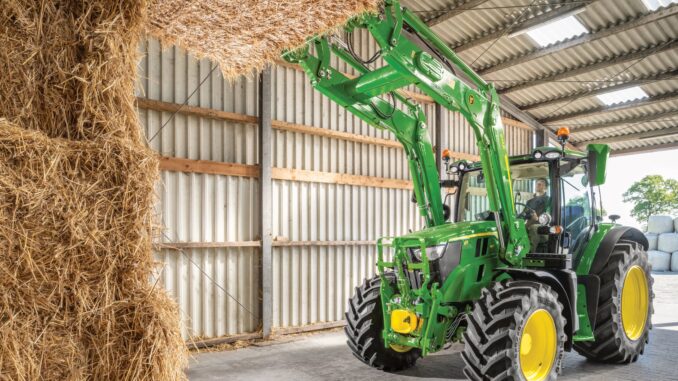
The John Deere 5210 is a 55‑horsepower, 5000‑series utility tractor commonly used for small farms, acreage, hay work, loader tasks and heavier lawn/yard duties with a 2WD or MFWD front axle. It typically uses a John Deere 2.9L 3‑cylinder diesel engine, syncro transmission, live PTO and three‑point hitch, often paired with loaders and mower or hay implements.
This guide walks you through symptom‑based troubleshooting, realistic DIY repairs, key parts and diagrams resources, service intervals and an expanded FAQ for everyday problems on the John Deere 5210.
General overview of the John Deere 5210
Within the Deere lineup, the John Deere 5210 sits in the 5000‑series utility tractor family, below larger models like the 5310/5410/5510 but above lawn/garden tractors in power and duty rating. It is designed as a compact‑utility farm tractor rather than a lawn mower, with heavier driveline components, higher hydraulic capacity and compatibility with loaders, rotary cutters, finish mowers, tillers and hay tools.
On the John Deere 5210, the key systems owners interact with are:
-
Engine and fuel system (diesel engine, fuel tank, filter, injectors, glow plugs).
-
Cooling system (radiator, fan belt, coolant hoses and water pump).
-
Transmission and drive (gear transmission, clutch, MFWD front axle if equipped).
-
PTO and hydraulics (rear PTO, three‑point hitch, hydraulic pumps and remotes).
-
Electrical and safety (starter circuit, alternator, battery, fuses, safety switches).
-
Brakes and steering (wet disc brakes, power steering, front axle).
Common service parts and numbers owners frequently buy for a John Deere 5210 include engine oil filter, fuel filter, air filter, hydraulic/transmission filter, fan/alternator belt, MFWD hub seals, batteries and safety switches. Typical examples (always verify against your PIN and engine code):
-
Engine oil filter – RE504836 or equivalent.
-
Fuel filter element – RE62419 or compatible.
-
Primary air filter – RE509672; inner safety element – RE509673.
-
Hydraulic/transmission filter – RE45864 or equivalent.
-
Fan/alternator belt – RE519287 (verify configuration).
-
Glow plug – RE19843 or equivalent.
-
Battery – 12V, heavy‑duty group size as specified in your operator’s manual.
Troubleshooting approach for John Deere 5210
For the John Deere 5210, diagnosis should start with what you see and feel as the operator, not with guessing parts. Begin with the symptom: won’t start, starts but stalls, low power, overheating, hydraulic hitch not lifting, PTO won’t engage, electrical dead, or abnormal noises/vibration. From there, narrow the system involved: fuel, air, electrical, hydraulic, driveline, PTO or steering/brakes.
Main symptom categories for John Deere 5210 owners:
-
Starting issues (no crank, slow crank, cranks but will not fire).
-
Running and power issues (stalling, low power under load, smoke).
-
PTO and hydraulic issues (PTO not turning, hitch won’t lift, loader weak).
-
Vibration and noise (engine knock, driveline vibration, squeals).
-
Overheating and fluid leaks (coolant issues, hydraulic or fuel leaks).
-
Transmission and drive problems (gears difficult to shift, MFWD not working).
-
Electrical and safety switch problems (no dash power, intermittent shut‑off).
Start with simple checks you can do safely without splitting the tractor: fluid levels, filters, obvious leaks, basic electrical tests, and visible linkage problems. Move to more advanced diagnostics only if the basic items check out.
Emergency and immediate repair needs on John Deere 5210
Some John Deere 5210 problems must be dealt with immediately because they either make the tractor unsafe to operate or risk expensive damage if you keep working. These include major leaks, overheating, brake failure, steering loss, PTO or hitch faults with heavy implements attached, and electrical shorts or burning smells. In this section, work symptom‑first and stop using the tractor if you see anything serious.
Starting issues on John Deere 5210
A starting problem on the John Deere 5210 usually shows up as no crank, slow crank or an engine that cranks but will not start. It matters because repeated cranking can overheat the starter, and using ether or improper starting aids on a diesel can damage the engine.
Common causes:
-
Weak or failing battery, poor cable connections or corroded grounds.
-
Faulty key switch, starter relay or neutral/clutch safety switches.
-
Glow plug circuit faults or inoperative cold‑start aids.
-
Fuel system problems: air in fuel lines, clogged fuel filter, water contamination.
Basic owner checks:
-
Verify PTO is off, transmission in neutral and clutch depressed fully.
-
Inspect battery terminals for corrosion; clean and tighten both ends including grounds.
-
Check that dash lights illuminate with key ON; if dead, suspect battery, fuse or key switch.
-
Confirm glow plug indicator works and give correct pre‑heat time before cranking in cold weather.
-
Drain water/sediment from fuel filter bowl and confirm fuel shut‑off is in the ON position.
Cut‑quality and implement performance problems with John Deere 5210
Although the 5210 is a tractor, many owners use it to drive rotary cutters, finish mowers and other implements, so “cut quality” issues show up as uneven mowing or poor performance of attached tools. This matters because poor cut quality often signals PTO speed or implement issues that can damage gearboxes or driveline components.
Common causes:
-
PTO not reaching rated 540 rpm due to engine running below speed.
-
Worn, nicked or incorrectly sharpened blades on mowers/cutters.
-
Bent blade carriers, spindle problems or out‑of‑level three‑point hitch.
-
Slipping PTO clutch or internal PTO engagement issues.
Basic owner checks:
-
Verify engine is run at recommended PTO speed (check the tachometer marking).
-
Inspect mower or cutter blades for wear, damage and correct installation.
-
Check three‑point hitch lift arms and top link length so the deck or cutter is level side‑to‑side and front‑to‑back.
-
Confirm PTO lever and any PTO clutch or switch is fully engaged; listen for slipping sounds.
-
Grease implement driveline and check universal joints for play.
Vibration and noise on John Deere 5210
On the John Deere 5210, vibration and abnormal noise can point to driveline issues, failing bearings or engine problems. Ignoring these symptoms can turn a minor fix into a major failure such as a damaged transmission, PTO shaft or broken engine mounts.
Common causes:
-
Loose or missing wheel hardware, worn front axle components or MFWD hub issues.
-
Worn U‑joints in front drive shaft (MFWD), loose or damaged loader mounts.
-
Misaligned or damaged PTO shaft and implement gearbox problems.
-
Engine knock from injector problems, timing issues or low oil level.
Basic owner checks:
-
Walk around the tractor and inspect wheel lug nuts; tighten to spec if any are loose.
-
Inspect front axle hubs and MFWD drive shaft for leaks, play or obvious damage.
-
Remove PTO shaft from implement and run the tractor with PTO engaged; if noise disappears, suspect the implement.
-
Check engine oil level and coolant level before further running.
-
Verify loader mounting bolts and brackets are tight and not cracked.
Overheating and leaks on John Deere 5210
Overheating or fluid leaks on a John Deere 5210 require immediate attention. Overheating can warp heads and damage the engine, while hydraulic leaks can cause loss of steering, hitch function or even fire risk if fluid contacts hot surfaces.
Common causes:
-
Low coolant, blocked radiator fins or failing fan/alternator belt.
-
Coolant hose leaks, water pump weep holes dripping.
-
Hydraulic hose failures, fitting leaks or damaged seals on cylinders and valves.
-
Fuel leaks at filter, lines or injector pump.
Basic owner checks:
-
Stop the tractor, let it cool and never remove the radiator cap when hot.
-
Inspect radiator fins and screen for debris; clean gently with low‑pressure air or water.
-
Check coolant level in the overflow tank and look for visible hose leaks.
-
Inspect hydraulic hoses on loader and rear remotes for wet spots, abrasion or bulges.
-
Verify fan belt tension and condition; replace if glazed, cracked or loose.
Transmission and drive problems on John Deere 5210
Transmission or drive issues on the John Deere 5210 show up as gears grinding, difficulty shifting, loss of drive, MFWD not engaging or strange noises from the rear end. These matter because internal transmission or differential repairs are complex and costly.
Common causes:
-
Incorrect clutch adjustment or worn clutch disc.
-
Operator shifting without proper clutch use, causing gear or synchro wear.
-
Low or contaminated transmission/hydraulic oil.
-
MFWD engagement linkage out of adjustment or front axle issues.
Basic owner checks:
-
Confirm transmission/hydraulic oil is at the correct level and not milky or burnt.
-
Follow the operator’s manual for proper clutch pedal free‑play and adjust if needed.
-
Test MFWD engagement at low speed on a safe surface; feel for positive engagement.
-
Listen for grinding when shifting; if severe, stop and consult a dealer.
-
Avoid towing heavy loads or working on steep slopes until the problem is resolved.
Electrical problems on John Deere 5210
Electrical problems on a John Deere 5210 often appear as dead dash, no start, erratic shut‑off or lighting issues. Electrical faults can prevent safe operation or indicate underlying wiring damage that needs prompt attention.
Common causes:
-
Weak battery, corroded terminals or poor ground connections.
-
Blown fuses, faulty relays or worn ignition key switch.
-
Damaged harness sections near the starter, battery, or under the dash.
-
Safety switches on clutch, PTO or seat not operating correctly.
Basic owner checks:
-
Inspect battery cables, clean terminals and ensure solid ground strap connections.
-
Locate the fuse block and check for blown fuses, replacing only with correct ratings.
-
Wiggle the key in the ignition; if power cuts in/out, suspect the switch.
-
Check visible wiring for rubbing, burnt sections or loose connectors.
-
Test lights and accessories to see if the issue is isolated or system‑wide.
DIY or dealer? Repair decision guide for John Deere 5210
On the John Deere 5210, the line between DIY and dealer work usually falls at the point where special tools, hoists or internal engine/transmission work are required. Routine fluids, filters, belts, battery, basic electrical troubleshooting and many external hydraulic repairs are realistic for a careful owner. Internal transmission repairs, clutch replacements, injector pump work and major MFWD axle repairs are usually best left to a qualified Deere technician.
Good DIY jobs:
-
Engine oil and filter changes.
-
Fuel and air filter service.
-
Hydraulic/transmission filter changes and basic fluid top‑offs.
-
Fan/alternator belt replacement.
-
Battery replacement and basic wiring/ground repairs.
-
Greasing loader pins and three‑point hitch, adjusting linkage.
Advanced DIY or dealer jobs:
-
Clutch replacement or splitting the tractor.
-
Internal transmission and differential repairs.
-
Injector pump and injector replacement or timing.
-
MFWD axle overhauls, internal brake repairs.
-
Major hydraulic pump or valve block replacements.
Skill level guide:
-
Beginner: Changing engine oil and filters, checking fluids and tire pressures, greasing fittings, replacing fuses and batteries.
-
Intermediate: Replacing belts, hydraulic filters, external hydraulic hoses, glow plugs, minor electrical repairs with a multimeter.
-
Advanced: Clutch and transmission work, MFWD internals, engine timing, pump and injector work, major hydraulic system rebuilds.
John Deere 5210 parts needed, OEM vs aftermarket, and what information you need
Before you order parts for your John Deere 5210, gather the full model name, Product Identification Number (PIN), engine model/serial and any attachment details (such as loader model or implement type). Deere used different configurations over the production run, and some filters, seals and electrical parts depend on serial number breaks.
Essential information:
-
Tractor model: John Deere 5210.
-
PIN: found on the tractor identification plate (usually on the right side of the frame or tractor).
-
Engine model and serial: stamped on the engine block tag or sticker.
-
Front axle type: 2WD or MFWD.
-
Loader model or other major attachments: e.g. 520 or 521 loader, mower deck or rotary cutter brand and size.
Key service parts for John Deere 5210
As a rule of thumb, choose OEM John Deere parts for belts, safety‑critical components (brakes, steering, PTO and safety switches) and anything fit‑sensitive that must match exact dimensions. Aftermarket brands can be acceptable for common filters, batteries and sometimes blades or wear parts as long as they cross‑reference correctly to the Deere part numbers and meet or exceed the original specifications.
Where to find John Deere 5210 parts diagrams and service manuals
Accurate parts diagrams and manuals make John Deere 5210 troubleshooting much easier. You can access official and third‑party resources online:
-
John Deere Operator’s Manual for the 5210 (via the official Deere Technical Publications or your dealer): provides basic operation, safety and maintenance schedules.
-
John Deere Tractors Models 5210, 5310, 5410 & 5510 Technical Manual TM1716: detailed diagnostics, repair procedures and wiring diagrams for the 5210 series.
-
JDParts or the modern Deere parts portal: exploded diagrams, current part numbers, supersessions and availability for the John Deere 5210.
-
Reputable Deere‑focused parts site with a John Deere 5210 page: offers aftermarket equivalents, kits and OEM parts with cross‑references.
Use the operator’s manual for routine maintenance and adjustments; use the technical manual for in‑depth diagnostics and repairs; use JDParts or a parts site for diagrams, part numbers and ordering.
How to locate model, serial and engine numbers on a John Deere 5210
Your John Deere 5210’s identification numbers are critical for ordering correct parts and accessing the right manuals. They also determine serial‑number‑specific changes such as filter sizes, hydraulic configurations and wiring harness variants.
To find the numbers:
-
Locate the tractor Product Identification Number (PIN) plate, typically on the right side of the frame or tractor chassis near the front or under the hood area.
-
Clean the plate so you can read the serial number clearly; note any prefix or suffix codes.
-
Find the engine tag or stamping on the side of the engine block; write down the engine family and serial number.
-
If equipped with MFWD, look for axle identification markings stamped or tagged on the front axle housing.
-
Record loader model and serial numbers from the loader frame plate if a Deere loader is fitted.
Buying John Deere 5210 parts online and in physical stores
A good strategy for buying John Deere 5210 parts is to combine online research with local support. Online, you can quickly cross‑reference part numbers, compare OEM vs aftermarket options and check availability. Local Deere dealers provide serial‑specific knowledge and can help with complex orders or superseded parts.
Options:
-
Online: Use the official Deere parts portal and reputable parts websites; always match parts to your PIN and engine codes and check for updated or superseded part numbers.
-
Dealer counter: Best for complex items (transmission, hydraulic or electrical components) and when you need confirmation for serial‑specific changes.
-
Retail/farm stores: Acceptable for common consumables like engine oil, grease, filters and batteries if the packaging clearly lists John Deere 5210 or the correct OEM number.
Useful URLs to bookmark (examples):
-
Official John Deere parts portal (Deere.com > Parts).
-
Deere Technical Publications search page for manuals.
-
A strong aftermarket supplier with a John Deere 5210 category page.
Step‑by‑step fitting guide: common John Deere 5210 DIY jobs
Below are some high‑impact, realistic DIY jobs for John Deere 5210 owners. Always park on level ground, set the parking brake, lower implements and stop the engine before working. Use appropriate personal protective equipment.
Changing engine oil and filter on John Deere 5210
Regular oil changes protect the 2.9L diesel engine from wear and contamination.
Steps:
-
Warm the engine briefly, then park on level ground, set brake and shut off.
-
Place a drain pan under the oil pan, remove the drain plug and let oil drain completely.
-
Remove the old oil filter using a suitable wrench; clean the mounting surface.
-
Lightly oil the gasket of the new filter (RE504836 or equivalent), install hand‑tight plus recommended fraction of a turn.
-
Reinstall the drain plug with correct torque; fill with the specified grade and quantity of diesel engine oil.
-
Start the tractor, check for leaks, then shut off and verify oil level on the dipstick after a few minutes.
Replacing the fuel filter element on John Deere 5210
Fuel filter replacement improves starting and running quality and protects injectors.
Steps:
-
Shut off the engine and close the fuel shut‑off valve if equipped.
-
Place a container under the filter housing, loosen the retaining ring and remove the old filter element.
-
Clean the housing and check O‑rings or seals; install the new filter (RE62419 or equivalent) with the retaining ring hand‑tight.
-
Open the fuel shut‑off valve, bleed air from the filter housing using the manual priming or bleed screw as described in the manual.
-
Start the engine and let it run at low idle, checking for leaks and smooth running.
Servicing the air filter on John Deere 5210
Keeping the air filter clean helps maintain power and reduces fuel consumption.
Steps:
-
Stop the tractor, open the hood and locate the air cleaner housing.
-
Release the latches and remove the housing cover; carefully pull out the primary air element (RE509672).
-
Inspect the inner safety element (RE509673); replace if dirty or at recommended interval.
-
Do not blow out paper elements aggressively; replace if heavily dirty or damaged.
-
Install new elements in the correct order, re‑fit the cover and latch securely.
Replacing the fan/alternator belt on John Deere 5210
A good fan/alternator belt ensures proper cooling and battery charging.
Steps:
-
With the engine off and cool, open the hood and locate the belt routing.
-
Loosen the alternator or belt tensioner bolts just enough to relieve tension.
-
Remove the old belt, noting its routing around pulleys.
-
Install the new belt (RE519287 or equivalent) following the same routing.
-
Adjust tension so there is moderate deflection at mid‑span; tighten mounting bolts.
-
Start the engine, check for proper tracking and listen for squeals; readjust if necessary.
Maintenance on John Deere 5210 to prevent problems reoccurring
Preventive maintenance on the John Deere 5210 focuses on keeping fluids clean, filters fresh, cooling and hydraulic systems intact, and electrical connections sound. Regular attention greatly reduces starting issues, overheating, hydraulic failures and driveline problems.
Key focus areas:
-
Starting reliability: maintain battery charge, clean terminals, service fuel and air filters, and keep glow plug circuits healthy.
-
Implement and PTO performance: run at correct PTO speed, grease drivelines and keep blades/sharpened tools in good condition.
-
Fire/overheating prevention: clean radiator and screens, inspect hoses and belts, fix leaks promptly.
-
Drive performance: check transmission/hydraulic oil levels, tighten wheel hardware, inspect MFWD hubs and front axle.
-
Electrical reliability: periodically inspect wiring harnesses, protect connections from moisture, and replace worn switches and relays.
John Deere 5210 maintenance schedule and year‑round checklist
Base your John Deere 5210 maintenance plan on the official maintenance chart, then adapt it to your hours and usage. The intervals below reflect typical guidance for this tractor type.
Daily / every 10 hours
-
Check engine oil level and top up if needed.
-
Check coolant level and inspect radiator screen for debris.
-
Walk‑around inspection for fuel, oil or hydraulic leaks.
-
Check tire pressures and look for cuts or damage.
-
Verify lights, indicators and basic controls operate correctly.
Every 50 hours
-
Tighten wheel hardware as per torque specifications.
-
Check alternator/fan belt tension and condition.
-
Inspect and tighten air intake and cooling system hose clamps.
-
Check transmission/hydraulic oil level and condition.
-
Grease front axle and loader pins (if a loader is fitted).
Every 100 hours
-
Replace transmission‑hydraulic filter element.
-
Change engine oil and engine oil filter.
-
Inspect fuel system components and drain water/sediment from fuel filter.
-
Check MFWD axle hub oil level if equipped.
Every 500 hours
-
Replace fuel filter element.
-
Inspect and service air cleaner elements (primary and safety).
-
Check operation of hydraulic system and three‑point hitch.
-
Inspect brake function and steering components.
Seasonal checklist (pre‑season, mid‑season, end‑of‑season)
Pre‑season:
-
Complete engine oil and filter change if due.
-
Verify coolant strength and level, fan belt condition and hose integrity.
-
Check battery condition and charge; clean terminals and grounds.
-
Inspect and test PTO and hitch operation with implements.
Mid‑season:
-
Re‑check fluid levels, radiator cleanliness and belt tension.
-
Inspect hydraulic hoses and loader pins for wear or looseness.
-
Address any emerging leaks or noises early.
End‑of‑season:
-
Clean tractor thoroughly, especially radiator, engine and axle areas.
-
Top off fuel with appropriate conditioner to reduce condensation.
-
Store indoors or under cover if possible; disconnect battery if stored long‑term.
-
Note any issues to address before next season and schedule repairs.
John Deere 5210 – repair, upgrade, or replace?
For the John Deere 5210, repair versus upgrade or replace usually depends on overall tractor condition, hours, and how well the machine fits your current work. A well‑maintained 5210 is worth repairing, especially for engine, hydraulic or driveline issues that can be resolved once and last for years. If your workload has changed significantly, upgrading attachments or adding a loader may be more impactful than changing tractors.
Repair if:
-
The tractor is structurally sound with good engine compression and acceptable hours.
-
Problems are limited to serviceable systems (filters, hoses, belts, minor hydraulics or electrics).
-
Repair cost is clearly lower than replacing with a comparable used unit.
Upgrade if:
-
You need more capability from the same tractor: loader installation, better tires, more hydraulic remotes or upgraded implements.
-
PTO power and hydraulics are adequate, but implements are outdated or undersized.
-
Adding safety and comfort upgrades (ROPS cab enhancements, lighting, seating) will extend usefulness.
Replace if:
-
The frame, engine or transmission has major damage that is uneconomical to repair.
-
You require significantly more horsepower, hydraulic capacity or modern features (cab, emissions, electronics) that the 5210 cannot provide.
-
Availability of parts for your serial range is poor, or multiple major systems are failing at once.
Expanded troubleshooting FAQ – John Deere 5210 (30+ questions)
1. Why will my John Deere 5210 not start?
No‑start on a 5210 is usually a battery, fuel or safety switch issue. Check that the battery is charged, terminals clean and grounds secure. Make sure the transmission is in neutral, clutch is depressed and PTO is off so safety switches allow starting. If the engine cranks but will not fire, suspect air in the fuel system, a clogged fuel filter or glow plug problems.
2. Why does my John Deere 5210 crank slowly?
Slow cranking typically comes from a weak battery, corroded connections or a failing starter. Test battery voltage and cold‑cranking amps; if marginal, replace with a correct heavy‑duty battery. Clean both battery and frame ground connections thoroughly. If voltage is good but cranking remains slow, have the starter checked or replaced.
3. Why does my John Deere 5210 start then stall?
Start‑then‑stall usually indicates fuel flow or air in the fuel system. Check for water or debris in the fuel filter bowl and drain it. Replace the fuel filter element if it is overdue, then bleed the system according to the manual. Also verify that the fuel shut‑off valve is fully open and that the tank vent is not blocked.
4. Why does my John Deere 5210 smoke excessively?
Excessive black smoke indicates over‑fueling or restricted air; white smoke can signal unburned fuel or cold operation. Inspect and replace the air filter elements if dirty. Check fuel quality and make sure the engine is reaching operating temperature. Persistent smoke under load may require injector or pump testing at a dealer.
5. Why is my John Deere 5210 hard to start in cold weather?
Cold starts depend on glow plugs, battery strength and fuel condition. Ensure the glow plug indicator works and that you allow the proper pre‑heat time. Use the recommended winter‑grade diesel fuel and consider a block heater if available. Weak batteries and tired glow plugs often show up first in cold conditions and should be replaced.
6. Why does the battery keep going flat on my John Deere 5210?
A battery that repeatedly goes flat suggests a charging issue or parasitic drain. Check alternator belt tension and condition; a slipping belt can reduce charging. Test alternator output with a multimeter while running. Inspect for accessories or wiring faults drawing power when the tractor is off and correct any shorts or improper connections.
7. Why are the hydraulics weak on my John Deere 5210?
Weak hydraulics, such as a slow loader or hitch, often result from low or contaminated hydraulic oil or a restricted filter. Verify transmission/hydraulic oil level is within the correct range and top up if needed. Replace the hydraulic filter at the recommended interval. If performance remains weak, hydraulic pump, control valve or internal leaks may require dealer diagnosis.
8. Why won’t the three‑point hitch lift on my John Deere 5210?
A non‑lifting hitch may be due to low hydraulic oil, faulty hitch control linkage or issues within the rockshaft or valves. Check oil level first. Inspect the hitch control lever, linkages and draft/position controls for proper movement. If the hitch still does not respond, internal valve or rockshaft repairs are best left to a dealer.
9. Why won’t the PTO engage on my John Deere 5210?
If the PTO will not engage, verify that all safety conditions are met and that the engagement lever or control moves fully. Check for obvious linkage problems near the PTO housing. Low or incorrect transmission/hydraulic oil can also affect PTO function. Internal clutch, gear or valve issues require professional attention.
10. Why does my John Deere 5210 PTO stop under load?
A PTO that stops under load usually indicates clutch slip or driveline problems. Ensure engine speed is at the correct PTO rpm before loading the implement. Inspect the implement’s driveline for binding or gearbox issues. Persistent slip may mean the internal PTO clutch is worn or misadjusted and should be serviced by a dealer.
11. Why does my John Deere 5210 overheat?
Overheating often results from blocked radiator fins, low coolant or a failing fan belt. Clean the radiator screen and fins, removing dirt and debris. Check coolant level in the recovery tank and inspect hoses for leaks. Verify fan/alternator belt tension and condition. If overheating persists, a failing water pump or thermostat may be involved.
12. Why is coolant leaking from my John Deere 5210?
Coolant leaks can come from hoses, radiator seams or the water pump weep hole. Inspect all coolant hoses for cracks, bulges or loose clamps. Look for wet spots around the radiator and at the water pump. Replace damaged hoses and clamps as DIY; pump or radiator replacement may be dealer‑level work.
13. Why is hydraulic oil leaking on my John Deere 5210?
Hydraulic leaks often appear at hose fittings, quick couplers or cylinder seals. Clean suspected areas and identify the source carefully. Replacing hoses or tightening fittings is realistic DIY if you can depressurize the system safely. Major leaks from pumps or valve blocks, or internal leaks, deserve dealer attention.
14. Why does my John Deere 5210 lose power under load?
Power loss under load can be due to fuel restriction, air restriction or engine issues. Start by replacing the fuel and air filters if they are due. Check for collapsing fuel lines or poor fuel quality. Persistent low power despite clean filters may point to turbo (if fitted), injector or pump problems requiring professional diagnosis.
15. Why are the gears grinding on my John Deere 5210?
Gear grinding usually indicates clutch adjustment issues or operator technique. Check the clutch pedal free‑play and adjust according to the manual. Always depress the clutch fully and pause briefly before engaging gears. If grinding continues, synchro or gear wear may be present and should be inspected by a dealer.
16. Why is it hard to shift gears on my John Deere 5210?
Difficult shifting can result from clutch drag, linkage misadjustment or internal transmission wear. Verify clutch adjustment and that linkages move smoothly. Check transmission/hydraulic oil level and condition. If the tractor still shifts poorly, internal transmission components may need professional repair.
17. Why does my John Deere 5210 MFWD not engage?
On MFWD‑equipped 5210s, lack of engagement can come from linkage problems, internal front axle issues or low oil. Perform a basic test at low speed on a safe surface, toggling the MFWD control. Inspect linkage and front axle for obvious damage or leaks. Internal MFWD clutch or gear faults are dealer‑level.
18. Why is the steering heavy on my John Deere 5210?
Heavy steering is often caused by low hydraulic oil, air in the steering circuit or front axle problems. Check transmission/hydraulic oil level first. Inspect front tires and hubs for proper pressure and lubrication. If steering remains heavy or jerky, power steering components may need inspection by a technician.
19. Why do the brakes feel weak on my John Deere 5210?
Weak brakes can be due to low hydraulic oil (if wet disc brakes share oil), air in the system or worn brake components. Verify fluid levels and check for leaks around axle housings. If braking performance remains poor, internal brake discs or seals likely require dealer service.
20. Why is my John Deere 5210 making a clunking noise?
Clunking sounds may come from loose loader mounts, worn driveline U‑joints or slack in hitch or drawbar components. Inspect loader frames and bolts, tightening as necessary. Check PTO and front drive shafts for play. If clunks appear in the rear end under load, avoid hard use and consult a dealer.
21. Why is there a squealing noise on my John Deere 5210?
Squeals often originate from slipping belts or hydraulic relief valves. Check the fan/alternator belt for tension and glazing and replace if worn. If the squeal coincides with heavy hydraulic demand, valves or pumps may be at relief pressure; avoid holding controls at full travel and consider a hydraulic system inspection.
22. Why do my John Deere 5210 lights not work?
Light failures typically involve bulbs, fuses or switch problems. Check the fuse panel and replace blown fuses with correct ratings. Inspect bulbs and replace any that are burnt out. Test the light switch and wiring for continuity; damaged harness sections may need repair.
23. Why does my John Deere 5210 shut off unexpectedly?
Unexpected shut‑off suggests a safety switch issue, fuel starvation or electrical fault. Monitor whether shut‑off occurs when you operate the clutch, PTO or seat; this can point to safety switch problems. Check fuel level and venting at the cap. Inspect key switch and main wiring for intermittent connections.
24. Why is the dash dead on my John Deere 5210?
A dead dash indicates loss of primary electrical power. Verify battery voltage and cable connections. Check main fuses or fusible links feeding the dash. If power shows at the battery but not at the dash, suspect the ignition switch or a harness break.
25. Why is the air filter light coming on my John Deere 5210?
An air restriction indicator coming on signals a clogged primary air element. Shut down and inspect the air cleaner; replace the primary filter element if dirty. Also check that nothing is obstructing the intake or pre‑cleaner. Do not ignore air restriction warnings; they can reduce power and increase fuel consumption.
26. Why is my John Deere 5210 using more fuel than normal?
Higher fuel consumption can result from dirty filters, low tire pressures, incorrect gear selection or running at unnecessary engine speeds. Service fuel and air filters, set tires to the correct pressure and operate in the appropriate gear range for your work. Persistent excessive fuel use may indicate engine tuning issues or internal wear.
27. How often should I change the oil on my John Deere 5210?
Follow the operator’s manual, but typical guidance is to change engine oil and filter every 100 hours or yearly, whichever comes first, under normal duty. Heavy use in dusty or high‑load conditions may warrant shorter intervals. Always use oil meeting Deere’s specifications for the engine.
28. How often should I change hydraulic filters on my John Deere 5210?
Hydraulic/transmission filters are usually changed at 100‑hour or similar intervals as outlined in the manual. Do not extend these intervals excessively; dirty filters can cause hydraulic performance problems and wear. Always refill with the recommended hydraulic/transmission oil.
29. What grease points should I focus on for my John Deere 5210?
Key grease points include front axle pivot and hubs, steering linkage, three‑point hitch pivot points and loader pins if fitted. Consult your operator’s manual for exact zerk locations. Greasing these points at regular intervals reduces wear and keeps steering and hitch movements smooth.
30. What safety checks should I do regularly on my John Deere 5210?
Regular safety checks include confirming ROPS and seat belts are in place and in good condition, ensuring all safety switches operate correctly, checking brakes and steering responsiveness, and verifying lights and signals work. Also inspect for leaks that could present a fire or environmental hazard.
31. Can I use aftermarket filters on my John Deere 5210?
Quality aftermarket filters that cross‑reference correctly to Deere OEM numbers are generally acceptable for engine oil, fuel and air filters. Ensure they meet or exceed the specifications in your manual. For hydraulic filters and critical components, many owners prefer OEM to avoid compatibility issues.
32. Should I attempt clutch replacement on my John Deere 5210 myself?
Clutch replacement on a 5210 requires splitting the tractor and handling heavy components safely. This is typically considered an advanced DIY job or dealer task. Only attempt it if you have appropriate equipment, experience and reference manuals; otherwise, hire a professional.
33. How can I tell if my John Deere 5210 needs an engine rebuild?
Signs of needing an engine rebuild include very low compression, excessive blow‑by, persistent smoking despite proper maintenance and rapid oil consumption. Have compression and leak‑down tests performed. If major wear is confirmed, weigh rebuild costs against the overall condition and value of the tractor.
34. What is a realistic DIY scope for electrical work on my John Deere 5210?
Realistic DIY electrical work includes battery, fuse and relay replacement, cleaning grounds, replacing simple switches and repairing obvious harness faults. More advanced diagnostics (ECU/if fitted, complex harness tracing, in‑depth alternator testing) may require dealer tools and experience.
35. How can I keep my John Deere 5210 reliable year‑round?
Reliability comes from regular maintenance, proper storage and attentive operation. Follow the service intervals for fluids and filters, keep the tractor clean and dry, fix leaks early and store it under cover when possible. Operate within the tractor’s limits and watch for emerging issues so you can address them before they become major failures.