
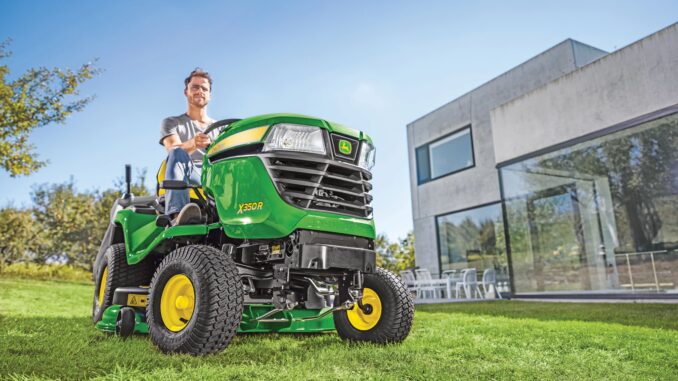
The John Deere S200 Series is a premium residential lawn tractor range built for homeowners and acreage owners who want more mowing capability, comfort, and drivetrain durability than a basic entry-level lawn tractor. These machines are intended primarily for regular mowing, mulch mowing, bagging, and light towing on maintained lawns, including properties with obstacles, modest slopes, and up to roughly two acres of typical turf.
This page serves as a working hub for model-specific guides, maintenance content, and troubleshooting content covering the S200 family. Use it alongside the General John Deere Lawn and Garden Tractor Guide when identifying the correct tractor class, mower deck arrangement, service parts, and compatible attachments. Individual S220 and S240 maintenance and troubleshooting guides can then provide the model-level specifications, repair procedures, service schedules, and common-problem details that a general series page cannot cover.
About the John Deere S200 Series Lawn and Garden Tractor Series
The John Deere S200 Series sits above the lighter S100 Series residential lawn tractors and below the more robust X300, X500, and X700 families. It is a premium lawn-tractor line rather than a full garden-tractor platform: it is designed for high-quality mowing, bagging, mulch mowing, and light hauling, but it is not intended to replace a shaft-driven heavy-duty garden tractor for demanding ground-engaging work.
Known S200 Series models include the S220 and S240. Engine output is approximately 21.5 to 22 hp, with V-twin gasoline engines designed for smoother running and better torque under mowing load than smaller single-cylinder residential engines. Both models use air-cooled engines, electric starting, replaceable engine oil filters, and 12-volt electrical systems.
The series uses a two-wheel-drive layout with hydrostatic transmissions and side-by-side forward and reverse pedals. This arrangement makes speed changes straightforward during trimming, backing around trees, mowing around landscaping, and working around buildings. The S240 uses a heavier K46 hydrostatic transaxle, while the S220 uses a Tuff Torq TLT200 hydrostatic transaxle. Neither model is a locking-differential or four-wheel-drive machine, so traction remains dependent on tire condition, operator technique, turf moisture, slope angle, and added rear weight where appropriate.
Mower-deck choices are 42-inch and 48-inch Accel Deep decks. These decks use an electric PTO clutch for blade engagement and can be configured for side discharge, bagging, or mulch mowing when equipped with the proper parts. Common support equipment includes bagging systems, mulch kits, utility carts, lawn sweepers, aerators, dethatchers, and seasonal snow equipment where supported by the tractor, deck, and attachment configuration.
Compared with an S100 Series tractor, an S200 generally offers a V-twin engine, stronger hydrostatic drive components, larger rear tires, improved seat comfort, and more premium operating features. Compared with X300 and X500 models, it remains a residential mower platform with fewer heavy-duty implement options and less emphasis on repeated high-load towing or ground-engaging work. The current S200 Series consists of the S220 and S240, with no established legacy line of earlier models marketed under the same S200 Series designation in the United States or Canada.deere+2
John Deere S200 Series Lawn and Garden Tractor Models
The S220 is the simpler of the current S200 models, with a 22-hp V-twin engine, a two-pedal hydrostatic transmission, and either a 42-inch or 48-inch deck. It is suited to owners who want a more capable mowing tractor without stepping into the price and implement capacity of an X300 or X500.
The S240 is the more premium model within the S200 family. It uses a 21.5-hp V-twin engine and a K46 heavy-duty hydrostatic transaxle, along with cruise control, larger rear tires, electric PTO blade engagement, and 42-inch or 48-inch deck options. It is often the better fit for a property where mowing takes longer, grass can become dense between cuts, or the tractor will regularly tow a cart or bagging system.deere+2
S200 Series Lawn and Garden Tractor Maintenance Guides
Routine Service and Checks
Routine servicing begins with the engine. Check the engine oil level before each mowing session or at least before extended use, especially on a tractor used on slopes or during warm weather. Change engine oil and replace the oil filter according to the operator’s manual interval, or sooner if the machine works in dusty conditions, handles heavy leaf collection, or operates for long periods at high load.
Inspect and clean the air filter regularly. A restricted filter can cause rich running, reduced engine power, plug fouling, increased fuel consumption, and poor mowing performance in heavy grass. Replace spark plugs at the recommended interval, inspect plug-wire connections, and check that the cooling-air intake screens and engine shrouds remain free of grass and debris.
Hydrostatic-drive service differs from engine service. The transaxle is not normally treated like a conventional manually serviced gearbox, but its cooling fan, external case, drive belt, control linkage, and pulley area should be inspected regularly. A damaged cooling fan, blocked airflow, slipping drive belt, or loose linkage can lead to reduced travel speed and premature transmission problems.
Useful internal content targets include:
-
S200 Series lawn and garden tractor service interval checklist
-
DIY maintenance for S200 Series lawn tractors
-
S220 engine oil, air filter, and spark plug service guide
-
S240 hydrostatic transmission and drive-belt inspection guide
-
Seasonal storage checklist for S200 Series lawn tractors
Mower Deck, Cutting Quality, and Belt Care
The mower deck needs attention at least as often as the engine. Clean packed grass from the underside of the deck after mowing damp grass, long grass, leaves, or thick spring growth. Built-up debris restricts airflow, weakens discharge, increases corrosion risk, and can make a normally good deck leave clumps or streaks.
Sharpen blades when the grass tips begin to look torn or brown shortly after mowing. Replace blades that are bent, cracked, excessively thin, or damaged around the mounting hole. Always balance blades after sharpening, because an out-of-balance blade can create vibration that damages spindles, deck bearings, pulleys, and mounting hardware.
Check deck level from side to side and front to rear before diagnosing a poor cut. Uneven tire pressure, bent deck hangers, worn lift linkage, a damaged blade, and incorrect deck pitch can all produce scalping, step cutting, streaking, or one side of the deck cutting lower than the other.
Inspect the deck belt for glazing, cracking, missing chunks, frayed edges, or contamination from oil and grease. A weak belt may squeal, slip in heavy grass, fail to turn the blades at full speed, or come off a pulley. Follow the belt-routing diagram exactly when replacing it.
Useful internal content targets include:
-
Mower deck maintenance and cutting quality on S200 Series tractors
-
Deck belt and spindle service for S200 Series lawn and garden tractors
-
S220 42-inch and 48-inch deck leveling guide
-
S240 blade replacement and deck-belt routing guide
Steering, Axle, and Chassis Maintenance
Inspect the steering system during regular service, particularly if the tractor begins to wander, turns unevenly, develops steering-wheel free play, or shows unusual front-tire wear. Check steering-linkage joints, tie-rod ends, steering-arm fasteners, front axle pivot points, wheel bearings or bushings, and front-tire pressures.
Correct toe-in helps the tractor track properly and reduces uneven tire wear. Do not alter steering adjustment simply to compensate for a bent component, worn steering joint, or damaged front axle. Find the underlying fault first, then carry out alignment adjustment only after worn or bent parts are repaired.
Inspect the chassis for loose seat hardware, damaged hood latches, missing deck pins, worn lift links, corroded fasteners, and loose rear-wheel hardware. Pay particular attention to the deck-lift system, anti-scalp wheels, front axle, transmission cooling fan, and the belt guards around the engine and mower deck.
A useful internal target is Steering and front axle maintenance across S200 Series lawn and garden tractors.
S200 Series Lawn and Garden Tractor Troubleshooting Guides
Starting, Engine, and Fuel / Ignition Problems
A no-start condition often comes down to the safety-interlock system, battery state, corroded battery terminals, weak starter circuit, brake-pedal position, PTO switch position, seat switch, or a blown fuse. Begin with simple checks: fuel level, fuel freshness, battery voltage, clean terminals, correct control positions, and whether the starter solenoid clicks when the key is turned.
Hard starting, surging, stalling, and weak power under load can be caused by stale fuel, water contamination, blocked fuel lines, a dirty fuel filter, carburetor contamination, restricted air filtration, fouled spark plugs, or an ignition-coil issue. On a V-twin engine, also consider whether one cylinder is weak or not firing, as this can make the tractor sound uneven and lose significant mowing power.
If the engine starts but stalls when the blades engage, inspect the mower deck first. A seized spindle, obstructed blade, damaged belt, overloaded deck, or excessively tall wet grass can overload the engine. If the engine stalls before the deck has time to load, investigate the PTO circuit and electrical system.
Useful internal targets include:
-
S200 Series lawn and garden tractor starting problems – diagnostics and fixes
-
Engine and fuel system issues across S200 Series tractors
-
S220 no-start and battery charging problems guide
-
S240 V-twin engine surging, stalling, and power-loss guide
Mower Deck, PTO, and Cutting Performance Problems
When the mower deck will not engage, check the PTO switch, PTO fuse, battery condition, wiring connections, seat and safety switches, and electric PTO clutch. A weak battery or poor charging system can sometimes allow the engine to start but prevent reliable PTO clutch operation.
If the blades stop in tall grass, cut height may be too low, travel speed may be too high, the deck may be packed with debris, or the deck belt may be slipping. Mow tall or wet grass in stages, raise the deck for the first pass, reduce ground speed, and ensure that blades and belts are in good condition.
Vibration commonly points to an unbalanced blade, bent blade, loose blade bolt, damaged spindle, worn pulley, debris wrapped around a spindle, or a belt that has failed internally. Stop the engine, remove the key, disconnect the spark-plug wires, and wait for all moving components to stop before inspecting the deck.
Useful internal targets include:
-
PTO and deck engagement problems on S200 Series lawn tractors
-
Cut quality and deck vibration issues on S200 Series models
-
S200 Series deck will not engage diagnosis guide
-
S220 and S240 uneven-cut and scalping fixes overview
Drive, Transmission, and Traction Problems
A tractor that will not move, moves slowly, loses speed on hills, or appears to slip may have a worn drive belt, weak belt tensioner, damaged idler pulley, seized pulley bearing, incorrect pedal linkage adjustment, or a hydrostatic-drive problem. Begin with the external belt system before assuming that the transaxle has failed.
Hydrostatic tractors can lose performance when the transmission cooling fan is damaged or covered with debris. Grass buildup around the transaxle and fan reduces cooling, especially during summer mowing, leaf collection, towing, or prolonged operation on slopes. A hot hydrostatic unit may become noisy, respond slowly, or lose travel speed until it cools.
Traction on slopes depends on terrain, grass moisture, tire tread, tire pressure, operator weight distribution, mowing direction, and the load being towed. Avoid using a lawn tractor on slopes beyond its stated operating limit, do not mow wet slopes, and do not expect two-wheel drive to behave like a locking-differential garden tractor. Tire chains or rear weights should only be used where the attachment and operating instructions support them.
Useful internal targets include:
-
Drive and transmission problems on S200 Series lawn and garden tractors
-
Traction and hill performance issues across S200 Series models
-
S220 slow travel speed and drive-belt troubleshooting guide
-
S240 hydrostatic-drive diagnosis and repair overview
Attachments and Implements for the S200 Series Lawn and Garden Tractor Series
The S200 Series is primarily configured around 42-inch and 48-inch Accel Deep mower decks. The deck should be selected for the property rather than simply choosing the widest available option. A 42-inch deck can be more manageable around gates, trees, narrow passages, and landscaping. A 48-inch deck can reduce mowing time on larger, more open lawns.
Common compatible lawn-care equipment can include bagging systems, mulch-control components, utility carts, lawn sweepers, spreaders, aerators, dethatchers, and light tow-behind yard equipment. These attachments are useful for seasonal cleanup, leaf collection, fertilizer application, lawn renovation, and routine property maintenance.
Snow equipment and front-mounted accessories require extra care when checking compatibility. The tractor model, model year, frame design, front mounting points, tire setup, accessory drive arrangement, electrical equipment, and ballast requirements all matter. A component that fits an earlier John Deere lawn tractor may not fit an S220 or S240, even if the mower deck width appears similar.
Do not treat the S200 Series as a heavy ground-engaging garden tractor. It is not the right platform for a rear-mounted tiller, repeated heavy hauling, large plowing work, or implements that require a rear PTO, hydraulic remotes, or a shaft-driven transmission. Those applications are more appropriate for certain X500, X700, or classic heavy-duty John Deere garden-tractor models.
Useful internal content targets include:
-
Attachments and implement options for S200 Series lawn and garden tractors
-
Setting up and using snow equipment and yard attachments on S200 Series tractors
-
S220 bagger, mulch kit, and utility-cart compatibility guide
-
S240 mower deck and seasonal attachment setup guide
Related Guides and Hubs
For broad ownership information, refer to the General John Deere Lawn and Garden Tractor Guide.
For cross-model service procedures and seasonal schedules, refer to the John Deere Lawn and Garden Tractor Maintenance Hub.
For diagnosis workflows covering starting, engine, deck, PTO, drive, steering, and electrical faults, refer to the John Deere Lawn and Garden Tractor Troubleshooting Hub.
Related series directories include:
-
S Series lawn tractor index
-
X300 Series lawn tractor index
-
X500 Series garden tractor index
-
X700 Series heavy-duty garden tractor index
-
Classic John Deere Garden Tractor index