
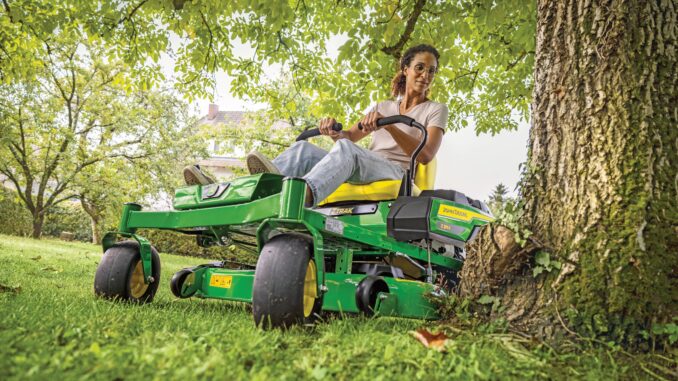
John Deere Z900 / Pro Series ZTrak Models and Maintenance Guide
The John Deere Z900 / Pro Series ZTrak range is a commercial zero-turn mower family built for demanding mowing work rather than general-purpose garden-tractor chores. It suits professional landscape contractors, property-maintenance crews, municipalities, institutions, acreage owners, and serious homeowners who need fast mowing over larger properties, repeated weekly use, and durable commercial-grade components.
This page is a directory for Z900 and earlier Pro Series ZTrak models sold in the United States and Canada. It is intended to route readers toward model-specific guides, maintenance content, mower-deck service information, and troubleshooting coverage. For broader ownership information that includes conventional riding mowers and garden tractors, see the General John Deere Lawn and Garden Tractor Guide.
About the John Deere Z900 / Pro Series ZTrak Series
The John Deere Z900 Series is a commercial zero-turn mower family, not a conventional lawn or garden tractor line. These machines use independently controlled hydrostatic wheel drives to turn within their own footprint, making them especially productive around trees, landscape beds, fences, buildings, and other obstacles. They are primarily 2WD machines, with two large rear drive wheels and freely swiveling front caster wheels.
Across both the current Z900 family and earlier Pro Series ZTrak generations, power ranges from roughly 23 hp gasoline machines to more than 40 hp turbocharged diesel models. Most models use air-cooled gasoline V-twin engines, while selected high-output machines use EFI gasoline engines, propane-capable engines, or liquid-cooled diesel engines. Hydrostatic transmissions are standard throughout the family; there are no manual-gear or belt-drive ground-drive versions in the mainstream Z900 range.
Deck choices commonly range from 48 to 72 inches, with larger deck configurations available on selected heavy-duty diesel machines. The most familiar commercial deck is the fabricated 7-Iron PRO side-discharge deck. Some models can also use Mulch On Demand decks or FastBack PRO rear-discharge decks, depending on model year and specification. These decks are designed for high mowing speeds and regular commercial use, but cutting quality still depends on sharp blades, correct deck setup, clean airflow, and suitable ground speed.
The Z900 family sits above John Deere S Series and X300 Series lawn tractors, which are aimed primarily at residential mowing. It also differs from X500 and X700 garden tractors because it is optimized for mowing productivity rather than for pulling ground-engaging implements, operating rear tillers, or running a broad range of front and rear attachments. A Z900 can tow light carts and operate selected turf-care accessories, but its purpose is commercial mowing.
John Deere Z900 / Pro Series ZTrak Lawn and Garden Tractor Models
Model availability, deck options, engine ratings, trim letters, and option packages can vary by production year. Verify the product identification number, engine label, deck tag, and parts catalog before ordering service parts or using a model-specific procedure.
Z900 / Pro Series ZTrak Maintenance Guides
Routine Service and Checks
A Z900 mower should be serviced according to hours worked rather than calendar time alone. Daily or pre-operation checks should include engine-oil level, hydraulic-oil leaks, tire condition, loose hardware, deck-belt condition, blade condition, safety-switch operation, fuel level, and debris accumulation around the engine and hydraulic system.
Change engine oil and replace the oil filter at the interval specified for the exact engine and operating environment. Commercial machines working in dust, heat, tall grass, or heavy seasonal use may need more frequent air-filter inspection and replacement. Check fuel filters, spark plugs, ignition components, and cooling screens on gasoline units. On diesel models, include fuel-water separator service, fuel-filter changes, coolant checks, radiator cleaning, and inspection of hoses and clamps.
Hydrostatic drive systems are a major service area on high-hour ZTrak mowers. Inspect for oil leaks, cooling-fan damage, loose hoses, contaminated fluid, and clogged hydraulic cooling areas. Use the correct specified hydraulic oil and filters for the machine’s production period. Do not assume that fluid type, filter number, or service interval is identical across every Z900 generation.
Useful internal guide targets include:
-
Z900 / Pro Series ZTrak service interval checklist
-
DIY maintenance for Z900 / Pro Series ZTrak mowers
-
Commercial zero-turn engine oil and filter service guide
-
Hydraulic drive-system maintenance for Z900 ZTrak mowers
-
Z900 mower pre-operation inspection checklist
Mower Deck, Cutting Quality, and Belt Care
A commercial deck must be kept clean, level, sharp, and properly tensioned if it is to deliver an even cut at working speed. Inspect blades regularly for dull edges, bent tips, cracks, excessive wear, and imbalance. Replace damaged blades as a complete matched set, especially on wider 60- and 72-inch decks.
Check the deck shell for buildup, corrosion, cracked welds, damaged baffles, worn gauge wheels, and loose spindle hardware. Grass buildup underneath the deck reduces airflow and can cause poor discharge, clumping, streaking, and increased belt load. Clean the deck after use when mowing wet grass, heavy spring growth, or dusty turf.
Deck belts should be inspected for cracking, glazing, frayed edges, missing ribs, overheating, and contamination from oil or hydraulic fluid. A belt that slips under load may be worn, incorrectly routed, poorly tensioned, or affected by a seized pulley or spindle bearing. Before replacing a belt, check all idlers, spring tensioners, pulley alignment, and blade-spindle condition.
Useful internal guide targets include:
-
Mower deck maintenance and cutting quality on Z900 / Pro Series ZTrak mowers
-
Deck belt and spindle service for Z900 / Pro Series ZTrak mowers
-
7-Iron PRO deck leveling and blade replacement guide
-
FastBack PRO rear-discharge deck maintenance guide
Steering, Wheel, and Chassis Maintenance
Z900 mowers steer through dual motion-control levers rather than a steering wheel, but the caster-wheel system, drive-wheel hardware, control-linkage adjustments, and chassis condition remain important. Check front caster forks, wheel bearings, tire condition, caster-wheel mounting hardware, and deck gauge wheels for looseness or wear.
Inspect the frame, ROPS hardware where fitted, seat mounting, operator-presence switch, parking brake, control levers, foot platform, and deck-lift components. Loose control-linkage hardware or out-of-adjustment neutral settings can cause creeping, uneven travel response, or difficulty tracking in a straight line.
Keep the cooling areas around the hydrostatic transaxles clean. Debris buildup can raise drive-system temperatures, shorten hydraulic component life, and contribute to loss of performance in hot conditions.
A useful internal guide is Steering, wheel, and chassis maintenance across Z900 / Pro Series ZTrak mowers.
Z900 / Pro Series ZTrak Troubleshooting Guides
Starting, Engine, and Fuel / Ignition Problems
A no-start condition on a Z900 mower often begins with basic interlock checks. Confirm that the parking brake is set, motion-control levers are in the required neutral position, the PTO is disengaged, the battery is charged, terminals are clean, and safety switches are operating correctly. A weak battery can crank the engine slowly and can also create misleading electrical symptoms.
For gasoline models, inspect fuel quality, tank venting, fuel lines, fuel filter condition, fuel-pump operation, spark plugs, ignition coils, and air-filter restriction. Old ethanol-blended fuel can cause varnish, water contamination, carburetor deposits, injector problems, rough running, surging, and poor hot starting. EFI models may require systematic diagnosis of fuel pressure, electrical connections, sensors, and fault information rather than carburetor adjustment.
Diesel models require clean fuel, correct glow-plug or starting-system operation, adequate cranking speed, an unrestricted fuel supply, and proper cooling-system maintenance. Loss of power under load can result from restricted fuel filters, plugged air filters, overheating, injector issues, or an overloaded mower deck.
Useful internal guide targets include Z900 / Pro Series ZTrak starting problems – diagnostics and fixes and Engine and fuel system issues across Z900 / Pro Series ZTrak mowers.
Mower Deck, PTO, and Cutting Performance Problems
If the deck will not engage, start with the PTO switch, seat switch, brake and neutral interlocks, wiring connectors, fuses, relays, and electric clutch. A clutch may receive power but still fail to engage if its air gap is incorrect, its bearing is failing, or the clutch itself is worn or overheated.
Blades that stop or slow in heavy grass can indicate a worn deck belt, seized spindle, weak tensioner, dull blades, excessive travel speed, wet grass buildup, or an engine that is not producing full power. Uneven cutting may come from incorrect tire pressure, an unlevel deck, bent blades, worn gauge wheels, damaged deck hangers, or improper cutting height.
Excessive vibration should be treated seriously. Stop the mower and inspect blades, spindle bearings, pulleys, belt condition, deck structure, engine mounting, and wheel hardware before returning to service. A bent blade or failing spindle can quickly damage other components.
Useful internal guide targets include PTO and deck engagement problems on Z900 / Pro Series ZTrak mowers and Cut quality and deck vibration issues on Z900 / Pro Series ZTrak models.
Drive, Transmission, and Traction Problems
A mower with no drive, weak drive, uneven steering response, slow travel speed, or excessive hydrostatic noise should be inspected before further use. Confirm that the parking brake is fully released, bypass valves are in the operating position, drive belts are installed correctly where applicable, and hydraulic oil is at the correct level and in suitable condition.
Overheated hydraulic systems can lose performance after prolonged mowing in heat or heavy grass. Clean debris from hydrostatic cooling fans, cooling fins, screens, and air paths. Also check for leaking hoses, damaged cooling fans, loose fittings, contaminated oil, and overdue hydraulic filters.
Zero-turn mowers depend on rear-wheel traction. Wet grass, slopes, loose soil, worn tires, aggressive turning, and unbalanced tire pressures can all reduce control. A Z900 mower should be operated with caution on slopes, using smooth lever inputs and avoiding abrupt turns that can cause turf damage or loss of stability.
Useful internal guide targets include Drive and transmission problems on Z900 / Pro Series ZTrak mowers and Traction and hill performance issues across Z900 / Pro Series ZTrak models.
Attachments and Implements for the Z900 / Pro Series ZTrak Series
The main working attachment on a Z900 mower is its mid-mounted commercial cutting deck. Depending on the model and production year, owners may choose 7-Iron PRO side-discharge decks, Mulch On Demand decks, or FastBack PRO rear-discharge decks. Deck size should match the terrain, gate access, transport requirements, grass volume, and productivity target rather than simply choosing the widest available option.
Bagging and collection systems may be available for selected models and deck configurations. These can be useful for leaf pickup, formal properties, and turf areas where clipping appearance is a priority, but they add weight, require careful airflow management, and can reduce productivity in wet or heavy material.
Some Z900 models can tow light utility carts, sprayers, aerators, dethatchers, and other turf-care equipment. Stay within the manufacturer’s towing and hitch recommendations, especially because a zero-turn mower’s hydrostatic drive and frame are designed primarily for mowing. Avoid treating a commercial zero-turn mower as a substitute for a garden tractor, compact tractor, or utility vehicle.
Snow blades, snow blowers, front brushes, and rear ground-engaging implements are generally associated more closely with John Deere garden tractors and compact equipment than with Z900 ZTrak mowers. Compatibility depends on the exact mower frame, deck, hitch arrangement, electrical system, PTO design, engine output, and approved accessory support for that production year.